

Boatyard and Mobile Marine Engineer Scheduling Software
Lift slots, engine work and seasonal checklists planned per boat, with photographs the owner can see before approving extra work.
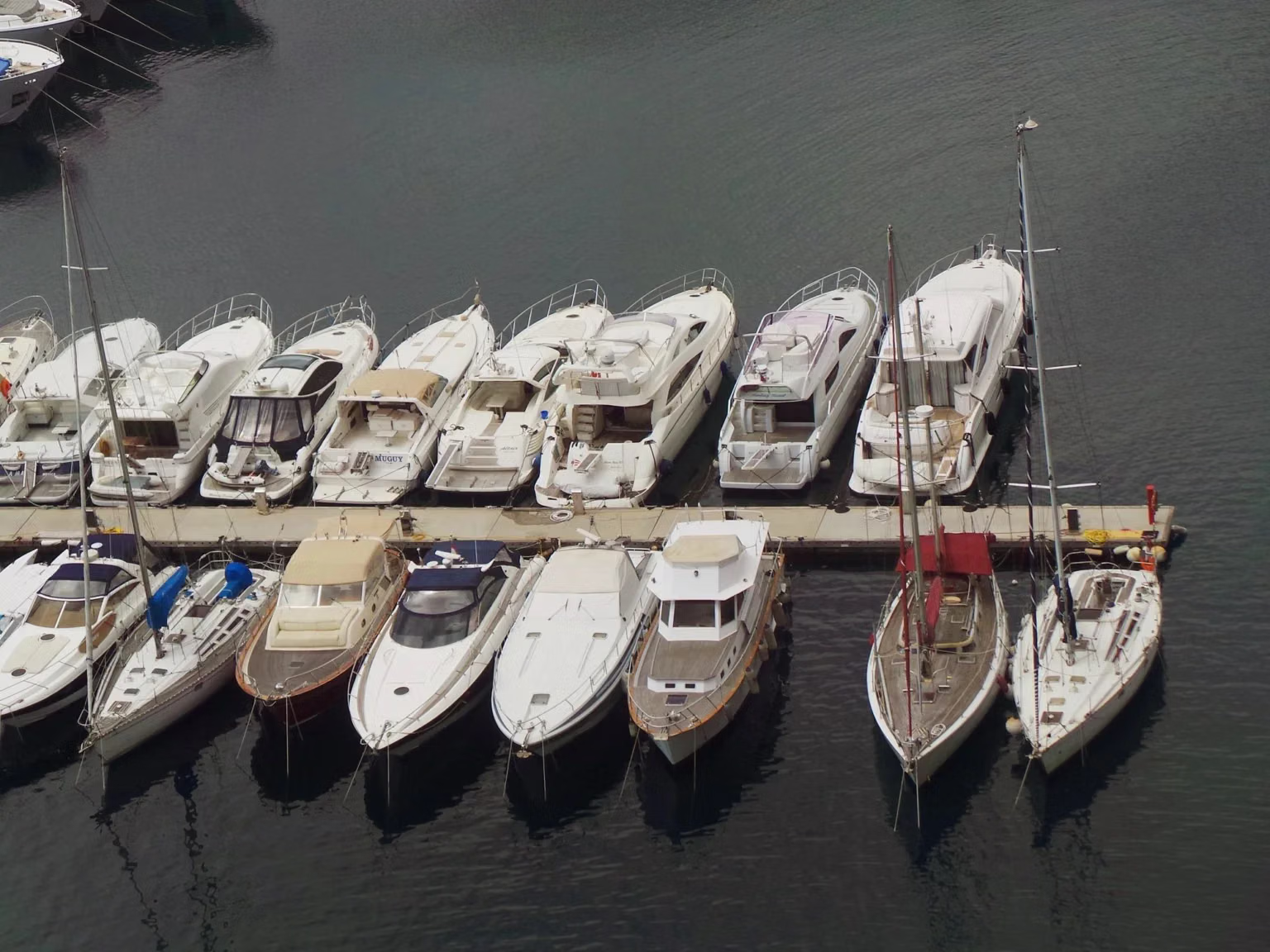
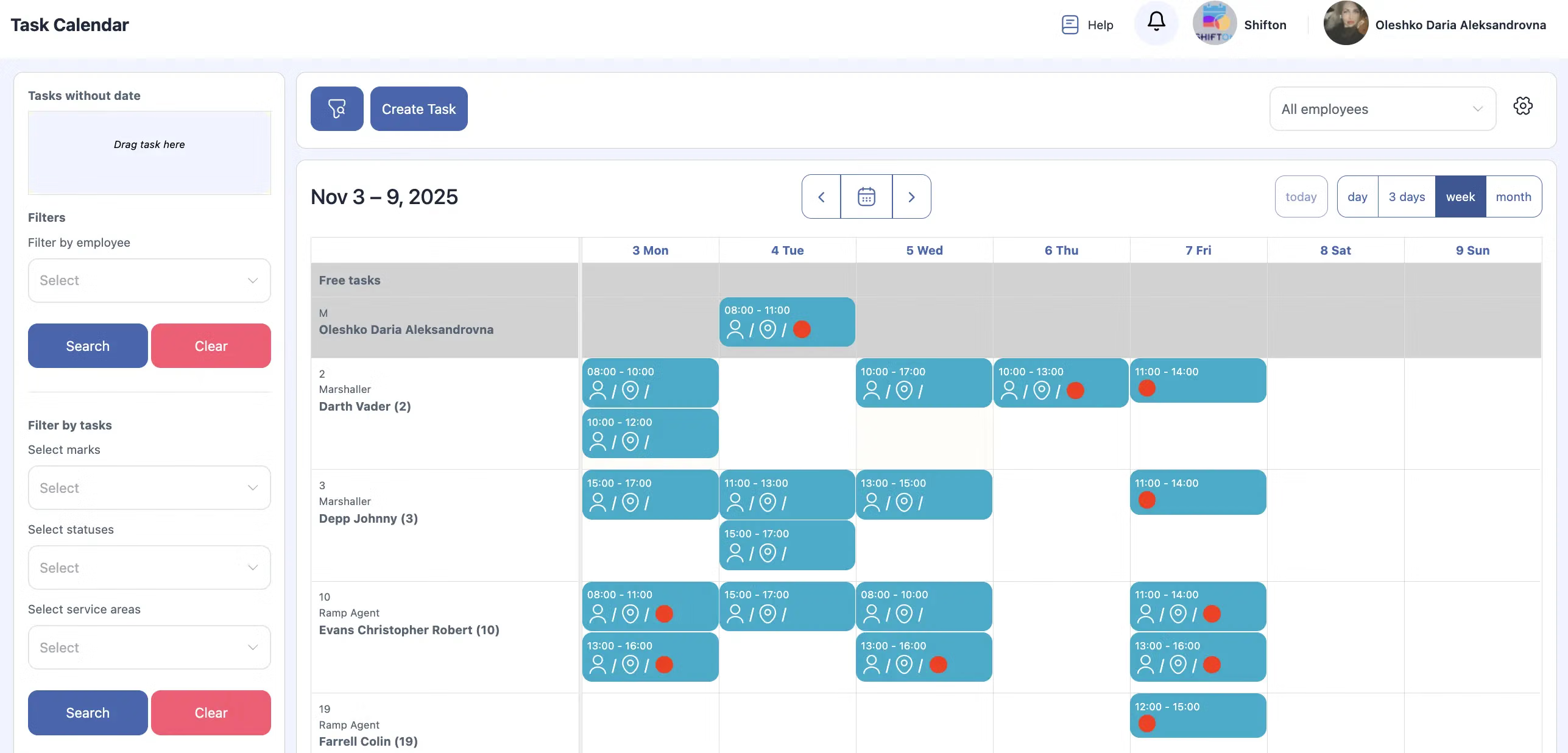
Every job belongs to a boat
An owner may have two boats, a boat may change owners, and the engineer needs to know which engine is under the hatch. Service work in a yard is recorded against the vessel: its name, berth or mooring, engine make and hours, and where the keys are kept.
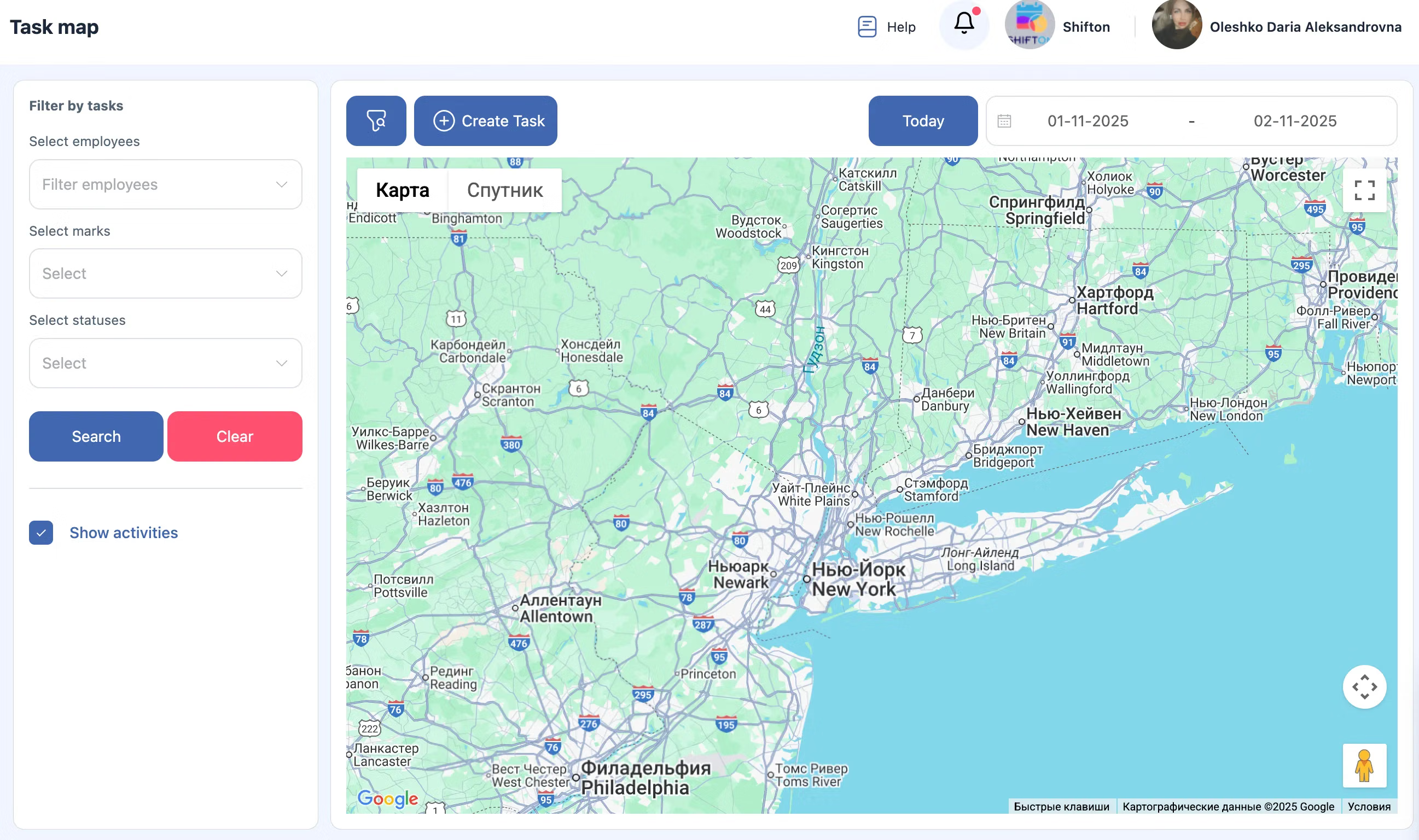
The travel lift sets the rhythm
A yard has one lift, sometimes two, and every haul-out and launch queues for it. Tides decide when some boats can be brought round, and the pressure washer crew has to be ready as soon as the hull is in the slings. Engineers who plan their day without seeing the lift schedule end up waiting on the hard.
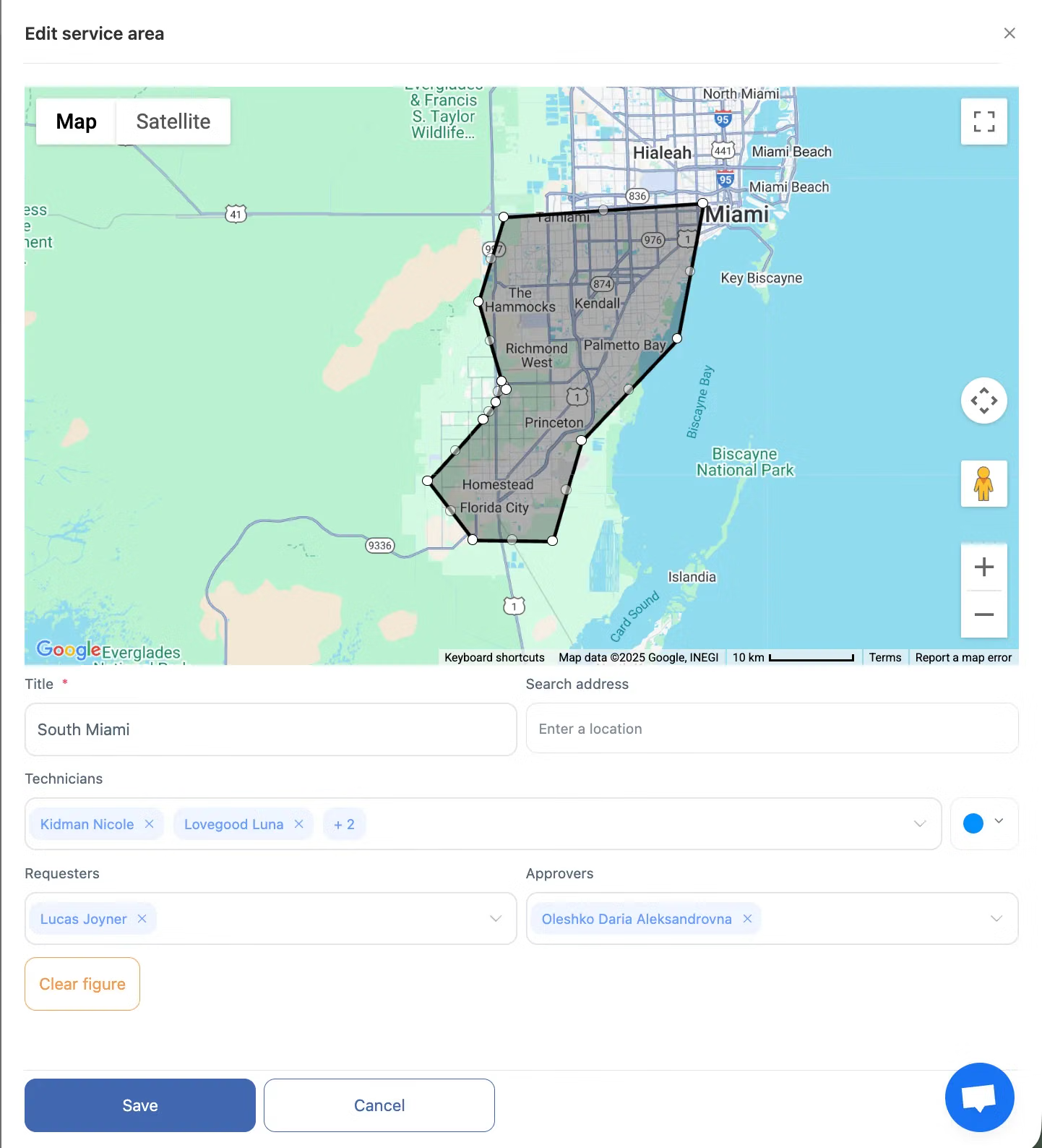
Extra work found once she is out
A cutless bearing with play in it, blistering below the waterline, a seized seacock: most yards find something the owner did not ask about. The owner is usually miles away. What gets the work approved is a clear photograph and a plain note, sent the same day.
Spring commissioning and autumn lay-up
Twice a year every boat in the yard needs roughly the same thing at roughly the same time. The work is repetitive and easy to skip a step on, which is exactly where a checklist earns its place.
Start with the Free Plan
No time limits. Get full access to core features and upgrade when you're ready.
See how boatyards plan lift slots and seasonal service work
Why boatyards look for marine service software
Most yards start with a whiteboard in the office and a diary for the lift. It works until the spring rush, when forty boats need commissioning in six weeks and three engineers are asking which one is next. Marine service software replaces the whiteboard with a board everyone can read on their phones: who is on which boat, which lift slot is booked, and what the owner has approved.
The difference between a yard and a general repair business is that the asset floats. It has to be brought to the lift at the right state of the tide, it has to be held somewhere while the work is done, and it has to go back into the water before the owner's holiday. The schedule is shaped by the lift, the weather and the season more than by the engineers' availability.
The seasons also make the workload lumpy. Autumn brings lay-ups in a rush before the first frost, winter is refits and slow repairs, and spring piles commissioning, antifouling and launches into a few weeks. Seeing the whole season on one board lets the yard book owners into realistic launch dates instead of promising everyone the same Saturday.
Hull work on the hard
Once a boat is out, several trades want it at the same time. The hull has to be washed and dried before antifouling, anodes are changed before the paint goes on, and the stern gear is checked while the boat is still high enough to reach the propeller. If the paint crew arrives before the engineer has withdrawn the shaft, one of them goes home. Splitting the boat into separate tasks, each with its own person and order, keeps the trades from tripping over each other.
Drying time matters too. Antifoul has a minimum overcoat interval and a minimum time before launch, printed on the tin. Writing those on the job stops a boat being lifted back in with paint that is still soft.
Mobile marine engineers
Not every job happens ashore. Many engineers work afloat: an engine that will not start on a pontoon, a bilge pump failing on a mooring, a survey ahead of a sale. These are field service jobs in the plain sense. The engineer needs the boat's location, access arrangements, previous work and the owner's contact before setting off, and the office needs to know when the job is finished and what was used.
Boat repair software for mobile engineers has to cope with long travel between marinas, calls that turn into a second visit because a part is not on the van, and customers who are rarely present. A photographed job sheet and a note of engine hours are what make the invoice believable.
Parts, waiting and the second visit
Marine parts are often specific to one engine family and not stocked locally. A seawater pump or a heat exchanger gasket can take a week to arrive, and the boat sits on the hard in the meantime. Recording the part on order and the reason the job is paused keeps the boat visible on the board instead of forgotten in a corner of the yard.
When the part arrives, the return visit should carry everything from the first: what was stripped, what was found, and the approval. Otherwise the second engineer starts diagnosing from scratch. The yard office also needs a simple view of every boat waiting on parts, because those are the boats owners phone about.
Where marina management software ends
Marina management software usually means berth allocation, mooring contracts, fuel sales and visitor bookings. Those are office and customer systems. The service side, meaning engineers, lift crews and the work they do on each boat, is a different problem, and many yards run the two separately.
What Shifton Field Service does
It schedules lift slots, yard work and mobile call-outs on one board, sends engineers the boat details and checklists, and records photos, parts used, hours and sign-off against each vessel. A yard where only two people do the work can use the board, the app, the forms and the reports without paying and without a time limit; invoicing, inventory, GPS location control and the customer portal are modules paid for separately.
It does not allocate berths, sell fuel or take mooring payments, it does not read engine diagnostics from the boat, and it does not predict tides. It keeps track of the people doing the work and what they did to each boat.
Frequently Asked Questions
Can we keep the service history per boat instead of per owner?
Yes. Jobs are recorded against the vessel, so the next engineer sees previous services, engine hours and notes even if the boat has been sold to someone new.
How do we get the owner to approve work we find after haul-out?
The engineer photographs the problem and adds a note to the job; the office sends it to the owner and records the answer. With the paid customer portal, the owner can see the job and its photos directly.
Can an engineer on a swinging mooring use the app without signal?
Out on the moorings the phone can drop coverage. The engineer can still tick through the checklist and take pictures, and everything is sent across when the tender gets back within range.
Is the winterization checklist the same on every boat?
You build the lists yourself, so a sailing yacht with a saildrive and a twin-engine motor cruiser can each have the right steps rather than one generic form.
What would a yard with one engineer and a lift driver pay?
Nothing. Two employees or fewer use the board, app, forms and reports free for as long as they like. Invoicing, parts stock, GPS location control and the customer portal are sold as separate modules.
Can we keep track of anodes, impellers and filters?
The paid Inventory module holds your parts, and the engineer records what was fitted on each job, so stock goes down and the boat's history shows exactly which parts went in.
Does this replace our berth and mooring booking system?
No. It plans and records the service work done on boats. Berth allocation, mooring fees and visitor bookings stay in whatever you use for that today.

Ready to transform your field operations?
Join thousands of field service companies that trust Shifton to run smarter every day.