

IT Field Service Management Software for On-Site Support
Break-fix visits, rollouts and scheduled maintenance on one board, with the asset history and the signed record attached to each site.

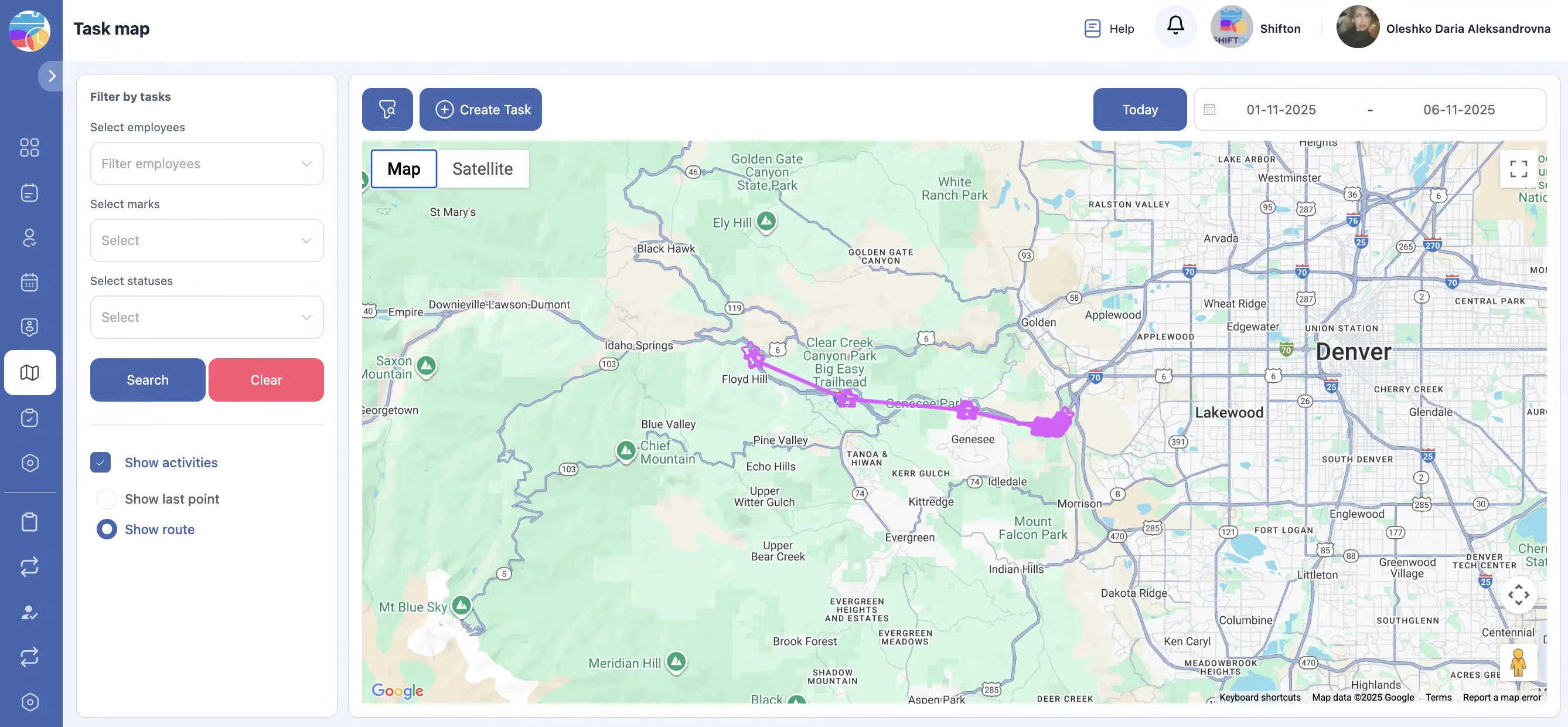
Remote support ends where the cable begins
Most tickets are closed from a desk. The ones that are not are the expensive ones: a failed switch, a workstation that will not boot, a printer nobody can reach, a rollout that has to happen out of hours. Those visits need a schedule, a route and a record, and a helpdesk queue provides none of the three.
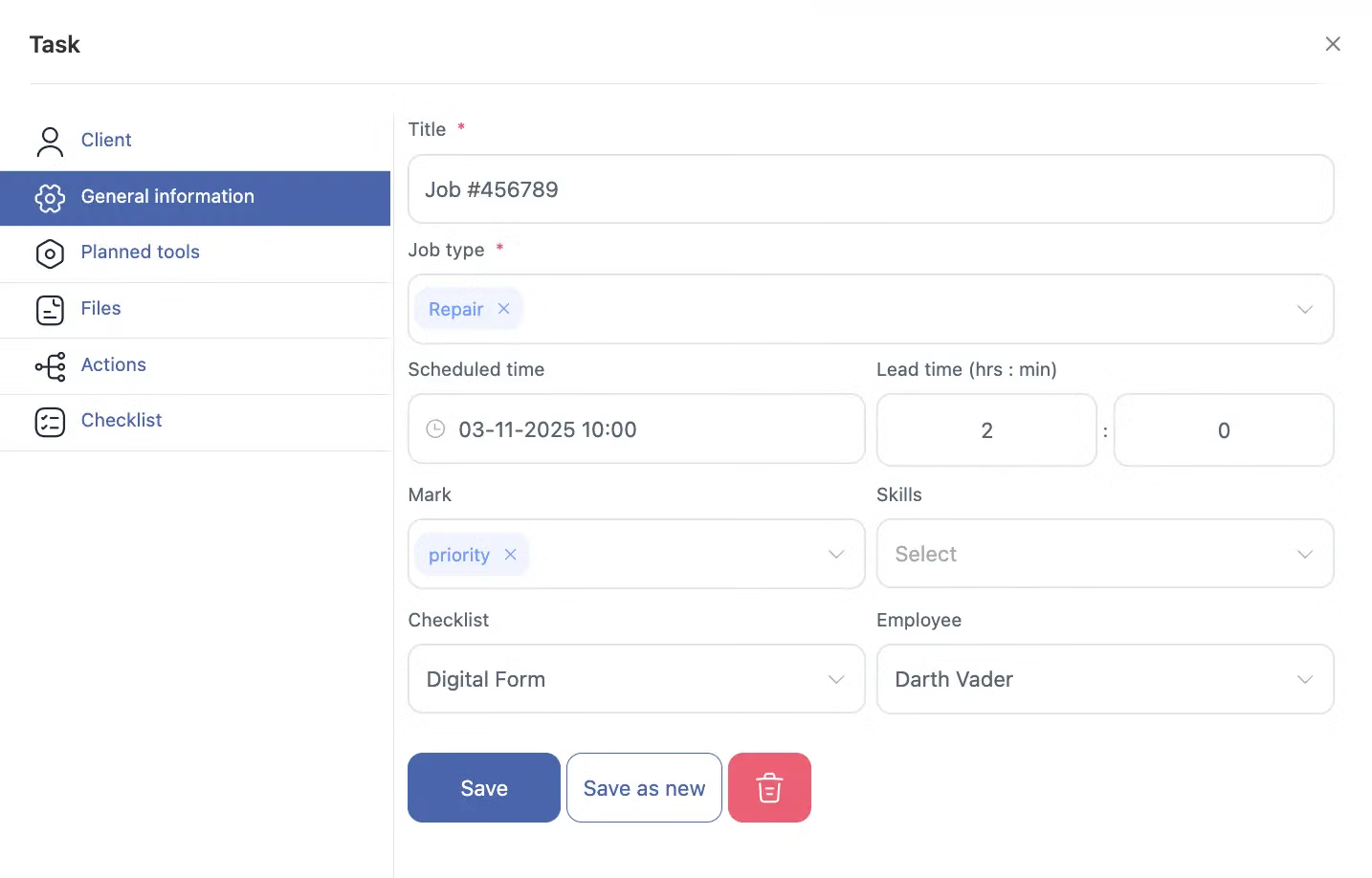
The engineer arrives knowing the site
Client sites differ in every way that matters: cabinet layouts, credentials, patching, who holds the keys, which floor the comms room is on. Holding that on the site record means the engineer sent today is not repeating the discovery work of the engineer sent last month.
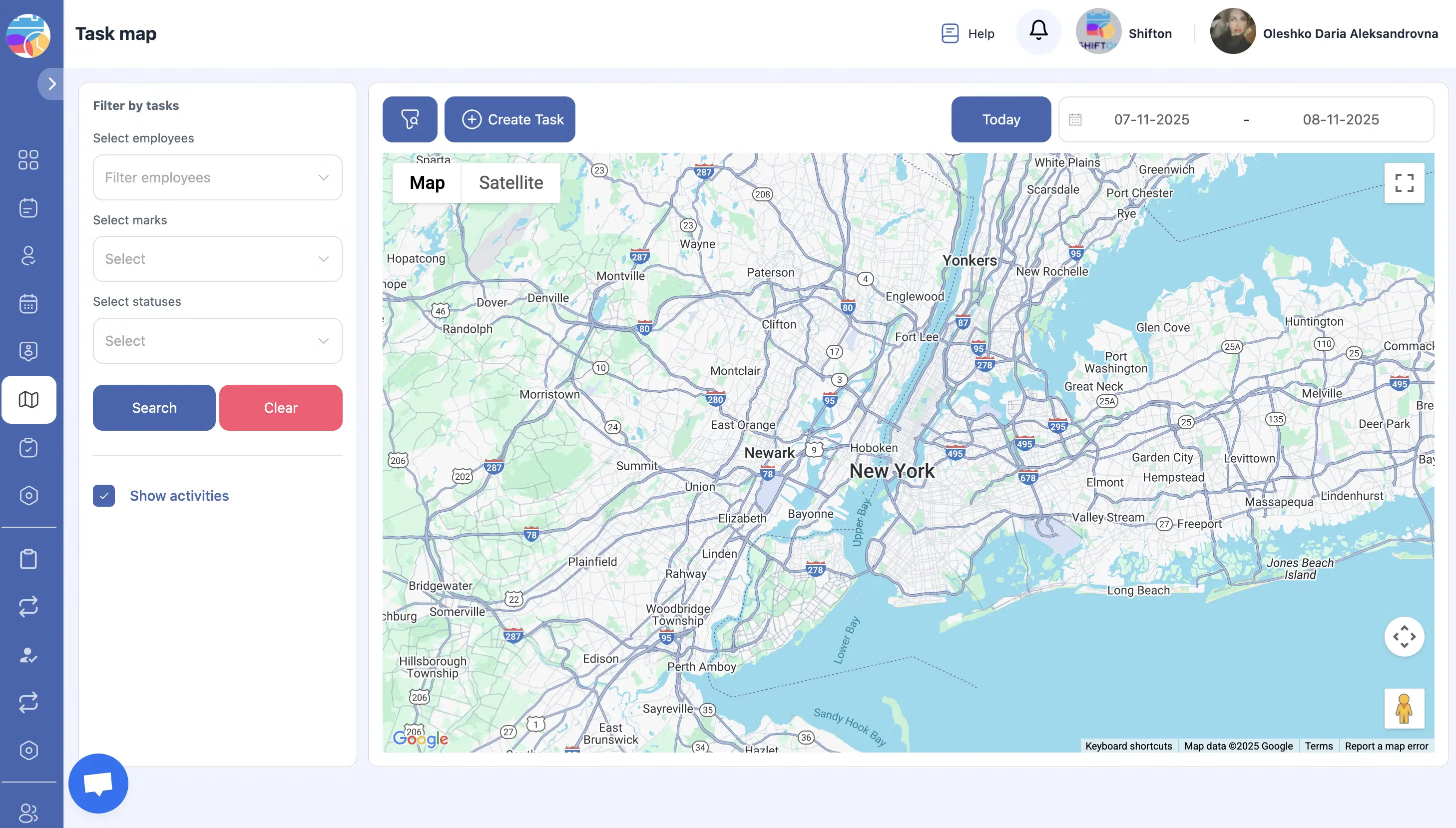
Rollouts, moves and scheduled maintenance
Project work is where on-site support makes margin, and where it most often loses it. Deployments, office moves and refresh cycles are planned as multi-visit work with the devices, the sequence and the out of hours windows fixed in advance.
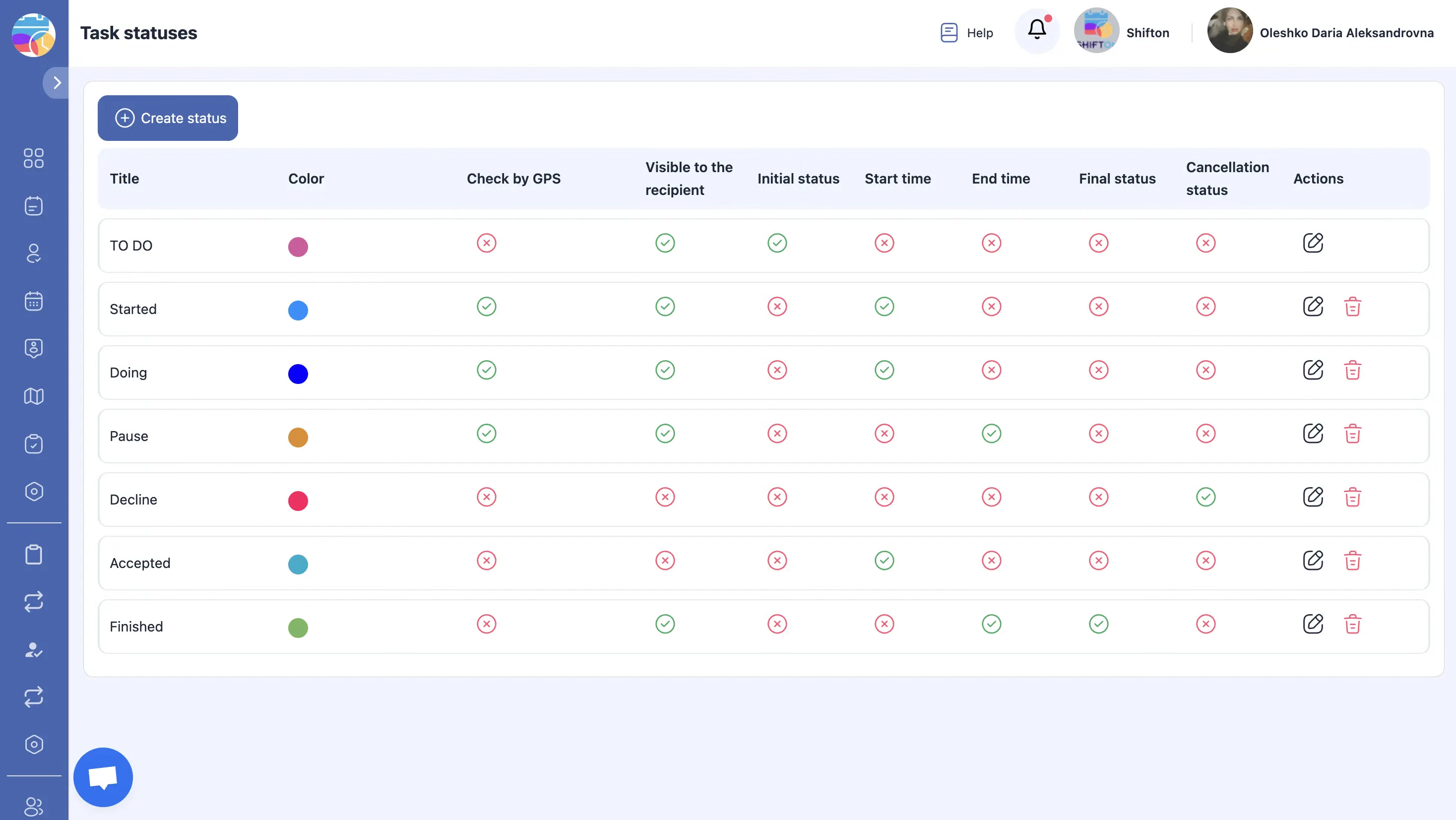
Billable time and evidence of the visit
On-site work is billed in hours, and hours reconstructed on a Friday are always wrong. Time recorded as the job is worked, with the signature and the notes captured on site, is both the invoice and the defence of it.
Start with the Free Plan
No time limits. Get full access to core features and upgrade when you're ready.
Read the full guide to IT field service software
The tickets that leave the building
An IT support business measures itself on remote resolution, and rightly: the cheapest fix is the one nobody drives to. What that measurement hides is that the remaining tickets, the ones that require someone on site, consume the majority of the operational effort and almost all of the schedule. IT field service management software is the layer for those tickets, and it sits alongside the helpdesk rather than replacing it.
The distinction is worth making because the two tools answer different questions. A ticketing system answers what is outstanding. A field service platform answers who is going, when they will arrive, what they need to bring and what happened when they got there.
Three kinds of on-site work
Break-fix
Unplanned visits arrive with a clock attached, especially for contracted clients whose agreements specify response. The scheduling question is not who is free in theory but who can reach that site today with the right skills and, where it matters, the right hardware in the car.
Projects and rollouts
Deployments, refreshes and office moves are the profitable work, and they behave like construction rather than support: sequences, dependencies, access windows and a finish date that the client has told their staff. Planning them as multi-visit jobs, with devices tracked through the sequence, is what keeps a weekend rollout from becoming a fortnight of loose ends.
Scheduled maintenance
Contracted clients expect proactive visits, and those visits are the easiest thing in the business to let slip, because nothing breaks when they are missed until something does. Generating them as recurring jobs means the commitment sold in the contract actually appears in the schedule.
Why the site record matters more than the ticket
Client environments are accumulations of decisions taken over years, most of them undocumented. The engineer who knows a particular site is an asset and a risk at the same time, because that knowledge leaves with them. Building the record as visits happen, with configuration notes, cabinet photographs, credentials handling and access arrangements attached to the site, converts individual memory into something the business owns.
Asset level history extends the same logic to hardware. A workstation with three call-outs in six months is a replacement decision waiting to be made, and it is invisible until visits are attached to devices rather than to dates.
Billing the work you actually did
On-site support is billed in time, and time is the thing engineers record worst. Hours reconstructed at the end of the week are conservative, inconsistent and unprovable. Recording start, travel and finish on the job, with a client signature on completion, produces an invoice nobody argues with and a picture of where the hours really go.
The number that shows whether it is working
First time fix rate. A support business that resolves the visit on the first attempt spends less on travel, bills more of its hours and keeps contracts longer. Improving it requires knowing why return visits happen, which requires the visits to carry their history. Nothing else in the operation gives a faster return.
Starting alongside the helpdesk
There is no integration project to complete first. When a ticket needs a visit, the visit is created as a job, the engineer works from the app, and the record and hours accumulate from that point. Support businesses with two or fewer employees stay on the free plan permanently, and paid modules carry a trial of up to 55 days.
Frequently Asked Questions
Does this replace our ticketing system?
No. Tickets keep living in the helpdesk. Shifton Field Service handles what happens when a ticket has to become a visit: scheduling the engineer, carrying the site and asset history, capturing the signed record and recording the hours actually worked on site.
Can we keep history per client site and per device?
Yes. Visits are attached to the site and to the asset, so the next engineer sees the cabinet layout, the previous configuration notes and what was replaced last time, rather than starting the diagnosis from nothing.
How are out of hours rollouts handled?
As planned multi-visit work. Evening and weekend windows are scheduled with the cover to match, the device list and sequence sit on the jobs, and progress is visible to the desk without ringing the team on site.
What happens in a comms room with no mobile signal?
The mobile app for iOS and Android holds the job and the forms on the device. Configuration notes, checklists, photographs and the client signature are captured offline and sync when the phone has signal again.
Can we record billable time accurately?
Time is recorded as the job is worked, including travel, rather than reconstructed later. The completed job carries the hours, the notes, the parts used and the signature, which is what the invoicing module turns into a document.
Is it suitable for a two-person support business?
Yes. Teams of two or fewer run on the free plan permanently: scheduling, digital job forms, the mobile app and reports are included. Invoicing, inventory, location control and the customer portal are paid modules added as the team grows.
How is pricing structured for a support business?
The free plan covers up to two employees with no time limit. Beyond that the platform is priced per employee per month, and each paid module carries a free trial of up to 55 days, long enough to run a full rollout through it.



Ready to transform your field operations?
Join thousands of field service companies that trust Shifton to run smarter every day.