

Medical Device Field Service Software for Engineers
Planned maintenance, calibration and breakdown calls scheduled per device, with the service record attached to the serial number.
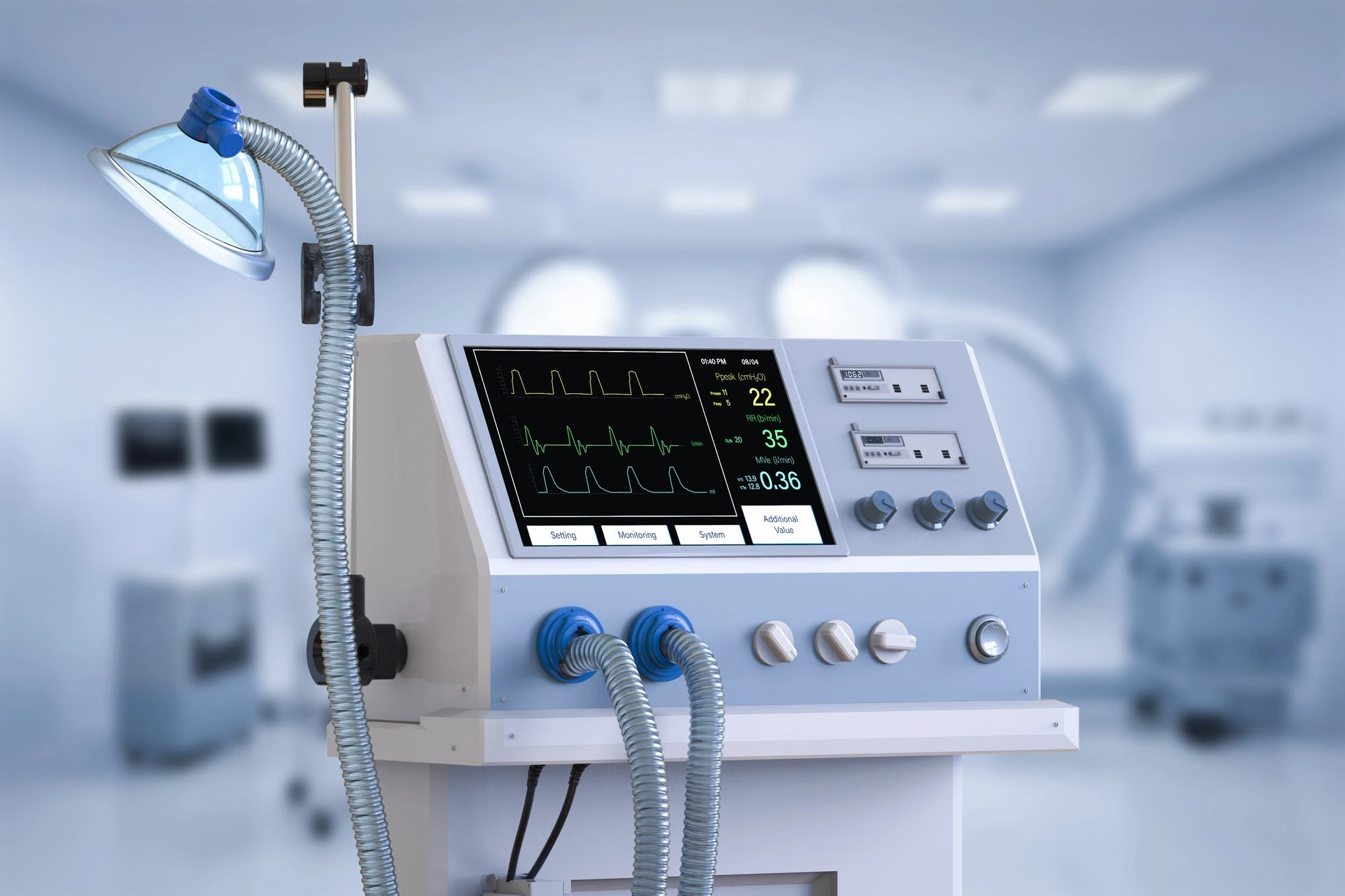
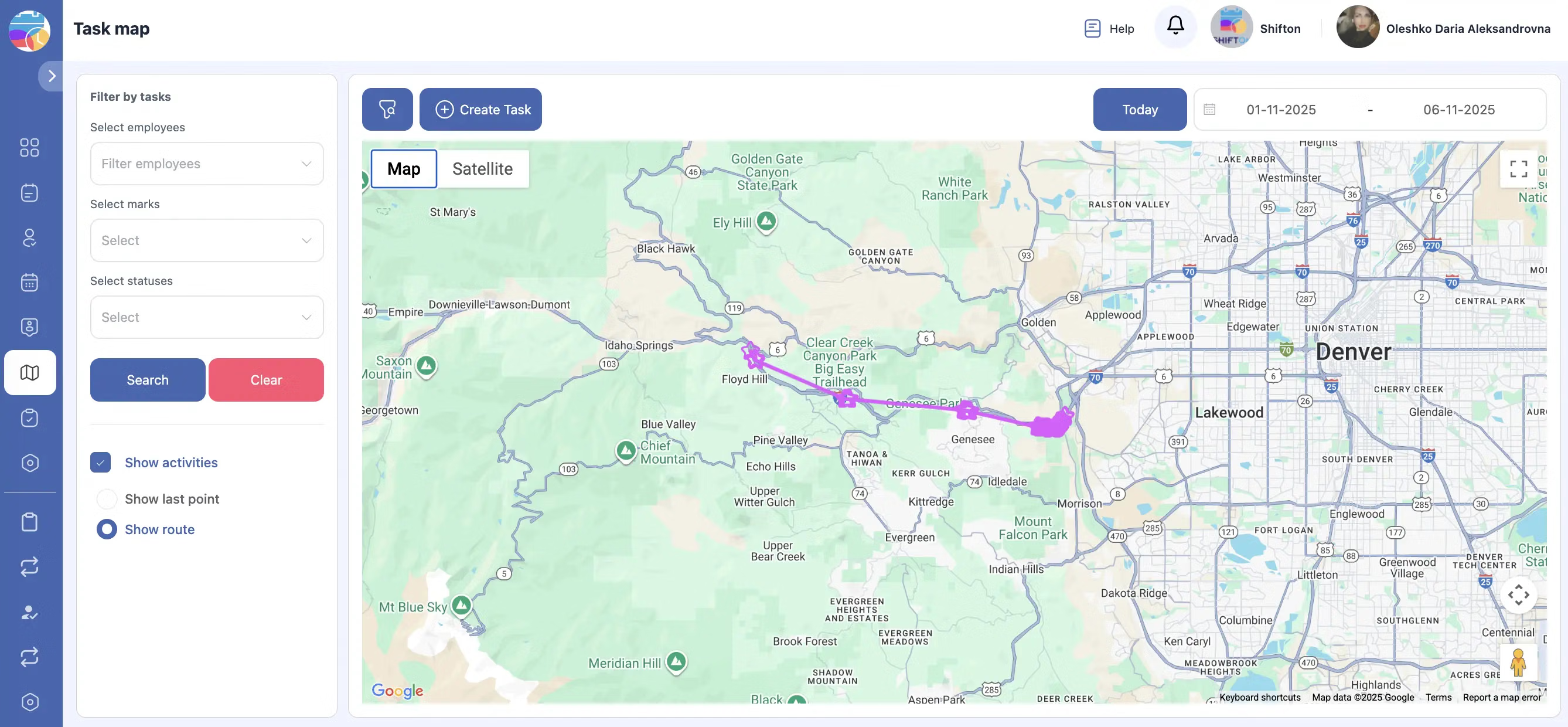
Uptime is a clinical requirement
Medical equipment does not fail quietly. A device out of service cancels lists, moves patients and puts a department under pressure that reaches the supplier within the hour. Response has to be planned rather than improvised, and the plan has to survive the days when three hospitals call at once.
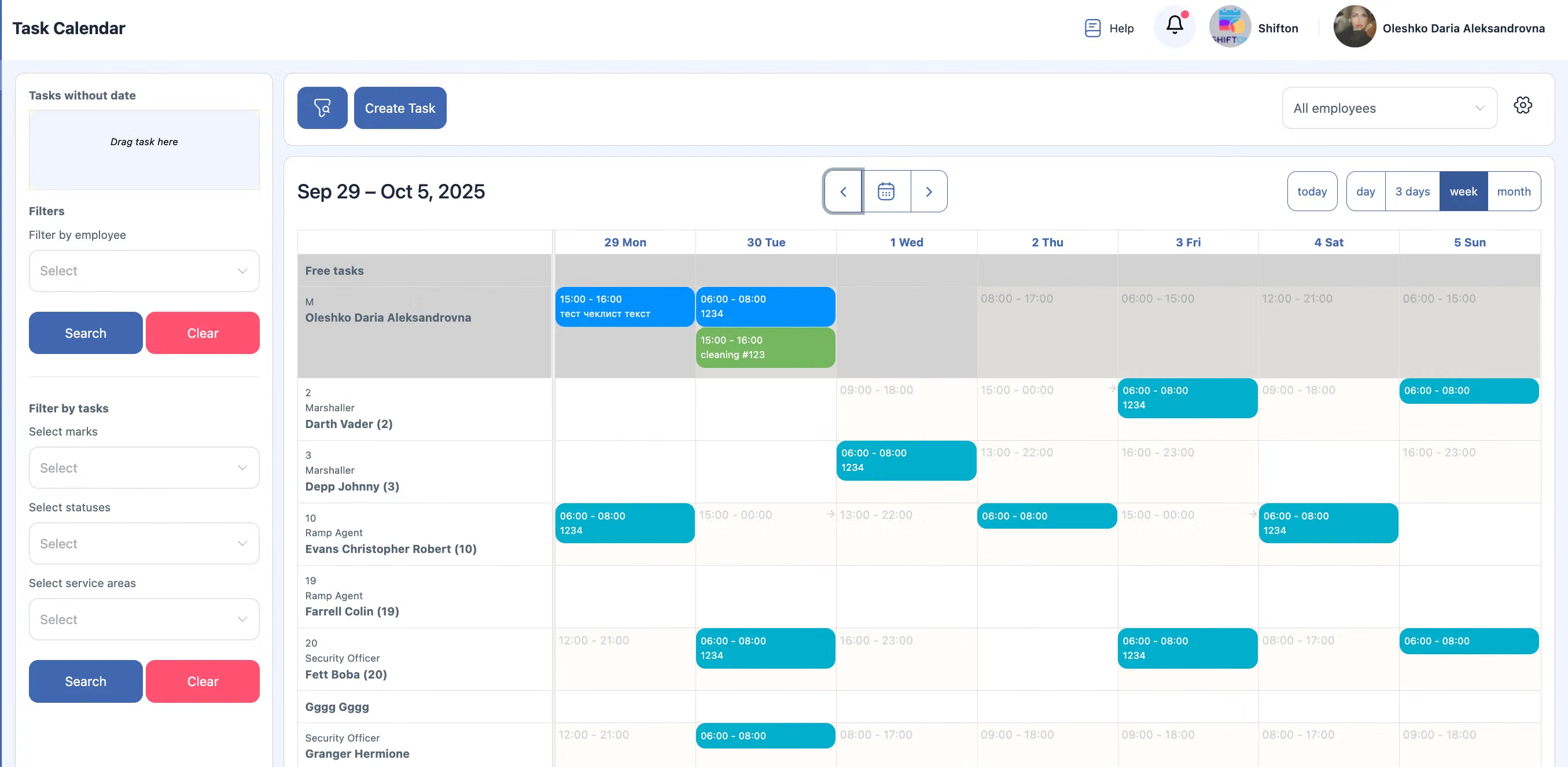
The service record belongs to the serial number
Every regulated device carries its own history, and that history has to survive changes of engineer, department and contract. Attaching visits to the asset rather than to a date is what makes the record usable at audit and useful in the field.
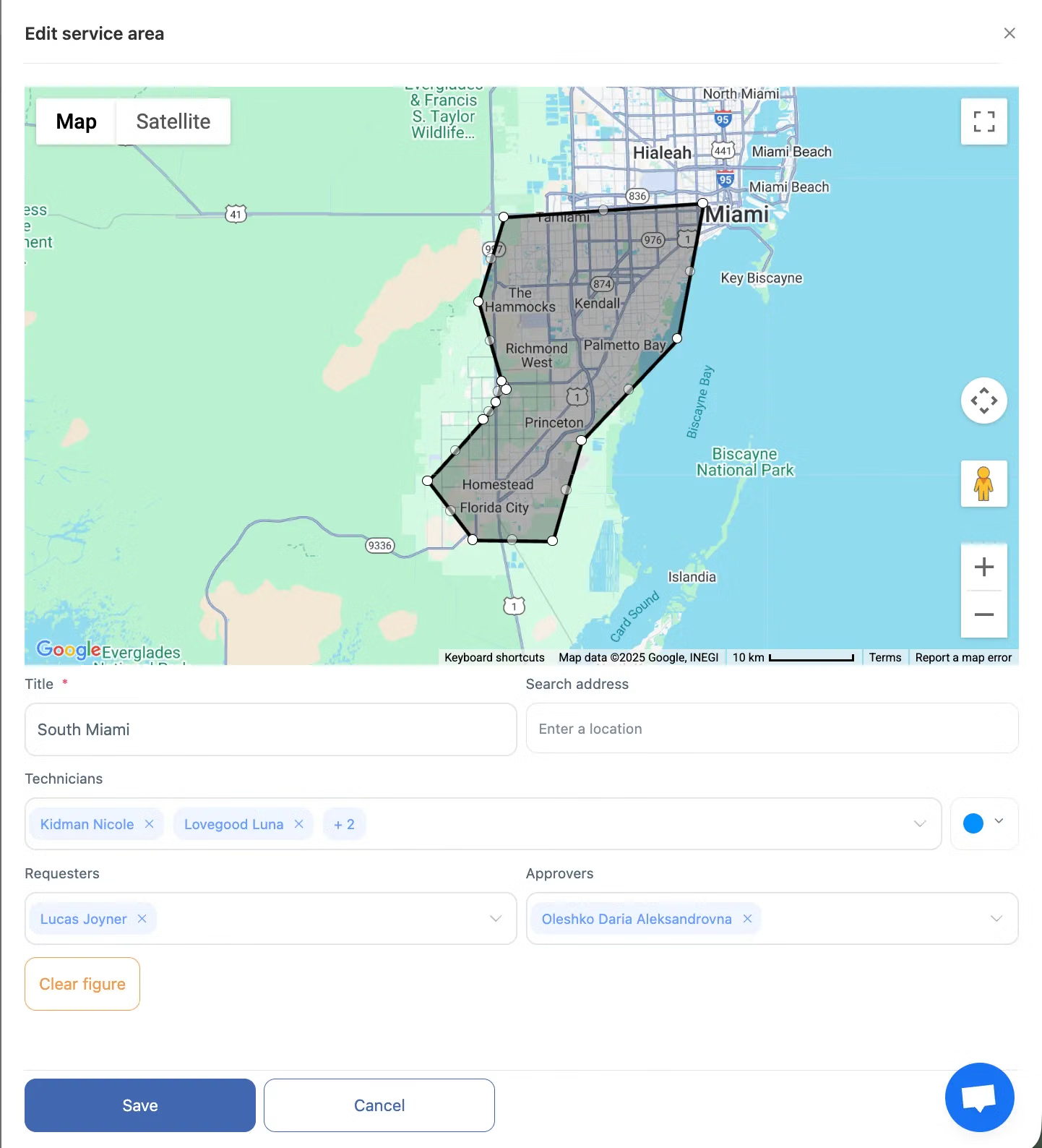
Evidence produced where the work happens
Service reports in this sector are documents of record. Digital job forms capture the readings, the parts fitted, the safety checks and the signature of the department at the point of work, so the report is finished before the engineer leaves the site.
Contracts, parts and the numbers behind them
Service contracts are priced on assumptions about visit counts and part consumption. Only the field record shows whether those assumptions held, per hospital and per modality.
Start with the Free Plan
No time limits. Get full access to core features and upgrade when you're ready.
Read the full guide to medical equipment service software
A service business with clinical consequences
Servicing medical equipment is field service with the tolerance removed. The equipment is in use, the users are clinical staff with no spare capacity, and a device out of action has an effect measured in cancelled procedures rather than inconvenience. Medical device field service software is therefore not primarily a scheduling convenience. It is the mechanism that makes response times real and service records defensible.
The paperwork is not administrative overhead either. In this sector the report is the evidence that maintenance happened to the required standard, and its quality is examined when something goes wrong. Anything that produces the report as a by-product of the visit, rather than as an evening task, improves both the record and the engineer's day.
Three streams of work, one team
Planned maintenance
Intervals are set by the manufacturer and the contract, and they apply per device rather than per site. Generating those visits automatically is the only reliable way to keep a growing installed base compliant, because a spreadsheet of due dates degrades quietly as devices move between departments.
Calibration and verification
These visits produce numbers that must be recorded exactly and retained. Capturing readings on a form at the point of measurement removes the transcription step where errors are introduced, and keeps the values attached to the asset that was tested.
Breakdowns
Unplanned failures are where contracts are tested. The scheduling question is which engineer has the modality experience and can attend within the committed window, and the answer changes hourly. A board that shows the whole team, their commitments and their skills makes that decision in seconds rather than through a round of phone calls.
Why the asset record is the whole system
Hospitals move equipment. A pump delivered to one ward is in another within a month, and a service history organised by customer address stops being accurate almost immediately. Building the record around the serial number keeps it true regardless of where the device ends up, and it makes the questions that matter answerable: how many times this unit has failed, what was replaced last time, whether this model is failing across the estate.
That last question is where a service business earns credibility. A supplier who can show, from its own records, that a particular model requires more intervention than its peers is a supplier the customer consults before buying the next batch.
Parts, stock and the cost of a second visit
First time fix in this sector is expensive to miss. A return visit means another journey, another access request, another slot in a department's schedule and another day of downtime. Recording parts consumption against jobs shows which spares should be on the van for which modality, and turns first time fix from an aspiration into something the stock policy supports.
Reporting that survives a contract review
Contract renewals ask three questions: how quickly did you respond, how often did the equipment fail, and can you prove both. When response times and visit records come out of the jobs themselves, the review is an export rather than a reconstruction, and the conversation about price is based on the same figures on both sides of the table.
Starting with one contract
Put a single customer's installed base on the system with its planned intervals and let the engineers complete their reports on the phone. Within one cycle the device histories exist, the reports are consistent and the response figures are real. Companies with two or fewer employees stay on the free plan permanently, and the paid modules carry a trial of up to 55 days.
Frequently Asked Questions
Can the service history be kept per device rather than per customer?
Yes. Visits, readings, parts and reports attach to the individual asset, so the history follows the serial number through departments, sites and changes of engineer. That is what makes it usable at audit and in the field.
How are planned maintenance intervals handled?
As recurring jobs. Each device carries its own interval, and the visits are generated ahead of time with their checklists attached, so the schedule reflects the contract rather than depending on a spreadsheet of due dates.
Can engineers record calibration readings on site?
Digital job forms capture readings, safety test results, parts fitted and notes at the point of work, with photographs where they help. The department signs on the phone and the report is complete before the engineer leaves.
What happens in a hospital basement with no signal?
The mobile app for iOS and Android holds the job and the forms on the device. Work completed in shielded rooms, plant areas and basements syncs when the phone has signal again, with nothing retyped.
Can we report response and downtime per contract?
Yes. Reporting breaks down by customer, so response times, visit counts and repeat failures can be shown per hospital or per modality, which is what contract reviews and renewal conversations require.
Is it suitable for a small independent service company?
Teams of two or fewer run on the free plan permanently: scheduling, digital job forms, the mobile app and reports are included. Inventory, invoicing, location control and the customer portal are paid modules added as the business grows.
How is the platform priced for a service company?
The free plan covers up to two employees with no time limit. Beyond that the platform is priced per employee per month, and every paid module carries a free trial of up to 55 days, enough to run a full maintenance cycle through it.



Ready to transform your field operations?
Join thousands of field service companies that trust Shifton to run smarter every day.