

Facility Management Software for Mobile Maintenance Teams
Reactive requests, planned maintenance and contractor visits on one board, with the asset, the checklist and the sign-off on the job.

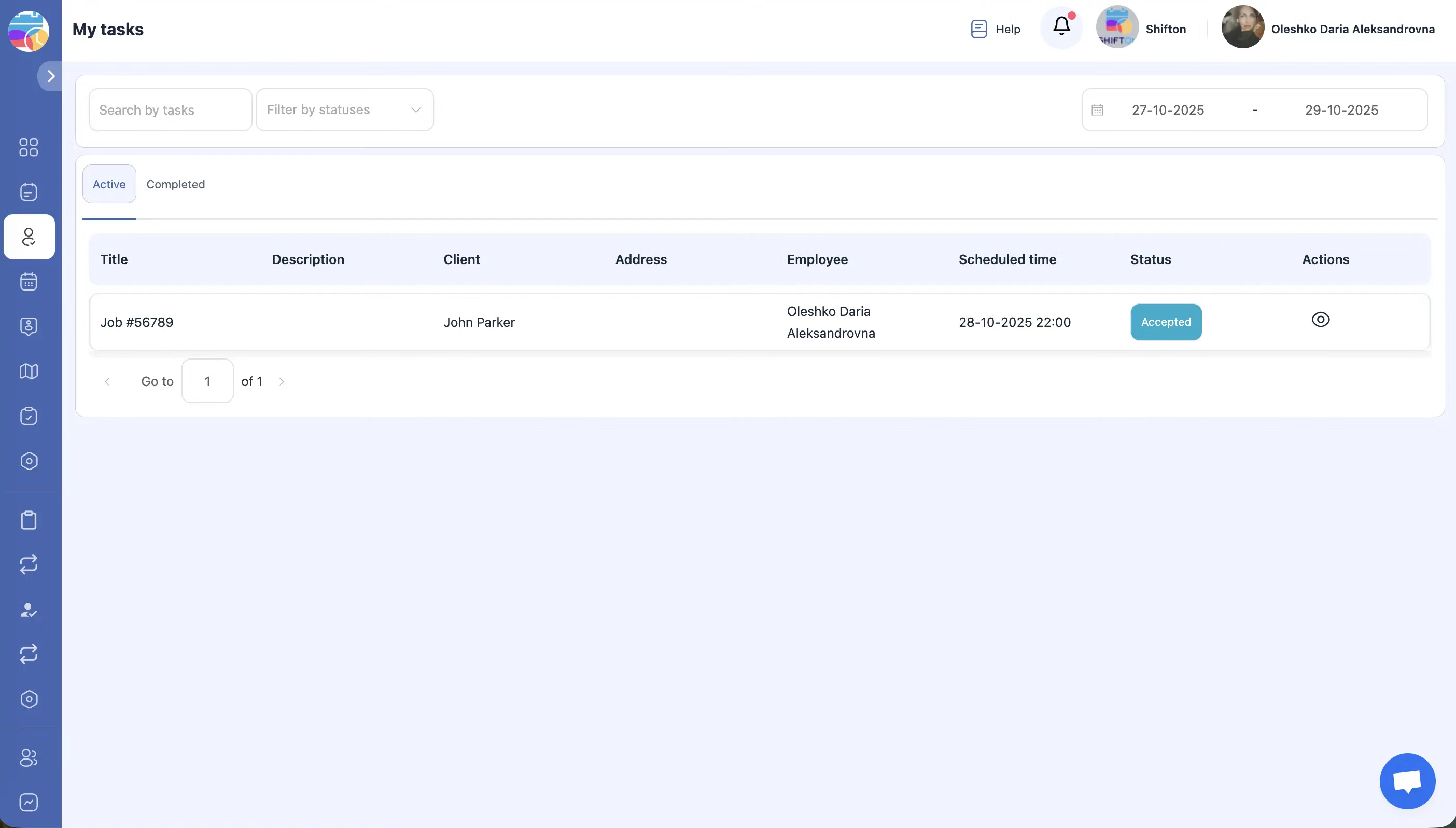
Reactive and planned work compete for the same engineers
A facilities team is judged on response time and paid for planned maintenance. The two use the same people, and the reactive side always shouts louder. Without one board, planned maintenance is what quietly does not happen, and it stays invisible until something fails.
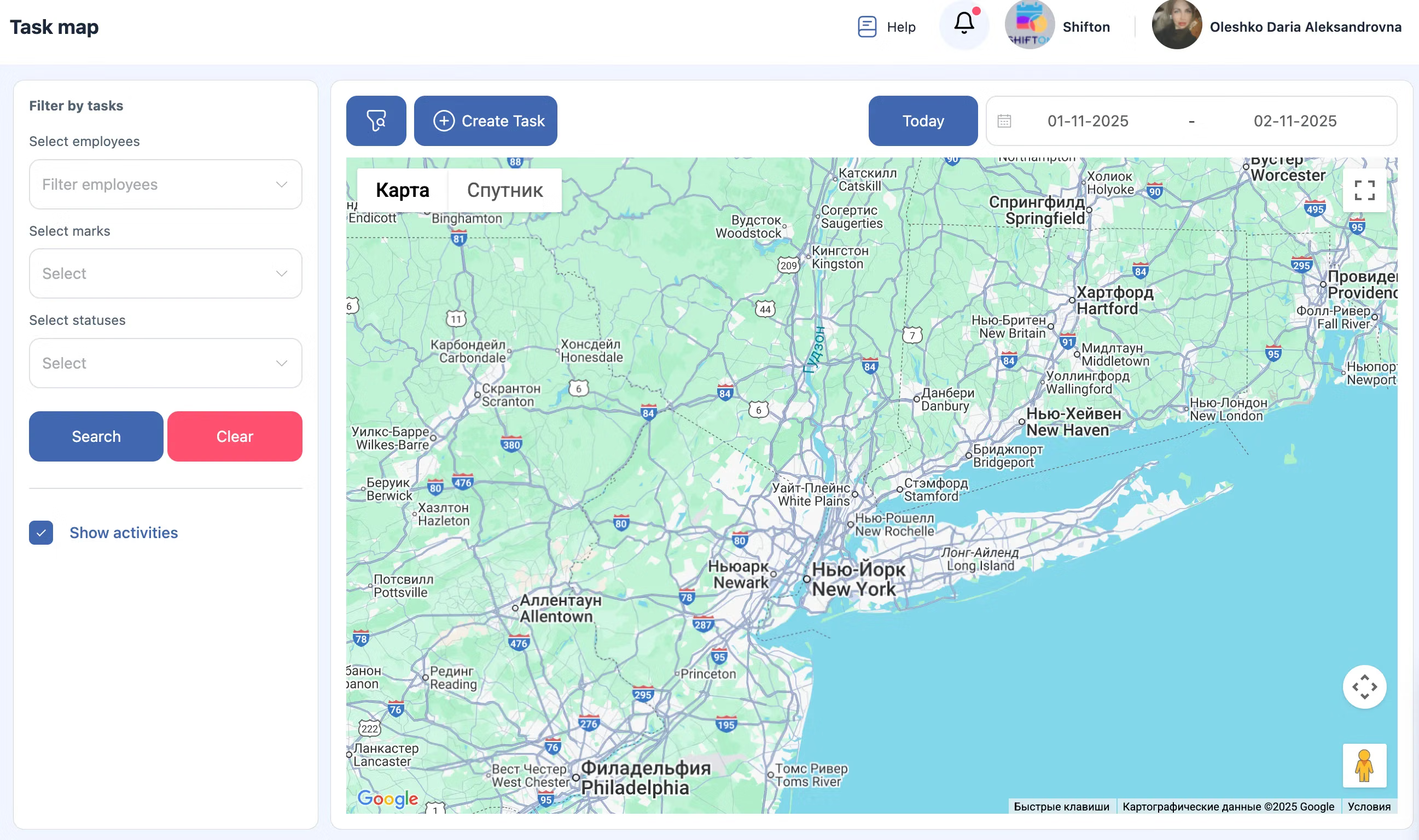
The engineer arrives knowing the asset
A request that says the air handling unit on the third floor is noisy is not a job yet. Which unit, what model, when it was last serviced, what was replaced then, where the isolator is. Held on the asset record, that history turns a diagnostic visit into a repair visit.
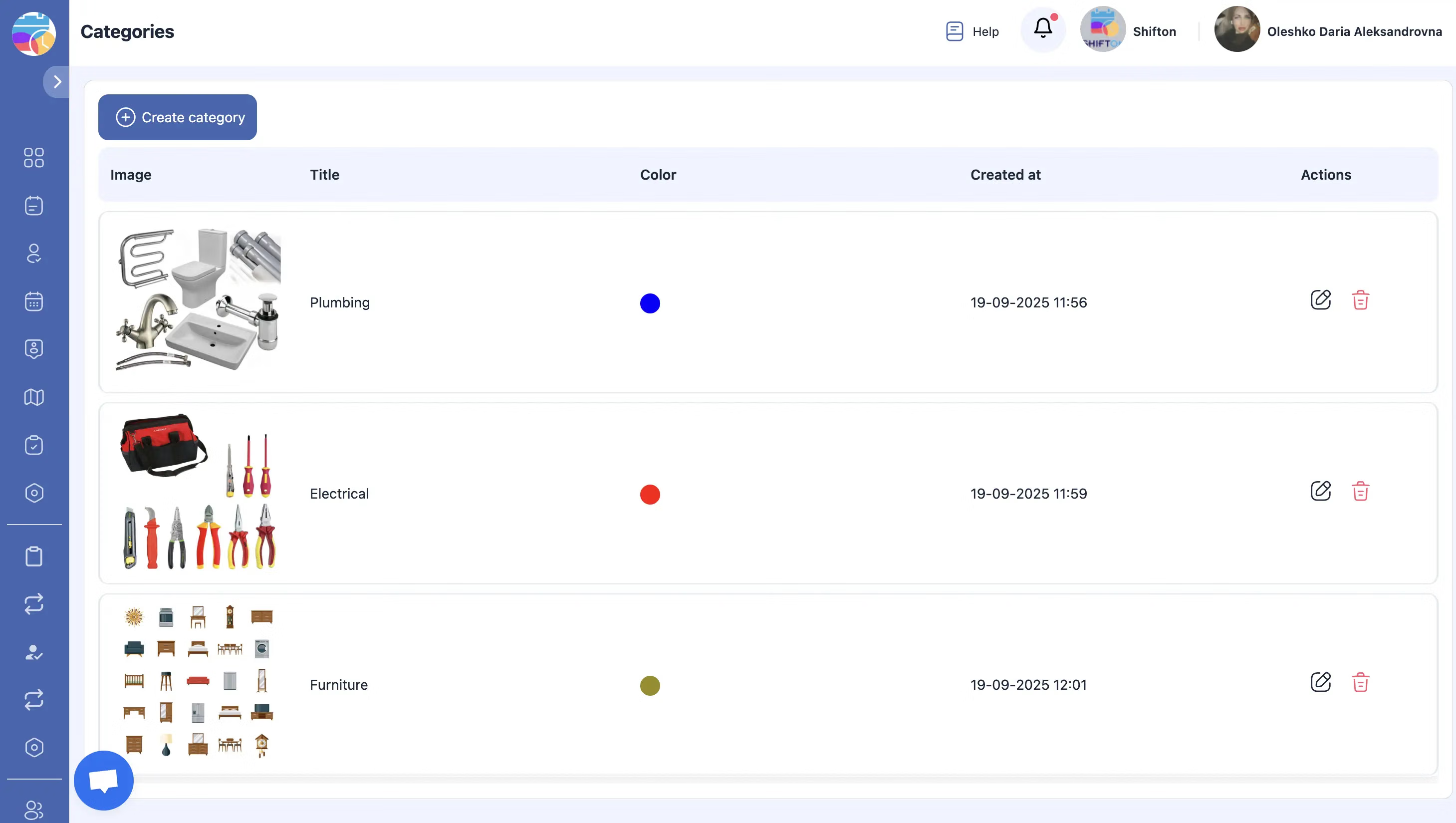
Planned maintenance that actually happens
Statutory checks, service intervals and inspections are scheduled once and then defended. Held as recurring jobs, they appear on the board in advance with their own checklists, which is the difference between a maintenance regime and a maintenance intention.
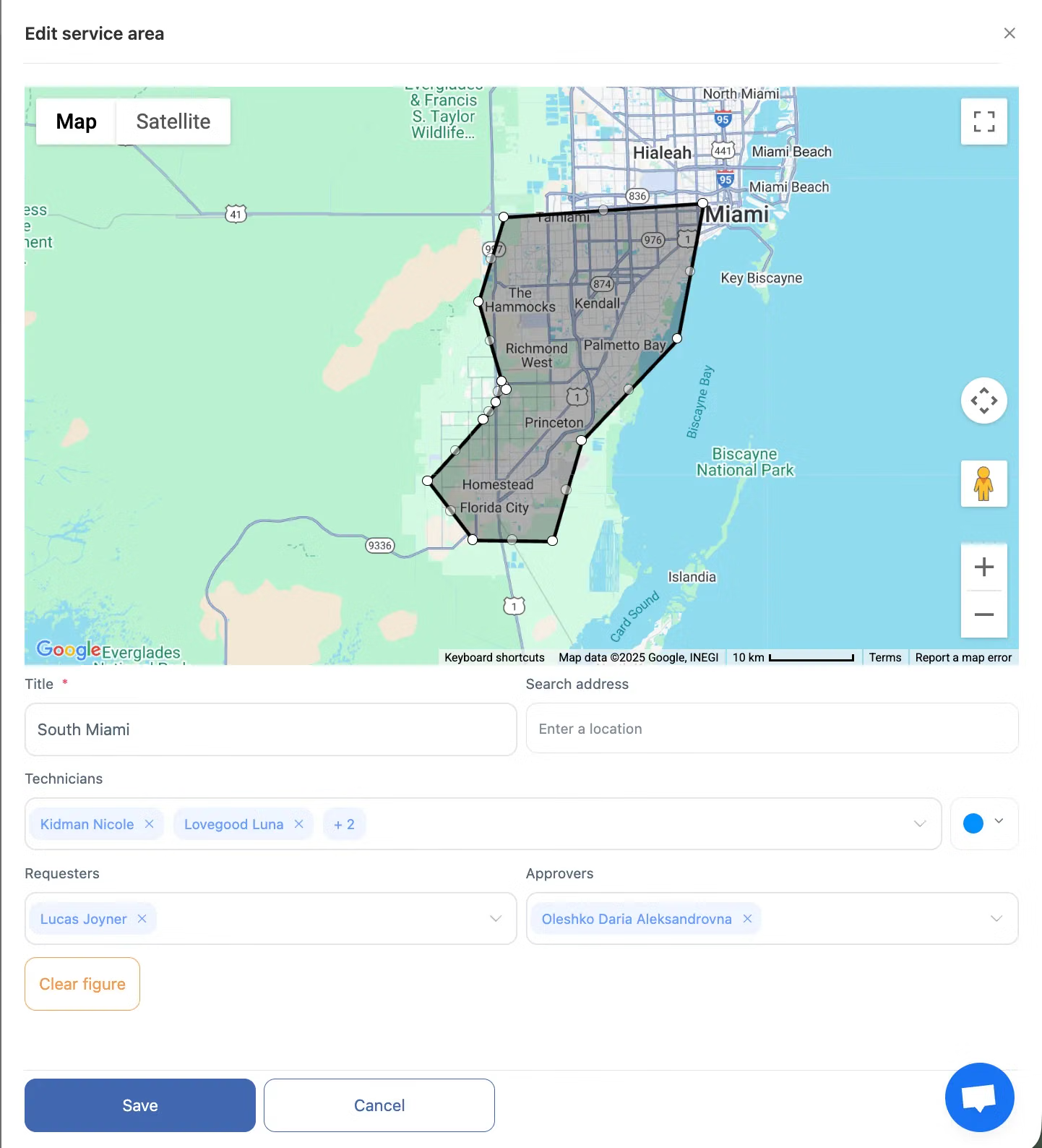
Cost, evidence and the report to the client
Whether the team is in house or contracted, somebody asks what the building cost to run and what was done for the money. Recording hours, parts and outcomes against the job makes that report a query rather than a project.
Start with the Free Plan
No time limits. Get full access to core features and upgrade when you're ready.
Read the full guide to facility management software
The part of facilities that happens on foot
Facility management covers a lot of ground, from lease administration to space planning. The part discussed here is narrower and more physical: the engineers, cleaners and contractors who move between buildings fixing and maintaining things. That work has more in common with field service than with the systems that manage property portfolios, and it is poorly served by tools designed for the latter.
The test is simple. Can somebody standing in a plant room with a phone and no signal complete the job properly. If not, the record will be made later, from memory, or not at all, and every report built on top of it inherits that weakness.
Reactive work will eat planned work unless you can see both
Every maintenance team has the same failure mode. A request comes in, an engineer is pulled off a scheduled service, and the service is rescheduled to a week that is also full. Repeat this for a quarter and the planned maintenance regime exists only on paper.
Nobody decides to let that happen. It happens because the two kinds of work are managed in different places, so the cost of an interruption is never visible at the moment of interruption. One board makes the trade explicit: taking this request means that service moves, and here is what it was.
Assets, not addresses
In most field trades the unit is the property. In facilities the useful unit is the asset: this air handling unit, this pump, this door, this lift. Holding history against the asset is what lets an engineer see that the same unit has been attended three times in six months, which is a replacement conversation rather than a fourth repair.
The history changes the visit
An engineer who knows the model, the last service date and what was replaced then arrives with the right part and the right expectation. One who knows only the building and a complaint spends the first hour finding out what everyone else already knew.
Compliance is a record, not an intention
Statutory inspections and periodic checks exist to be evidenced. The evidence is a completed checklist with a date, a name and, increasingly, photographs. Produced on site on a phone, it is complete and findable. Produced on paper and filed later, it is complete about as often as anyone is willing to check.
Contractors are part of the building's record
Specialist work goes to third parties: lifts, fire systems, air conditioning. If those visits are tracked in supplier emails, the building has no single history and nobody can answer a simple question about when the last inspection happened. Held as jobs on the same schedule, the record is complete regardless of who did the work.
The report somebody will ask for
Whether the team is in house or a contractor, the same questions arrive: what did we spend on this building, how fast did we respond, what proportion of planned maintenance was completed on time. Each of those is trivial if hours and outcomes are recorded against jobs, and a week of spreadsheet work if they are not.
What to look for
Can reactive and planned work live in the same view. Can history be held against equipment rather than only against a building. Can an engineer complete a job offline. Can compliance evidence be produced from the record rather than assembled from folders.
Starting free
A small team of two runs free with no time limit: scheduling, digital job forms, the mobile app and reports are included, which is enough to test the approach on one building before rolling it out.
Paid modules follow the need, each with a free trial of up to 55 days: inventory for spares, invoicing where work is billed on, location control across a portfolio, the customer portal where tenants or clients want visibility.
Each part is documented: task management and dispatch, work order history, digital job forms, the mobile app, role based access and reports. Prices are on the pricing page.
Frequently Asked Questions
Can reactive requests and planned maintenance sit on one board?
Yes, and that is the point. Urgent requests and scheduled maintenance are visible together, so the effect of accepting an emergency on the planned regime is obvious before the decision is made rather than at the end of the quarter.
Is the service history kept per asset?
Each job is held against the equipment and the building it belongs to, so the history of a specific unit opens in one place: what was done, when, by whom and with which parts. That is what turns a diagnostic visit into a repair visit.
Does the app work in a plant room with no signal?
The mobile app for iOS and Android holds the job, the checklist and the photos on the device and syncs when the phone reconnects. Basements and plant rooms without coverage are recorded normally.
Can statutory and periodic checks be scheduled automatically?
Recurring jobs are set per asset at the required interval, so inspections and service visits appear on the board in advance with their own checklists, and each completed occurrence keeps its evidence and signature.
Can contractor visits be tracked alongside our own engineers?
Third party visits are held as jobs on the same schedule, so the building has one record of what happened regardless of who did it, and the office can see coverage rather than assuming it.
Can we report cost and response times per building?
Hours, parts and outcomes are recorded against the job, which rolls up into response times, completion rates and cost per building without anyone assembling a spreadsheet at the end of the month.
What does facility management software cost to start?
Teams of two or fewer run free with no time limit, including scheduling, digital job forms, the mobile app and reports. Above that pricing is per employee per month, and every paid module carries a free trial of up to 55 days.



Ready to transform your field operations?
Join thousands of field service companies that trust Shifton to run smarter every day.