

Pest Control Business Software for Insect Control Field Teams
Treatment routes planned around the day, every application recorded on site, and recurring contracts that generate their own visits.

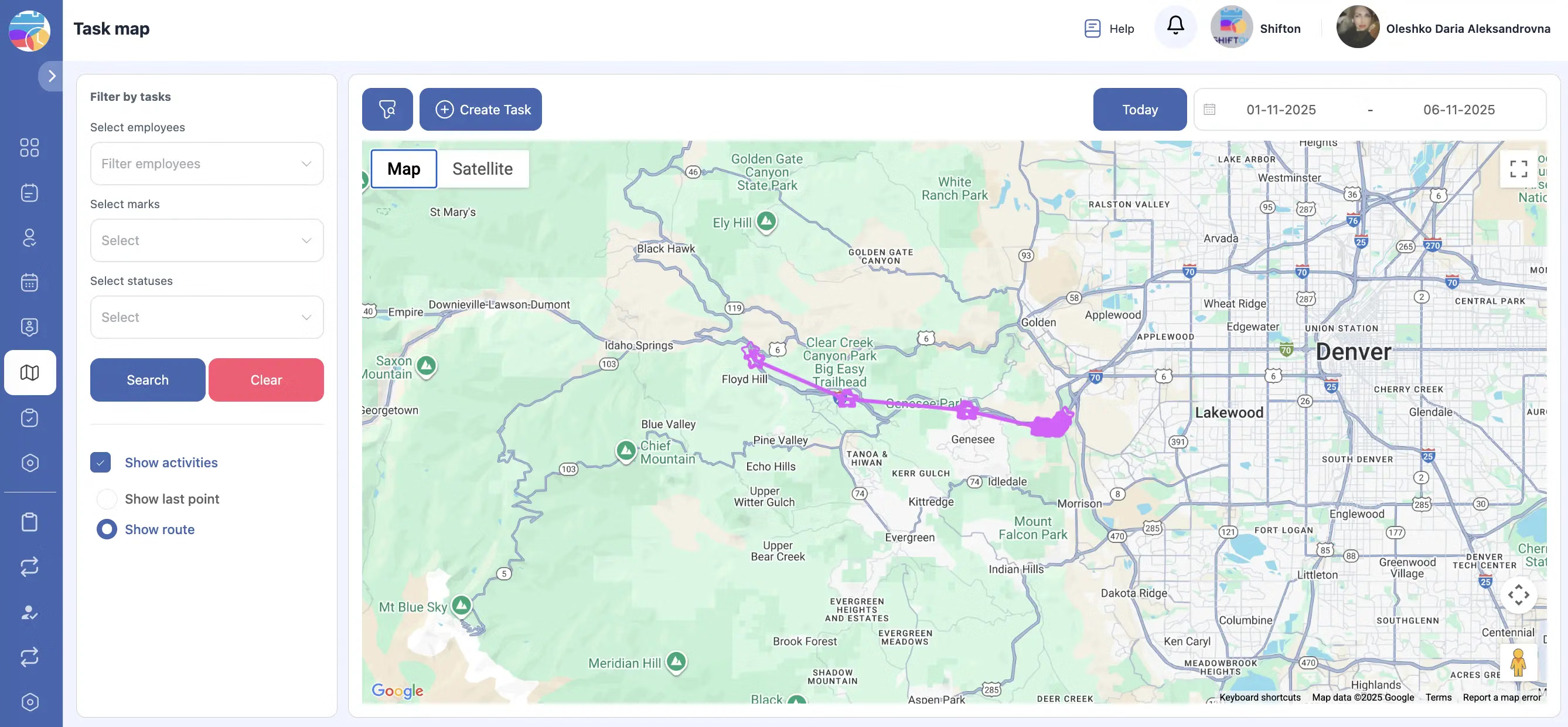
The route is the margin
An insect control business earns on visits completed per technician per day, and loses on driving. A route built by postcode order rather than by geography quietly removes one job a day from every van, which over a year is a technician's worth of capacity nobody hired.
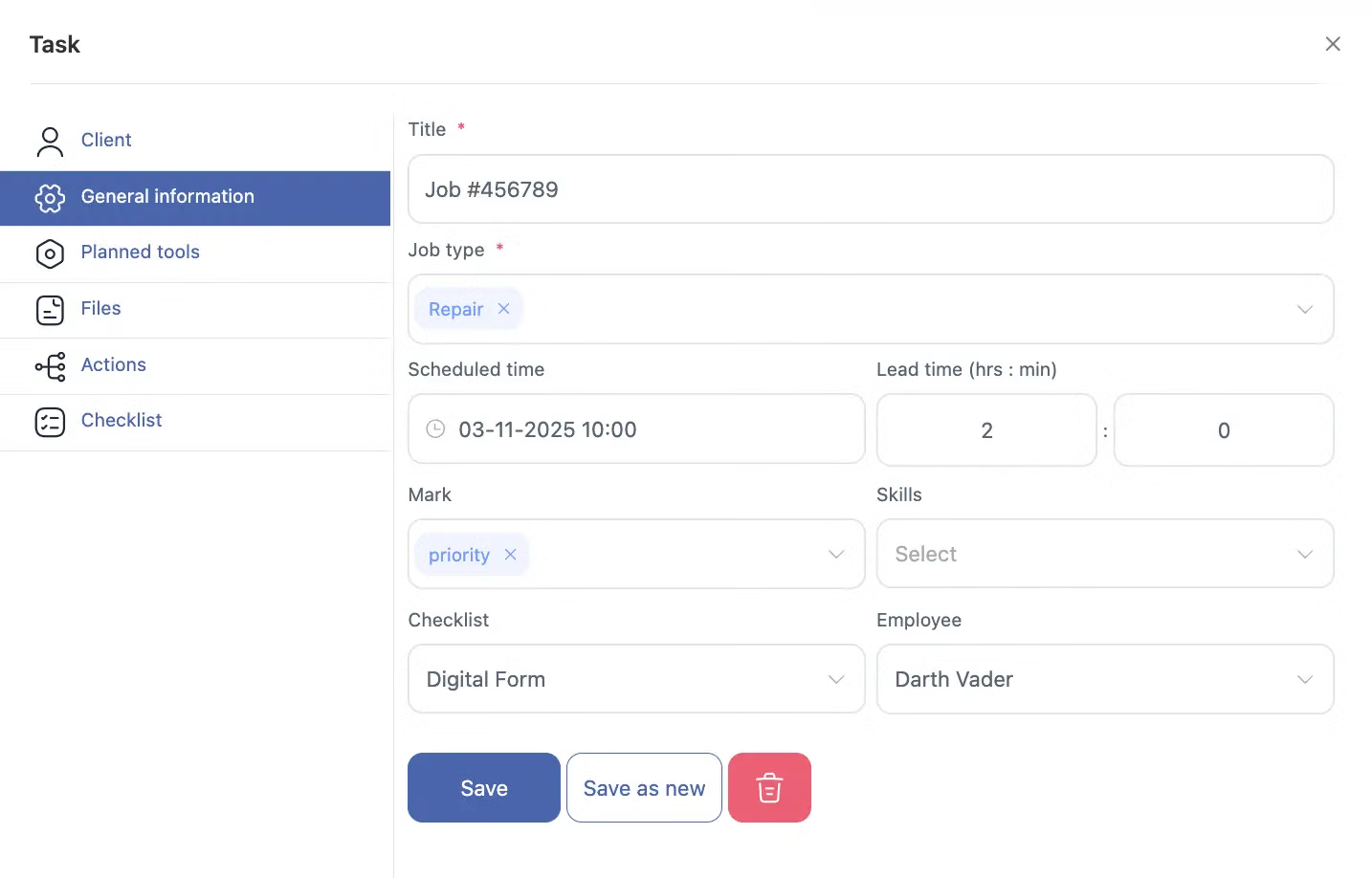
What was applied, where, and by whom
Every treatment is a record somebody may ask to see: the client, the next technician, an auditor, occasionally a lawyer. Written on a paper sheet in a van, it is a record in name only. Captured on the job, it becomes the site history the business runs on.
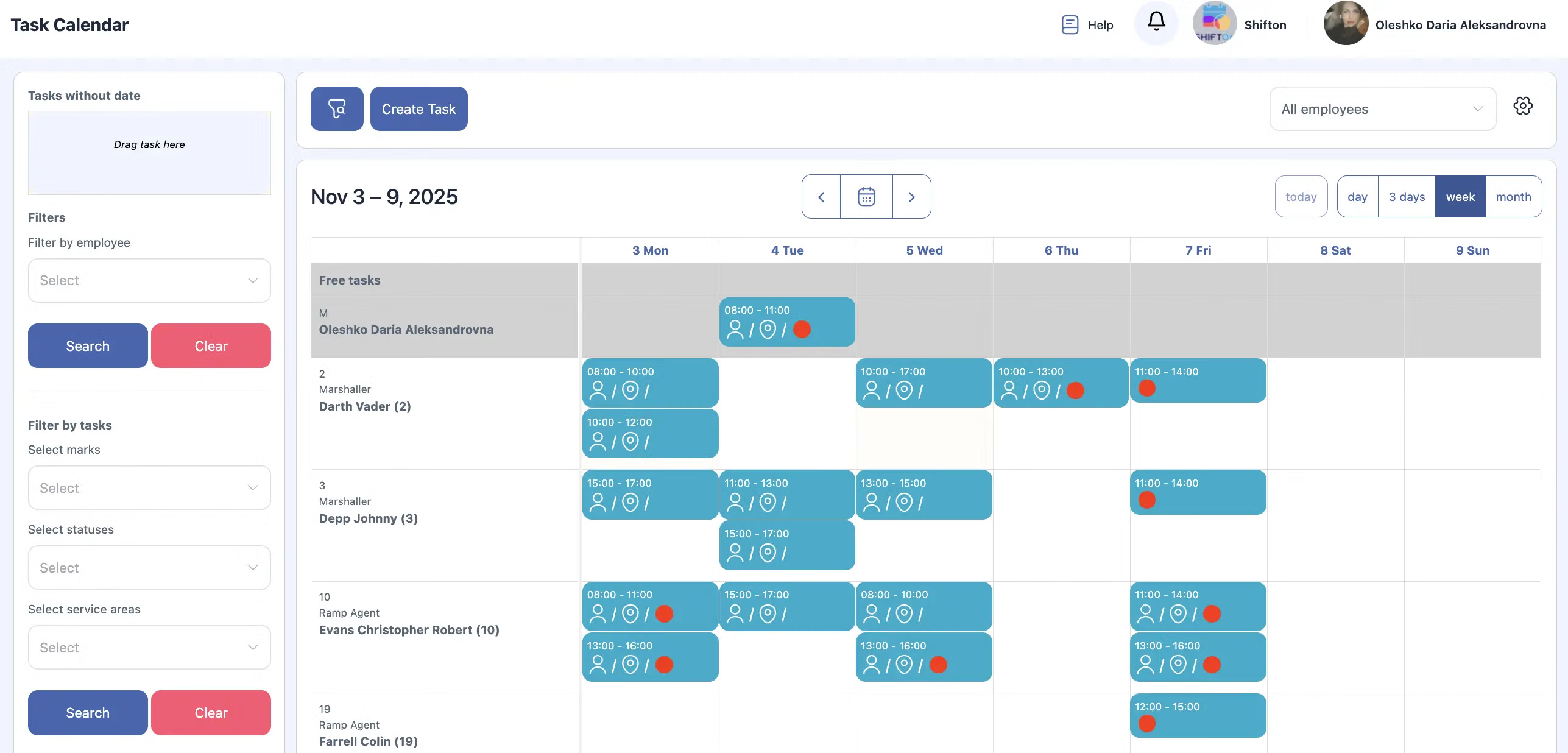
Recurring contracts that do not depend on memory
Commercial pest control is a subscription business wearing a field service uniform. Restaurants, warehouses and food producers buy a schedule of visits, and the revenue survives exactly as long as those visits keep appearing without anybody having to remember them.
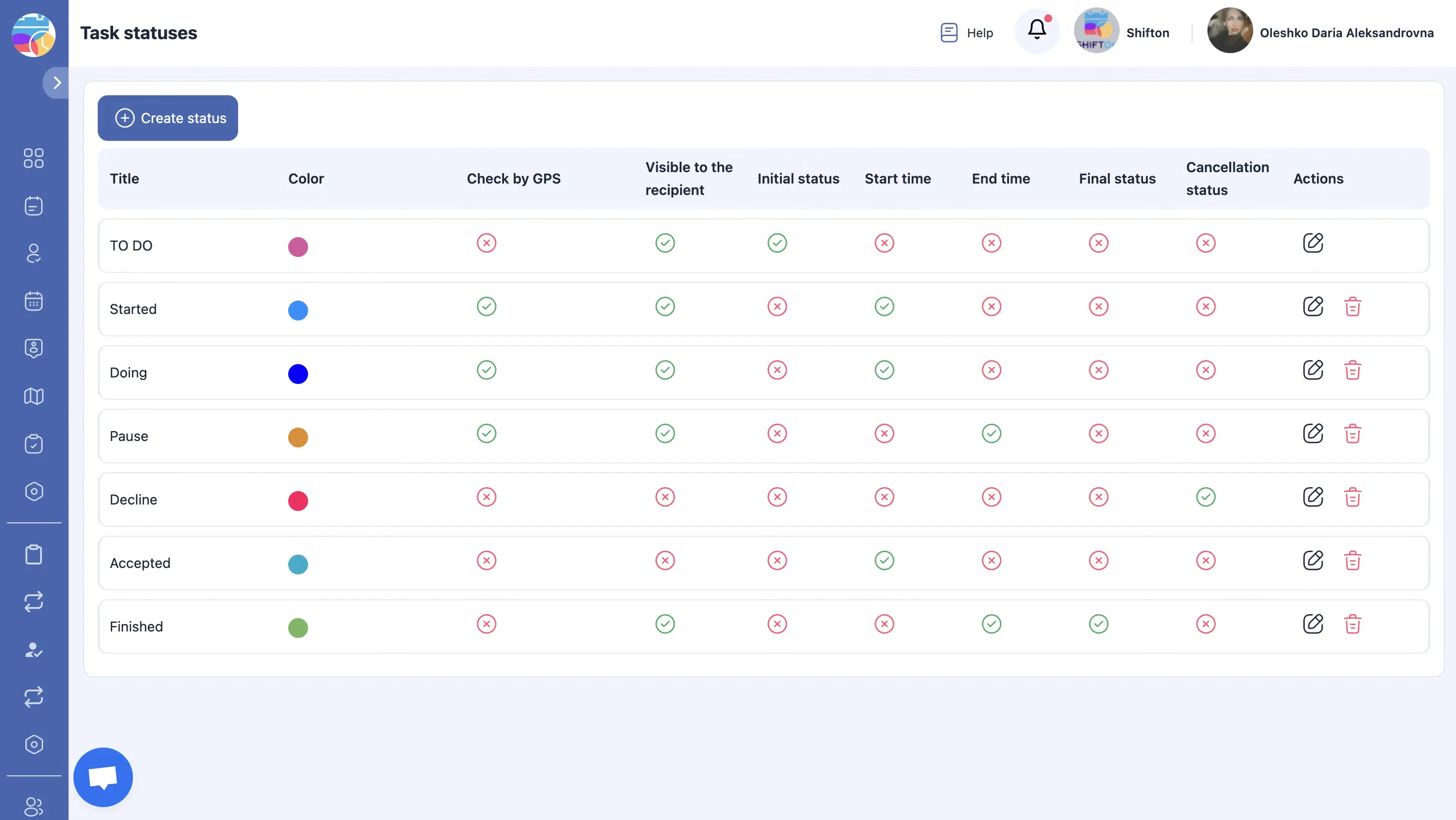
From the finished job to the invoice
Insect control is a high-volume, low-ticket trade: many jobs, small amounts, and administration that grows faster than revenue. The distance between a technician finishing a treatment and the business being paid for it is where the margin leaks.
Start with the Free Plan
No time limits. Get full access to core features and upgrade when you're ready.
Read the full guide to pest control software for insect control
Why insect control is harder to schedule than it looks
From the outside, insect control looks like a simple field business: a technician, a van, a list of addresses. The complication is that almost nothing about a job is known until somebody is standing in the property. An ant trail is twenty minutes or two hours depending on where it leads. A bed bug treatment depends on how many rooms are affected and whether the occupant prepared them. A cockroach problem in a restaurant kitchen is a different job at nine in the morning than at nine at night.
That uncertainty is why pest control business software is bought and why generic calendars are abandoned. The schedule has to survive being wrong, several times a day, without the office losing track of which clients are still expecting somebody.
The four records that decide whether the business works
The route
Capacity in this trade is measured in jobs per van per day, and the difference between a well-built route and a list in booking order is usually one job. Planning by geography rather than by the order the phone rang is the least glamorous improvement available and the one that shows up in revenue first.
The treatment
What was applied, at what concentration, in which rooms, under what conditions: this is the record that answers a complaint, informs the follow-up and demonstrates that the work was done properly. It has to be captured at the property, because a record written later is a summary of a memory.
The site history
Recurring infestations are diagnosed across visits, not within them. A technician who can see what the previous attendance found, which entry points were sealed and what was used last month approaches the job as the next step in a treatment plan rather than as a first visit to an unfamiliar building.
The contract
Commercial work is scheduled a year in advance and forgotten in a week. Visits that generate themselves, on the cadence the contract specifies, are the difference between a service that runs and one that is remembered when the client calls to ask why nobody came.
What the office stops doing
Most of the administration in a small pest control firm is reconstruction. Working out which jobs were finished from a stack of route sheets. Rebuilding hours on a Friday afternoon. Chasing a technician for the detail of a treatment because a client has queried it. Producing an invoice a week after the work because nobody had the paperwork.
When the job carries its own record, that work disappears rather than moving somewhere else. The visit is completed on the phone, the form is attached, the hours are already recorded, and the invoice is built from what was actually done. Pest control invoice software is not a separate purchase in that model; invoicing is simply what happens to a finished job.
What pest control scheduling software has to do beyond a calendar
Pest control scheduling software is often shopped for as a calendar with technicians attached, and that is why so much of it is abandoned within a year. A calendar answers where somebody is meant to be. A pest control management software package has to answer what happened when they got there, which visit it belongs to in a course of treatment, and whether the client has been invoiced for it.
That is also the honest answer to whether a firm needs a pest control CRM. Customer history in this trade is not a list of contacts, it is a list of properties with their own infestation histories. A pest control work order that arrives with last month's findings attached is worth more than a contact record with a phone number on it.
Small operators are usually looking for pest control software for small business reasons: two or three technicians, no back office, and no appetite for a six week implementation. Mobile pest control software that a technician can use on the first day without training matters more, at that size, than any feature comparison.
Domestic and commercial on one board
Almost every insect control business runs two trades at once. Domestic work arrives by phone, is urgent, is priced per job and is won on how quickly somebody can attend. Commercial work is contracted, scheduled, audited and won on the quality of the record. They compete for the same technicians on the same day.
Keeping them on one board is what makes that competition visible. An urgent domestic callout inserted into a route shows what it displaces. A commercial round that keeps being pushed shows a contract at risk. Two separate systems hide exactly the trade-off the business needs to see.
Honest limits
Shifton Field Service is workforce and job software. It plans routes, holds the job and its forms, records what was done, tracks hours and turns the result into invoices and reports. Up to two technicians, the board, the app, job forms and reporting carry no charge at all, and the modules that do are inventory, invoicing, location control and the customer portal.
It is not a regulatory chemical register and it is not a licensing system. Pest control businesses carry obligations about product records, technician certification and, in some markets, notification of treatments, and those obligations are defined by the regulator rather than by any software vendor. The right approach is to treat the job record as evidence of what was done and to check separately what the local regime requires of it.
Frequently Asked Questions
Can technicians record treatments without a signal?
Yes. The job, the forms and the checklists are held on the device, so a technician in a basement, a plant room or a rural property completes the record offline. Photographs, signatures and product details sync when the phone reconnects.
How are recurring commercial contracts handled?
Recurring jobs generate planned visits ahead of time for each contracted site, each with its own checklist and history. The board shows contracts falling behind schedule, which is usually the first sign of a renewal about to be lost.
Can we see what was applied at a property last time?
Each premises keeps its own visit history. The technician attending sees previous findings, the products used and the photographs taken, so a follow-up treatment starts from the last visit rather than from the client's description of it.
Does it plan routes around where the jobs are?
Jobs are planned by area rather than by the order they were booked, and urgent callouts can be placed into the route that is genuinely nearest. Dispatch sees the day live, so a route running late can be changed while that still helps.
Can it handle both domestic callouts and commercial rounds?
Both sit on the same board. One-off domestic treatments, warranty revisits and contracted commercial rounds are all jobs with their own durations and checklists, which is what stops a two-hour treatment being booked into a thirty-minute slot.
What does a small pest control firm get for nothing?
Up to two technicians costs nothing, permanently, and that includes the board, the app, job forms and reporting. Invoicing, inventory, location control and the customer portal are charged per employee per month on top.
Does it track chemical stock on the van?
Inventory is a paid module and covers what is held and what is used, so consumption can be read against the treatments recorded. It is stock control for a field business, not a regulatory chemical register, and it does not replace the licensing records a pest control business is required to keep.

Ready to transform your field operations?
Join thousands of field service companies that trust Shifton to run smarter every day.