

Cleaning Management Software for Crews and Contracts
Contract rounds, one-off deep cleans and cover shifts on one board, with the checklist, the photos and the hours on the job.

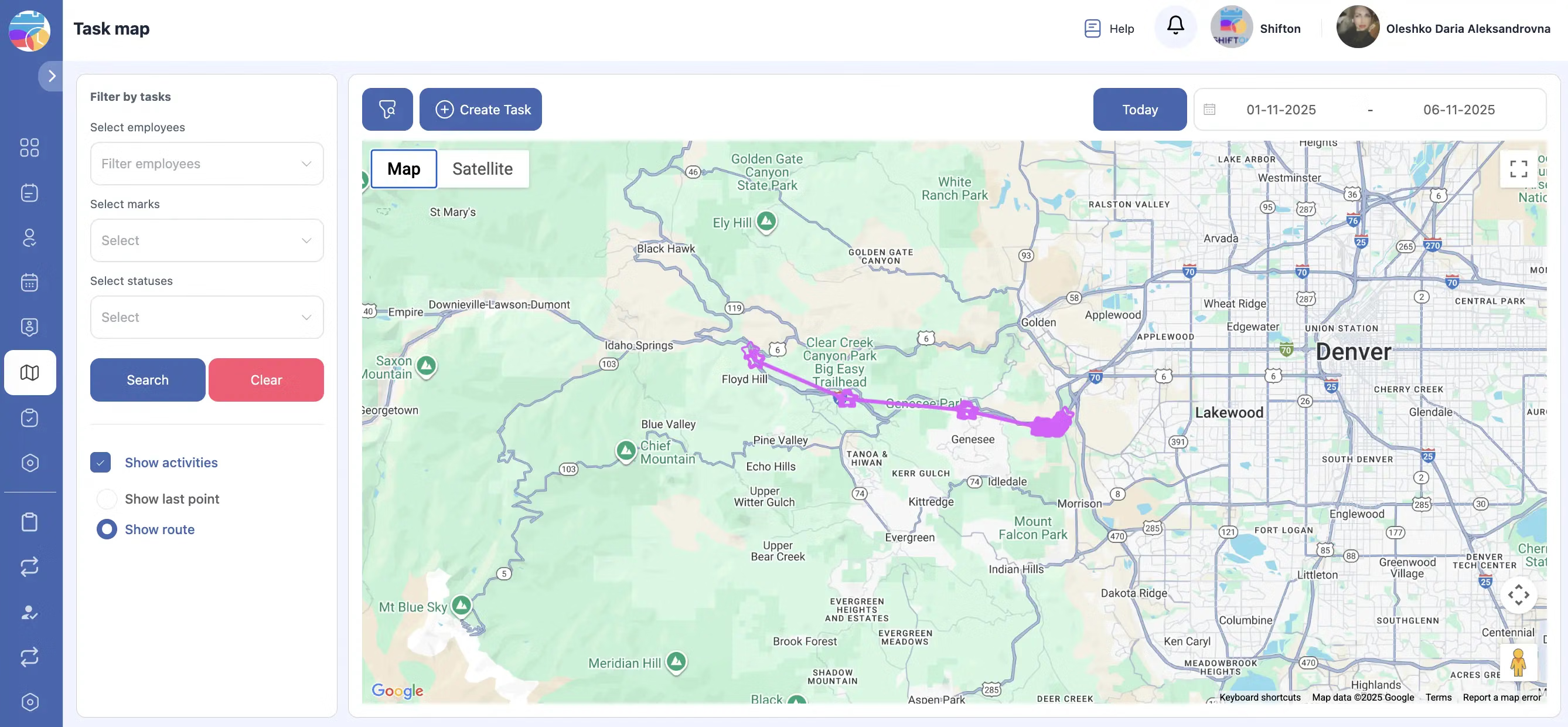
Cover is the whole problem
A cleaning contract is a promise that somebody will be at a site at a particular time, week after week. Most of the operational work is not cleaning, it is covering: sickness, holidays, a resignation on a Friday, a new site starting on Monday. Held in a spreadsheet, cover is a phone tree. Held on a board, it is a decision you can make in a minute.
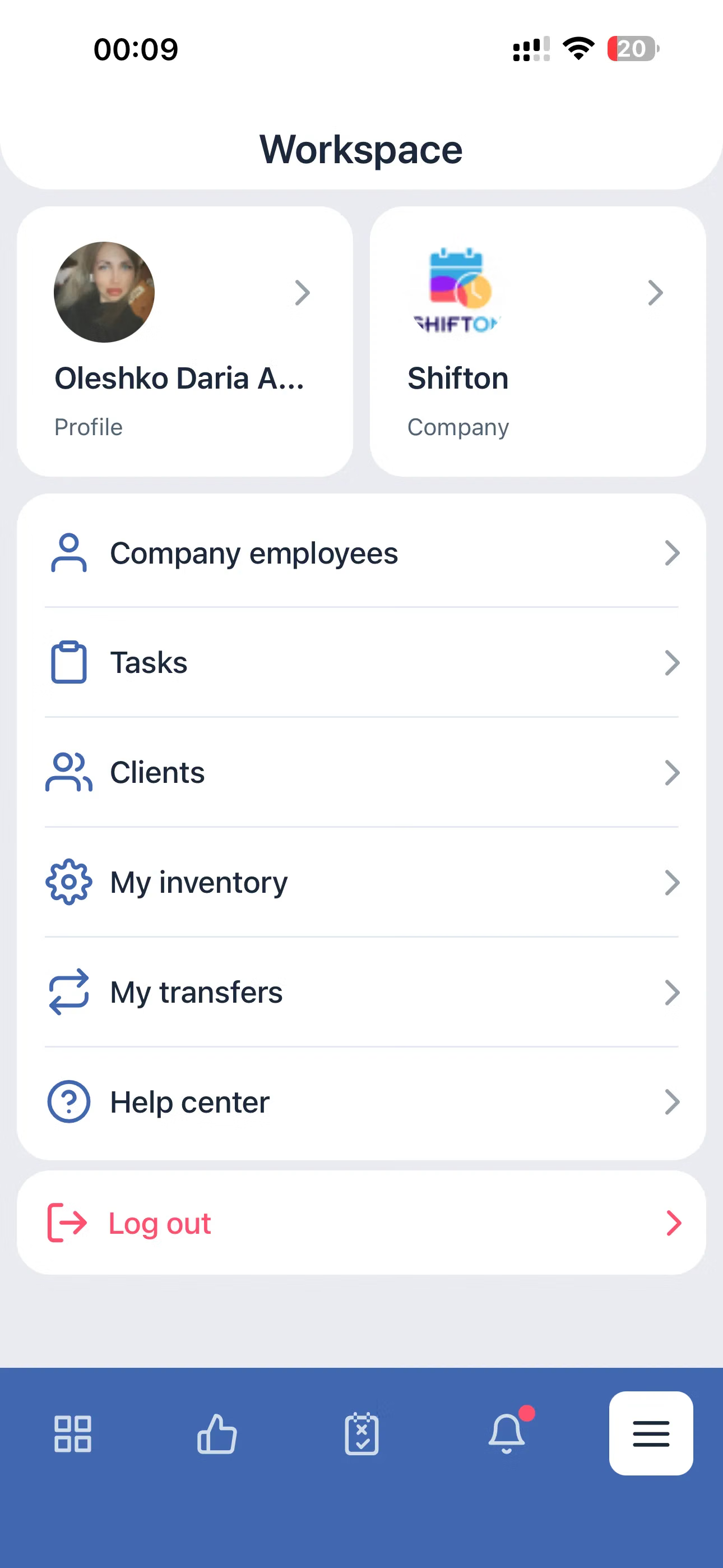
Proof the site was cleaned, not just visited
Cleaning is bought on trust and lost on doubt. A client who cannot see what was done assumes the worst on the day they find a bin unemptied. A visit record with a completed checklist and photographs changes the conversation from an argument into a review of evidence.
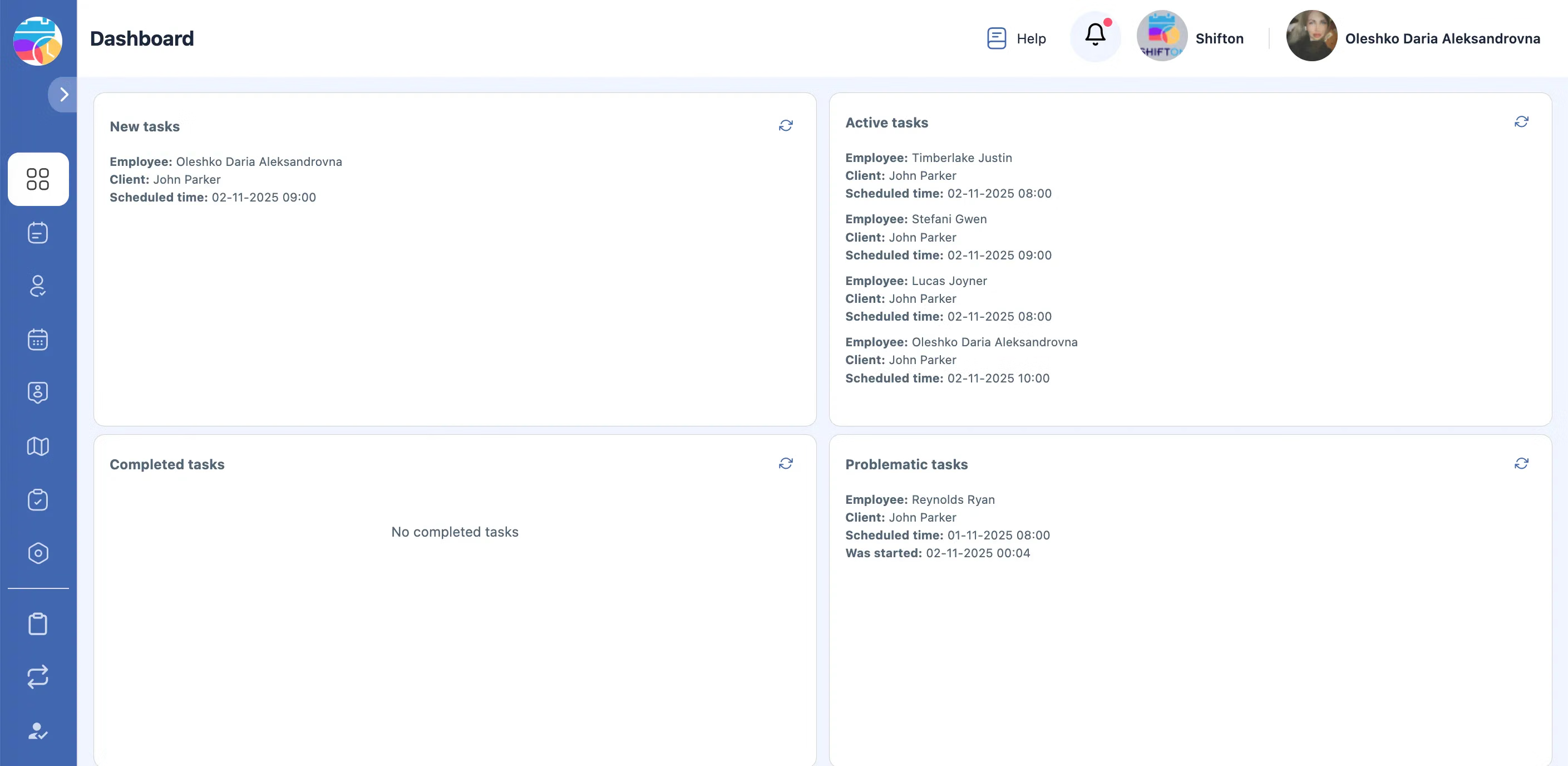
Hours against the contract, not against the week
Cleaning margin is thin and made entirely of hours. A site staffed for two hours that takes two and a half is losing money quietly every single visit, and the loss only appears at the end of the year in a number nobody can explain. Recording time on the job makes it a weekly fact.
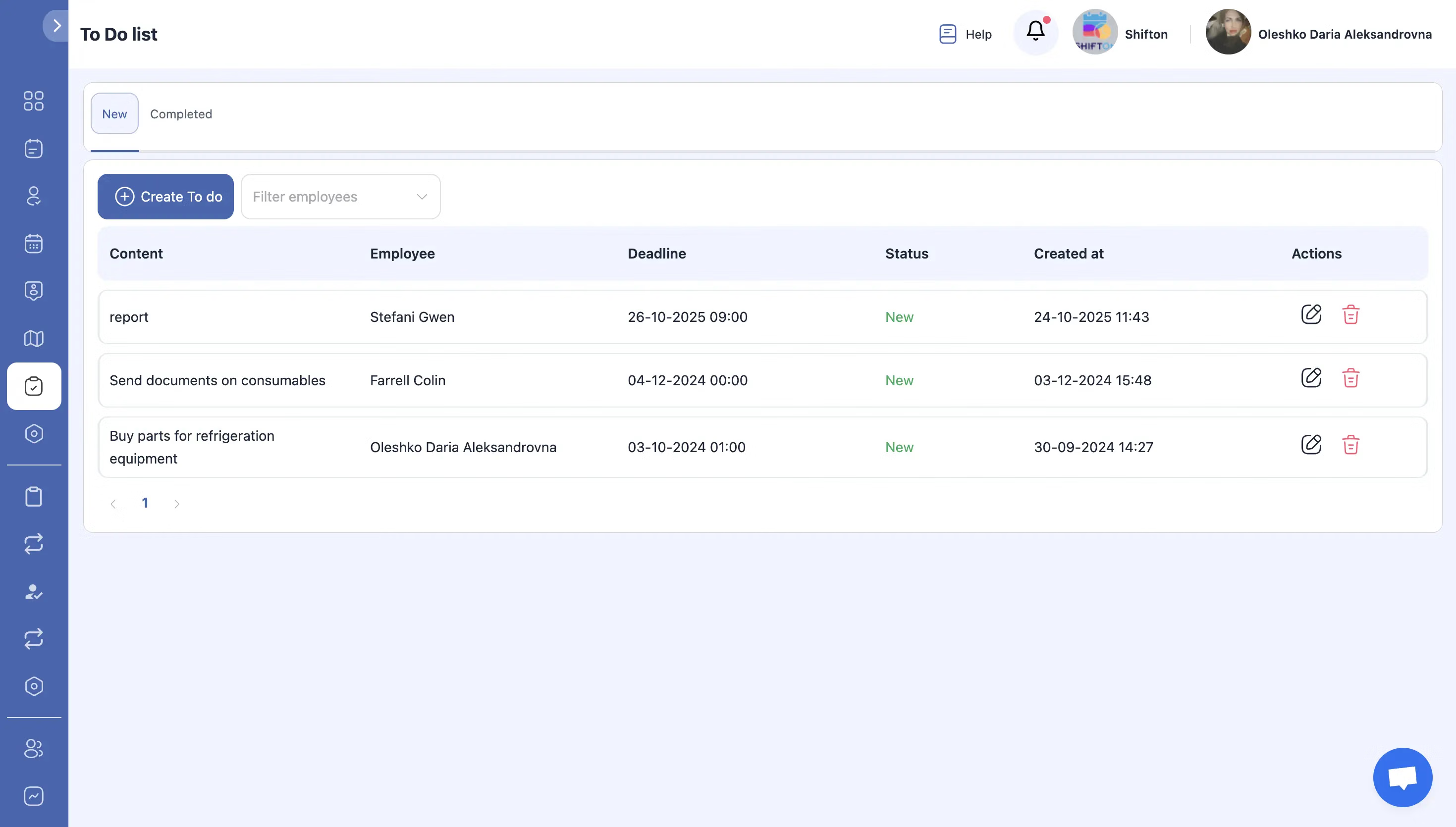
Consumables, extras and a bill that matches the month
Consumables are ordered centrally and consumed on site, and the gap between the two is where a cleaning budget disappears. Periodic work such as carpet or window cleaning is agreed on the phone and forgotten by billing. Both belong on the job, where the invoice can find them.
Start with the Free Plan
No time limits. Get full access to core features and upgrade when you're ready.
Read the full guide to cleaning management software
What a cleaning company is really managing
From the outside a cleaning business sells cleaning. From the inside it manages attendance. The specification is agreed once and rarely changes. What changes every day is who is available, who is late, who has left, and which site is uncovered tomorrow morning. Software that helps a cleaning company is software that makes cover fast and attendance provable, in that order.
This is why generic scheduling tools disappoint here. They are built for booking appointments with customers. A cleaning operation is not booking appointments, it is staffing recurring slots across dozens of sites and repairing that staffing daily.
Cover, and the six in the morning problem
The defining moment in contract cleaning happens before most offices open. Somebody is ill, a site expects a cleaner at seven, and a supervisor is working through a contact list. The quality of the outcome depends entirely on whether that supervisor can see who is free, who is near and who is qualified for the site.
Reassignment has to be one action
If cover takes six phone calls it will sometimes not happen. If it takes three taps and both people are notified, it happens every time. That is the whole argument for holding the schedule somewhere both the office and the cleaners can see, rather than in a spreadsheet that only one person can edit.
Proof of service is the product
Cleaning is judged on the one thing that was missed, not the ninety that were done. Without a record, every complaint is a matter of opinion and the client is always more certain than you are. With a completed checklist, time stamps and photographs, the same complaint becomes a specific question with a specific answer, and often the answer is that the item was not in the specification at all.
That record also protects the good cleaners. A site that complains regularly and a record that shows the work being done properly is a contract problem, not a staff problem, and telling those two apart is impossible without evidence.
Hours are the margin
In a business where labour is most of the cost, the difference between staffed hours and worked hours is the difference between a profitable contract and one that quietly funds itself out of another. Fifteen minutes over, per visit, five visits a week, is more than a hundred hours a year on a single site.
Recording time against the site rather than against the payroll week is what makes this visible. It also answers the question that comes up whenever a contract is retendered: what does this site actually cost us to deliver.
Periodic work and consumables
Two things routinely fall out of cleaning billing. The first is periodic work: carpets, windows, hard floor treatment, agreed by phone weeks earlier and never invoiced. The second is consumables, ordered centrally, consumed on site and reconciled by nobody. Both are recoverable if they are recorded on the visit they belong to, and neither is recoverable from memory at the end of the month.
Choosing without regret
Three practical tests. Can a supervisor cover an absence in under a minute from a phone. Can a cleaner complete a site checklist with no signal in a basement. Can the month be invoiced from the visits recorded rather than from a spreadsheet maintained in parallel.
A tool that fails any of those will be used for a month and then quietly replaced by a group chat, which is where most cleaning schedules actually live.
Starting on the free plan
A two-person operation runs free with no time limit, including scheduling, digital job forms, the mobile app and reports. That is enough to run a handful of contracts properly and to see whether the way of working fits.
Paid modules are added as the business grows into them. Invoicing when billing is the worst day of the month. Inventory when consumables stop adding up. Location control when sites are spread out. The customer portal when clients start asking to see their own visit history. Each carries a free trial of up to 55 days.
The components are documented separately: task management and dispatch, digital job forms, the mobile app, job history, invoicing and reports, with prices on the pricing page.
Frequently Asked Questions
How does cleaning software handle cover when somebody calls in sick?
The board shows who is free and who is close enough to reach the site in time. The visit is reassigned in a few taps, and both the new cleaner and the supervisor see the change on the mobile app immediately, so cover stops being a chain of phone calls at six in the morning.
Can we prove to a client that a site was cleaned properly?
Yes. Each visit carries the site checklist completed on the phone, photographs with time stamps and a record of who attended and for how long. The client conversation moves from opinion to evidence, and the history for that site opens in one place.
Can I see the hours worked on each cleaning contract?
Hours are recorded against the site rather than against the day, so planned time and actual time can be compared per contract in reports. A site that consistently runs over its staffed hours is visible in weeks rather than at the end of the financial year.
Does the app work in buildings with no mobile signal?
The mobile app for iOS and Android holds the job and the checklist on the device. Basements and plant rooms without coverage are recorded normally and everything syncs when the phone reconnects, so nothing is written on paper and typed up later.
Can we track consumables issued to each site?
With the inventory module, yes. Consumables are recorded against the site where they are used, stock is reduced automatically and low levels are flagged before a cleaner arrives to find there is nothing to work with.
Is commercial cleaning software usable by a very small company?
Teams of two or fewer run on the free plan with no time limit: scheduling, digital job forms, the mobile app and reports are included. Paid modules such as invoicing, inventory, location control and the customer portal are added as contracts are won.
What does it cost as the team grows?
Above two employees the platform is priced per employee per month, and every paid module carries a free trial of up to 55 days. That is long enough to run a full quarter of contract cleaning through invoicing before deciding to keep it.



Ready to transform your field operations?
Join thousands of field service companies that trust Shifton to run smarter every day.