

Ready Mix Truck Dispatch: Loads, Drivers and Delivery Records
Orders broken into loads, loads assigned to trucks and drivers, and what happened on site written down before the drum is washed out.

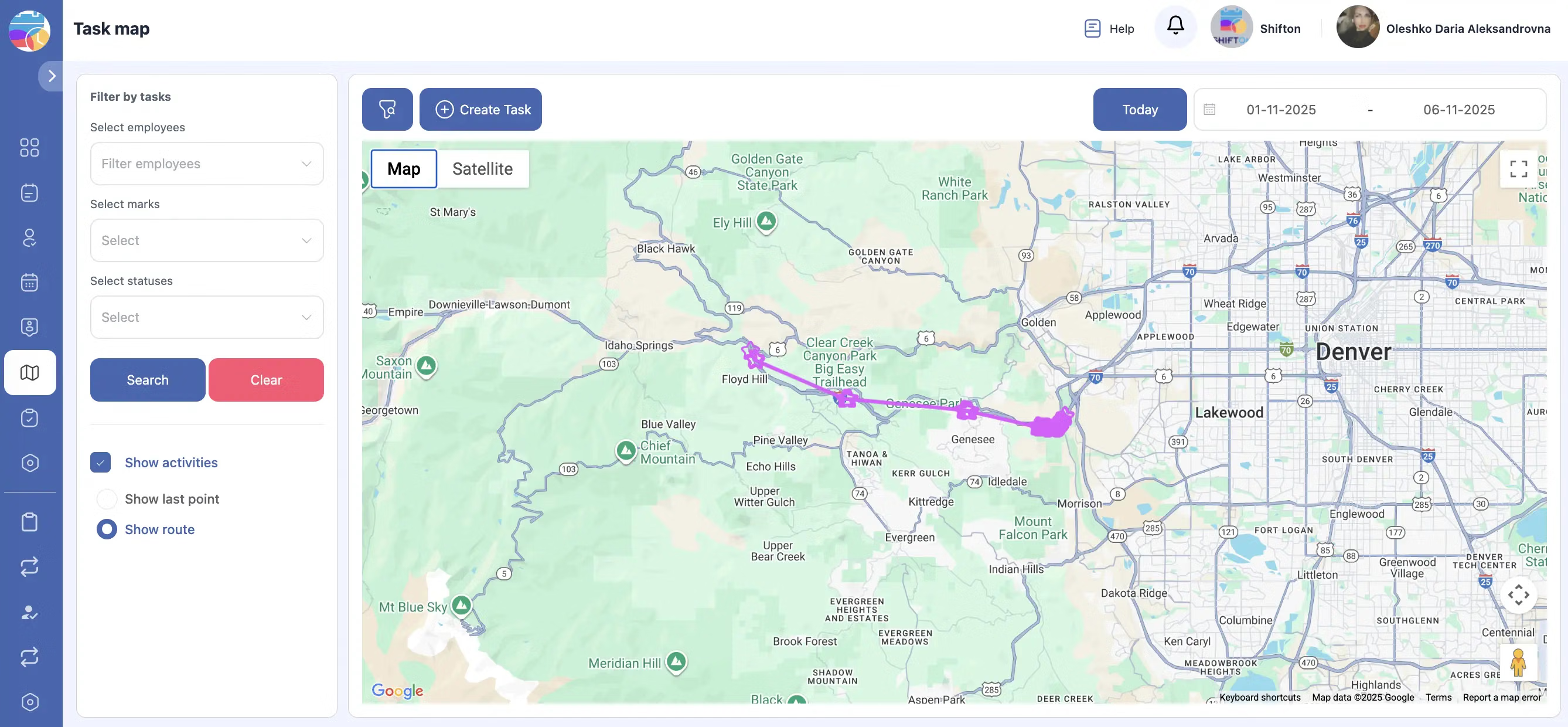
An order is a series of loads
A customer orders sixty cubic metres of a given mix for seven in the morning. The plant sees eight or nine truckloads, each with its own driver, its own batch time and its own journey. Dispatch works at the level of the load, and that is where the records need to be.
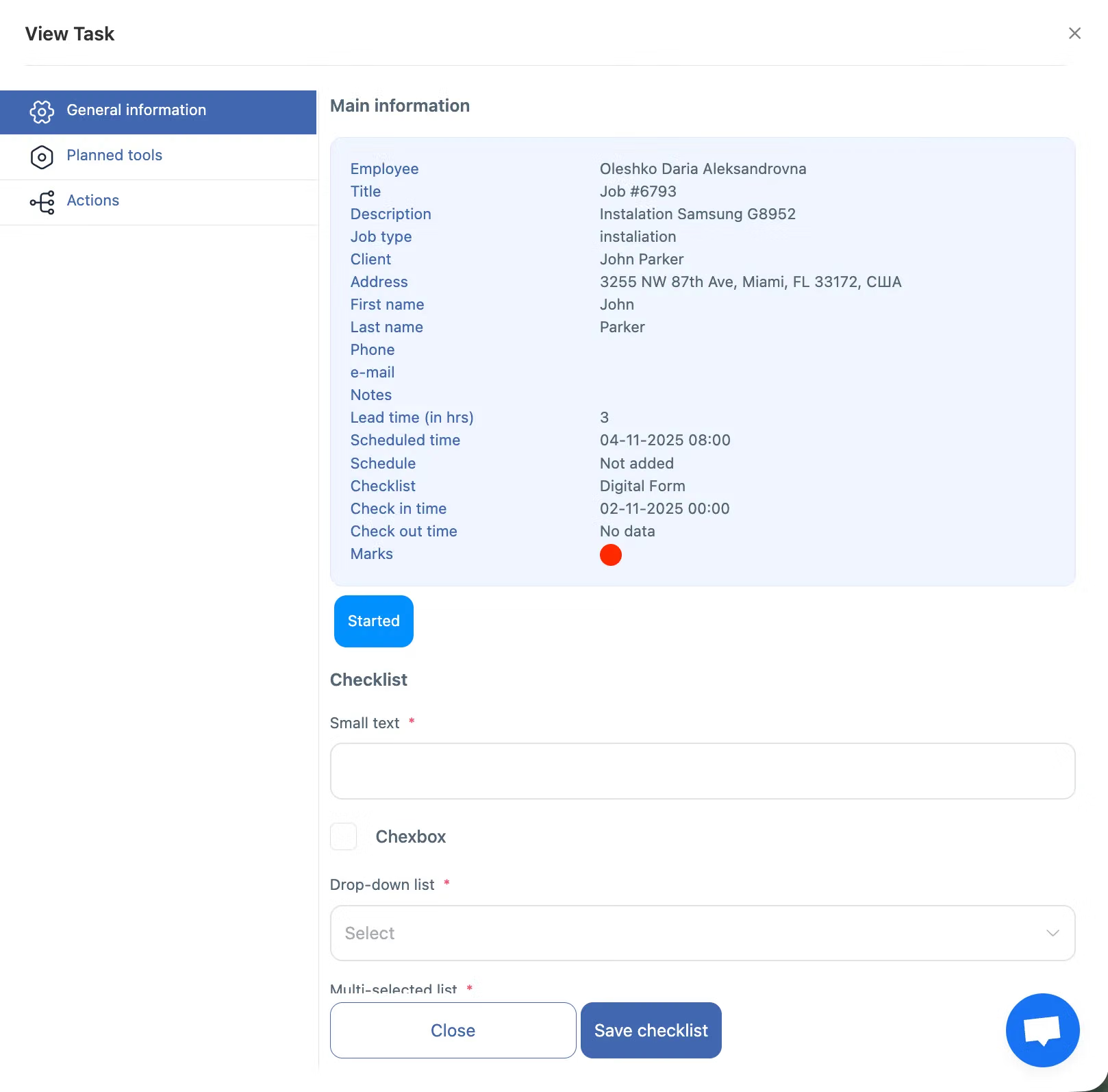
Spacing trucks on a pour
Send the trucks too close together and they queue at the site, with the clock on the concrete running. Send them too far apart and the pour stalls, the finishers stand around and a cold joint becomes a real risk. The dispatcher adjusts the gap as the pour goes on.
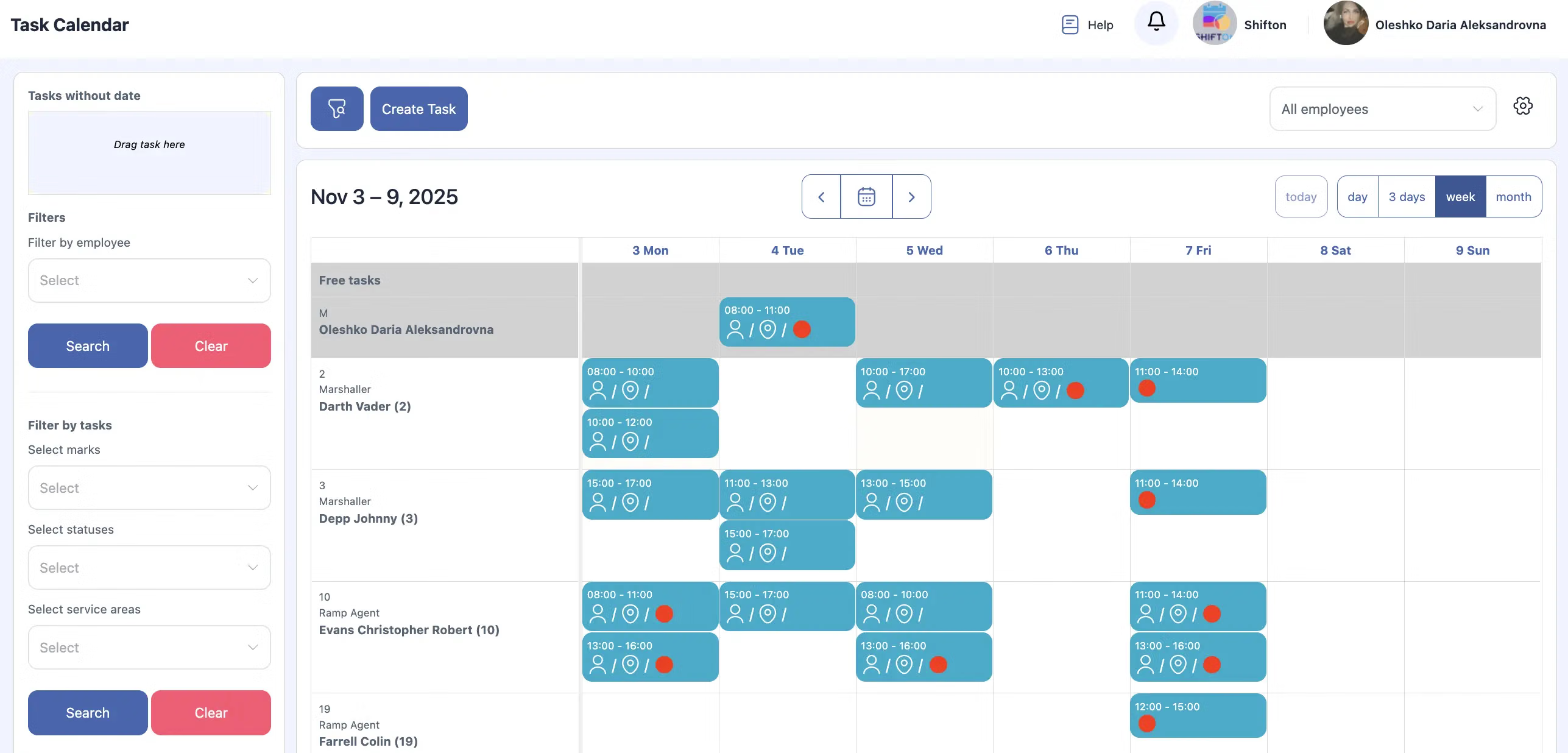
What happens on site gets written down
Most disputes about ready mix are about what happened after the truck arrived: how long it waited, whether water was added, how much came back. Drivers are the only witnesses, and a delivery record filled in on the phone is their evidence.
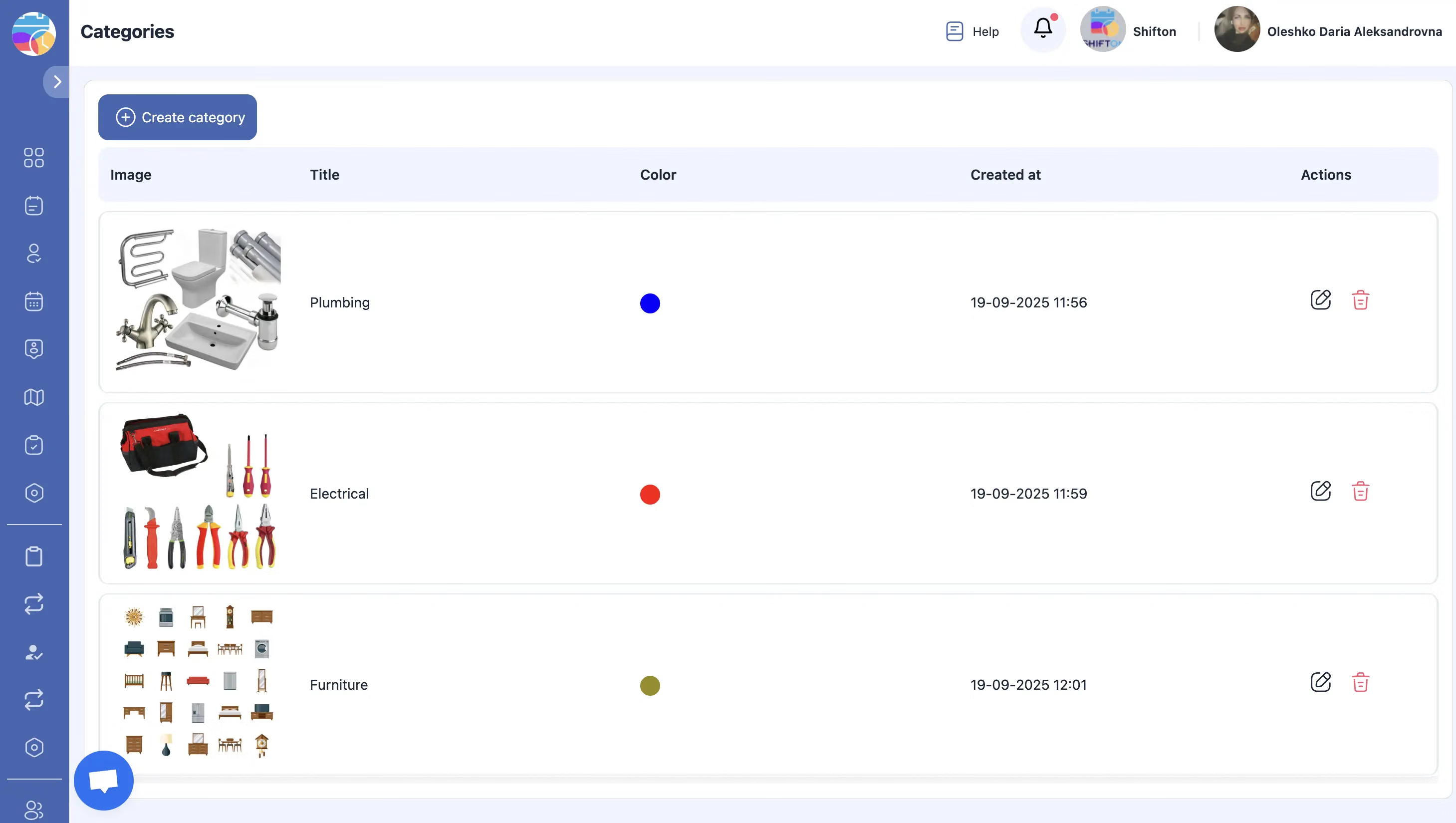
Trucks and drivers ready for the morning
A mixer fleet runs early. Trucks that fail a walkaround check at six o'clock do not make the first loads, and a driver who went home at the limit of his hours cannot take the late pour.
Start with the Free Plan
No time limits. Get full access to core features and upgrade when you're ready.
Read how ready mix plants dispatch loads and record deliveries
Why ready mix producers look for concrete dispatch software
Concrete is a product with a clock on it. From the moment water meets cement, the load has a limited time to be placed, and the specification says how long. Concrete dispatch software is really about keeping that clock in view: which truck is loaded, which is on the road, which is waiting at a site that is not ready.
In a small plant the dispatcher does this with a radio, a whiteboard and a lot of memory. It works until two big pours overlap, a pump breaks down on one of them and three trucks need redirecting at once. At that point the question is not who is free but who is closest to being free, and the whiteboard cannot answer it.
Ready mix dispatch software and the working day
Ready mix dispatch software has to handle a day that starts before dawn and changes every hour. Orders are confirmed the afternoon before, but weather, site readiness and pump availability can cancel or delay them in the morning. Short loads, small domestic orders and sites with restricted delivery hours all have to be fitted around the big pours.
Cancellations and returned concrete
When a site cancels after batching, the plant is left with concrete that has to go somewhere. Recording why it was returned, and who cancelled, supports the charge for it and shows which customers do it repeatedly.
Pumps and skips
Many producers run pumps or work alongside pump hire firms. The truck and the pump need to arrive in the right order, and if the pump is late, trucks queue. Adding the pump as a job on the same board gives the dispatcher one picture.
Drivers, hours and the evening pour
Mixer drivers start early and some sites only allow deliveries after the shops close or before traffic builds. A driver who began at five cannot sensibly take the eight o'clock evening slab. Seeing each driver's hours so far on the day, next to the loads still to go, stops the dispatcher from promising a delivery nobody can make.
Owner-drivers and hired trucks add another layer. They need the same load details and the same delivery form, and their times feed into what they are paid, so the records have to be as complete for them as for the company's own drivers.
Records that protect the producer
When a slab cracks or cube results come back low, the producer is asked for the delivery records. Batch time, arrival time, discharge time, water added on site and the customer's signature are the facts that matter. If they were written on a crumpled ticket in a cab, they may not survive. If they were entered on the phone and stored with the load, they are there when needed.
What Shifton Field Service does
It shows every order and load on one board, assigns them to trucks and drivers, gives drivers delivery forms and vehicle checklists on their phones, and keeps times, signatures, photos and hours per load for reporting. A plant with just two people on the payroll can run the board, app, forms and reports free and for good; invoicing, stock, GPS location control and the customer portal come as paid modules.
It is not batching software, it does not read data from mixer drums or truck trackers, and it does not produce the legal delivery ticket printed at the plant. It organises the drivers and loads and keeps a clear record of each delivery.
Frequently Asked Questions
Can one order be split into loads for different drivers?
Yes. Each load is set up as its own job under the order, assigned to a truck and driver on the board, so the dispatcher can see which loads are out and which are still at the plant.
How do drivers record arrival and discharge times?
They update the load on the phone as they reach the site, start discharging and finish. The times are stored with the delivery and show up in reports.
Can we record water added on site and who asked for it?
Yes. The delivery form has fields for water or admixture added and the name of the person who requested it, followed by a customer signature.
Can we bill waiting time on site?
Arrival and discharge times are on record, so waiting time can be worked out per load. Turning it into an invoice line needs the paid Invoicing module.
Can drivers do their daily truck checks in the app?
The walkaround is a checklist on the phone, completed before the first load. A failed item can be passed to the workshop as a repair job.
Is there a no-cost option for a small plant with two drivers?
There is. Two employees or fewer pay nothing for the dispatch board, the app, forms and reports, with no deadline. Invoicing, stock, GPS location control and the customer portal are bought separately.
Does it control the batching plant?
No. It does not connect to batching controls, weighbridges or truck telematics. Batching stays in your plant system; this handles the people, loads and records around it.


Ready to transform your field operations?
Join thousands of field service companies that trust Shifton to run smarter every day.