

Extrusion Welding Jobs, Seam Records and Crews in One Place
Site and shop work planned together, seam logs completed where the weld is made, and every test and patch traceable to its welder.
Conditions decide whether you can weld
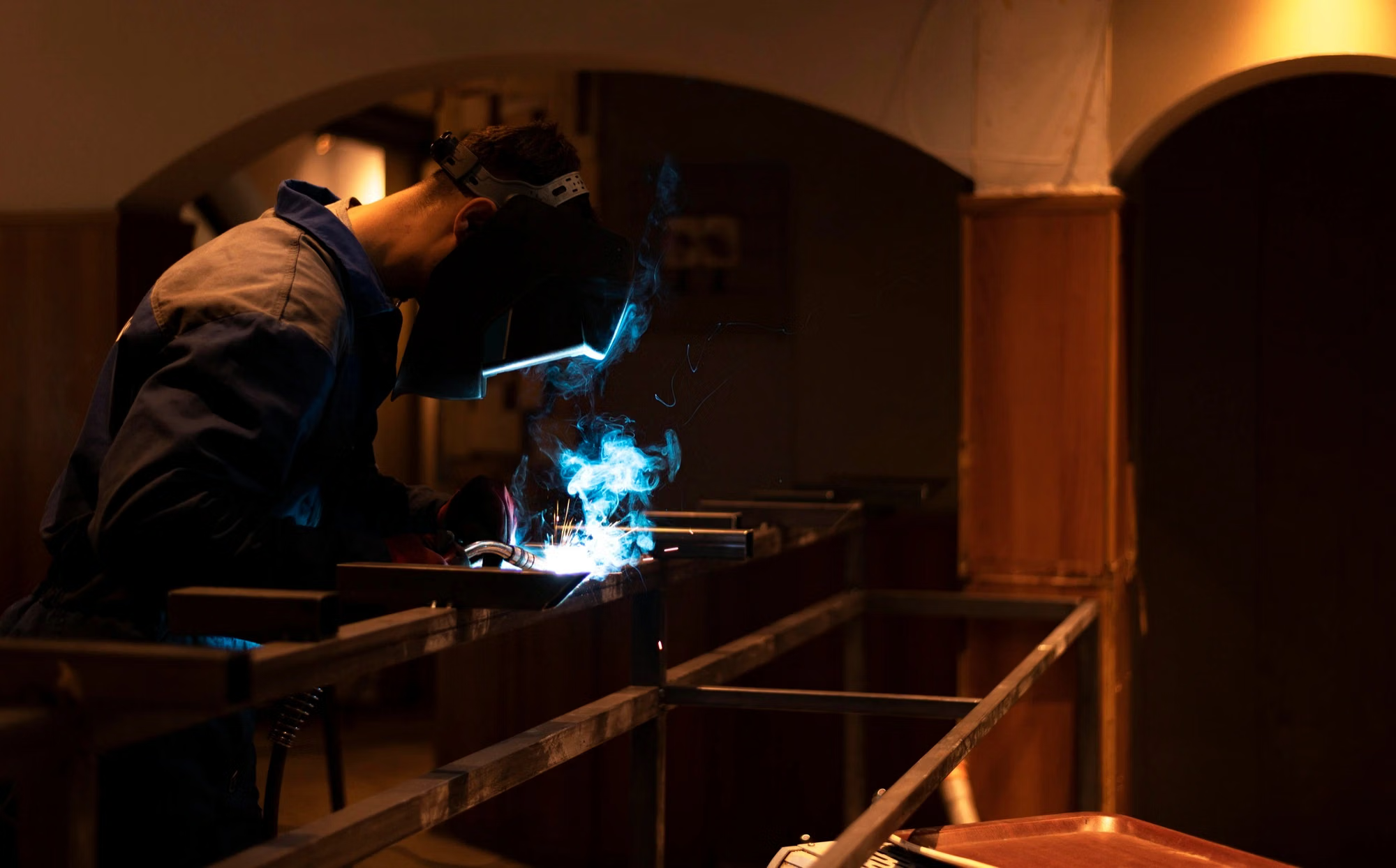
Polyethylene and polypropylene do not forgive bad conditions. Cold sheet, wind across the seam, dew on the liner or dust in the overlap all weaken a weld that looks fine from above. Good crews check before they start and write down what they found.
Every seam needs a record
On lining jobs the client and the quality engineer want to know who welded each seam, with which machine, at what settings and on what day. On tanks and fabrications they want the same, joint by joint. Paper seam logs get wet, lost or filled in at the end of the week from memory.
Testing and repairs
Extrusion welds are tested non-destructively on site, typically with a vacuum box or a spark tester, and samples are cut for peel and shear tests. Anything that fails is patched and tested again. Each of those steps needs to point back to the original seam.
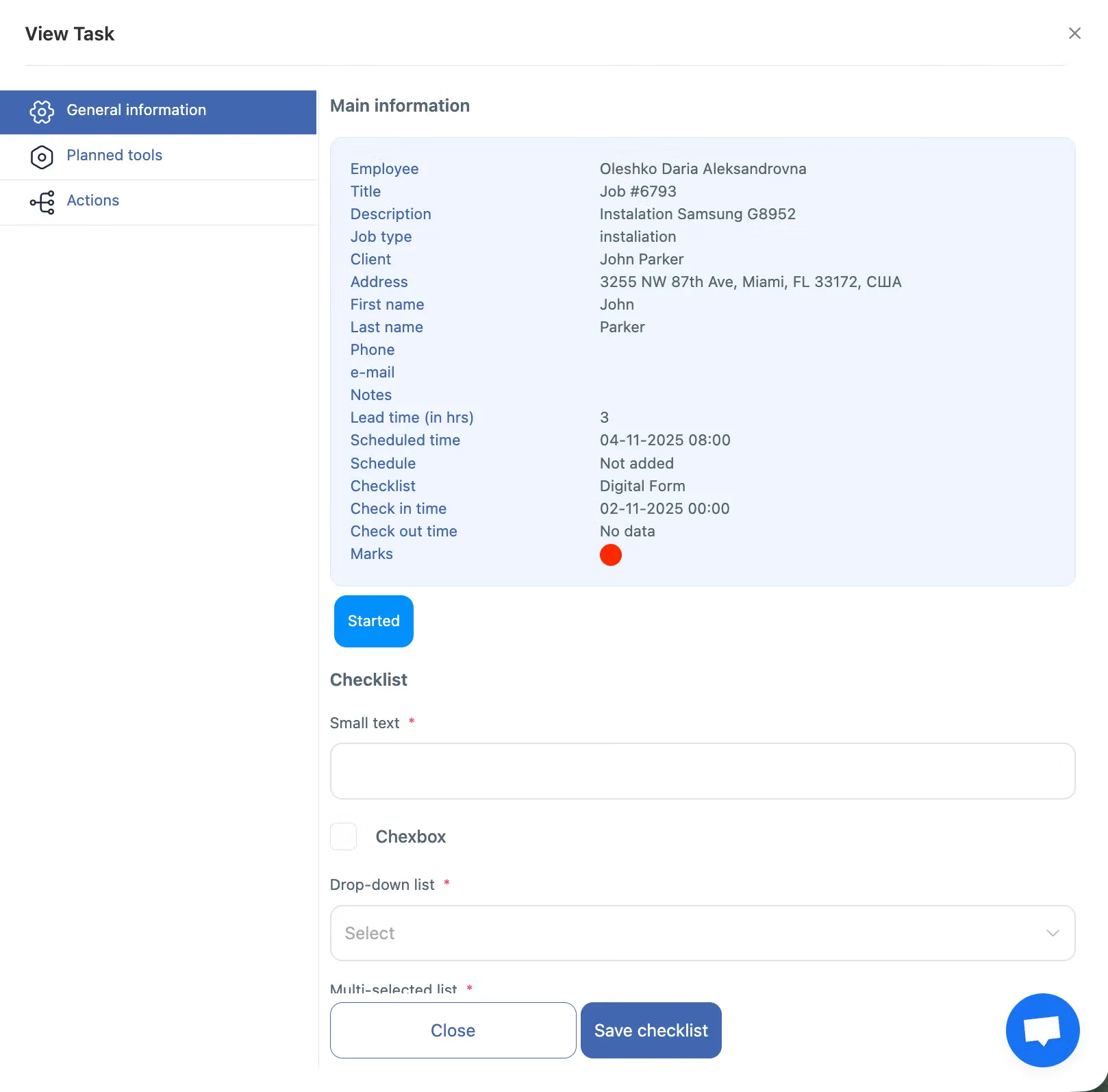
Shop fabrication and site installation
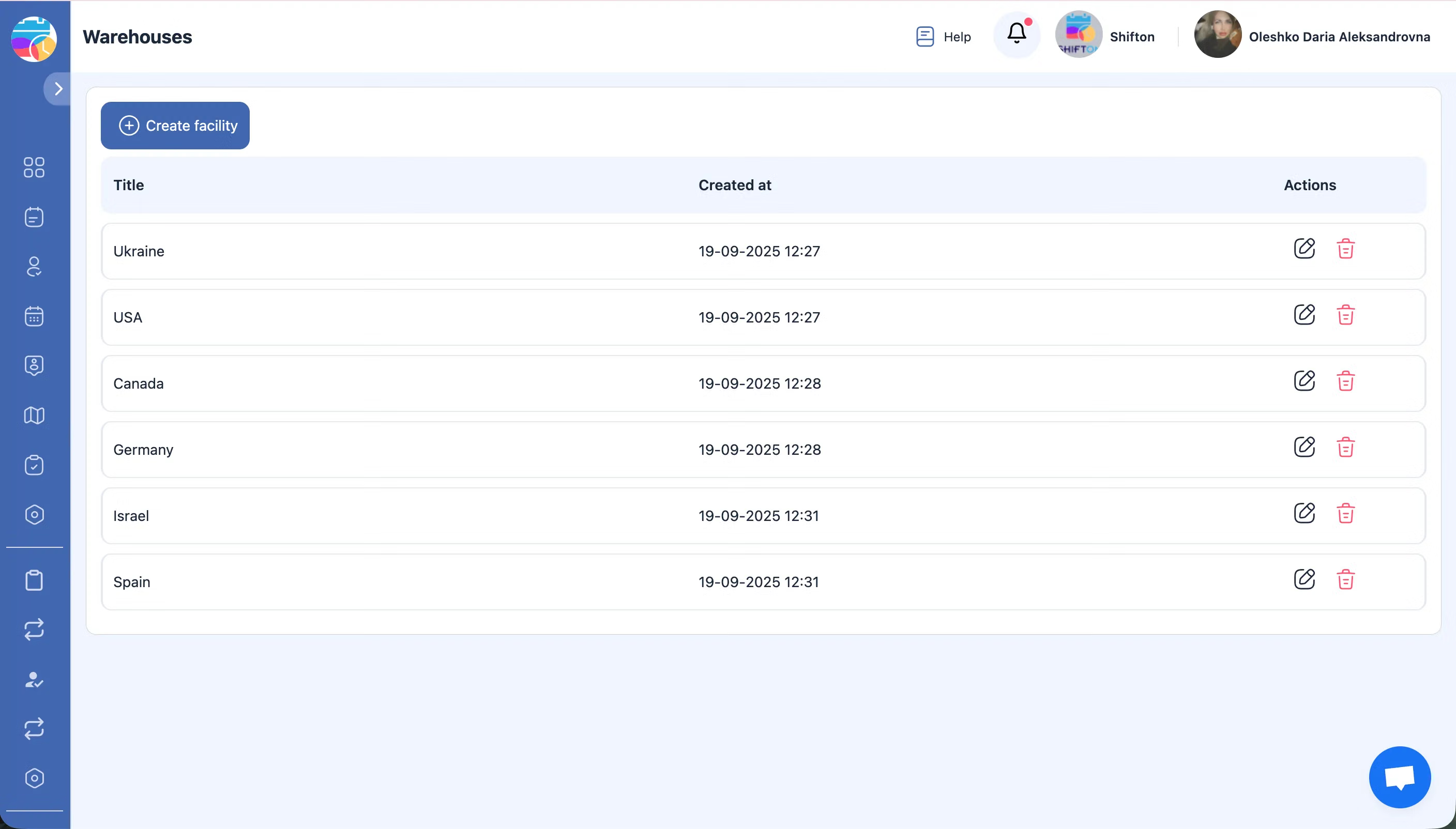
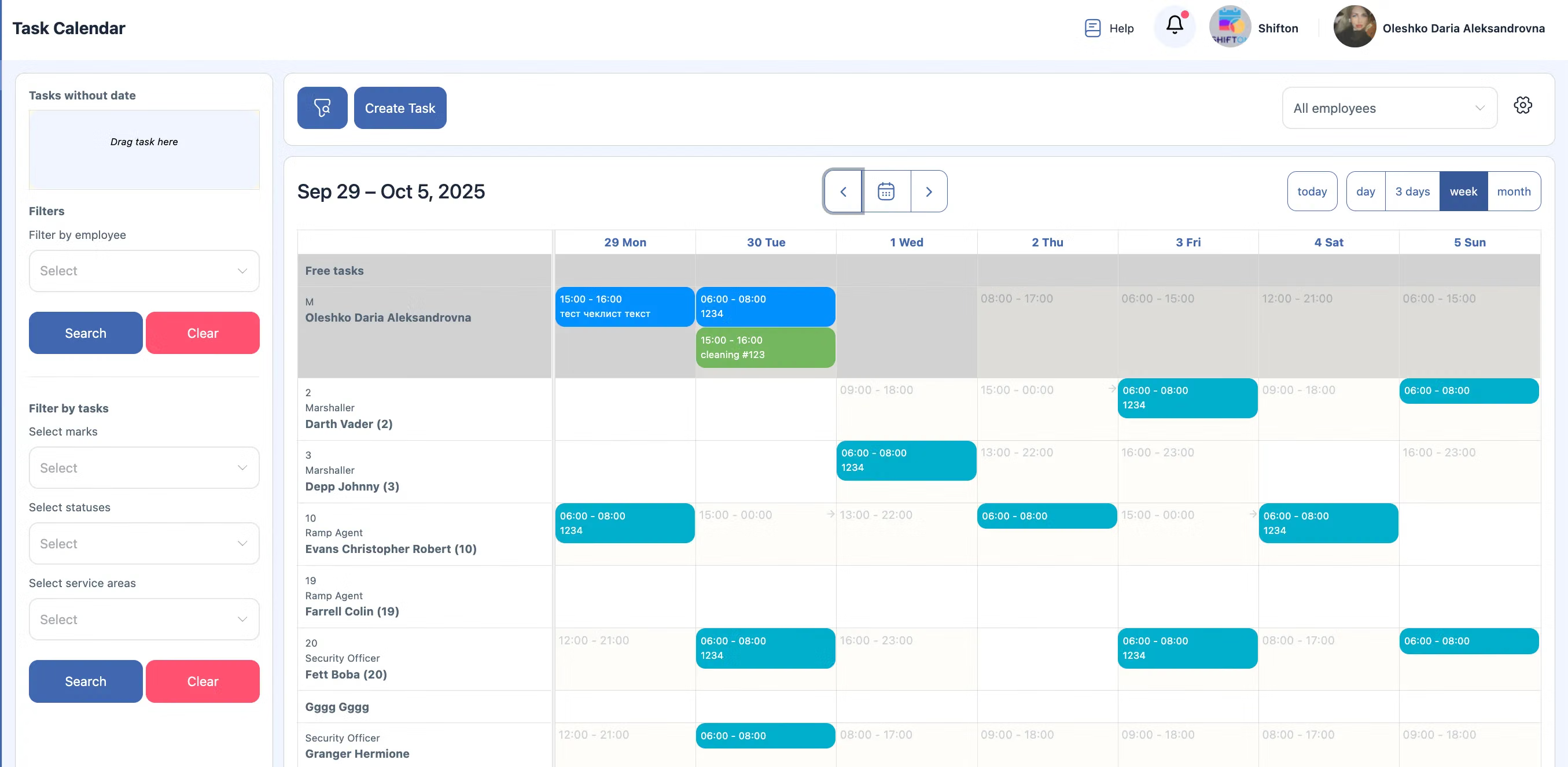
Many plastic welding firms do both: tanks, sumps and ductwork fabricated in the shop, then delivered and fitted on site, alongside separate lining contracts. The same welders move between them, and the schedule has to show where each one is.
Start with the Free Plan
No time limits. Get full access to core features and upgrade when you're ready.
See how plastic welding firms plan seams, tests and crews
What welding software should do for a plastics contractor
Most welding software on the market is written for steel: procedure specifications, welder qualification records, material certificates for structural work. Plastic extrusion welding has its own version of all that, but day to day the bigger problem is simpler. The office needs to know which welder is on which site, what was welded, whether it passed and what it cost in hours. That is scheduling and record keeping, and it is where most firms still rely on paper.
Lining work
Geomembrane lining of landfills, lagoons, ponds and secondary containment is usually a combination of wedge welding for long seams and extrusion welding for details, pipe boots, patches and corners. The job moves in stages as the earthworks contractor hands over areas. Crews wait for subgrade approval, the liner is deployed panel by panel, and seams are welded and tested behind it.
Each of those hand-overs is a date that can slip, and the lining crew is often the last trade before cover soil goes on. Keeping every area as a separate task, with its status and records, lets the office see what is finished and what is waiting for another contractor.
Quality records at hand-over
At the end of a lining job the client gets a pack: panel layout, seam logs, test results, repair logs and destructive test outcomes. Building that pack from forms filled in on the day is a matter of collecting reports. Building it from notebooks is a week of typing and guesswork.
Machines and welding rod
Hand extruders, wedge welders, generators and test kit go from site to site in vans, and the one that is overdue for a service is always the one that fails on a remote job. A short end-of-day check per machine catches a sticking drive or a failing heater before it matters. Welding rod is the other thing that runs out at the wrong time: it has to match the sheet material and colour, and batches are recorded for traceability. Knowing what went to each site, and what came back, keeps the next job from starting a day late.
Travel, crew hours and small repair calls
Between the big lining contracts sit the small jobs that pay the bills: a split in a farm slurry lagoon liner, a leaking weld on a chemical bund, a damaged pipe boot. They are short, urgent and often far away. Grouping them by area, and fitting them around the long contracts, is where a board that shows every welder's week pays for itself.
Hours recorded per job, including travel and weather stops, give the real cost of each contract. That is the number to look at before quoting the next one.
Fabrication shop software for plastic welders
Fabrication shop software usually tracks orders through stages: cutting, forming, welding, testing and dispatch. For a plastic fabricator the stages are similar, and each one benefits from a short checklist so that nothing is skipped when the shop is busy. A tank that leaves without its leak test recorded is a tank that comes back.
Hours per stage also show where quotes go wrong. If welding the outlets on a certain tank design always takes longer than priced, the next quote can say so. The same applies to rework: a record of which fabrications failed their leak test, and why, tells you whether the fault lies in a design, a batch of sheet or a particular bench.
Welding inspection software and what it really means here
Welding inspection software often means dedicated tools for radiography or ultrasonic results on metal welds. For plastic welding contractors, inspection is mostly vacuum box, spark and destructive testing, plus visual checks. Those fit perfectly well into digital forms, provided the forms are designed around your procedure and your client's specification.
What Shifton Field Service does
It schedules shop and site welding on one board, puts seam logs, test forms and checklists on each welder's phone, and keeps photos, results, hours and sign-off with the job for reporting. Firms with one or two employees get the board, app, forms and reports free and indefinitely; invoicing, inventory, GPS location control and the customer portal are separate modules with a price.
It is not a welding procedure management system, it does not store or verify welder certificates, and it does not read data from extruders or test equipment. It plans the work and keeps the records the welders create.
Frequently Asked Questions
Can welders fill in seam logs on their phones?
Yes. You build the seam log as a form with the fields your clients ask for, and each welder completes it on the job. Entries are stored with the job and time-stamped when submitted.
How do we record vacuum box and spark test results?
As checklist or form entries on the job, one per section tested, with a pass or fail, the location and a photo if needed. Failed sections can be followed by a repair task on the same job.
Can a repair patch be linked to the seam it fixes?
The repair form references the seam number and the failed test, so the quality record shows the failure, the patch and the retest together.
Can we make sure only qualified welders are sent to liner work?
The dispatcher chooses who goes, and the job states what qualification it needs. The software does not verify welding certificates on its own, so keep those in your own records.
What if the landfill cell we are lining has no phone coverage?
Welders can keep entering seams, tests and photos while the phone has no service at the bottom of a cell; the records upload when they climb back into coverage.
How much does it cost a welding firm of two?
Nothing, for as long as there are two employees or fewer. That covers scheduling, the mobile app, forms and checklists, and reports. Invoicing, inventory, GPS location control and the customer portal are separate paid modules.
Does it handle shop fabrication as well as site installation?
Yes. Both appear on the same board as jobs with their own checklists, so you can see which welders are in the shop and which are out on site each day.
Ready to transform your field operations?
Join thousands of field service companies that trust Shifton to run smarter every day.