

Smart Home Software for Installers and Integration Teams
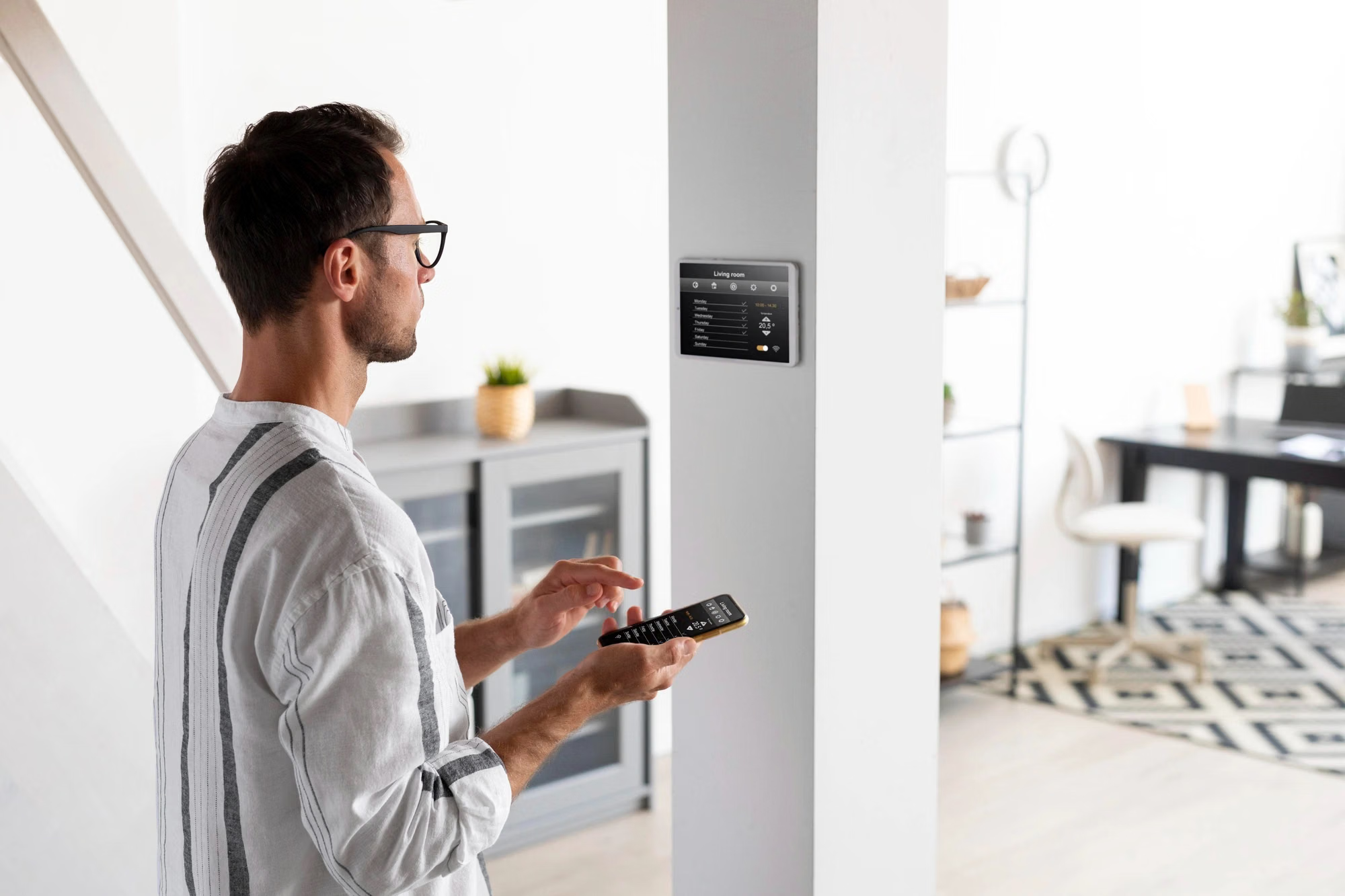
Installs planned by stage across several days, commissioning tracked separately, and the configuration recorded for whoever comes back.
An install is a sequence, not an appointment
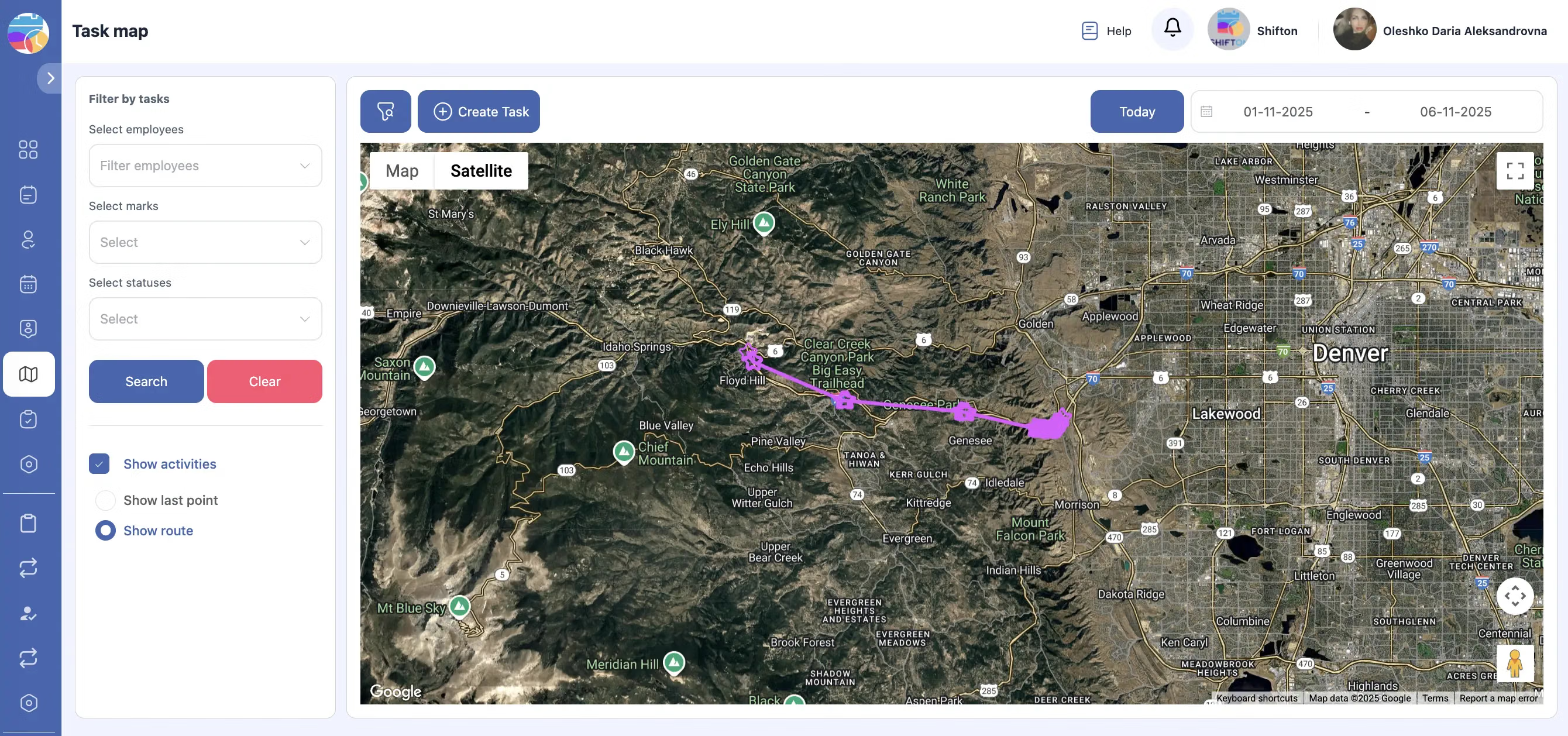
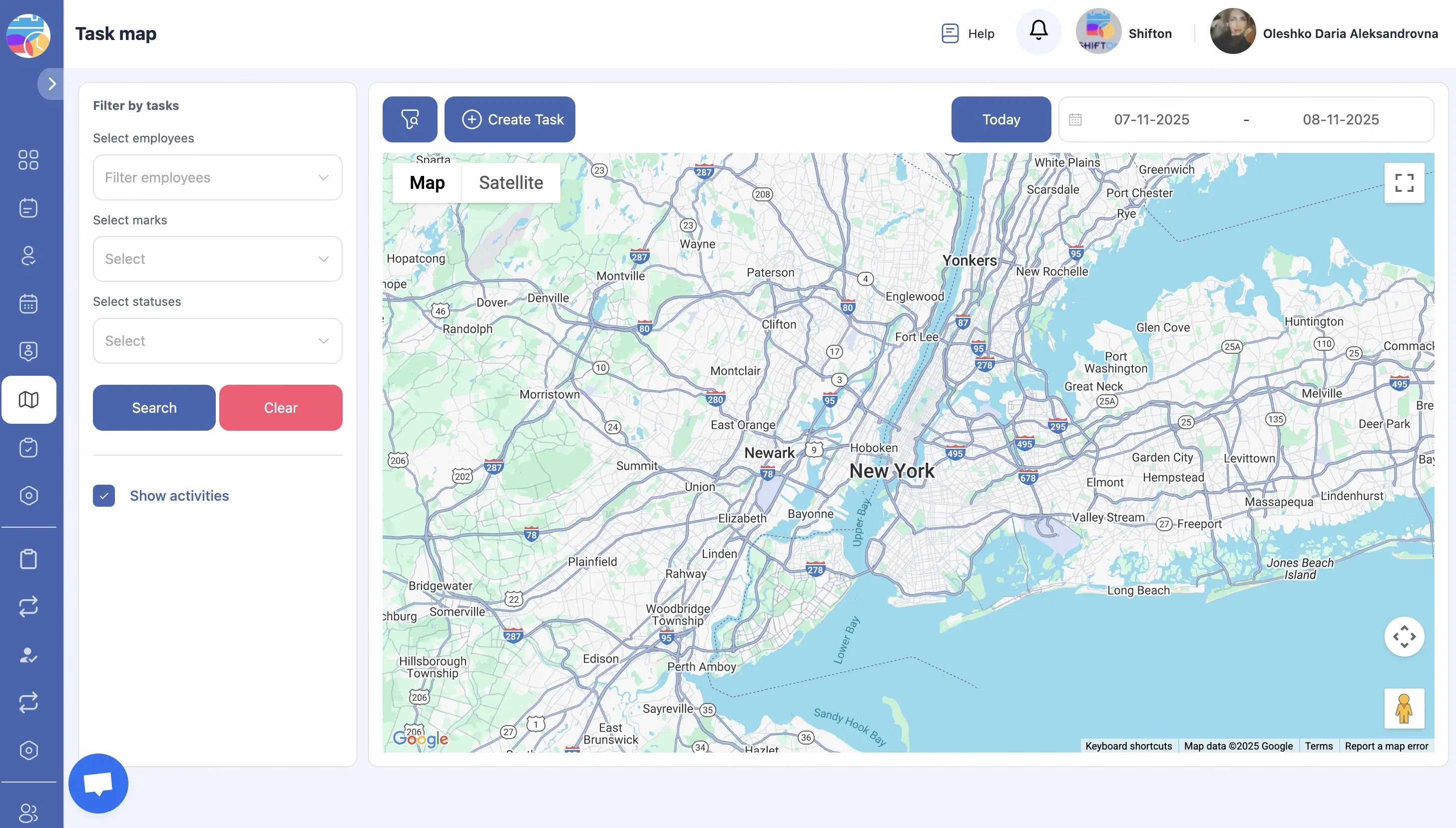
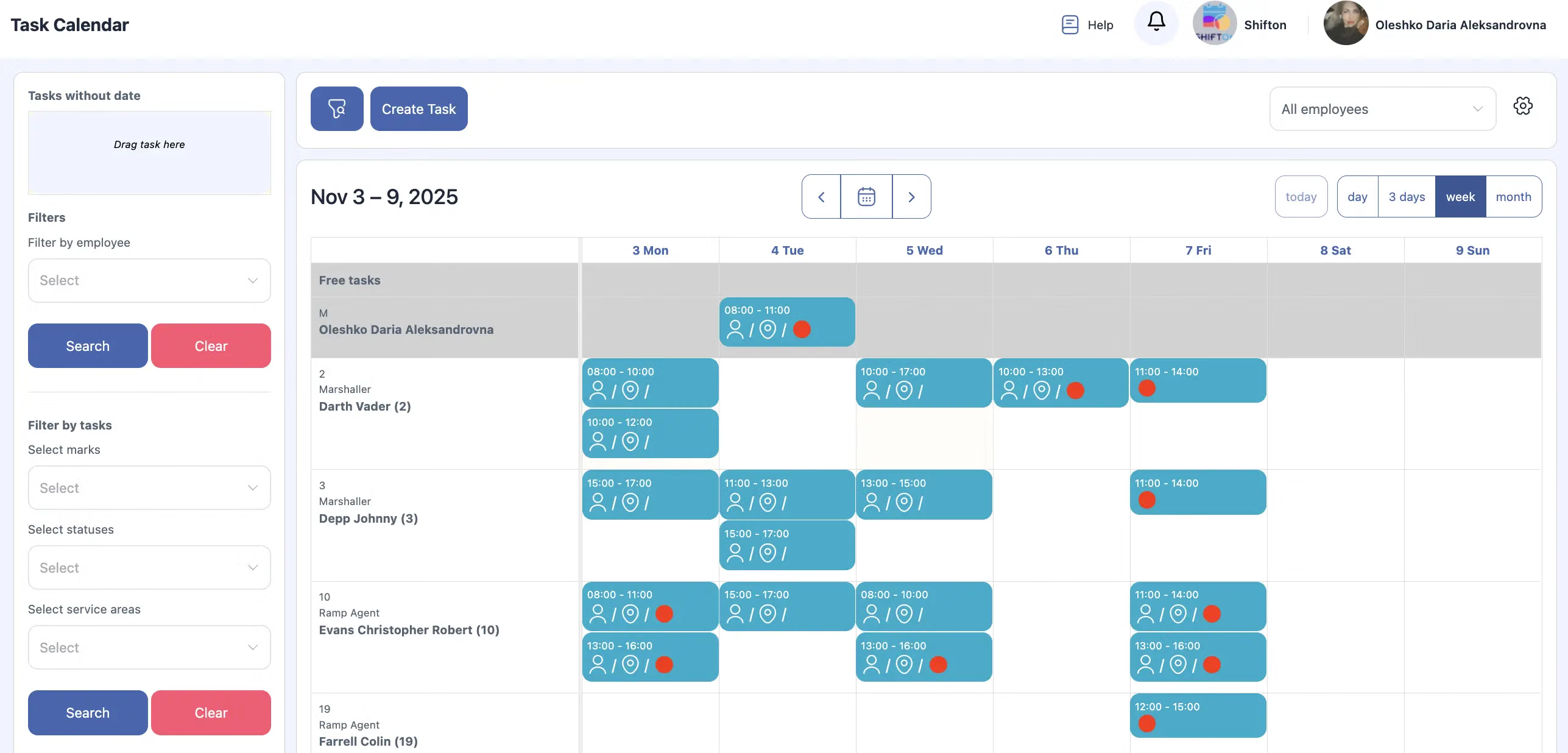
Smart home work happens in stages separated by weeks: first fix cabling while the walls are open, second fix when the decorators have gone, commissioning when there is power and internet. Booked as one job, the whole thing slips when the builder does.
The configuration is the deliverable
What makes a smart home work is not the hardware, it is how it was configured: device names, scenes, network settings, integrations, credentials. Held in one engineer's head, that knowledge leaves with them.
Support visits are where the relationship is decided
Integration work generates a long tail: something stopped talking to something else, a firmware update broke a scene, the customer changed their broadband. These visits are small, frequent and the reason the customer recommends you or does not.
Projects, engineers and the hours behind them
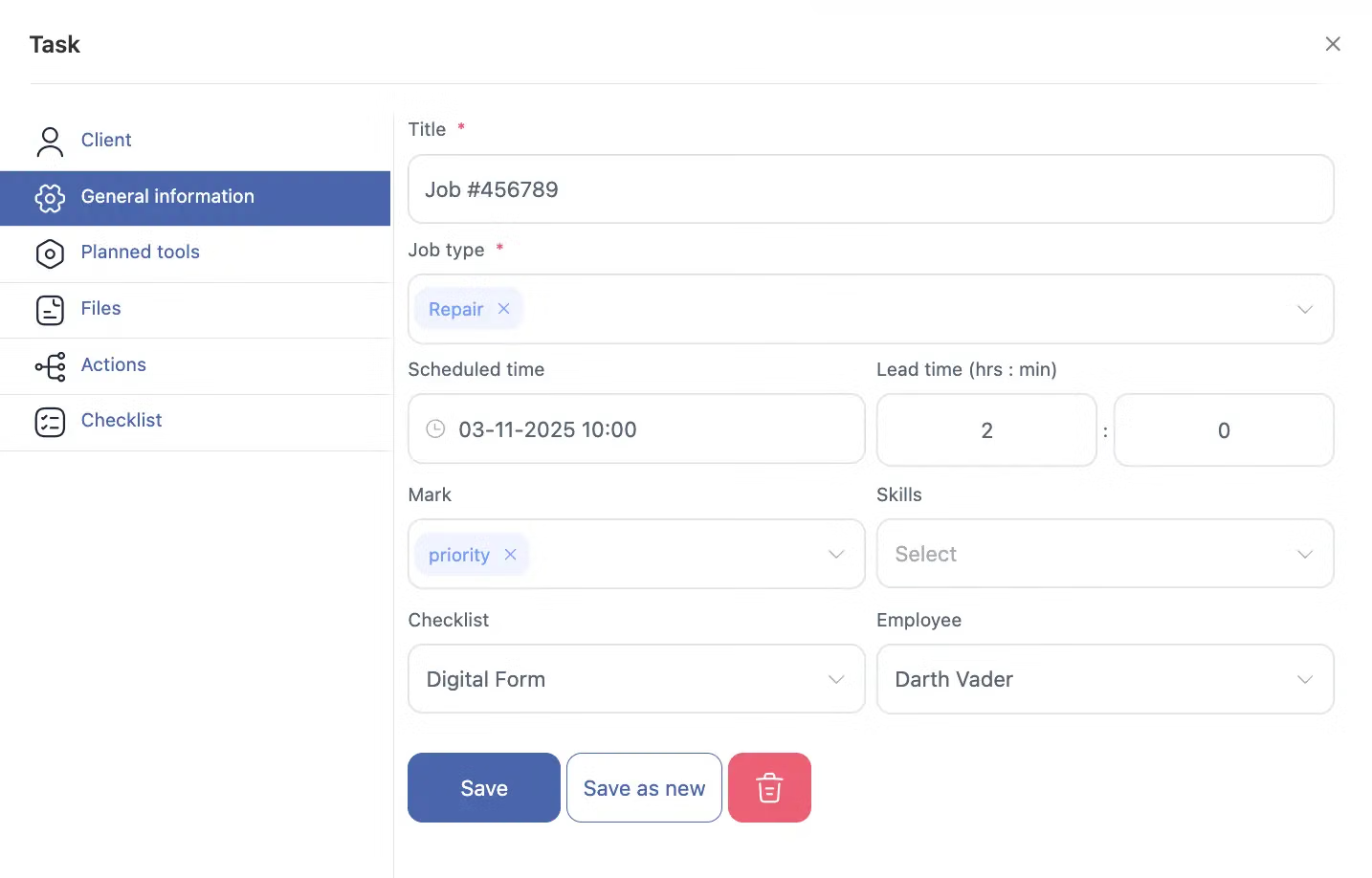
Integrators run several projects at once with a small team, and a day is split between a new install, two support calls and a site meeting. Recording where the hours went is what makes a project's real cost visible before the next one is quoted.
Start with the Free Plan
No time limits. Get full access to core features and upgrade when you're ready.
Read the full guide to running smart home installation work
Integration businesses are project businesses wearing field service clothes
A smart home installer looks like a field service company: engineers, vans, site visits. The economics are those of a project business. Work is won as a whole installation, delivered over months in stages that depend on other trades, and profitability is decided by how many unplanned return visits it took to finish.
This is why generic dispatch software fits badly. It assumes a job is a visit. In integration, a job is a project with four or five visits inside it and a support tail that lasts years.
The stages, and why they belong apart
First fix
This stage is governed entirely by somebody else's programme. Arrive a day early and the plasterboard is not up; arrive a day late and it is, which turns an hour of cable pulling into a chase, a repair and an apology to the decorator.
Second fix
Fitting devices after decoration. Different skills, different risk, and a stage where damage to finished surfaces becomes an expensive conversation.
Commissioning
Where the system becomes a system. It needs power, network and time, and it is the stage most often compressed because the handover date did not move when everything before it did.
Documentation is the difference between a business and a person
Integration knowledge is unusually personal. The engineer who configured a house knows the device names, the scenes, the quirk with the lighting controller and where the network switch is hidden. That knowledge is worth money and it is entirely undefended.
A firm that records configuration as part of the job can send anybody to a support call. A firm that does not is dependent on one engineer being available, and is quietly unsellable, because the value walks out at five o'clock.
The support tail
Nobody quotes for the visits that follow handover, and every integrator makes them. A firmware update changes behaviour, a customer replaces their router, a device drops off the network. Each is small, urgent to the customer and easy to lose money on.
Tracking them as jobs against the site does two things. It shows which customers and which systems consume support, which is a design lesson for the next project. And it makes the case for a maintenance agreement in numbers rather than in feeling.
What Shifton Field Service is here
It plans projects and their stages, carries the site record and configuration forms to the engineer, captures evidence, tracks hours across projects and support, and produces invoices and reports. Two or fewer engineers use project scheduling, the app, configuration forms and reporting at no cost with no time limit, and invoicing, inventory, location control and the customer portal are paid modules.
It is explicitly not a home automation platform. It does not talk to hubs, controllers or devices, it does not monitor systems remotely and it does not replace the manufacturer tools an integrator uses to configure them. It manages the people and the record of their work.
Frequently Asked Questions
Can a multi-stage install be planned as separate visits?
Yes. First fix, second fix, commissioning and handover are separate jobs against the same project, each with its own crew, duration and dependencies, so a delay to one is visible against the rest.
Where is the system configuration recorded?
On the job, through digital job forms. Device lists, locations, network settings and controller configuration are captured as they are set and stay attached to the site for whoever attends next.
What happens on a site before the internet is live?
Nothing changes for the engineer. Jobs, configuration forms and photographs sit on the device and upload later, which is the normal situation on a building site with no service yet.
Can support callouts see what is installed?
The site record carries the equipment, the configuration and the previous visits, so an engineer attending a fault starts from what is there rather than from the customer's description of it.
Can we see how much time a project really took?
Hours are recorded by project and stage, including travel and support visits after handover, which is usually where the difference between the quoted and the actual cost turns out to be.
Does it control or monitor the smart home systems?
No. It does not talk to controllers, hubs or devices, and it is not a remote management platform. It schedules the people and records what they did.
What does a small integration business pay?
Two or fewer engineers is free and stays free, covering projects, the app, configuration forms and reports. Invoicing, inventory, location control and the customer portal are the modules with a price on them.

Ready to transform your field operations?
Join thousands of field service companies that trust Shifton to run smarter every day.