

Service Scheduling for Commercial Washers, Dryers and Ironers
Breakdowns ranked by who is waiting for clean linen, a history for every machine, and the right part on the van more often.
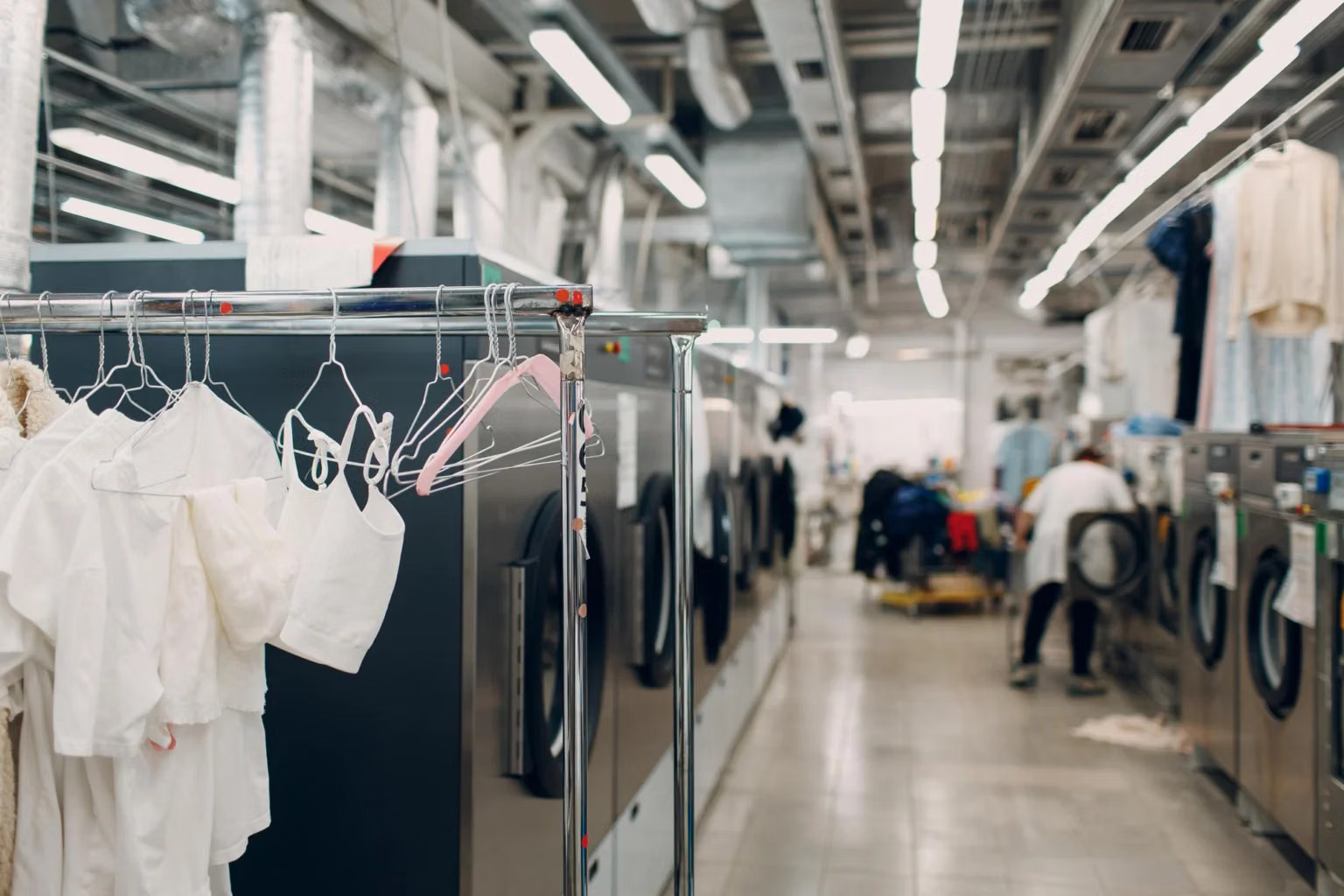
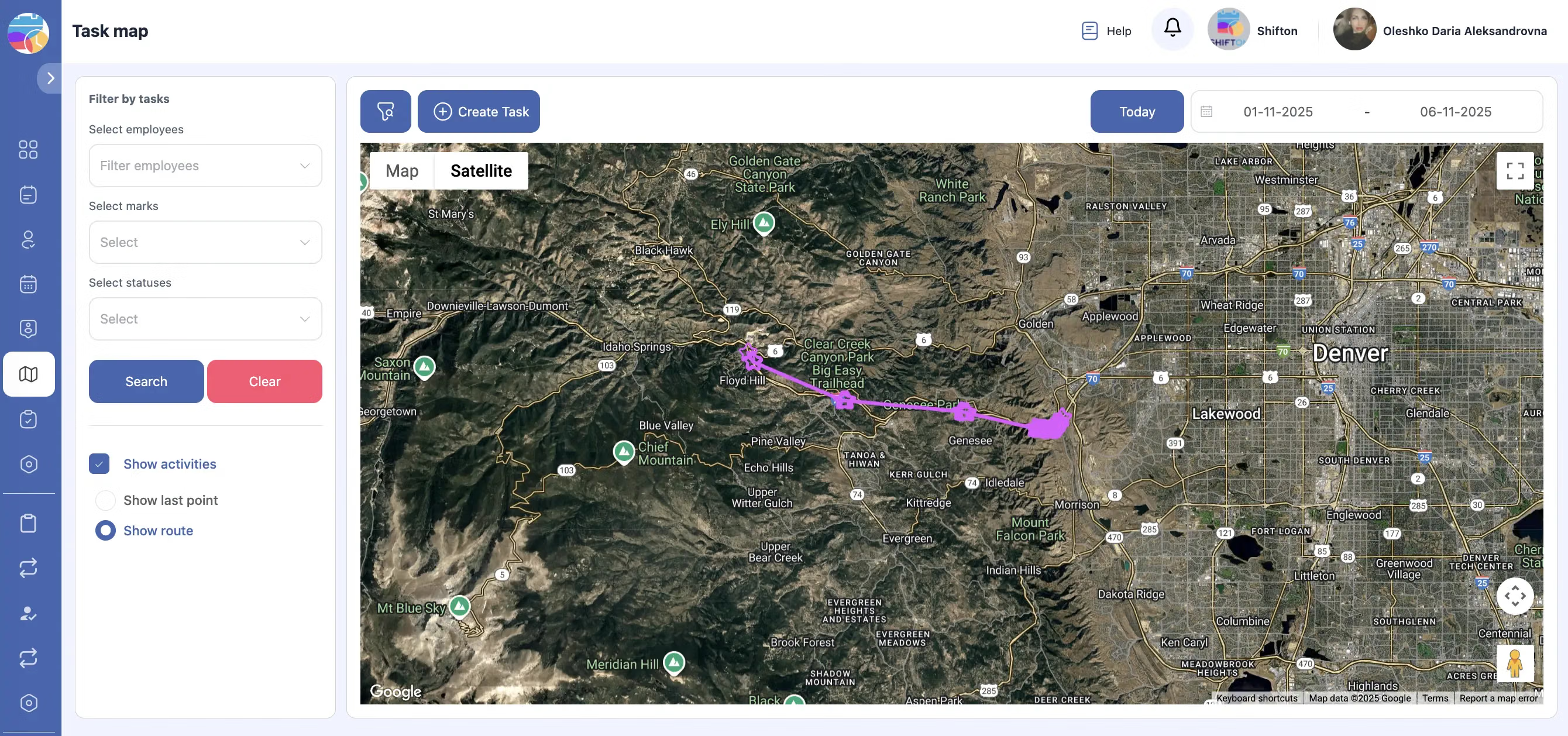
A broken machine stops someone else's business
When a washer-extractor fails in a care home, the bedding piles up by lunchtime. When a hotel's ironer stops, the linen goes out to a laundry at a cost. A launderette with two dryers down loses its evening customers. Call-outs are not equal, and the board has to show which ones cannot wait.
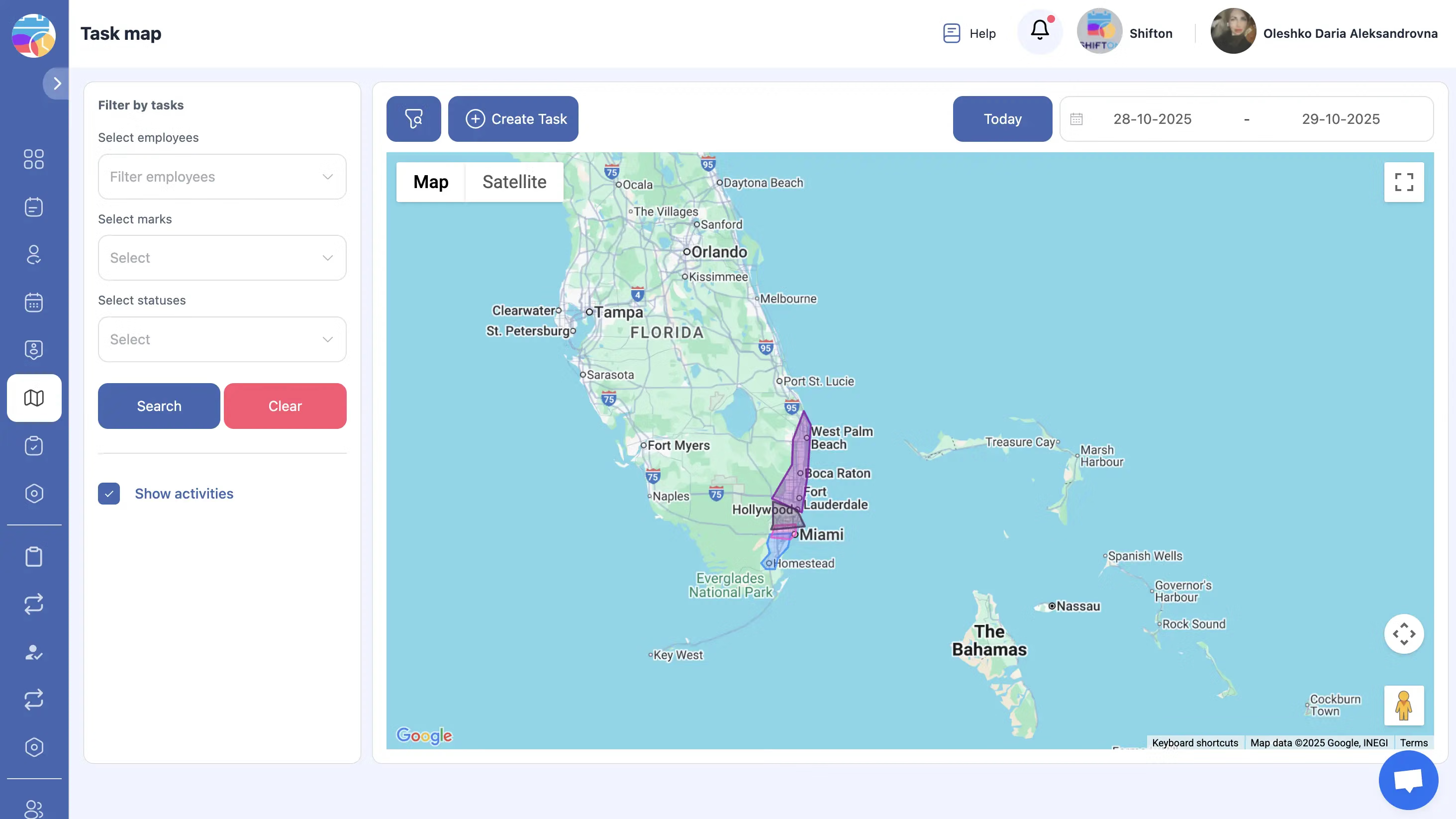
History per machine, not per customer
A hotel group may have forty machines across ten sites. The fault that matters is the one this particular dryer has had three times since spring. Recording work against the machine, by serial number, shows patterns a customer-level record hides.
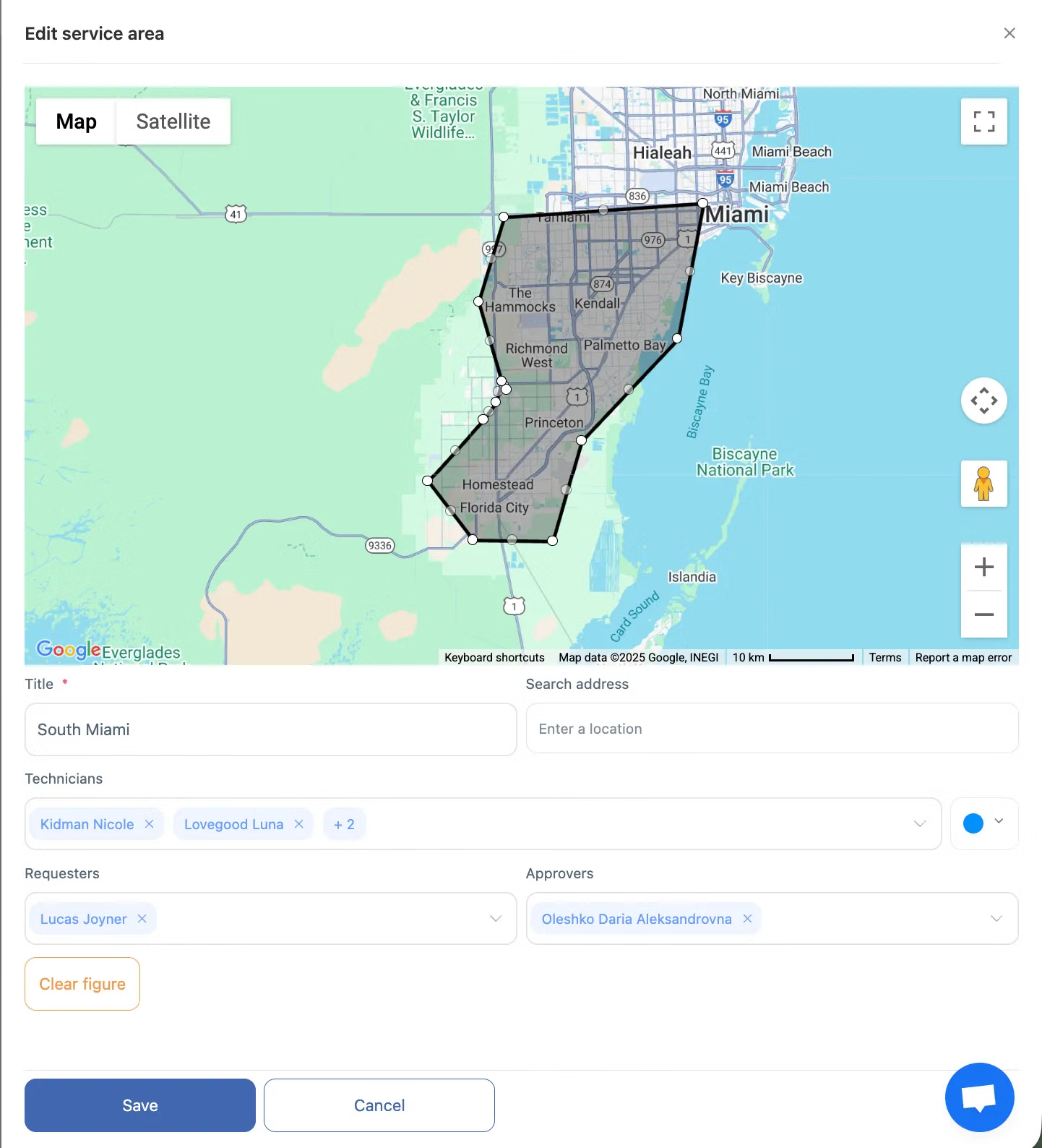
First-visit fix starts on the van
Door locks, drain valves, heating elements, belts and control boards cover a large share of commercial laundry faults. An engineer who carries the right ones fixes on the first visit; one who does not orders the part and comes back next week while the customer sends their linen out.
Planned maintenance and dryer safety
Dryers collect lint in places the operator never sees: behind the drum, in the exhaust duct, around the burner or heater bank. Lint build-up is a fire risk, and planned visits are where it gets cleared. Washers need door seals, dosing lines and suspension checked before they fail.
Start with the Free Plan
No time limits. Get full access to core features and upgrade when you're ready.
Read how laundry engineers plan breakdowns and maintenance
Appliance repair software built around commercial machines
Most appliance repair software is designed for household calls: one washing machine, one homeowner, one visit. Commercial laundry service is a different job. The machines are larger and more expensive, customers own many of them across several sites, and a breakdown has a direct cost for the business that depends on it. Planning, parts and records all need to work at the level of the individual machine.
Who the customers are
On-premise laundries in hotels, care homes, hospitals, gyms and sports clubs; self-service launderettes; commercial laundries running tunnel washers and large ironers. Each has different expectations. A launderette owner may be happy with next-day service; a nursing home may have it written into the contract that a washer is back in use within hours.
Other commercial equipment
Many laundry engineers also service commercial dishwashers, glasswashers and other catering equipment for the same customers. The approach is the same: record the machine, plan the visits, carry the parts, prove the work.
Why commercial call-outs overrun
The fault description on a laundry call is rarely accurate. "Not spinning" can be a door lock, an unbalanced load sensor, a drive belt or an inverter. "Not heating" on a dryer can be a failed element, a gas valve, a blocked exhaust or a thermal cut-out that tripped because of lint. The engineer's first job is to find out which, and the office's first job is to give the engineer as much as possible before the visit: the machine model, its history and anything the site staff can say about the error code on the display.
Access is the other surprise. Laundry rooms are in basements, behind kitchens or in locked plant rooms, and machines are often bolted down in tight rows. Noting access details on the site record once saves every engineer who follows from finding the caretaker on their own.
What commercial laundry equipment service software should record
Commercial laundry equipment service software is only as good as the job records it keeps. At minimum: the machine, the fault reported, the fault found, parts fitted, time on site and a signature. Add photos of the lint trap and exhaust after cleaning, and the controller reading if the machine shows one, and you have a history that supports both the invoice and the conversation about replacing a machine.
Many laundry machines are supplied on rental or lease agreements with service included. For those, hours and parts recorded against the machine are how the supplier sees whether the agreement pays.
What Shifton Field Service does
It schedules breakdowns, planned maintenance and return visits on one board, sends engineers the machine details, history and checklists, and records photos, parts, hours and signatures on each job. Companies with a couple of engineers can keep using the board, app, forms and reports free of charge; invoicing, inventory, GPS location control and the customer portal are there as paid modules.
It is not a parts catalogue for laundry manufacturers, it does not connect to machine controllers or payment systems in launderettes, and it does not diagnose faults. It organises the engineers and keeps the evidence of their work.
Frequently Asked Questions
Can we keep records per machine by serial number?
Yes. Each machine can be recorded with its model and serial, and jobs are logged against it, so the engineer sees its fault history before touching it.
How do we get to the care home before the launderette?
Priority and contract response times are set on the job, and the dispatcher sees them on the board. Moving the urgent call to the front is a drag, not a phone round.
Can engineers check which parts are on their van?
With the paid Inventory module, stock can be held per van and parts fitted are deducted on the job, so the office knows what needs restocking.
Can a one-engineer service company use it for free?
Yes. A business with up to two employees pays nothing, with no expiry, for the schedule board, the app, forms and reports. Invoicing, inventory, GPS location control and the customer portal are charged as modules.
Can we separate contract machines from chargeable call-outs?
The job records whether the visit is covered by a contract or chargeable, so the office invoices only what should be billed. Invoicing itself is a paid module.
Can the site manager sign the job sheet on the engineer's phone?
Yes. The engineer completes the job with photos and notes, and the site contact signs on the phone before the engineer leaves the laundry room.
Ready to transform your field operations?
Join thousands of field service companies that trust Shifton to run smarter every day.