

Vending Management Software for Route Drivers and Techs
Restock rounds, breakdown calls and machine history on one board, with every visit recorded against the machine it belongs to.

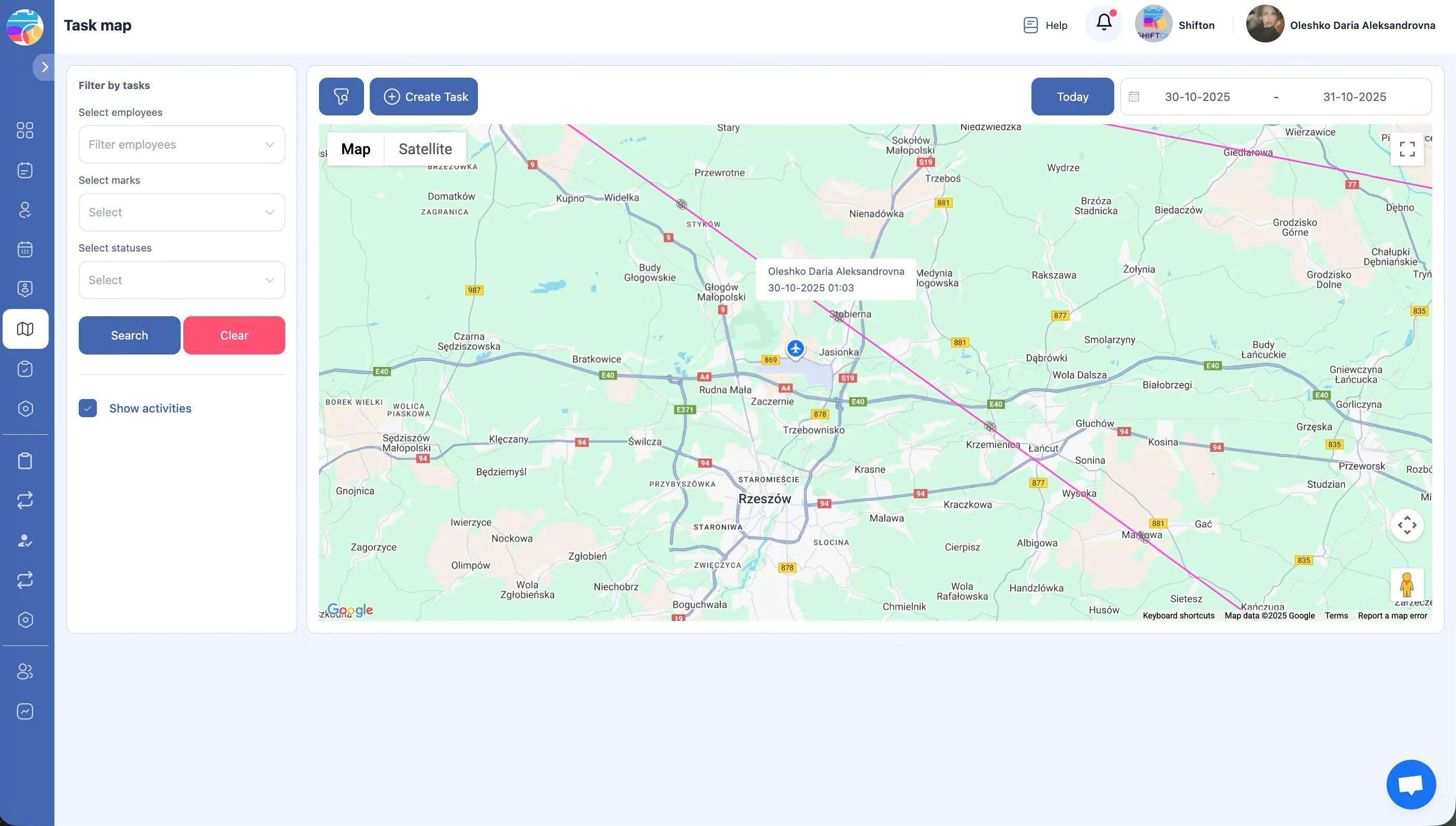
The route is the business
Vending profitability is decided by how many machines a driver services in a day and how few of them need a second visit. Routes built from habit visit machines that did not need stock and miss the ones that ran dry, and every empty machine is revenue lost while the rent on the site continues.
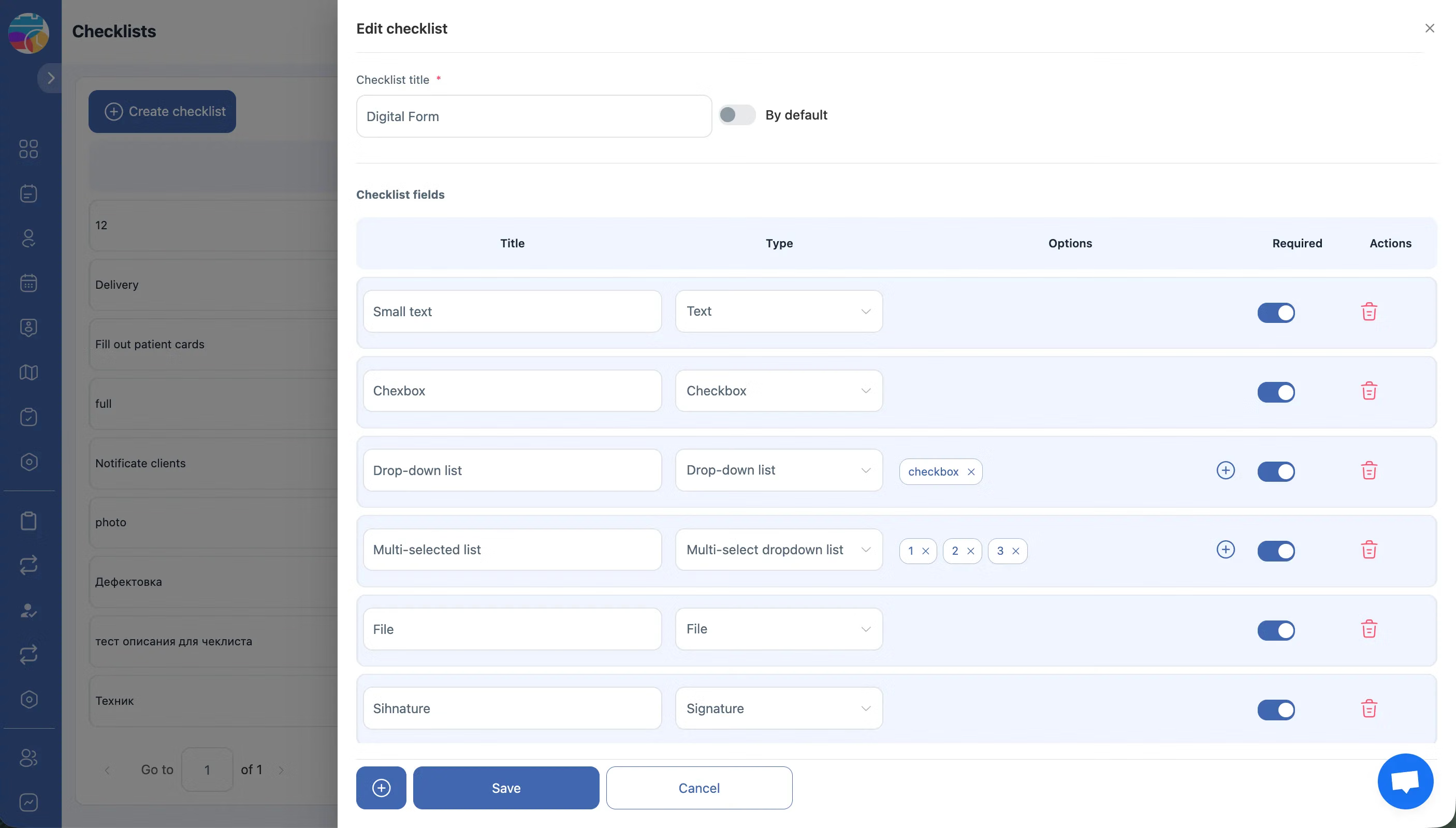
Every machine keeps its own record
A vending estate is hundreds of individual assets in other people's buildings. Treating each machine as a record, rather than a line on a route sheet, is what makes the estate manageable: what is installed, where, what it sells, and what has gone wrong with it.
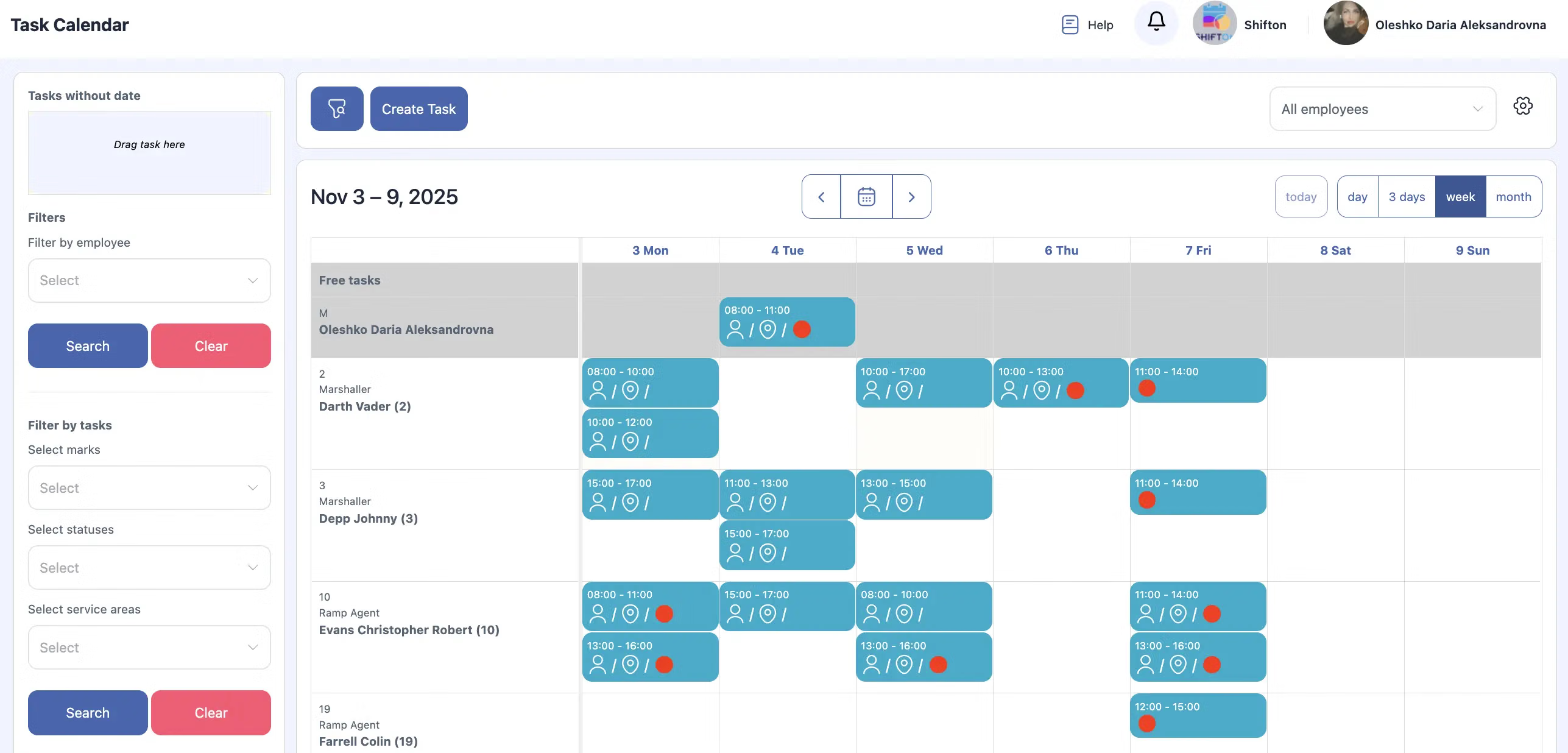
Stock off the van, counted as it is used
Product loaded onto the van and product sold from the machine rarely match by the end of the week. Recording what was loaded into each machine at the point of service closes the gap and makes shrinkage something you can see rather than something you absorb.
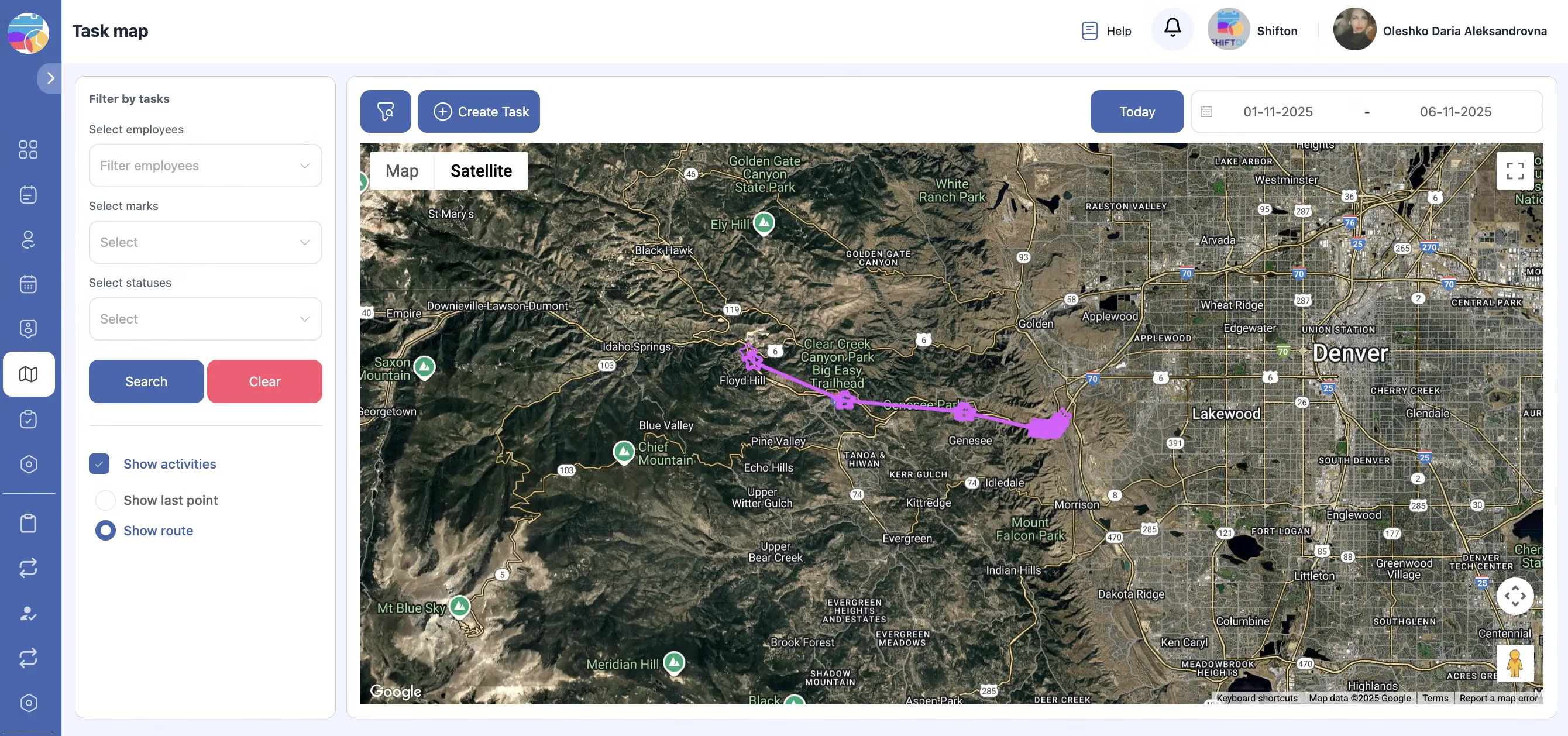
Technical calls and the numbers behind them
A machine that does not vend is a machine that does not earn, and the site owner notices before you do. Holding breakdown calls in the same system as the routes means response is planned rather than squeezed in, and the reporting shows what it is costing.
Start with the Free Plan
No time limits. Get full access to core features and upgrade when you're ready.
Read the full guide to vending route management
Two numbers decide a vending business
Machines serviced per driver day, and hours a machine spends unable to vend. Everything else in the operation is downstream of those two. Vending management software earns its place by improving them, and any feature that does not touch either is decoration.
Both numbers are field problems. They are not solved by better reporting at head office, because the visit either happened efficiently or it did not, and the machine either got attention or it stood empty in someone else's canteen with your name on it.
Why fixed rounds stop working
Most estates start with a weekly cycle, which works while the machines are similar and the sites behave. It stops working as soon as the estate becomes varied: a busy machine in a hospital empties in three days, a machine in a small office does not need touching for a fortnight, and the fixed round services both identically. The result is a driver day full of unnecessary visits and a handful of dry machines earning nothing.
Planning rounds around actual demand rather than the calendar means the driver spends the day where the money is. It also makes the round resilient, because a dry machine reported by a site contact can be inserted into the nearest round instead of waiting for its scheduled slot.
The machine as the unit of record
Route sheets describe journeys. Asset records describe the business. When every machine carries its own history of restocks, faults, parts fitted and photographs, questions that used to be unanswerable become routine: which model fails most, which site damages equipment, which machine has now cost more in call-outs than it returns in a year.
Access is part of the asset
Vending machines live in other people's buildings, which means opening hours, security procedures, key holders and permits are operational facts. Keeping them on the job rather than in a driver's memory is what allows a round to be covered by someone else without a day of phone calls.
Planograms and evidence
A photograph of the machine after service settles disputes about presentation, damage and stock levels, and it gives head office a view of the estate without a site visit. Captured as part of the job, it costs the driver seconds.
Stock discipline in the field
Shrinkage in vending is rarely dramatic. It accumulates through product loaded and not accounted for, spoilage that never gets recorded, and machines topped up from stock that was written off somewhere else. Recording loads at the machine, on the phone, as the work happens, is the only practical way to keep the count honest, because reconstruction at the depot is guesswork by then.
Downtime as a service commitment
Site owners judge a vending supplier on how quickly a broken machine works again. Treating faults as jobs with priority, history and access details attached means a technician arrives able to fix the machine rather than diagnose it and return. Repeat faults become visible, and the decision to replace an ageing machine gets made on evidence.
Starting with one round
The practical way in is to put a single round on the board for two weeks, with the machines as records and the loads recorded on the phone. The picture that comes back tells you which visits were unnecessary and which machines are quietly costing money. Operators with two or fewer employees stay on the free plan permanently, and the paid modules carry a trial of up to 55 days.
Frequently Asked Questions
Does it plan restock rounds by area?
Yes. Machines are grouped into rounds so a driver services a cluster rather than crossing the region, and machines reported dry can be prioritised into the next round instead of waiting for their turn in the cycle.
Can we see the full history of an individual machine?
Every visit, restock, repair and inspection is attached to the machine record. That history is what shows which assets fail repeatedly and which sites justify the equipment installed in them.
How is product loaded into machines recorded?
The driver records what went into each machine on the phone, through the inventory module. Van stock is reduced as the round progresses, so the difference between what was loaded in the morning and what reached the machines is visible the same day.
What if the site has no signal?
The mobile app holds the job on the device. Visits completed in basements, plant rooms and underground concourses sync when the phone has signal again, and nothing is retyped at the depot.
Can breakdown calls be handled alongside routes?
Yes. A fault is raised as a job with its own priority, the site access notes and the machine history attached, and it is scheduled on the same board as the restock work rather than in a separate list.
Is it suitable for a small operator?
Teams of two or fewer run on the free plan with no time limit: scheduling, digital job forms, the mobile app and reports are included. Inventory, invoicing, location control and the customer portal are paid modules added as the estate grows.
What does it cost to run an estate on the platform?
The free plan covers up to two employees permanently. Beyond that pricing is per employee per month, and every paid module carries a free trial of up to 55 days, enough to run a full quarter of routes through the system.

Ready to transform your field operations?
Join thousands of field service companies that trust Shifton to run smarter every day.