English
If you’ve been running your field operations on Jobber and wondering whether there’s a smarter, more affordable way — you’re not alone. Thousands of teams managing technicians, work orders, and dispatch workflows every day hit the same ceiling: costs that scale too fast, features locked behind premium tiers, and a system built primarily for small home-service contractors rather than growing field operations.
This guide breaks down exactly where Jobber falls short for scaling field service companies, what to look for in a Jobber alternative for field service, and why Shifton Field Service is the solution that consistently wins on price, flexibility, and operational depth.
Why Teams Search for a Jobber Alternative
Jobber is a capable tool for a solo HVAC contractor or a small cleaning crew of two or three. It has clean mobile apps, solid invoicing, and a polished client portal. But when field service companies start growing — more technicians, more locations, more complex scheduling — Jobber’s structure starts to show its limits.
Where Jobber falls short
- Pricing starts at $69/month, jumps to $349/month for ten users
- Every additional user costs +$29/month on top of the base plan
- Advanced automations gated behind higher tiers
- Reporting is basic and lacks operational depth
- No native inventory or warehouse management
- GPS tracking relies on third-party integrations
- Only English and Spanish supported
- 14-day trial — barely enough for a real test
What you actually need
- Transparent, predictable per-seat pricing
- Real-time team location tracking built in
- Full inventory and parts management
- Digital job forms with offline support
- Automated scheduling and smart dispatch
- Instant alerts and SLA guardrails
- Multi-language support for diverse crews
- A trial long enough to run actual routes
The pattern is consistent: Jobber’s per-user pricing model starts to outpace the value it delivers once you have more than five or six technicians. That’s exactly the moment when it pays to evaluate a field service Jobber alternative with a more scalable model.
Shifton Field Service: Built for Operational Teams
Shifton Field Service is not a slightly cheaper copy of Jobber. It’s a workforce management platform designed for companies that plan, dispatch, and execute field work at scale. Shifton connects every layer of field operations — from headcount planning and scheduling through mobile execution and real-time tracking to invoicing and reporting — inside one system. There are no $29/user add-on charges, no automation tiers, no feature walls.
🗓️
Automated Scheduling & Dispatch
Smart routing that assigns jobs by skill, proximity, and availability. Drag-and-drop board with real-time adjustments when priorities shift mid-day.
📍
Team Location Tracking
Live GPS tracking with geofenced clock-ins. Know exactly where every technician is and respond instantly to delays without a phone call.
📋
Digital Job Forms
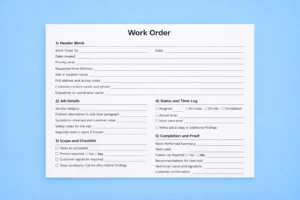
Custom checklists, photo capture, barcode scanning, and customer signatures — all offline-ready. Evidence stored automatically with every work order.
📦
Inventory & Warehouse Management
Track parts, tools, and van stock in real time. Flags missing items before dispatch and suggests the nearest pickup — stopping “I’ll come back tomorrow” for good.
🔔
Instant Alerts & SLA Guardrails
Automated warnings before an SLA window closes. Escalation rules that keep the day inside the rails without a manager watching every ticket manually.
🧾
Invoicing & Reporting
Clean invoices tied directly to completed work orders. Dashboards that surface travel time, first-visit fix rates, overtime trends, and SLA attainment.
📱
Mobile App — Full Offline
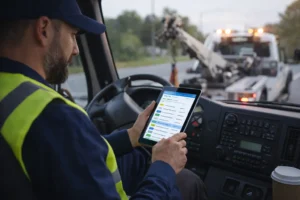
Technicians view assignments, complete forms, upload photos, and clock in — even underground or in dead zones. Everything syncs automatically on reconnect.
📊
Task Management
Structured work orders with required fields, approval rules, priority flags, and automatic status updates. No more “urgent depends on who shouts loudest.”
For a closer look at how Shifton handles the full work order lifecycle, the platform’s job tracking and work order history module gives teams complete visibility at every stage.
Jobber vs Shifton: Head-to-Head Comparison
🏆
Pricing That Makes Sense as You Grow
The hidden cost of field service software is rarely the headline number. It’s what happens when your team grows from five to fifteen technicians. With Jobber, every new seat adds $29/month — meaning a 15-person team on the Grow plan could pay over $400/month before transaction fees and automation add-ons.
- All features included, no tier restrictions
- Inventory and warehouse management
- Built-in GPS team tracking
- Digital job forms with full offline support
- SLA guardrails and instant alerts
- Invoicing and workforce reporting
- 40+ languages for global teams
- Up to 55 days free trial, no credit card
- Basic scheduling and invoicing
- Client portal and online booking
- QuickBooks sync on higher tiers only
- No native GPS tracking
- No inventory management
- Automations extra or gated
- English and Spanish only
- 14-day trial only
The Operational Edge: Features Jobber Doesn’t Have
Inventory & Parts Management
One of the most expensive problems in field service is the missed first visit — when a technician arrives on-site without the right part. Shifton’s inventory and warehouse management module connects parts availability directly to work order creation. Jobs can only be assigned when the required inventory is confirmed, and if stock is missing, the system proposes the nearest pickup location automatically. Jobber has no native inventory module — teams managing parts-heavy operations must maintain inventory in a separate system and hope the two stay in sync.
Real-Time Team Location Tracking
Knowing where your technicians are at any given moment is the foundation of accurate ETAs, intelligent rerouting, and SLA compliance. Shifton’s built-in GPS tracking uses geofenced clock-ins and real-time location updates, so dispatch always has an accurate picture of the field without making a single phone call. Jobber’s location tracking depends on third-party fleet partnerships that require separate subscriptions and separate dashboards.
Offline-First Mobile App
In the real world, field service jobs happen in basements, rural sites, concrete buildings, and underground facilities where mobile signal doesn’t reach. Shifton’s mobile app caches checklists, photos, barcodes, and customer signatures and syncs cleanly when connectivity returns. If the app doesn’t work offline, technicians won’t adopt it — and Shifton was built for this reality from the start.
Automated Dispatch Intelligence
Smart dispatch isn’t just about filling a calendar — it’s about matching the right technician, with the right skills and van stock, to each job while minimizing travel time and protecting SLA windows. Shifton’s scheduling engine considers all of these variables simultaneously and re-routes automatically when a rush job arrives or a technician is delayed. According to Gartner’s field service management research, scheduling automation is now a baseline expectation for mature FSM platforms — companies that move from manual dispatch to automated scheduling typically reduce travel time per job by 15–25%.
Who Should Switch from Jobber to Shifton
🔧
HVAC & Refrigeration
Multi-technician teams with complex parts requirements, recurring maintenance contracts, and SLA commitments need inventory management and real-time tracking — both missing from Jobber.
⚡
Electrical & Utilities
Certified-skill matching, emergency dispatch, and geofenced time tracking make Shifton the operational backbone for utilities and electrical contractors managing compliance.
📡
Telecom & Infrastructure
Offline app reliability is non-negotiable when technicians work in signal-dead zones. Shifton’s mobile app was built for exactly this environment.
🏗️
Construction & Maintenance
Multi-location, multi-crew operations with complex shift patterns, contractor management, and detailed work order documentation that feeds payroll automatically.
Key insight: The question isn’t whether Jobber is a good product — it is, for what it’s designed to do. The real question is whether the platform you’re paying for was designed for your scale, your workflows, and your growth trajectory. For most field service companies managing 10 or more technicians, the answer is no.
Real-World Impact: What Changes When You Switch
Teams that move from manual processes or small-business tools to a purpose-built field service platform measure improvements within weeks. The metrics that move first:
- Travel time per job — drops as routing becomes skill and location-aware instead of calendar-based
- First-visit fix rate — improves when parts checks run before dispatch, not after arrival
- SLA attainment — rises when automated alerts fire before windows close rather than after
- Admin hours — fall when scheduling, invoicing, and reporting live in one system instead of three
- Overtime hours — trend down when workload is distributed by logic rather than habit
You can explore how Shifton measures these outcomes through its workforce reporting software, which surfaces all of these metrics on a single dashboard. Research by Aberdeen Group on field service management consistently shows that best-in-class organizations using dedicated FSM software outperform peers on first-time fix rate and customer retention — outcomes tied directly to dispatch intelligence and parts management.
For teams planning the transition, Shifton’s breakdown of field service automation outlines the workflow changes that deliver the biggest gains and the right sequencing for rolling them out without disruption.
How to Evaluate Any Jobber Alternative
Before committing to any field service platform, run every candidate through these eight questions. The answers will quickly surface whether a tool is built for your actual operations or just positioned to look that way in a comparison chart.
- Does the mobile app work fully offline? If it doesn’t, field techs won’t use it — and everything else falls apart.
- Is GPS tracking native or via third-party integration? Native tracking means one bill, one dashboard, one support team.
- How does pricing scale with team size? Run the math for your team at 20, 50, and 100 users. Some tools are cheap at five seats and ruinous at fifty.
- Does the scheduler account for skills AND parts availability? Assigning the right person without the right tools is half a solution.
- How long is the free trial? Fourteen days isn’t enough time to run real routes and measure real impact. Look for 30+ days minimum.
- Are SLA alerts built-in or an add-on? SLA management should be a core feature, not a premium tier unlock.
- What languages does the platform support? If your crews speak Portuguese, Arabic, or Ukrainian, your software should too.
- Does inventory management exist natively? Parts-heavy operations can’t afford to run inventory in a separate system.
Shifton passes all eight. Jobber passes three.
Making the Transition: What to Expect
Switching platforms feels like a bigger undertaking than it usually is. Most Shifton customers complete initial setup — importing crews, skill tags, job templates, and location data — within a single business day. The first week typically runs with a parallel fallback while the team builds confidence. By week two, the app becomes the default because it makes everyone’s day lighter.
- Day 1 — Import crew data, define skill tags, build your top five job templates
- Days 2–3 — Load a real week of jobs with addresses, time windows, and parts requirements
- Day 4 — Run a two-template day: standard and urgent-heavy, to test rule logic
- Day 5 — Invite the full crew, test clock-ins and photo uploads on two live jobs
- Days 6–7 — Run the full week from the dispatch board; measure travel time and first-fix rate
Within two weeks, most teams have enough data to demonstrate measurable gains — the kind that justify the switch and make the decision permanent.
Frequently Asked Questions
Is Shifton a real alternative to Jobber for field service?
Yes. Shifton Field Service is a purpose-built workforce management platform for companies that dispatch technicians, manage work orders, track field teams, and control inventory. It covers — and often exceeds — Jobber’s feature set at a significantly lower price per user. The key difference is that Shifton is designed for operational scale, not just home-service quoting and invoicing.
How does Shifton pricing compare to Jobber?
Jobber’s Core plan starts at $69/month for a single user and scales to $349/month for ten users, with additional per-seat charges of $29/month beyond included seats. Shifton starts at $1/user/month with all features included and no per-user add-on fees. For a team of twenty technicians, the annual cost difference often exceeds $3,000.
Does Shifton work for small field service businesses or only large companies?
Shifton works for teams from five to five hundred. The platform is intentionally designed to start simple — clean intake, basic scheduling, mobile time tracking — and add complexity only as the team needs it. Small businesses see the biggest immediate win from digital work orders and clean approval flows. Larger operations get the most value from automated routing, SLA management, and reporting.
Can I migrate from Jobber to Shifton without losing data?
Yes. Shifton supports CSV imports for team data, skills, job templates, and customer records. Most teams complete the initial data setup in under a day. You can run both platforms in parallel during the trial period to compare results directly before fully committing.
Does Shifton have an offline mobile app?
Yes, and this is one of Shifton’s strongest differentiators. The mobile apps for iOS and Android cache checklists, job forms, photos, barcodes, and signatures locally when connectivity drops. All data syncs automatically when the device reconnects — whether leaving a basement, exiting a tunnel, or returning to cell coverage after a rural site visit.
Which industries does Shifton Field Service support?
Shifton is actively used in HVAC, refrigeration, electrical, telecommunications, plumbing, utilities, construction, healthcare field services, lawn care, pool maintenance, transportation, and home care. The platform is flexible enough to handle any industry where field technicians need to be dispatched, tracked, and measured against service commitments.
How long is Shifton’s free trial?
Shifton offers a free trial of up to 55 days — no credit card required. This is substantially longer than Jobber’s 14-day trial and gives teams enough time to run actual field workflows, measure real performance metrics, and build genuine confidence in the platform before making a commitment.
Does Shifton support teams that speak languages other than English?
Yes. Shifton Field Service is available in 40+ languages, including Spanish, Portuguese, German, French, Arabic, Ukrainian, Japanese, Chinese, Hindi, and dozens more. This makes it one of the few field service platforms genuinely suitable for international and multilingual teams — where Jobber’s two-language limitation is a hard blocker for global operations.