

Garage Door Software for Service Calls and Installs
Breakdown calls, planned services and new installs on one board, with the door type, the parts and the sign-off on the job.
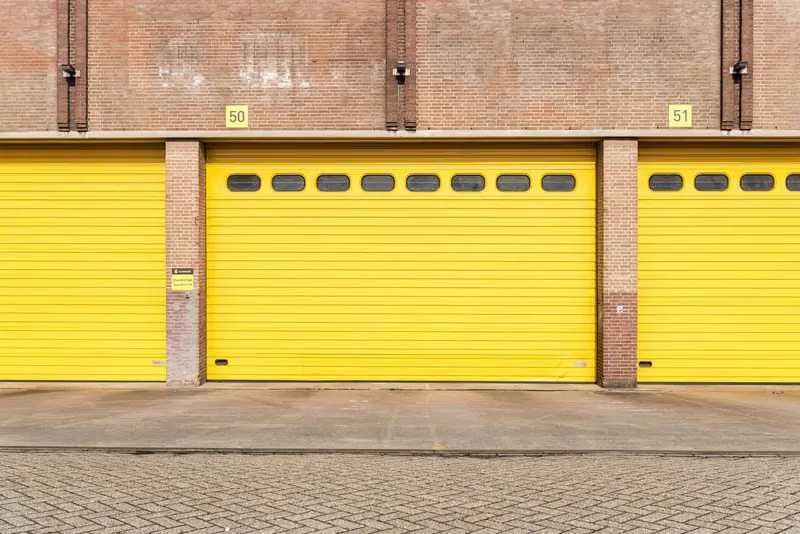
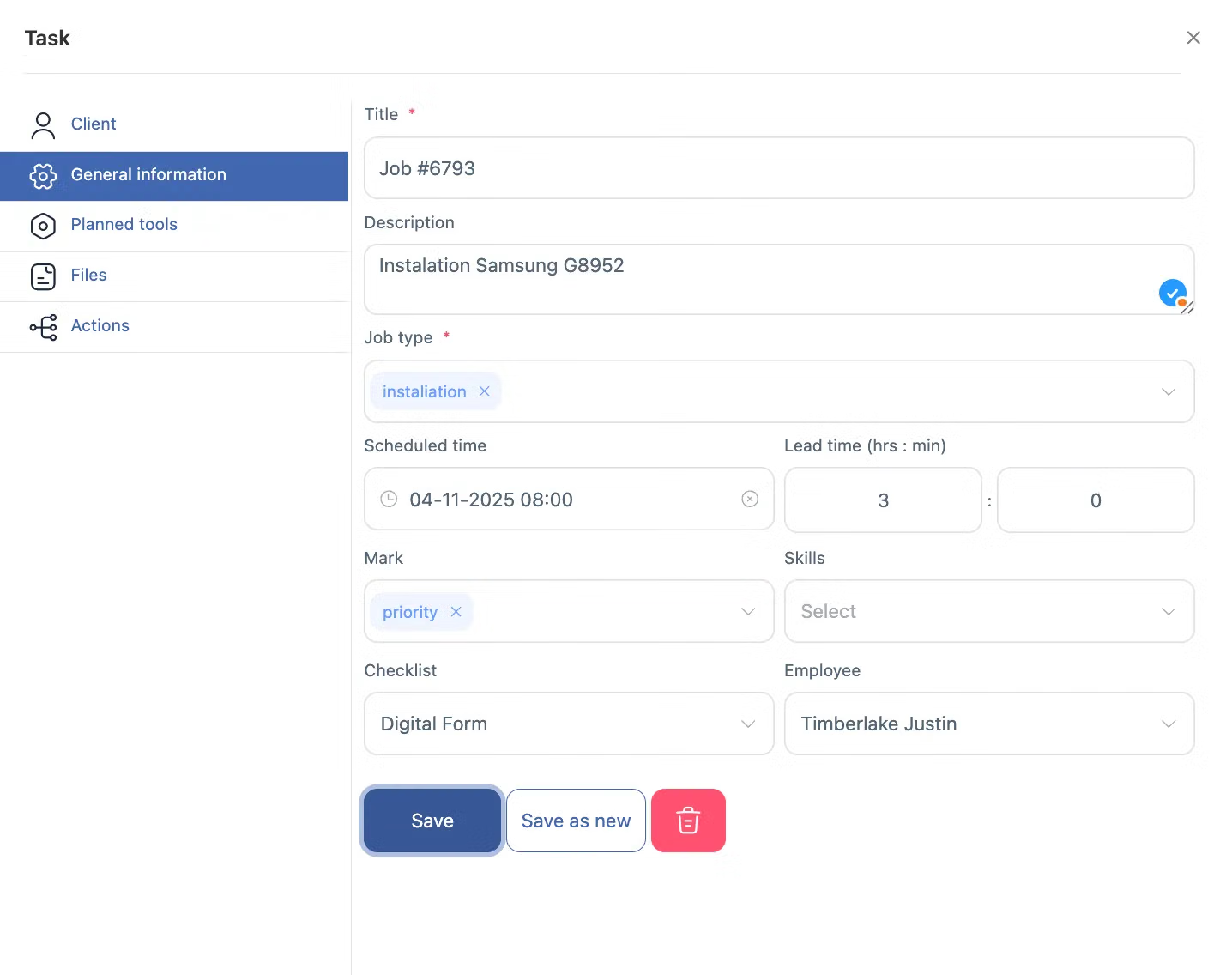
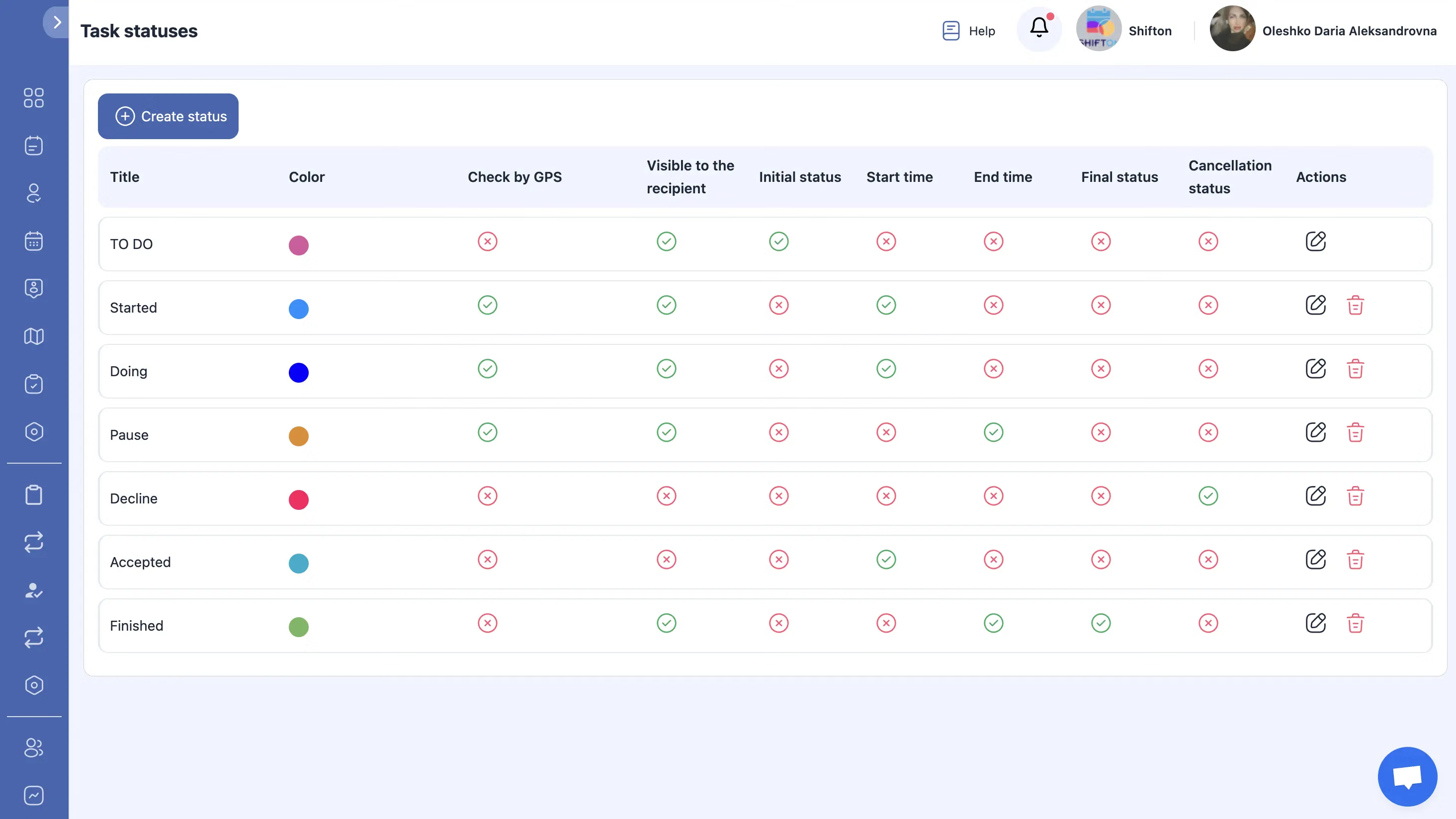
Breakdowns do not wait for the schedule
A garage door that will not open traps a car and sometimes a business. The call is urgent, the customer is comparing response times, and the schedule already has installs on it. One board holds both, so the office can see what taking the emergency actually costs before promising a time.
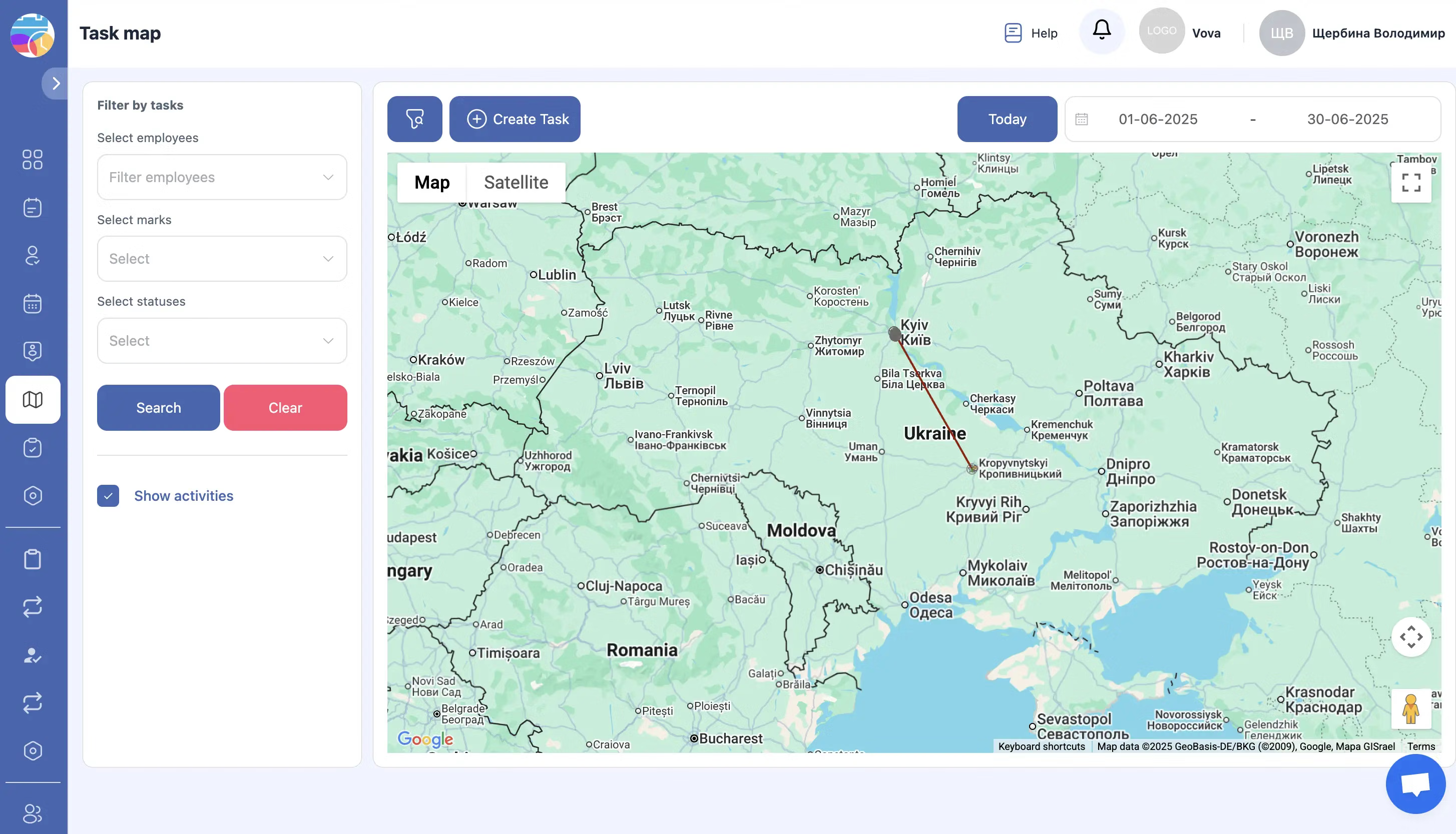
The door on the job card, not in somebody's memory
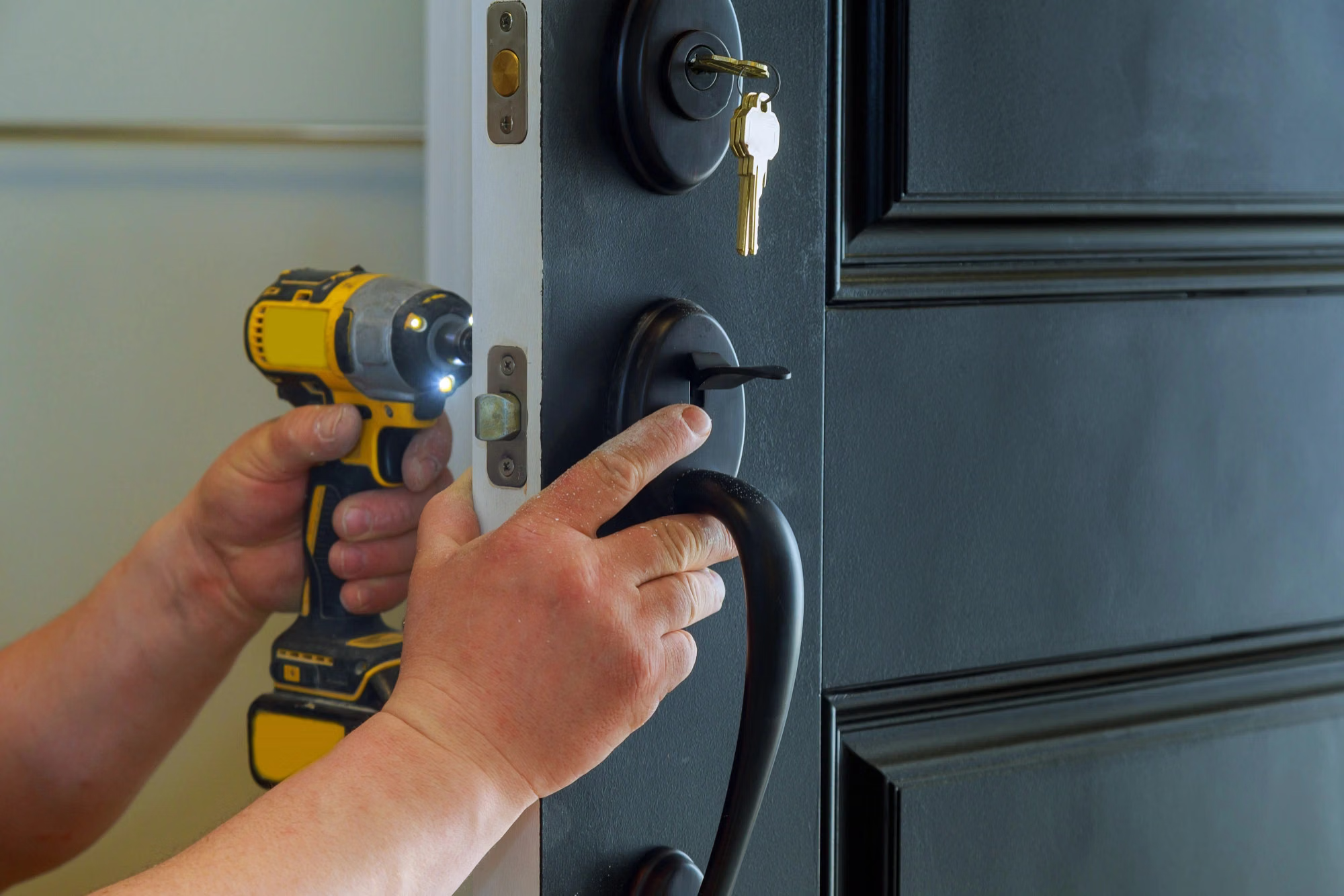
Springs, tracks, openers and remotes vary by make, age and installation. An engineer who arrives knowing the door type, the opener model and what was done last time finishes in one visit. One who arrives with a van full of generic parts often does not.
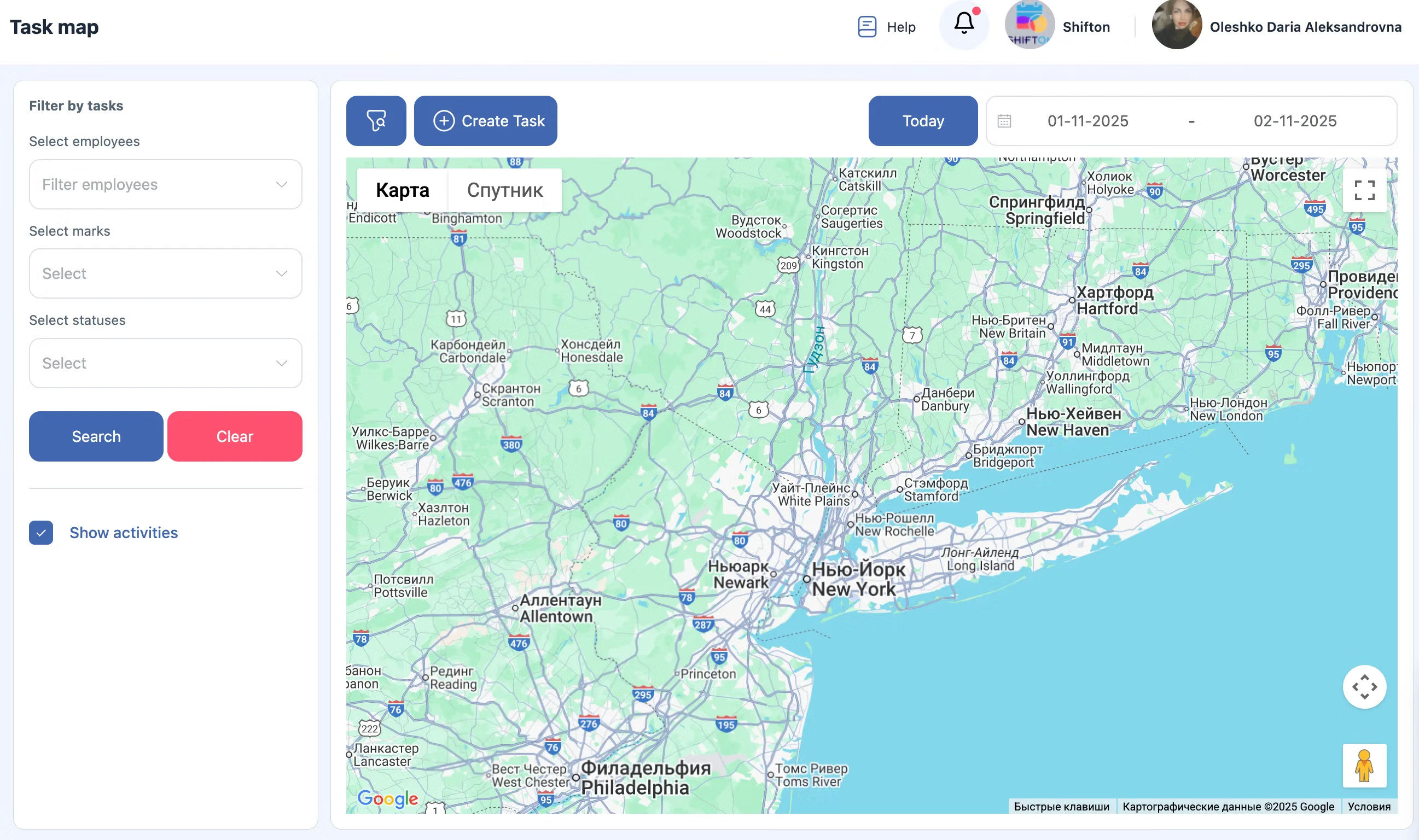
Springs, cables and the parts that decide the visit
A torsion spring, a cable set, a set of rollers, an opener board. Carry the right one and the job takes an hour, carry the wrong one and it takes two visits and an apology. Recording parts against jobs is what turns van stocking from guesswork into a decision.
Safety checks, sign-off and the invoice
Every service visit produces a safety check on a mechanism under considerable tension, and every install produces a handover. Both need a record with photographs and a signature, and both should end with a bill built from what was actually done.
Start with the Free Plan
No time limits. Get full access to core features and upgrade when you're ready.
Read the full guide to garage door software
Three kinds of work, one set of vans
A garage door business runs emergency repairs, planned servicing and installations, and the three pull in opposite directions. Repairs are urgent and unpredictable. Servicing is routable and easy to postpone, which is why it gets postponed. Installations are booked, take most of a day and cannot absorb interruptions without somebody losing a morning.
Holding all three on one board is what makes the trade-offs deliberate. Without it, the emergency always wins, the servicing never happens, and the install crew finds out at eight in the morning that they are now a repair crew.
First-time fix is an information problem
The difference between a profitable garage door call and a losing one is whether the engineer can finish on the first visit. That is decided before they arrive, by what they know and what is on the van.
What the job card should carry
Door type and size, opener make and model, the age of the installation, what was replaced last time and photographs from the previous visit. None of this is difficult to record, and all of it is missing in businesses that keep the history in a diary or in the head of the engineer who has been there longest.
What the van should carry
Van stock in this trade is usually set by habit and adjusted after a bad week. Recording parts against jobs replaces that with evidence: which spring sizes are actually used, how often an opener board is needed, what is being carried around all year and never fitted.
Servicing is the contract you already have
Commercial doors on loading bays and in car parks need periodic servicing, and that work is both profitable and easy to lose. It is lost by being unscheduled: nobody sets a date, the year passes, and the customer only calls again when something breaks, often after taking a quote from someone else.
Recurring visits scheduled ahead solve this at the cost of a few minutes of setup per contract. The service appears on the board in advance, gets planned into a sensible route, and is invoiced without anyone chasing.
Safety and the record that outlives the visit
Garage doors store a lot of energy in springs, and the industry has the accident history to prove it. Service checks matter, and so does being able to show that they were done. A checklist completed on a phone, with photographs, and stored against the address is the cheapest form of that proof.
It is also what makes warranty conversations short. When a spring fails fourteen months after replacement, the record of what was fitted and when is either available in one search or is not available at all.
What to look for
Can an emergency be slotted into a booked day with the consequences visible. Does the engineer arrive knowing the door. Can parts be recorded on the job. Can the invoice be produced from the finished work. Those four decide whether the software helps or is just another screen.
Starting free
One or two engineers run free with no time limit: scheduling, digital job forms, the mobile app and reports. That is a complete system for a small operation and a low-risk way for a larger one to test the approach.
Modules are added when the business needs them, each with a free trial of up to 55 days: inventory for van stock, invoicing for billing from the job, location control when several vans need routing, the customer portal for commercial clients.
Individual pages cover each part: task management and dispatch, the mobile app, digital job forms, inventory, work order history and invoicing. Prices are on the pricing page.
Frequently Asked Questions
Can breakdown calls and installs be managed on the same board?
Yes. Emergency call-outs, planned services and installation work sit in the same view, so accepting an urgent job shows immediately what it does to the committed work rather than being discovered when an install crew is short an engineer.
How does the engineer know the door and opener details before arriving?
They are on the job card, along with the history of previous visits to that address. Make, model, age, what was replaced last time and photographs from earlier work all travel with the job, which is what makes a one-visit fix likely.
Can we track springs, cables and opener parts used?
With the inventory module, parts are recorded against the job that consumed them and van stock is reduced automatically, with warnings when a commonly used size runs low. Over a few months this shows what a van should actually carry.
Does the app work in an underground car park with no signal?
The mobile app for iOS and Android holds the job, the checklist and the photographs on the device. Work is recorded normally without coverage and syncs when the phone gets a connection again.
How are safety checks recorded?
As digital job forms completed on the phone during the visit, with photographs where they help. The signed record is stored against the address, so a question about a service done two years ago is answered from the job history.
Is this workable for a two-engineer business?
Teams of two or fewer run free with no time limit: scheduling, digital job forms, the mobile app and reports are included. Paid modules such as inventory, invoicing and location control are added when there are more vans to coordinate.
What does garage door software cost here?
Above two employees the platform is priced per employee per month, and every paid module carries a free trial of up to 55 days, which is long enough to run a full quarter of service and installation work through it.
Ready to transform your field operations?
Join thousands of field service companies that trust Shifton to run smarter every day.