

Lawn Care Management Software for Routes and Crews
The weekly round in route order, with the property notes, the visit record and the extras on the job card.

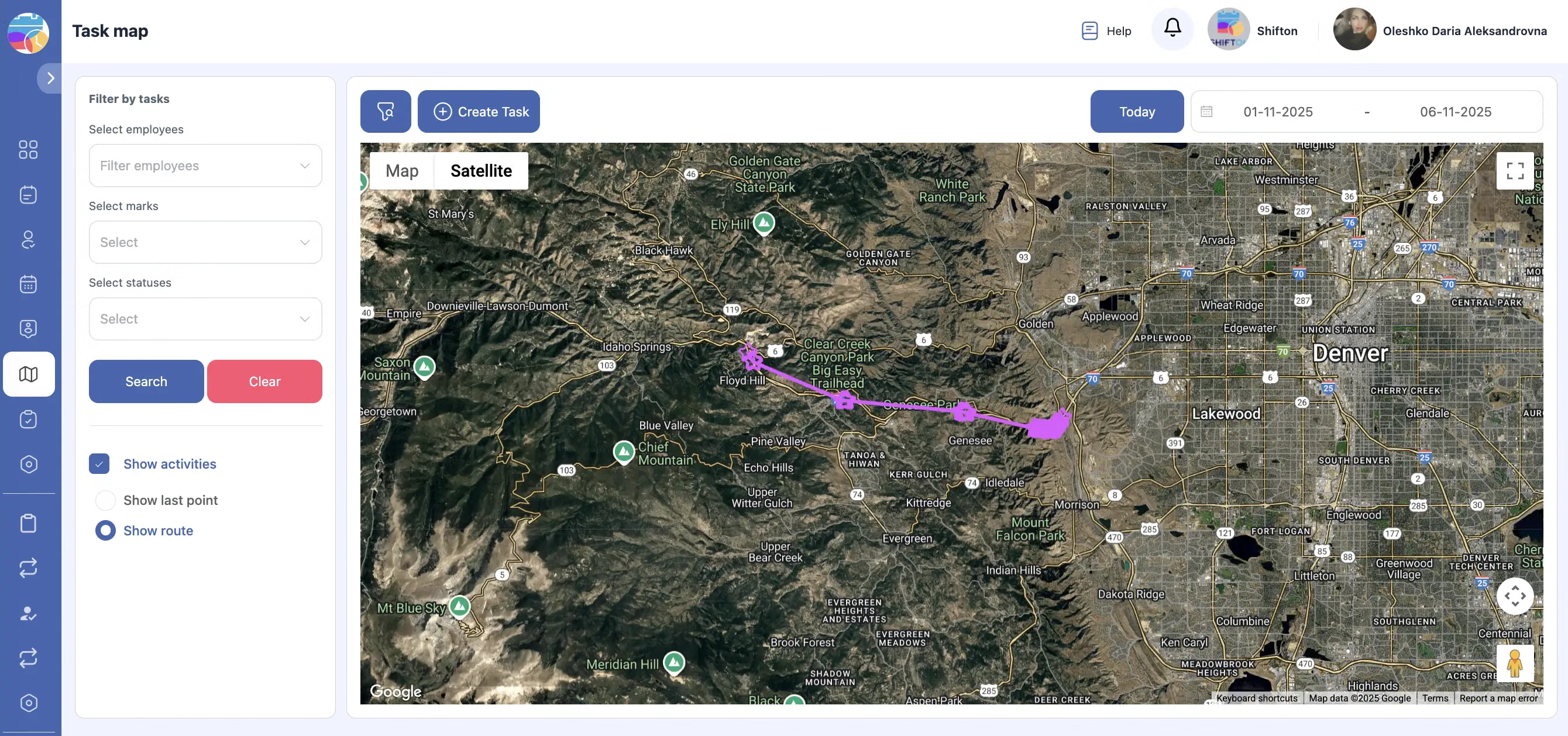
The round is the business
Lawn care lives or dies on the round. The same properties, roughly the same order, every week from spring to autumn. What changes is the weather, the growth rate and who is off. A round rebuilt by hand each Monday is a round that drifts: properties get missed, the driving grows and nobody notices until a customer cancels.
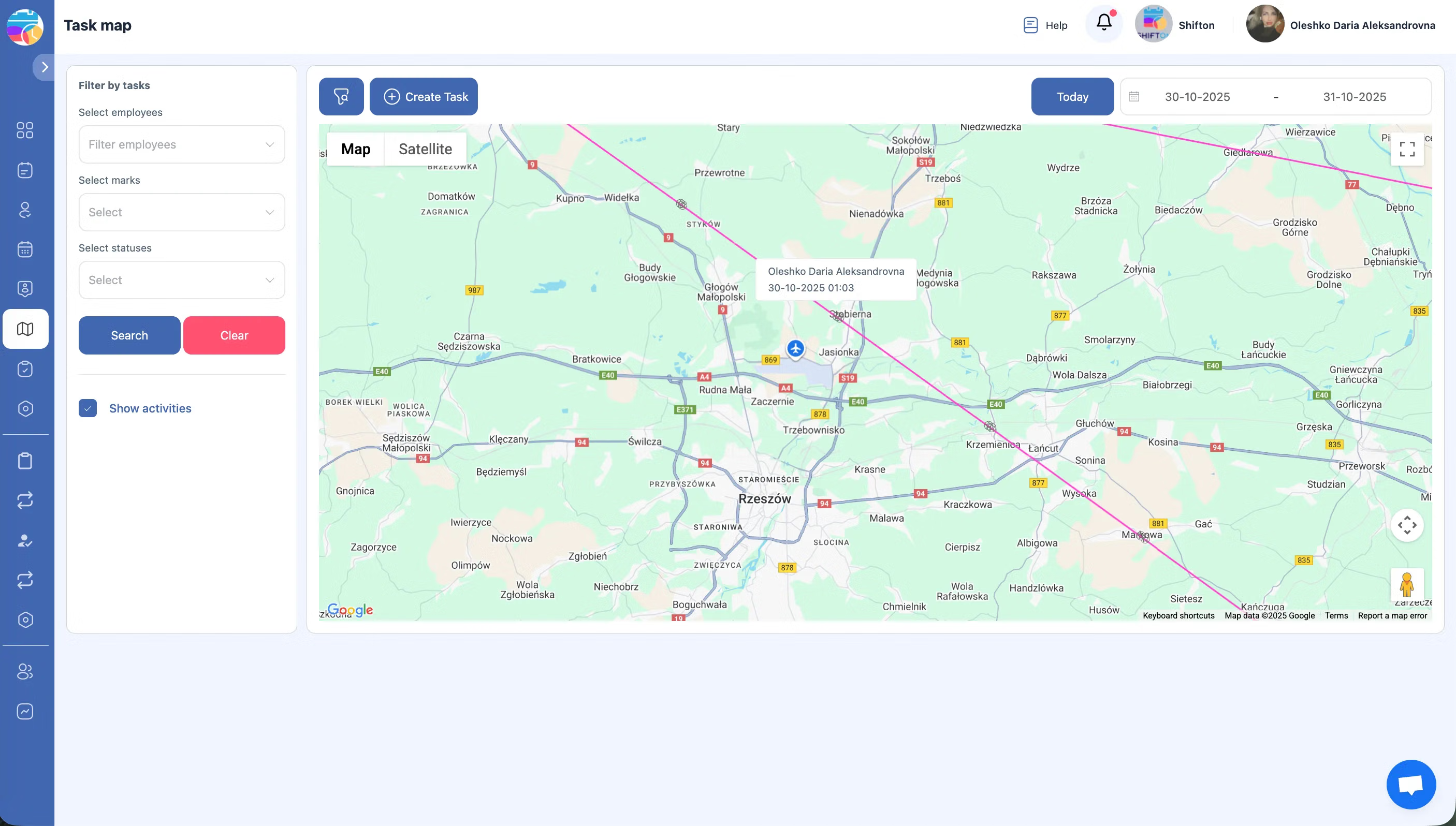
Everything the crew needs to know is on the job
Gate codes, the dog, the sprinkler heads near the border, the side gate that sticks, the customer who wants the clippings left. Kept in one person's memory it disappears when they do. Kept on the property record it survives holidays, new starters and the end of the season.
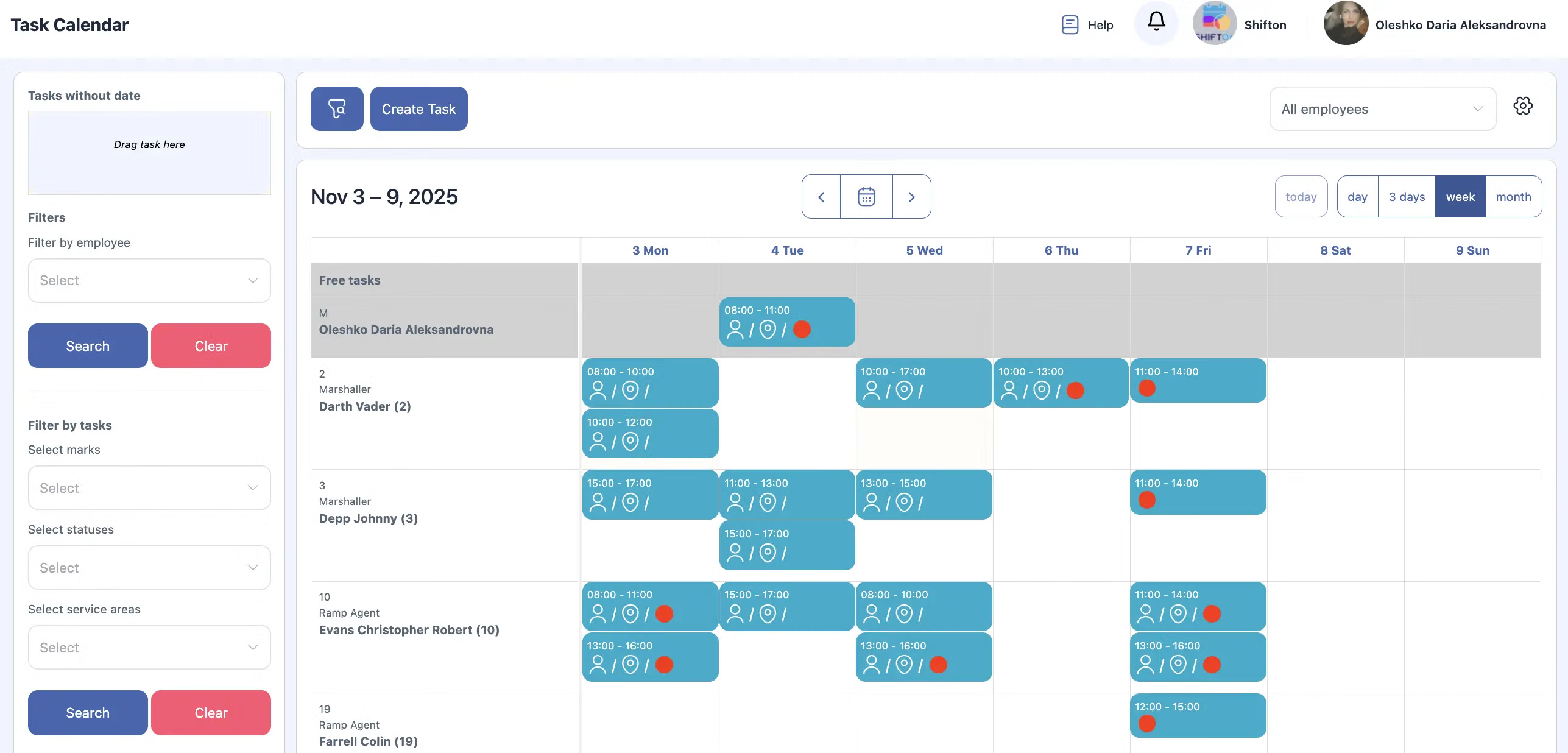
Time on site turns a price into a margin
Every lawn care contract was priced from an estimate, and most are never checked against reality. Recording time on the job converts the estimate into a fact: the property quoted at twenty five minutes that takes forty five in July is visible while the season is still running.
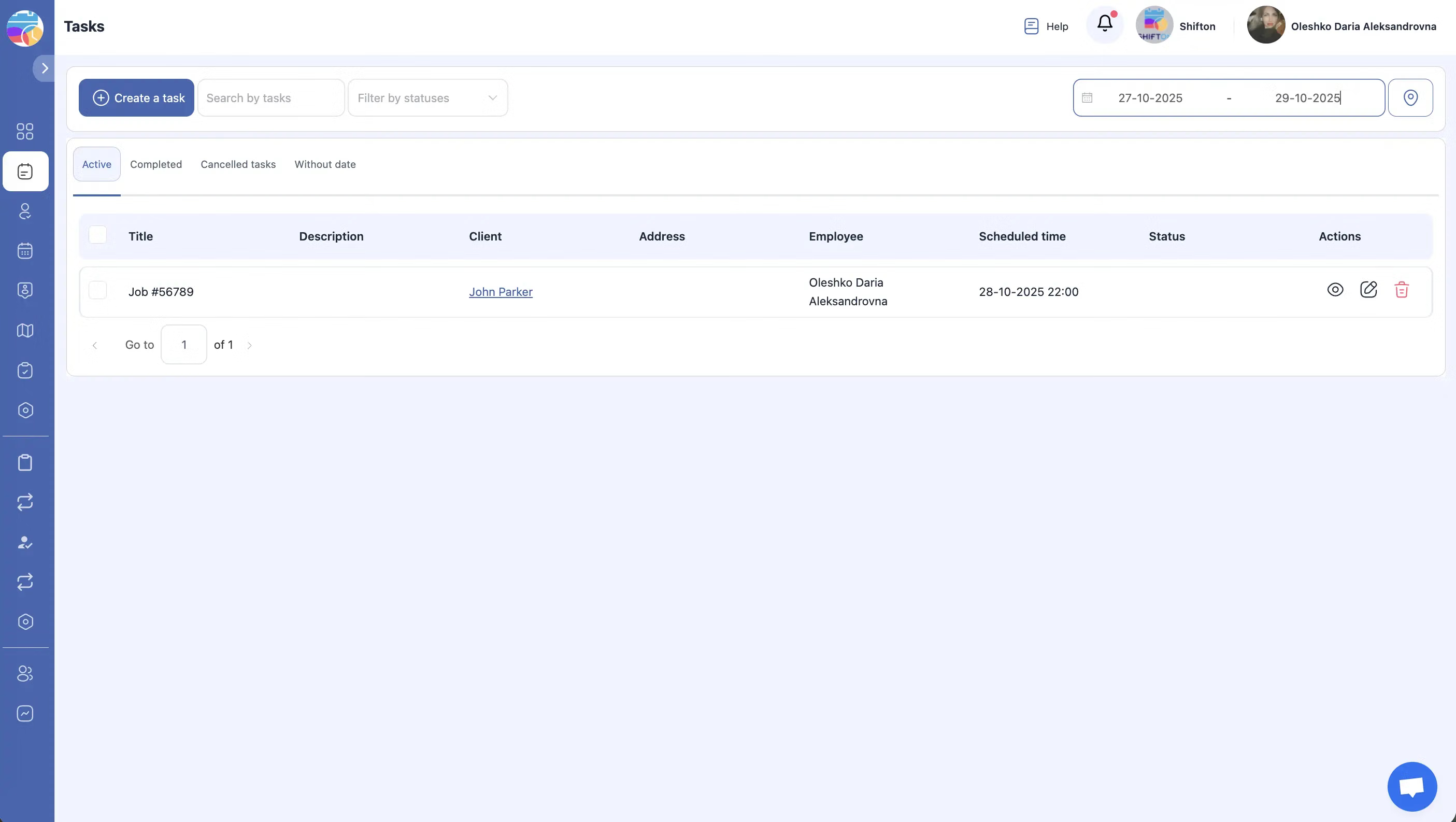
Extras, materials and the invoice at the end of the month
Fertiliser, weed treatment, hedge work agreed on the spot, a tree limb taken away. Small things that are done and not billed because nobody wrote them down. Recorded on the visit they either get charged or get given away on purpose.
Start with the Free Plan
No time limits. Get full access to core features and upgrade when you're ready.
Read the full guide to lawn care management software
A lawn care business is a routing business
The work itself barely varies. A lawn takes what it takes, and the crew that has done it forty times knows exactly how long. What varies, week to week, is the driving between properties, and that is the part almost nobody measures. A round built in the order customers signed up rather than the order they sit on the map can spend a quarter of the day in the van, and the business never sees it because the van is not on a timesheet.
This is the first reason to move a round off paper. Not tidiness. Route order, made visible, and kept that way as customers join and leave.
Recurrence has to be a setting, not a habit
A season is roughly thirty visits per property. Multiply by a hundred and twenty properties and the office is either scheduling four thousand visits by hand or scheduling one pattern and adjusting it. Every business that does the first eventually misses a property for three weeks and finds out from a cancellation.
Skips, catch-ups and growth rate
The pattern needs exceptions. Rain moves a day. A dry August means some lawns can go a fortnight. A customer goes away and asks to pause. All three should be a change to one visit, not a reason to rebuild the round, and all three should be visible to the crew on their phone the same morning.
The property record beats the crew's memory
Lawn care has an unusual amount of knowledge attached to each address, and almost all of it is trivial until it is missing. The code for the side gate. The dog that is fine unless you use the front. The bed the customer mows themselves. The sprinkler heads that cost you a callout the last time somebody new was on the round.
Written on the job card, this is the difference between a competent visit and an apology. It also makes holidays and staff turnover survivable, which in a seasonal business with seasonal staff is not a small thing.
Hours per property, and why it changes renewals
Most lawn care contracts are priced once, from an estimate, and renewed on a feeling. The result is a portfolio where a third of the properties are quietly subsidising the rest. Recording time on site turns that from a suspicion into a list: these eleven properties take longer than they were priced for, and here is by how much.
What you do with the list is a business decision. Reprice, adjust the specification, hand the property back or accept it as part of a good route. All three are better than not knowing, and the numbers make the renewal conversation with a customer straightforward rather than awkward.
Extras are the difference between a good year and a flat one
The crew is on site, the customer asks whether they could deal with the hedge while they are there, and it gets done. Ten minutes, no record, no charge. Across a season, in a business with four crews, that is a serious number and it is completely invisible because it never touched paper.
Making the record take five seconds on the phone the crew leader already has in their hand is the whole fix. After that, giving work away is a choice rather than an accident.
What to look for
Three questions matter more than any feature list. Can the season be scheduled once and adjusted. Can a visit be completed on a phone, in the field, with no signal, in under a minute. Can the month be invoiced from the visits that were actually recorded.
If those work, the software will still be in use in August. If they do not, it will be quietly abandoned by June, when everyone is too busy to fight it.
Starting free
A two-person operation runs free with no time limit: scheduling, digital job forms, the mobile app and reports are included. That is a working system for a single crew, and a way for a larger business to test the round before committing.
Paid modules follow the pain. Invoicing when billing the month by hand becomes the worst afternoon in the calendar. Inventory when treatments and materials stop reconciling. Location control when crews cover a wide area and route decisions start to matter. Each has a free trial of up to 55 days.
The parts are documented individually: task management and dispatch, the mobile app, digital job forms, invoicing, client records and reports. Prices sit on the pricing page.
Frequently Asked Questions
Can I schedule a whole season of lawn care visits in advance?
Yes. Recurring visits are set up per property and appear on the board automatically, so the round is planned once rather than rebuilt every Monday. Individual visits can still be moved, skipped or caught up without breaking the rest of the schedule.
How does the lawn care app handle a day lost to rain?
The day is rescheduled rather than deleted. Properties move to a catch-up slot, the crews affected see the change on the mobile app, and the office can see what the move does to the rest of the week before committing to it.
Can crews record extras agreed with the customer on site?
Yes. Additional work such as hedge trimming or a treatment is recorded on the visit while the crew is still on the property, with a photo if useful, and carried into the invoice. That is the difference between billing extras and remembering half of them.
Does the mobile app work where there is no signal?
The app for iOS and Android stores the job, the checklist and the photos on the device. Rural properties with no coverage are recorded normally and everything syncs when the phone reconnects, so nothing has to be written down and typed later.
How do I find out which properties are unprofitable?
Hours are recorded against each property rather than against the day. Reports compare quoted time with actual time, so the lawns that overrun in mid-season show up while there is still time to reprice them or fix the route around them.
Is lawn care software affordable for a one-crew business?
Teams of two or fewer use the free plan with no time limit, including scheduling, digital job forms, the mobile app and reports. Paid modules such as invoicing, inventory, location control and the customer portal are added when the round grows.
What does it cost beyond the free plan?
Pricing is per employee per month above two employees, and every paid module carries a free trial of up to 55 days. That covers a full cutting season, which is long enough to judge whether invoicing or route tracking is worth keeping.


Ready to transform your field operations?
Join thousands of field service companies that trust Shifton to run smarter every day.