

Home Care Scheduling Software for Agencies and Caregiver Rotas
Caregiver rotas built around the client, visits confirmed on the doorstep, and hours that reach payroll without being reconstructed.

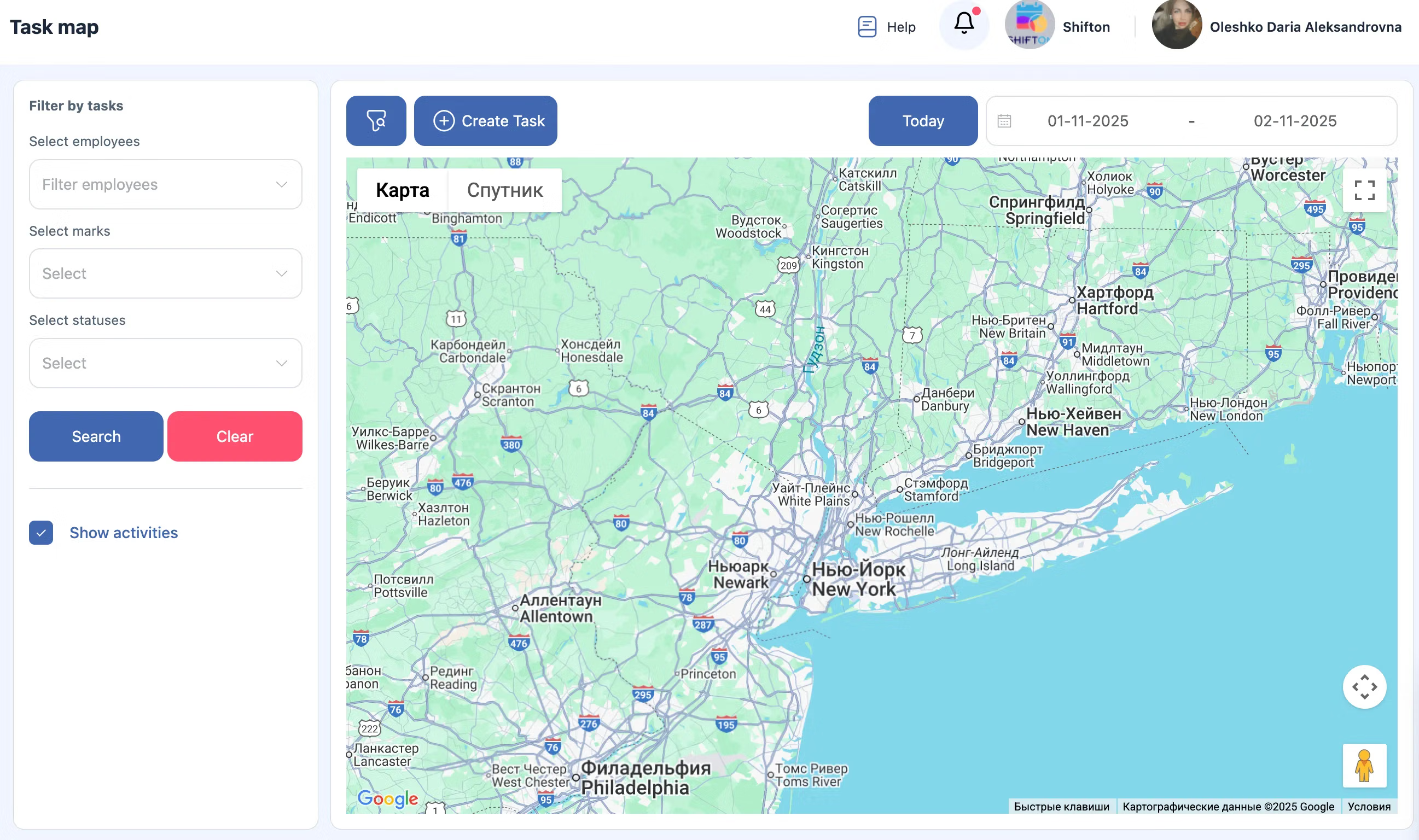
The rota is a promise to a person, not a shift pattern
A home care rota is not a list of shifts to be covered. It is a set of promises to named people who expect the same caregiver at roughly the same hour, and continuity is the part clients notice first when it breaks. Scheduling that treats visits as interchangeable slots produces a legal rota and an unhappy client list.
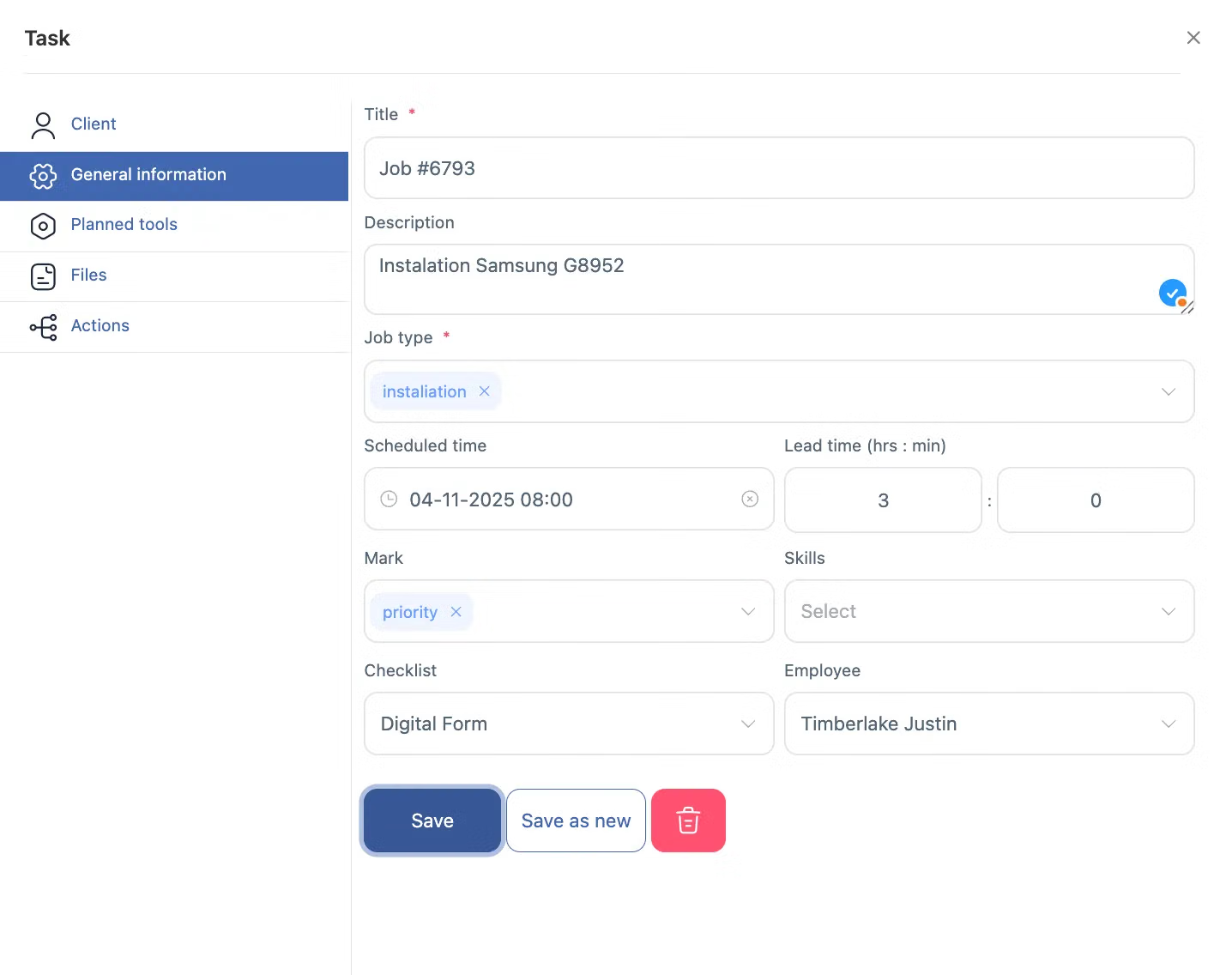
Visits confirmed where they happen
The office learns what happened in a home from whatever the caregiver writes down later, and later is where accuracy goes. A visit recorded on the doorstep, at the moment it starts and ends, replaces a timesheet written from memory at the end of a week.
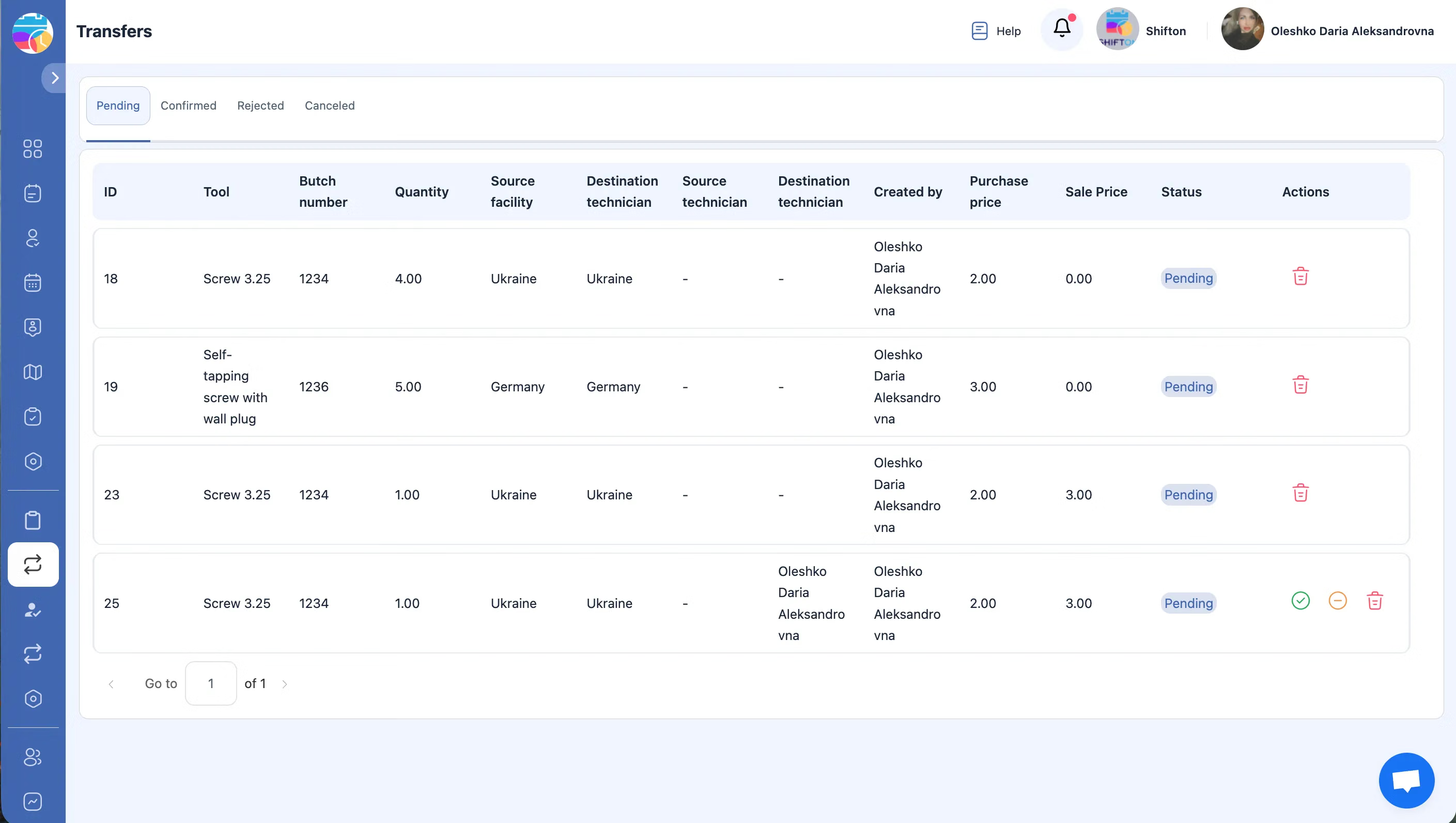
Late, missed and reassigned, seen while the day is still fixable
Most of what goes wrong in home care is recoverable if it is noticed in the first twenty minutes. A caregiver stuck in traffic, a client who does not answer, a visit that never started: all of them are visible on a live board and invisible on a printed rota.
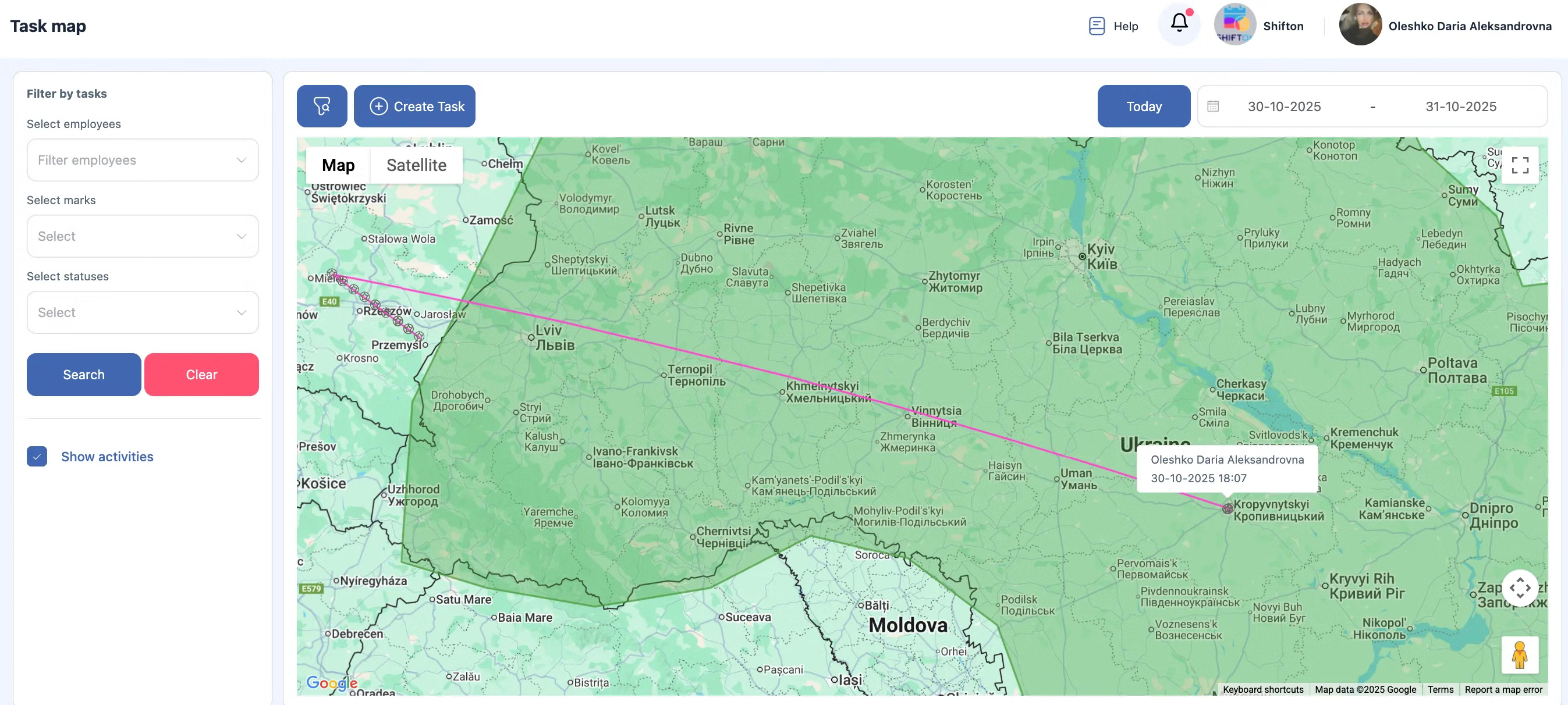
Hours, mileage and the wage bill they become
Payroll in home care is where three numbers meet: hours worked, travel between clients and the rates that apply to each. Reconstructing them from paper is slow, and every correction is a conversation with a caregiver about money.
Start with the Free Plan
No time limits. Get full access to core features and upgrade when you're ready.
Read the full guide to scheduling software for home care
Why home care rotas break in ways other rotas do not
Most workforce scheduling problems are arithmetic: enough people, enough hours, the right skills. Home care adds a constraint that arithmetic cannot express. The work happens in somebody's home, on a timetable that belongs to their life rather than to the agency, and the person delivering it is someone the client has usually come to trust. Move the visit an hour and the maths still works. The client still notices.
That is why home care scheduling software is judged differently from a generic rota tool. The question is not whether it can cover the week. It is whether the week it produces keeps the promises the agency made when it took the client on.
Four things the rota has to hold at once
Continuity
Continuity is the single strongest predictor of whether a client is satisfied, and it is the first thing sacrificed when cover gets tight. Holding the client's caregiver history on the client record turns continuity into something the coordinator can see while building the rota, rather than something they remember for the clients they know well and lose for the rest.
Travel
A visit list without travel is a work of fiction. Two consecutive visits twenty minutes apart cannot be scheduled back to back, and an agency that does so is either paying overtime it did not plan or delivering short visits it will be asked about. Planning the journey as part of the day makes the cost visible before it is incurred.
Preferences and access
A key safe code, a dog that needs shutting in another room, a client who does not open the door to someone she has not met: these are not footnotes, they are the difference between a visit and a wasted journey. They belong on the job card where the caregiver reads them, not in a folder in the office.
Cover
Sickness is not an exception in home care, it is a weekly event. What matters is how quickly the coordinator can see which visits are uncovered, who is genuinely close enough to take them, and which clients must be phoned first. That is a live board, not a spreadsheet emailed on Sunday.
Recording the visit where the visit happens
Every agency keeps a record of what was delivered, and almost every dispute about pay, invoicing or care quality comes back to it. The weakness is rarely dishonesty. It is that the record is made hours after the event, by someone who has since been to four other homes.
Starting and ending the visit in the app on the doorstep changes the nature of that record. The times are the real times. The notes are written while the detail is fresh. A photograph of a concern, a signature from a family member, a task list ticked as it is completed: all of it attaches to the visit rather than being reconstructed from a notebook.
Location confirmation belongs in the same discussion and deserves an honest description. Shifton offers it through the Work location control module, which is a paid addition rather than part of the free plan, and it confirms that the phone was at the address when the visit started. It is evidence about attendance, not a clinical record and not a certified visit verification scheme, and agencies with regulatory obligations should check what their own regulator requires before relying on any single tool.
What coordinators actually do all day
Ask a care coordinator what takes their time and the answer is almost never building the rota. It is the twenty phone calls that follow a rota meeting reality: the caregiver who is running late, the client who cancelled, the visit that needs moving because a district nurse is coming at eleven.
Software helps here by shortening the distance between something going wrong and somebody knowing. A visit that has not started is visible as a visit that has not started. The caregivers nearby are visible as names with locations rather than a mental map of who lives where. The client can be called before the hour they were expecting someone, which is the difference between a service that communicates and one that apologises.
Caregiver apps, agency systems, and the difference between them
Search for caregiver scheduling software and the results mix two different products. One is a caregiver app in the consumer sense: a family coordinating care for a relative, sharing a calendar and a medication list. The other is home care agency software, which exists to run a workforce of employed caregivers against contracted hours. They share vocabulary and almost nothing else.
An agency needs the second. The test is simple: can the office see, at nine on a Monday morning, which visits have not started. A shared calendar cannot answer that question, because nothing in it knows whether anybody arrived. A mobile caregiver app that records a caregiver clock in at the address can, and that single capability is what separates a rota from a record.
Private duty agencies and home health care providers ask the same question with different vocabulary and different regulators behind it. The scheduling problem underneath is identical: caregiver staff scheduling that respects continuity, travel and preference, and produces hours nobody has to reconstruct.
Hours, and why they are contentious
Home care pay is made of short visits, split shifts, travel and unsocial hours, and every one of those is a place where a caregiver and an office can arrive at different numbers. When the hours come from recorded visits rather than from a submitted timesheet, the conversation changes from whose memory is right to what the record shows.
The same records answer the questions an agency is asked by everyone else. How many visits were delivered late last month. Which clients had more than three different caregivers. How much of the week went into travel. These are not reports anyone enjoys producing by hand, and they are the ones that decide whether a contract is renewed.
Where Shifton Field Service fits, and where it does not
Shifton Field Service is workforce software. It plans who goes where, holds what they need when they arrive, records what happened and turns that into hours and reports. Scheduling, the caregiver app, digital job forms and reporting are in the free plan, which covers teams of up to two people with no time limit; inventory, invoicing, location control and the customer portal are paid modules.
It is not a clinical system. It does not hold medical records, it does not bill a health insurer, and it is not a substitute for the documentation an agency keeps for regulatory purposes. Agencies usually run it alongside whatever holds the care plan, because the two answer different questions: one describes the care a client should receive, the other shows how the visits were actually delivered.
Frequently Asked Questions
Does the caregiver app work without a signal?
Yes. The visit, the task list and the forms are held on the device, so a caregiver in a basement flat or a rural area can start the visit, complete the notes and capture a signature offline. Everything syncs when the phone finds a connection again.
Can we keep the same caregiver with the same client?
That is what the client card is for. Preferences, routines, access details and previous caregivers stay with the client, and the coordinator builds the rota around continuity instead of filling slots with whoever is free.
How is a visit confirmed as actually delivered?
The caregiver starts and ends the visit in the mobile app on site. Location confirmation through GPS or a geofence is available as the paid Work location control module, and visit notes, photographs and signatures attach to the same record.
What happens when a caregiver calls in sick?
Affected visits appear on the board as uncovered. The coordinator can see who is nearby and available, offer the visits, and reassign them in a few minutes rather than working through a list of phone numbers.
Does it count travel between clients?
Travel sits in the plan rather than being assumed away. The time between two homes is visible when the rota is built, and the hours recorded reflect the day the caregiver actually worked.
Can a small agency use this without a long setup?
An agency of two or fewer works on the free plan indefinitely, with the rota, the caregiver app, forms and reports included. Paid modules cover inventory, invoicing, location confirmation and the customer portal.
Is this a medical records system?
No. Shifton Field Service schedules the workforce and records how visits were delivered. It is not a clinical documentation or billing system, and it does not replace the medical record an agency keeps for a client.



Ready to transform your field operations?
Join thousands of field service companies that trust Shifton to run smarter every day.