

Elevator Service Software for Maintenance and Callouts
Planned maintenance, callouts and entrapments on one board, with the unit history, the checklist and the parts on the job.
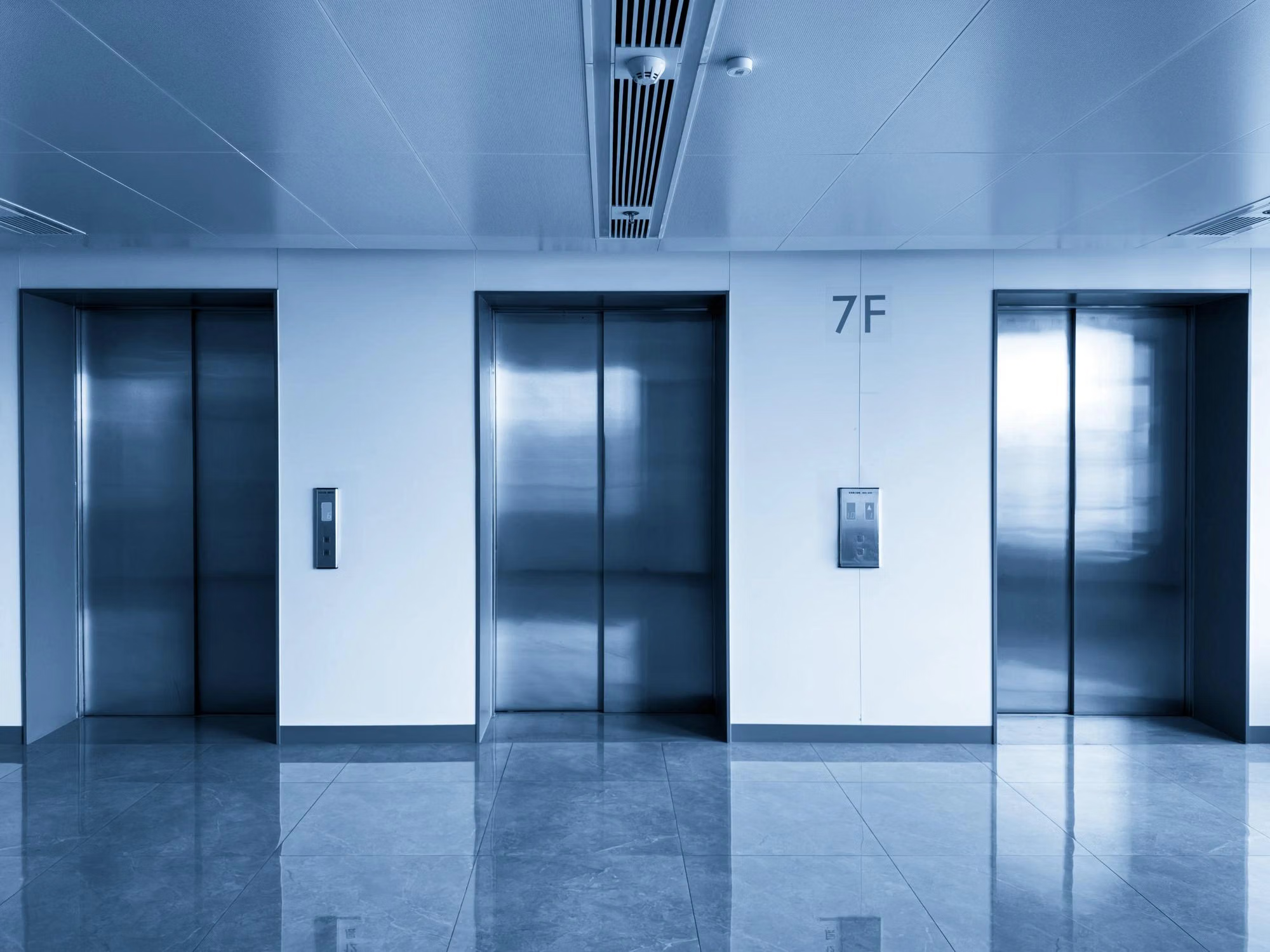
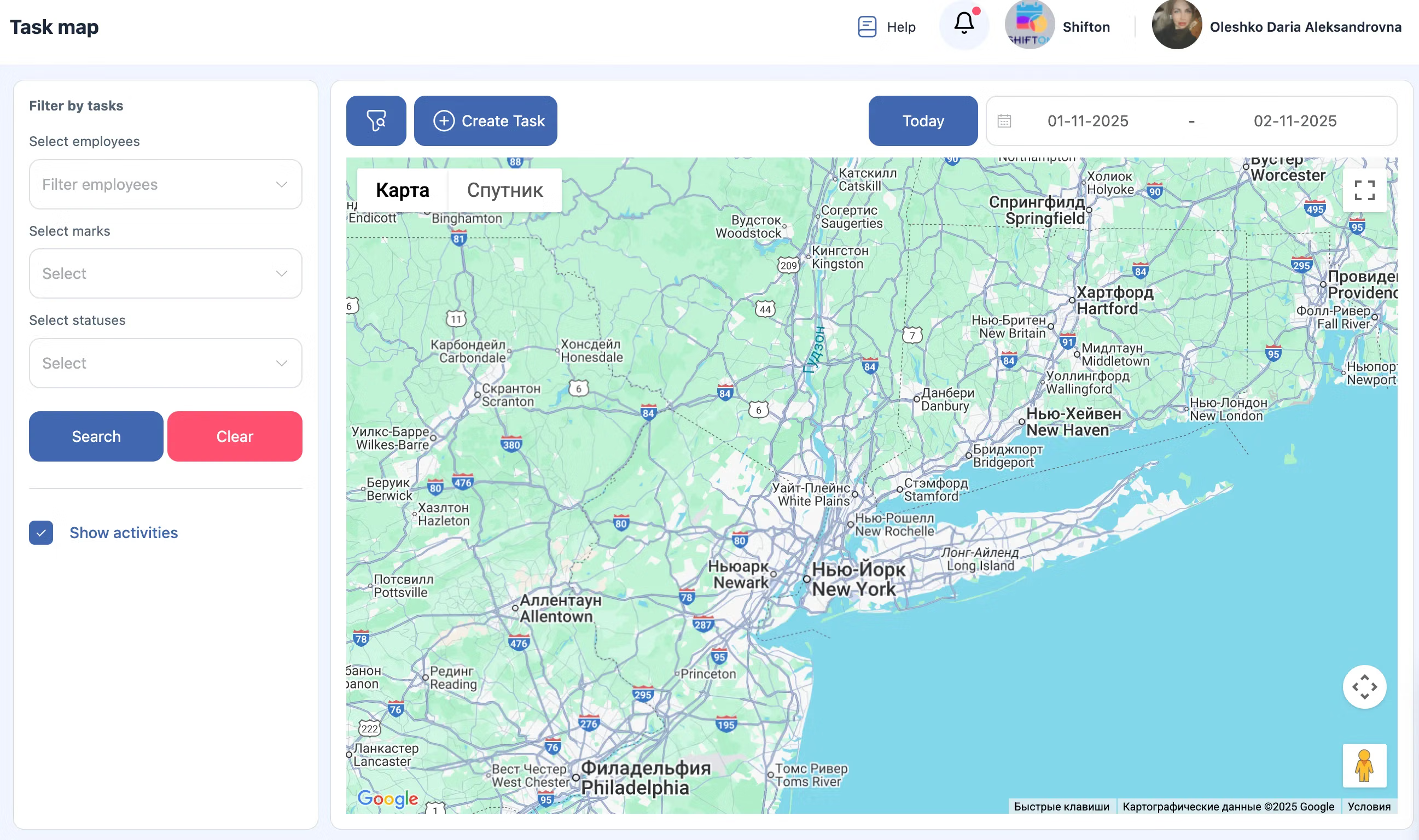
Entrapments do not queue
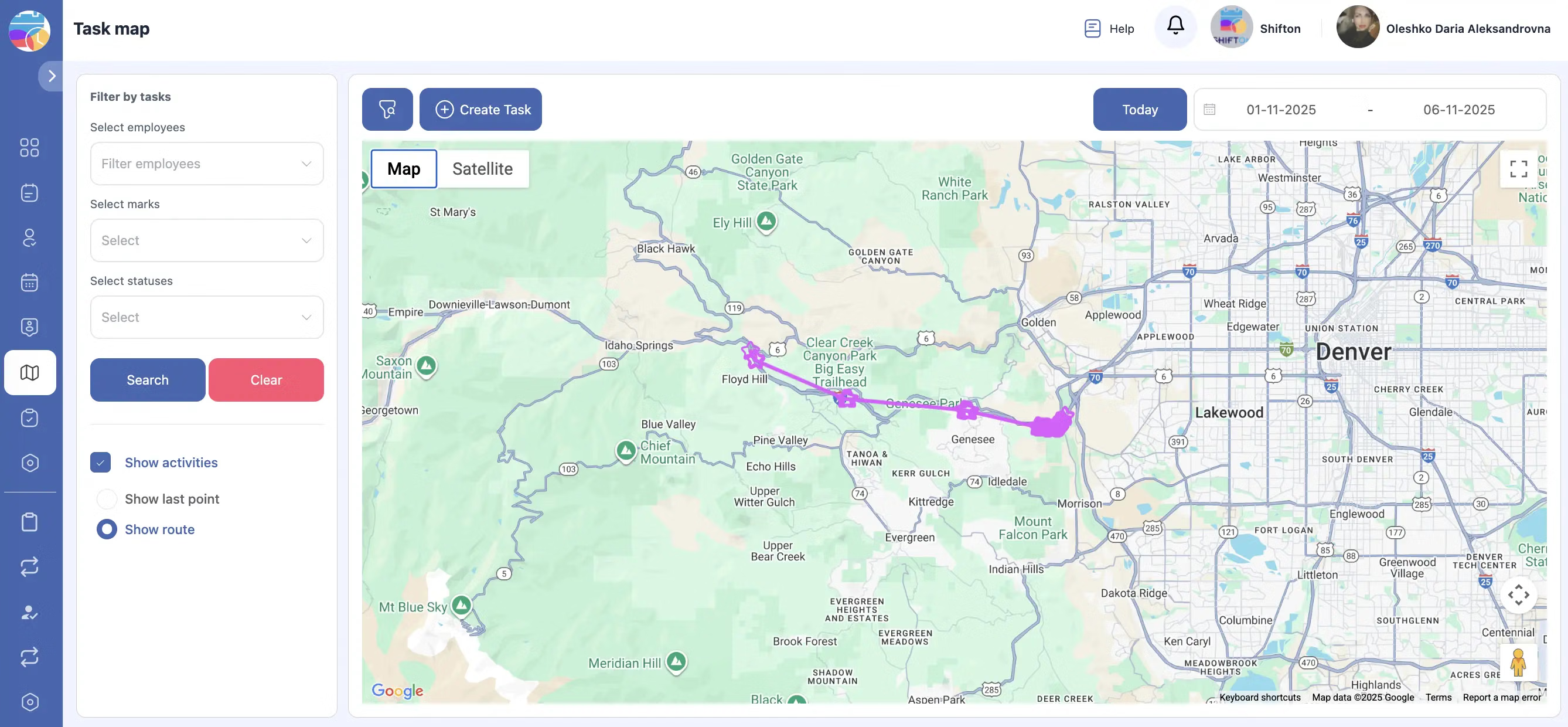
A lift with somebody in it is the highest priority job any maintenance business has, and it arrives without warning into a day already full of scheduled visits. The board has to show who is nearest, who is qualified for that unit and what the emergency displaces, in the time it takes to answer the phone.
Every lift is its own record
Make, model, controller, drive type, capacity, the door operator that has failed twice, the part that was replaced last spring. That history belongs to the unit, not to the engineer who happens to know it, and it decides whether a callout is diagnosed or guessed at.
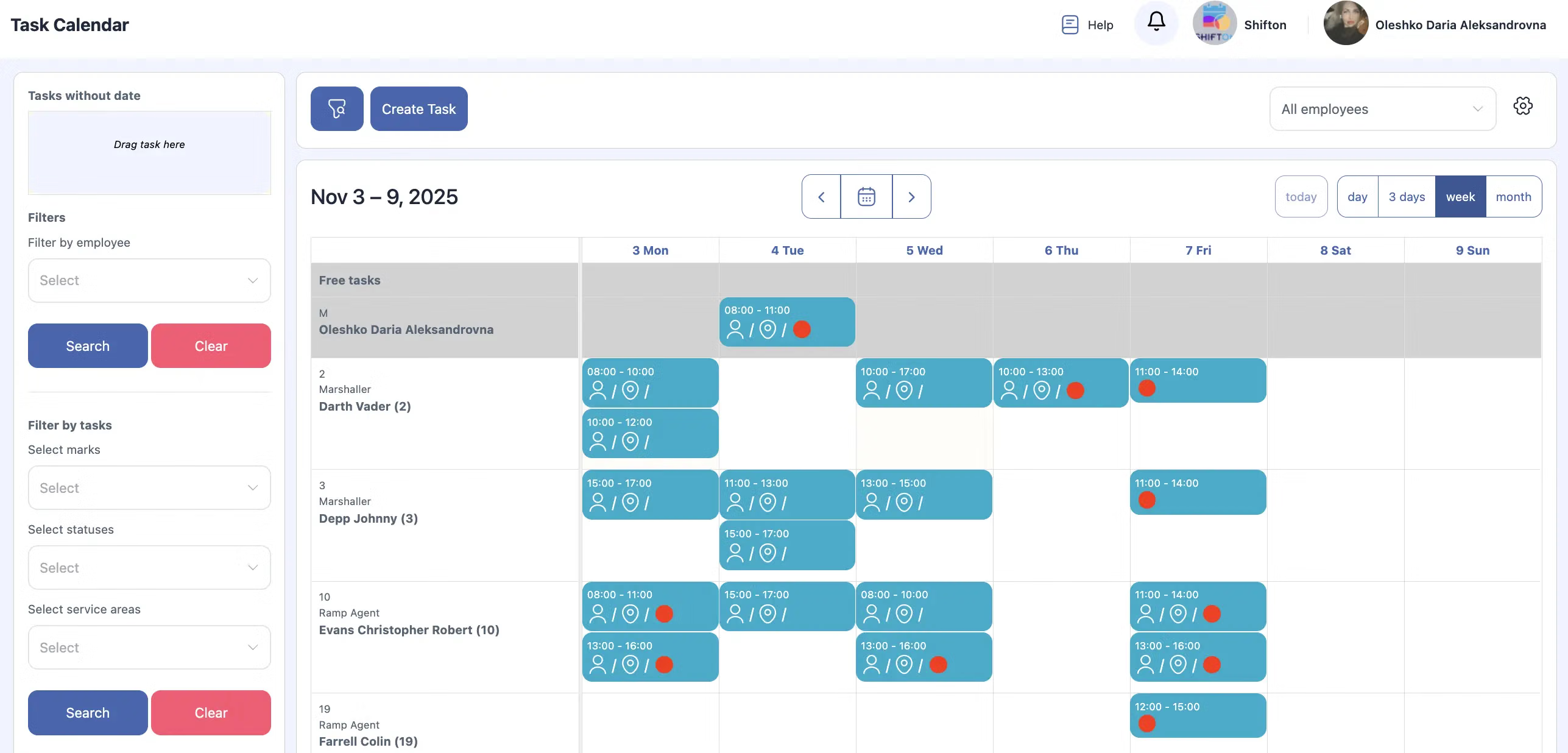
Planned maintenance that survives the callouts
Maintenance contracts are sold as intervals and delivered by engineers who are constantly pulled onto breakdowns. Held as recurring jobs per unit, the planned visits stay visible and the shortfall is a number rather than a surprise at contract review.
Parts, hours and the numbers behind the contract
Lift maintenance is priced per unit per year and delivered in visits, parts and callouts. Recording all three against the unit is what tells you which contracts are profitable and which are being kept alive by an engineer's goodwill.
Start with the Free Plan
No time limits. Get full access to core features and upgrade when you're ready.
Read the full guide to elevator service software
A contract business interrupted by emergencies
Lift maintenance is sold as a schedule and delivered against interruptions. The contract says each unit is visited at an interval. The day says a lift has stopped between floors with somebody inside, and everything else waits. Managing both is the entire operational problem of the trade, and it cannot be done from two separate systems.
The businesses that handle it well are not the ones with more engineers. They are the ones where the office can see, in one place, what the emergency is costing the planned regime, and can make that trade deliberately.
The unit is the record, not the building
A building with six lifts does not have one maintenance history, it has six. Holding the record per unit is what makes patterns visible: the door operator that has failed three times this year, the controller that trips in hot weather, the drive that is consuming parts faster than the contract price assumed.
Those patterns are the basis for every useful conversation with a client. A recommendation to modernise a unit is persuasive when it comes with a list of dated callouts and parts, and is easy to dismiss when it comes as an opinion.
What the engineer should have before arriving
Make, model, controller type, configuration, the last visit and what was found. An engineer with that arrives with a hypothesis. An engineer without it arrives with a torch.
Machine rooms are the worst place to rely on a signal
Almost all lift work happens where mobile coverage does not: basements, shafts, plant rooms behind two sets of fire doors. Any system that requires a live connection to record a visit will be used in a car park afterwards, from memory, which is how checklists get completed identically every month regardless of what was found.
An app that holds the job on the device and syncs later removes that failure quietly, and it is the difference between a maintenance record and a maintenance ritual.
Compliance is the product you are selling
Clients buy lift maintenance partly for reliability and largely for compliance. The evidence of a completed inspection, signed and dated, is what they need when their insurer or their regulator asks. If producing that evidence involves searching paper files, the value of the contract is being undermined by its own administration.
The contract that is quietly unprofitable
Every lift maintenance business has contracts that are kept alive by the goodwill of one engineer who visits more often than the price allows. Nobody sees it because callouts, hours and parts are recorded in different places, if at all.
Attributing all three to the unit turns that into a report. Some contracts get repriced, some units get a modernisation proposal, and some clients find out that their preferred response time costs more than they are paying for it.
What to look for
Can an entrapment be dispatched in under a minute with the unit details attached. Is the history held per lift. Can an engineer complete a visit offline in a machine room. Can planned maintenance coverage be reported per unit and per contract.
Starting free
A small independent maintenance business with two people runs free with no time limit: scheduling, digital job forms, the mobile app and reports are included.
Paid modules are added as the portfolio grows, each with a free trial of up to 55 days: inventory for spares, invoicing for callout billing, location control across a region, the customer portal where building managers want their own visibility.
Each part is documented: dispatch and task management, work order history, digital job forms, the mobile app, inventory and reports. Prices are on the pricing page.
Frequently Asked Questions
How quickly can an entrapment be dispatched?
The job is created with the site and unit details and pushed to the nearest qualified engineer, who receives it on the mobile app immediately. The on-call rota sits on the same board as day work, so out of hours calls do not depend on remembering who is on.
Is the history kept per lift rather than per building?
Yes. Each unit has its own record: make, model, controller, every previous visit, the faults found and the parts fitted. A site with six lifts has six histories rather than one folder, which is what makes repeat faults visible.
Does the app work in a machine room with no signal?
The mobile app for iOS and Android holds the job, the checklist and the photographs on the device and syncs when the phone reconnects. Machine rooms, basements and shafts are recorded normally.
Can planned maintenance intervals be scheduled per unit?
Recurring visits are set per lift at the contracted interval, so the whole portfolio appears on the board in advance and units falling behind their schedule are visible rather than being discovered at contract review.
Can we record parts fitted to each lift?
With the inventory module, parts are recorded against the unit they were fitted to and stock is reduced automatically. Over time that shows which units are consuming parts at a rate that suggests replacement rather than repair.
Can we show a client what was done under their contract?
Every visit keeps its checklist, photographs and signature against the unit, so a report of what was done, when and by whom is produced from the record rather than assembled by hand before a contract review.
What does lift maintenance software cost?
Teams of two or fewer run free with no time limit, including scheduling, digital job forms, the mobile app and reports. Above that pricing is per employee per month, and every paid module carries a free trial of up to 55 days.

Ready to transform your field operations?
Join thousands of field service companies that trust Shifton to run smarter every day.