

Towing Management Software for Dispatch and Impound
Police calls, private property removals, motor club work and impound releases on one board, each with its own clock and its own evidence.

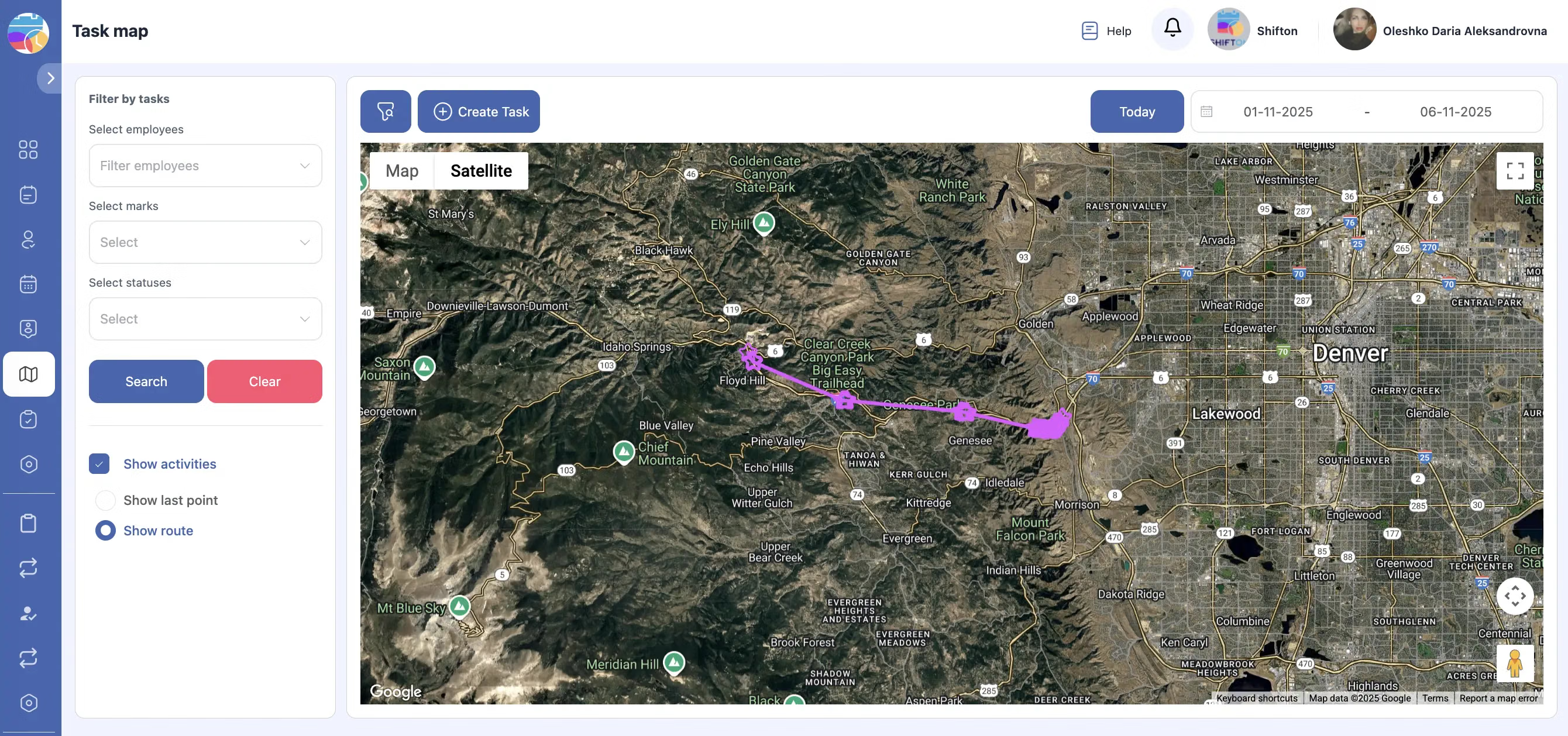
Four kinds of work, one board
A towing company runs several businesses at once. Police rotation, motor club contracts, private property impounds and cash recoveries all arrive through different channels and are paid on different terms, yet they compete for the same trucks. Held on paper and radio, that mix produces missed rotation calls and trucks driving past work they could have taken.
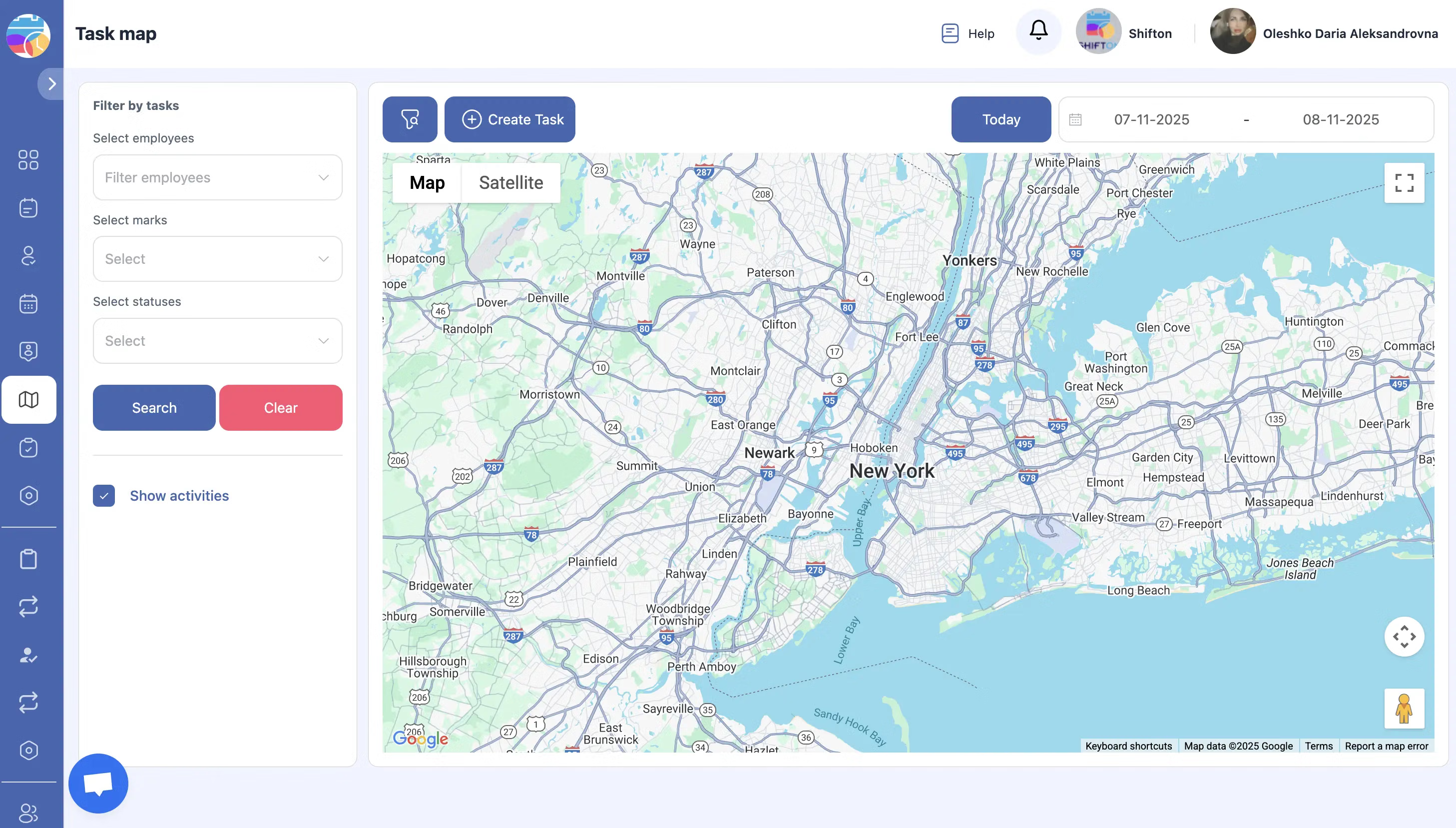
Dispatch that reaches the driver
The gap between taking a call and a truck moving is where towing companies lose contracts. Towing software should close it: the job is created with the location, the vehicle, the reason for the tow and the destination, and it lands on the driver's phone immediately.
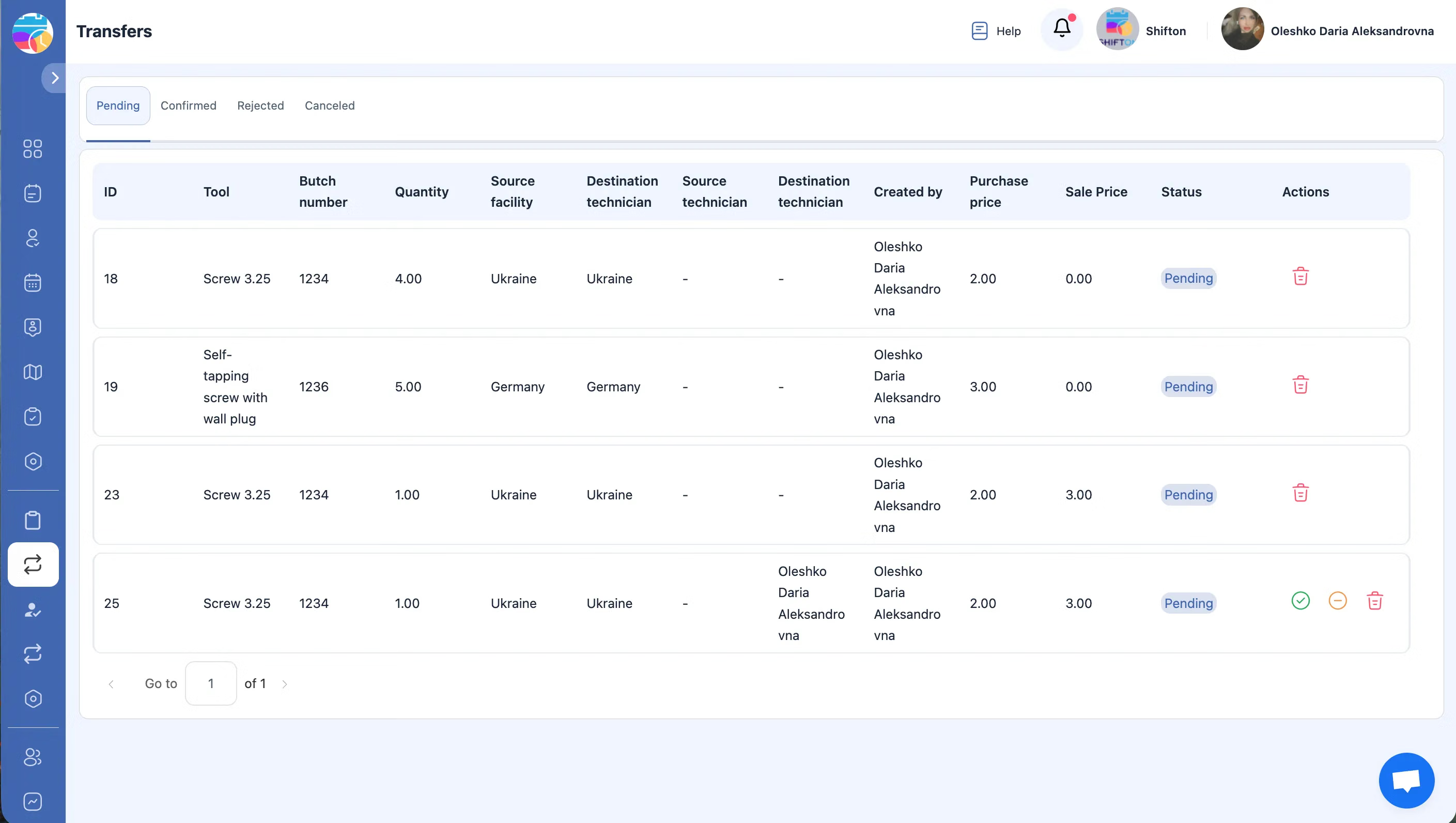
Impound, storage and release without disputes
Storage is where the money and the arguments are. Every day a vehicle sits has to be evidenced, and every release has to be documented. Job records hold the arrival, the condition and the paperwork so a release is a lookup rather than a search through a filing cabinet.
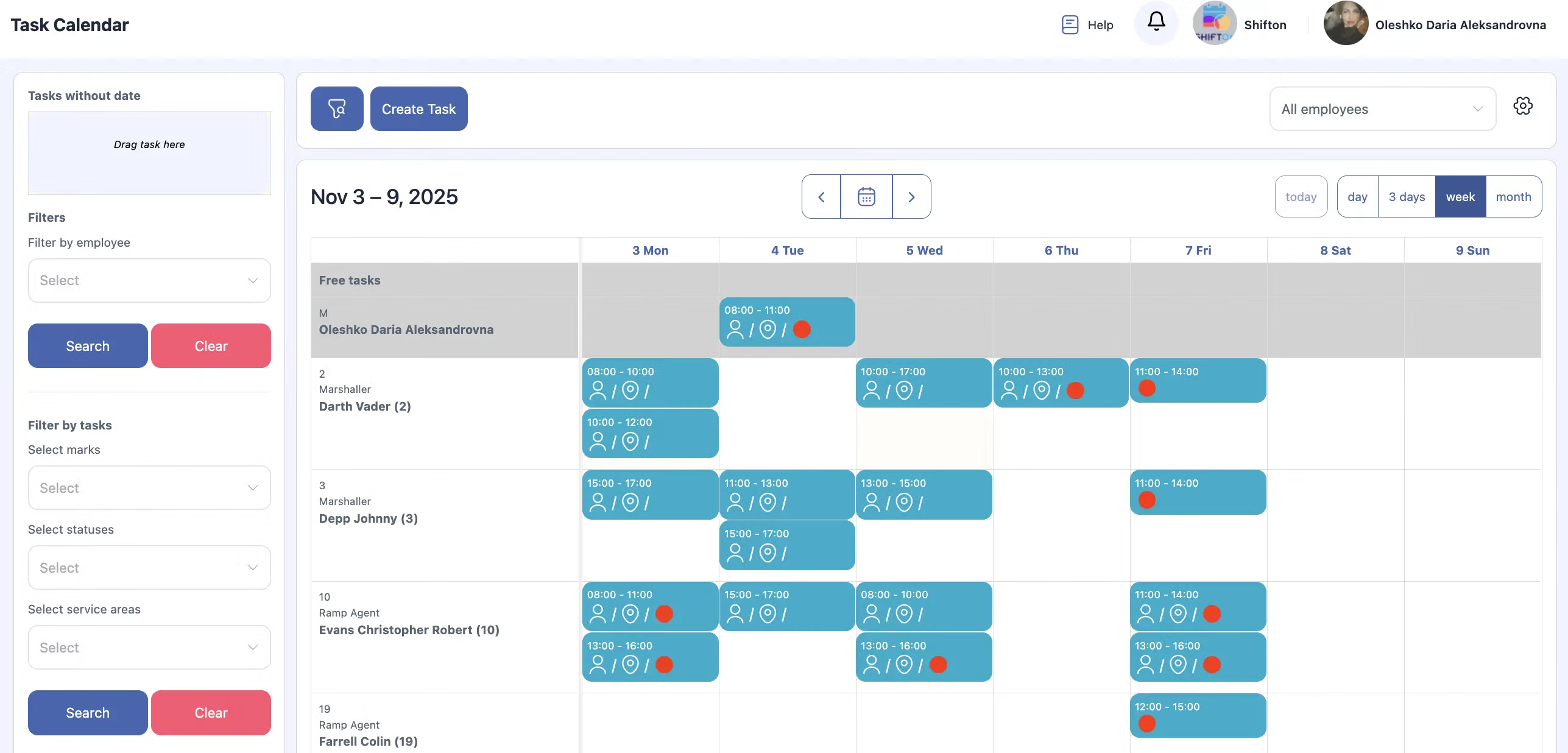
Trucks, shifts and the numbers behind them
Towing is a fleet business with a rota attached. Cover has to match call volumes, and the truck that is always out needs to be visible against the one that is not. Shift planning and job data in one platform make both true at once.
Start with the Free Plan
No time limits. Get full access to core features and upgrade when you're ready.
Read the full guide to towing management software
Why towing is harder to schedule than it looks
Towing has no forecast. The work arrives when a vehicle stops working, a car blocks a loading bay or an authority calls the rotation list, and none of those events give notice. What can be controlled is the response: which truck goes, how fast it gets there, and what evidence comes back. Towing management software is worth having only if it improves those three.
The operational difficulty is that a towing company serves several masters at once. Rotation work carries obligations and penalties. Motor club work is priced tightly and measured on arrival time. Private property removals depend on documentation being flawless because they are the most likely to be challenged. Cash work is the most profitable and the easiest to lose to a competitor who answered faster.
Dispatch, in the order it actually happens
Take the call as a job
The information that matters is gathered once: where the vehicle is, what it is, why it is being moved, where it is going and who is paying. Capturing that as a job rather than a note means nothing has to be repeated to the driver, and the record already exists when a query arrives three weeks later.
Send the truck that can do the work
Distance alone is a poor way to assign a recovery. Equipment, weight and the type of removal all determine whether a truck can complete the job on the first attempt. Assignment that accounts for capability as well as position is what keeps one call from becoming two.
Evidence before the vehicle moves
Photographs of the vehicle before loading are the standard defence against damage claims, and they are only useful if they are attached to the job rather than sitting in a phone gallery. The same applies at the yard, where the condition on arrival becomes the reference point for everything that follows.
Storage is a record keeping business
Impound revenue depends on documentation. Storage days have to run from an evidenced arrival, releases have to show who collected the vehicle and under what authority, and the whole chain has to survive a challenge months later. Towing software that keeps the arrival, the photographs, the paperwork and the release on one record turns that challenge into a lookup.
It also protects the yard from the opposite problem: vehicles that quietly sit longer than anyone realises, never invoiced and never disposed of, because the note about them was on a board that got wiped.
Measuring a towing operation honestly
Four numbers describe the health of the business, and all of them come out of the job record rather than a spreadsheet: response time by account, tows per truck per shift, storage days outstanding and revenue per account. Once those exist weekly rather than monthly, decisions about adding a truck, dropping a contract or changing the rota stop being arguments about impressions.
Rotas that match the calls
Demand in towing is concentrated at night, at weekends and in bad weather, which is exactly when cover is hardest to arrange and most expensive to get wrong. Building the rota in the same system that records the calls means the pattern is visible, overtime is recorded as it is worked, and the effect of a change to cover shows up in response times the following week.
Getting started on the next shift
There is no migration to complete first. Calls are entered as jobs, drivers work from the app, and the response and evidence trail begins immediately. Operators with two or fewer employees stay on the free plan permanently, and the paid modules carry a trial of up to 55 days, which covers a full seasonal peak of recoveries.
Frequently Asked Questions
Can the system handle police rotation and private work together?
Yes. All sources sit on one board, each job carrying its own priority and account rules. Rotation and accident calls can outrank routine removals automatically, so the busiest nights do not depend on an operator remembering which contract matters most.
How does a driver receive a call?
On the mobile app for iOS and Android. The job arrives with the location, the vehicle details, the reason for the tow, the destination and any account requirements. Status updates from the cab replace radio check-ins.
Can we photograph vehicle condition at pickup?
Yes, through digital job forms. Photographs, notes and a signature are captured at the scene and again at the yard, time stamped and attached to the job. That record is what settles damage claims made days later.
Does it track storage days for impounded vehicles?
The arrival time is recorded on the job when the vehicle reaches the yard, so storage is counted from a documented moment rather than a note on a whiteboard. Release details, including who collected the vehicle and under what authorisation, are added to the same record.
Can we see where each truck is?
With the work location control module, yes. Live positions show which truck is closest to a new call and what it is already carrying. The module is paid, added when the fleet is large enough to benefit.
Is it usable for an operator with one or two trucks?
Yes. Teams of two or fewer use the free plan with no time limit: scheduling, digital job forms, the mobile app and reports are included. Paid modules such as location control, invoicing and the customer portal are added later.
How is pricing worked out for a towing company?
The free plan covers up to two employees permanently. Beyond that pricing is per employee per month, and every paid module carries a free trial of up to 55 days, so a full quarter of recoveries can run through it before you commit.


Ready to transform your field operations?
Join thousands of field service companies that trust Shifton to run smarter every day.