

Managed Print Software for Copier and Printer Service Teams
Service calls routed by device and location, meter readings captured on site, and contract visits that generate themselves.
The device is the customer, not the building
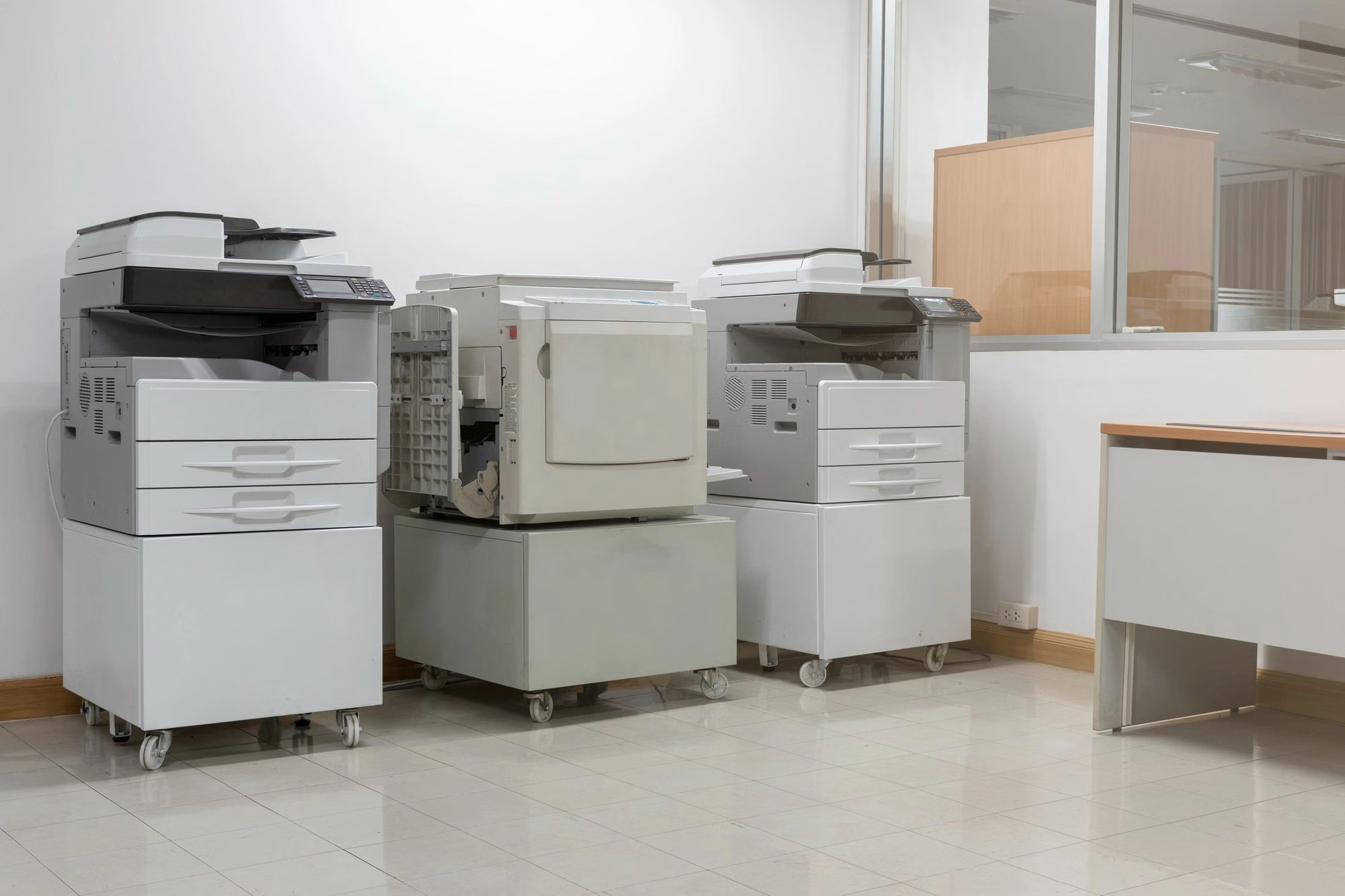
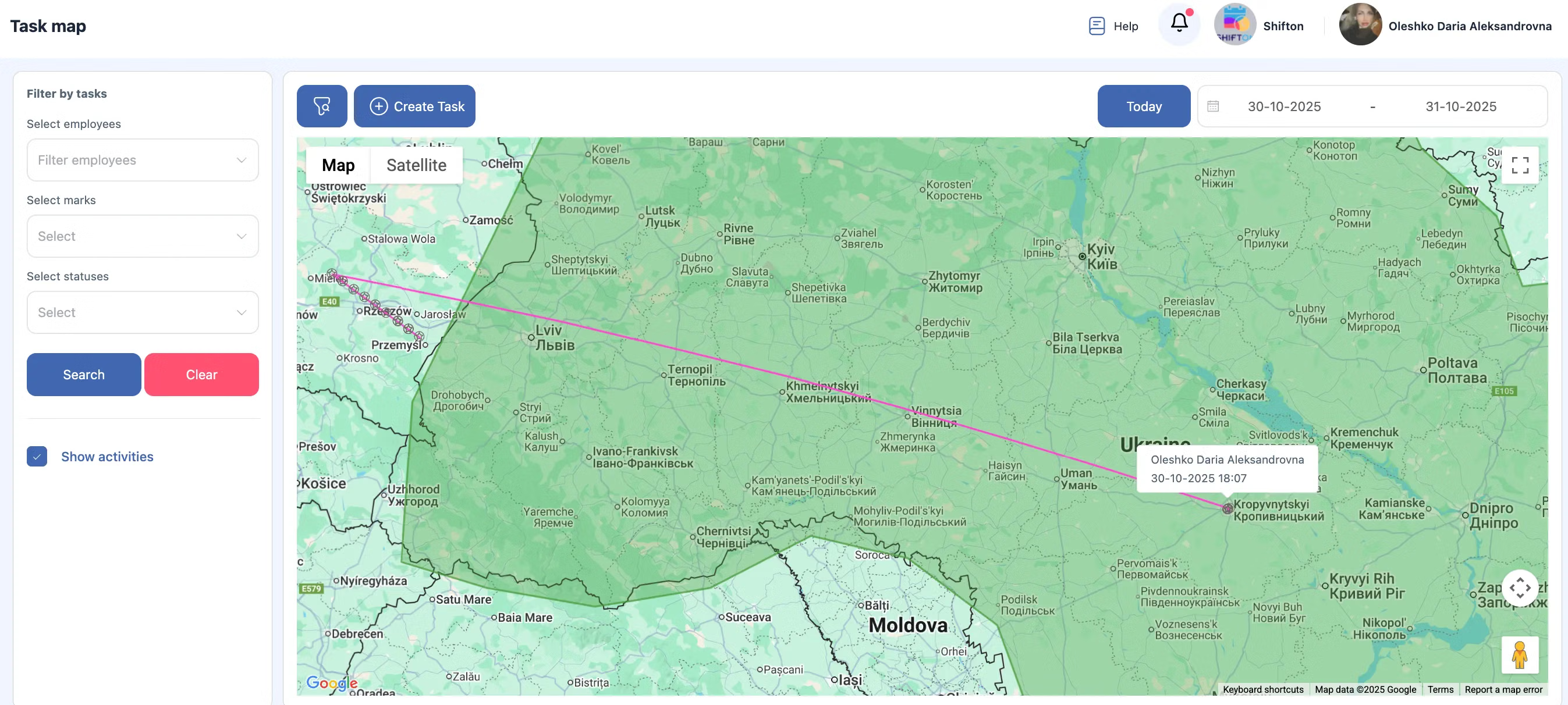
A print estate is a list of machines, each with its own model, its own contract and its own fault history. Dispatching against a building address loses that: the technician arrives knowing there is a problem somewhere in an office with fourteen devices in it.
Meter readings, consumables and the billing they feed
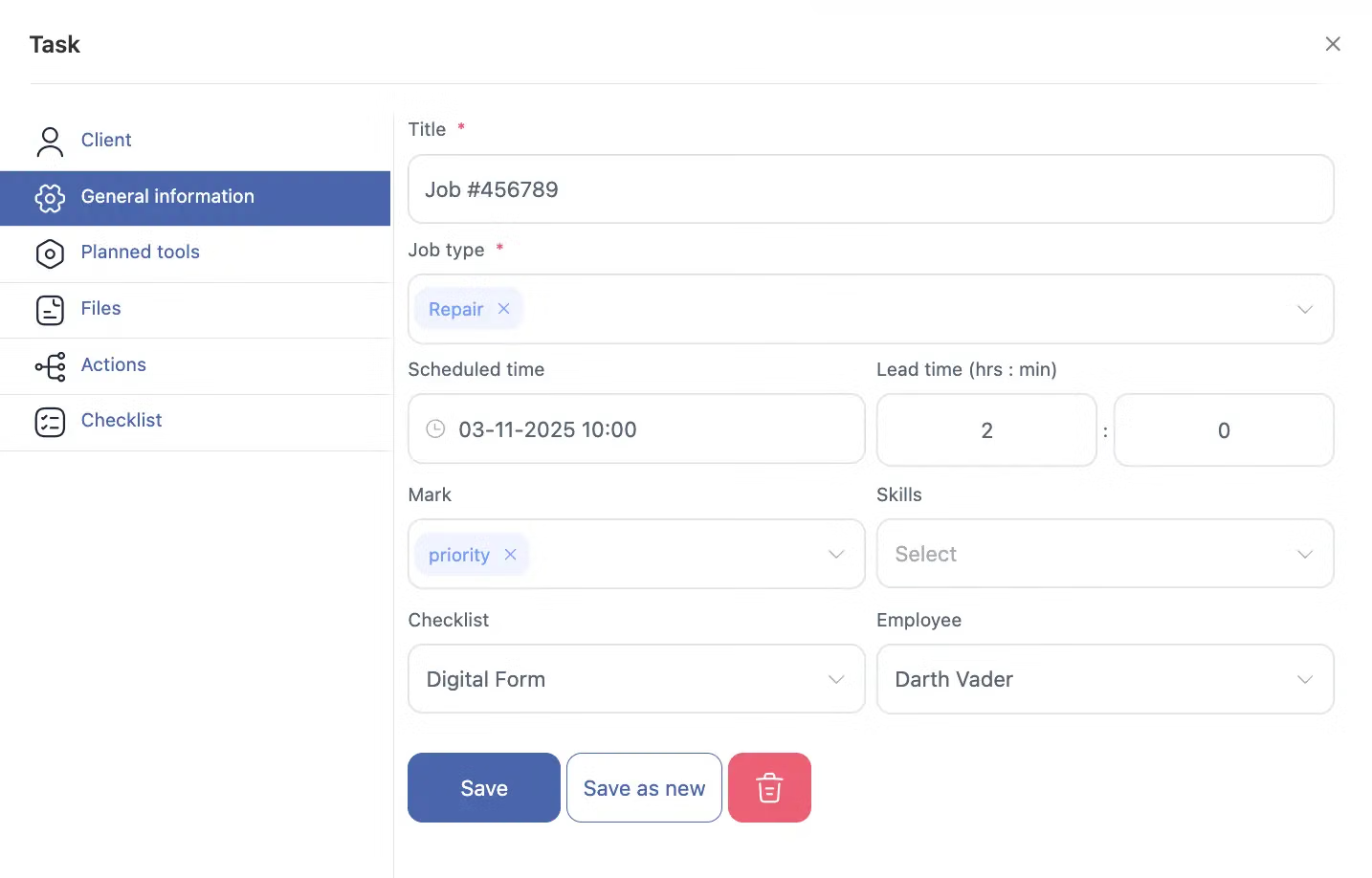
Cost per page billing only works if the readings arrive. Chasing them by email at the end of a quarter produces estimates, disputes and credit notes, and every one of those is more expensive than the visit that could have captured the number.
Response times that are measured rather than promised
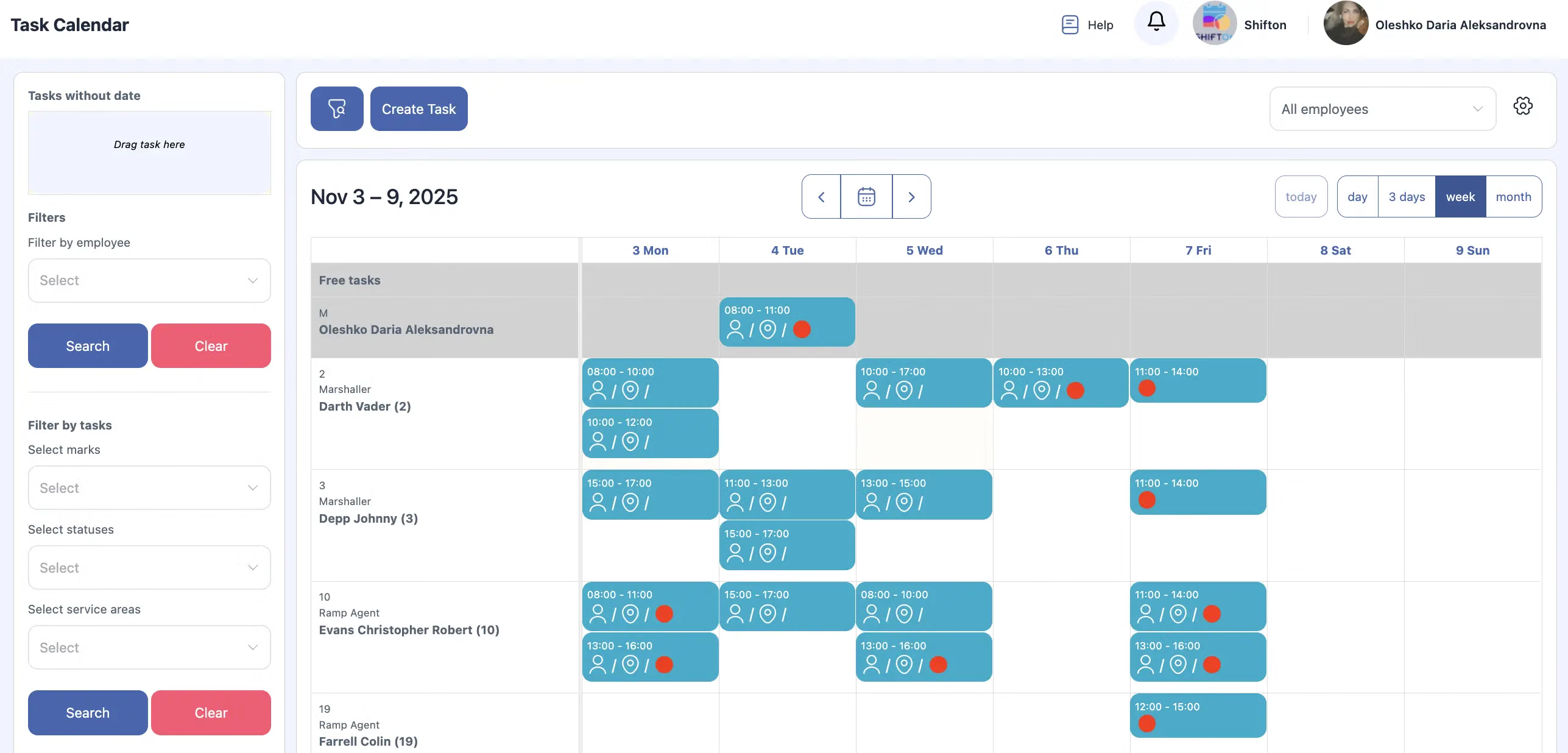
Print contracts carry service level commitments, and the difference between meeting them and believing you meet them is a record of when the call came in and when somebody arrived. Most disputes in this trade are about that gap.
Installs, moves and the fleet that keeps changing
Print estates do not sit still. Machines are installed, relocated between floors, swapped at end of lease and removed when a customer downsizes. A fleet record that drifts out of date takes the billing with it.
Start with the Free Plan
No time limits. Get full access to core features and upgrade when you're ready.
Read the full guide to managed print service software
Why copier service is a data problem before it is a scheduling problem
A printer and copier dealer sells availability. The customer does not buy a machine so much as a promise that the machine will work, that consumables will arrive before they run out and that somebody will come when it does not. Every part of that promise is administrative, and the trade runs on records rather than on repairs.
This is why managed print software looks different from generic field service software. The unit of work is the device, not the site. The billing depends on a number a human has to read off a panel. The contract carries a response time that somebody will eventually ask you to prove.
The four records a print business runs on
The fleet
Which machines exist, where they are, what they are contracted for and what has gone wrong with them before. A fleet list that lives in a spreadsheet updated quarterly is a fleet list that is wrong by the time it matters, usually when a device is billed after it was removed.
The meter
Cost per page contracts are settled on readings. Collected on the visit, they are facts. Collected by emailing the customer's office manager, they are estimates that turn into credit notes. The cheapest moment to take a reading is when a technician is already standing in front of the panel.
The call
A service call has two timestamps that matter: when the customer raised it and when somebody arrived. Everything else in the service level conversation follows from those two numbers, and neither of them survives being written down later.
The consumable
Toner, drums and maintenance kits are stock, cost and a delivery all at once. Recording what was fitted against the machine that received it is what turns a van full of boxes into a margin that can be read.
First time fix, and why dealers care about it more than customers do
A returned visit costs twice: the engineer's day and the customer's confidence. Print faults invite revisits because the symptom is easy to clear and the cause is not, and a jam cleared without fixing the worn roller behind it is a call that will come back in a fortnight.
Measuring first time fix per device rather than per engineer changes what the number tells you. A machine that generates three calls a month is not an engineering failure, it is a machine at the end of its life being kept alive under a contract that no longer prices it correctly. That is a commercial decision, and it can only be made from a service history.
Installs, moves and lease ends
The fleet churns constantly. A customer takes on two more devices, moves a floor, swaps at lease end, removes a machine that was under-used. Each of those is a visit, a change to the billing record and an opportunity for the two to diverge.
Treating them as jobs with their own checklists keeps the record and the reality together. The device keeps its history when it changes location. The removal is a dated event rather than a phone call somebody remembers. The install carries the configuration that the next engineer will need.
Where this sits next to your monitoring tools
Most dealers already run a data collection agent that polls devices for page counts, toner levels and alerts. That software is good at what it does and does not schedule anybody. It raises an alert; it does not decide who goes, hold the contract terms, record what was fitted or produce the hours for payroll.
Shifton Field Service covers the second half. Scheduling, the engineer app, digital job forms and reporting sit in the free plan for teams of up to two people with no time limit; inventory, invoicing, location control and the customer portal are paid modules. It is workforce software for a service business, not a fleet monitoring platform, and dealers generally run the two side by side.
Frequently Asked Questions
Can a job be raised against a specific machine?
Yes. The call carries the device it belongs to, with its serial, model, location and previous faults, so the engineer arrives knowing which machine in the office is down and what was done to it last time.
How are meter readings collected?
On the visit. The technician records the meter in the mobile app while at the device, which removes the end of quarter chase and the estimated bills that come with it. Readings stay attached to the machine's history.
Can an engineer work in a print room with no coverage?
Yes. Meter readings, forms and photographs are recorded on the device and sync afterwards, which covers print rooms, basements and secure floors where phones lose signal.
Can we see whether we are meeting response times?
Calls carry the time they were raised and the time the engineer arrived on site, so response performance is a measured number rather than an impression. First time fix and revisit rates come from the same records.
Can toner deliveries be planned as work?
Yes. Consumable runs are jobs like any other, so they are planned into routes rather than being fitted around breakdowns, and what was delivered is recorded against the machine.
Is this suitable for a two person dealership?
A dealership running two engineers or fewer stays on the free plan with no expiry. Scheduling, the app, forms and reports come with it; invoicing, stock, location control and the portal are separately priced modules.
Does it replace our print management server software?
No. Fleet monitoring tools that poll devices for alerts and page counts do a different job. Shifton Field Service schedules and records the human side: who attended, when, what was fitted and how long it took.



Ready to transform your field operations?
Join thousands of field service companies that trust Shifton to run smarter every day.