

Staffing Agency Scheduling Software for Client Sites
Book temps onto client sites, fill a cancellation before the shift starts, and keep one set of hours for the invoice and the payroll run.

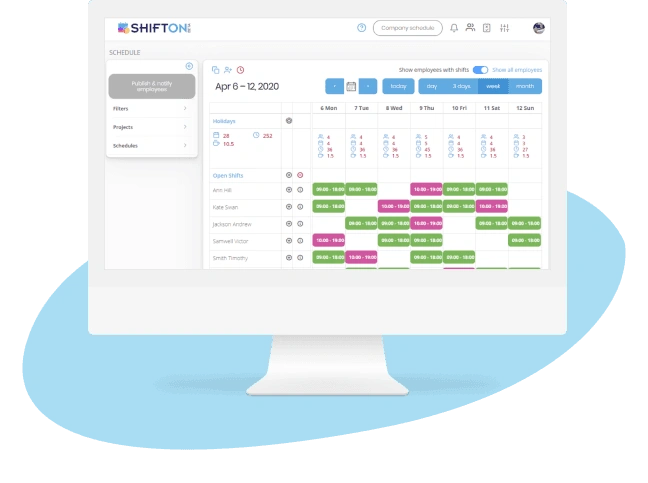
Every client site on one board
An agency week is a set of bookings across sites that do not know about each other. The same worker can be at one client on Monday and another on Wednesday, and the schedule has to hold both without duplicating the person.
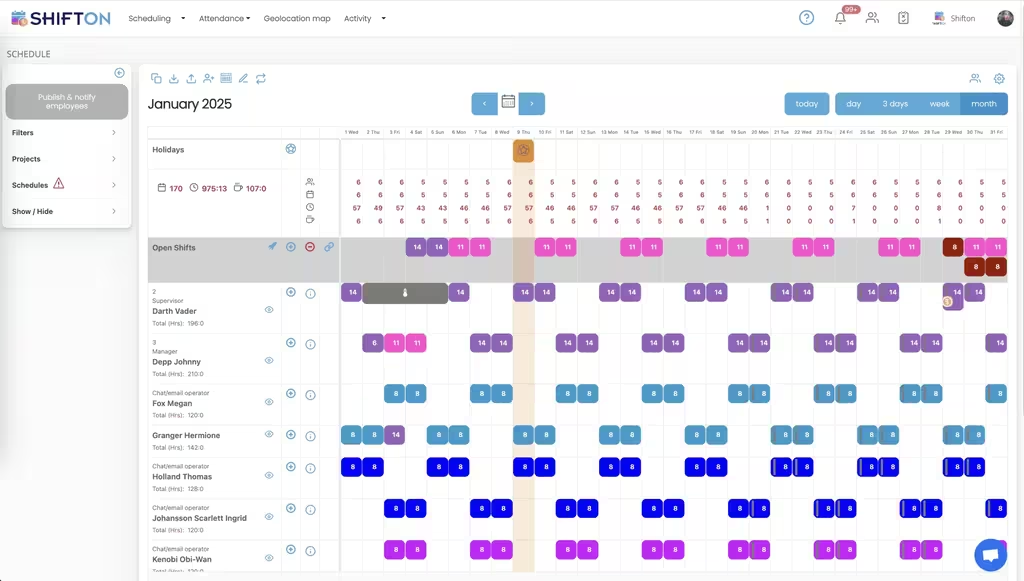
Fill a cancellation before the shift starts
A worker drops out at seven for a nine o clock start and the client is expecting somebody. Publishing the shift to everyone available beats working through a list, and the first acceptance closes it.
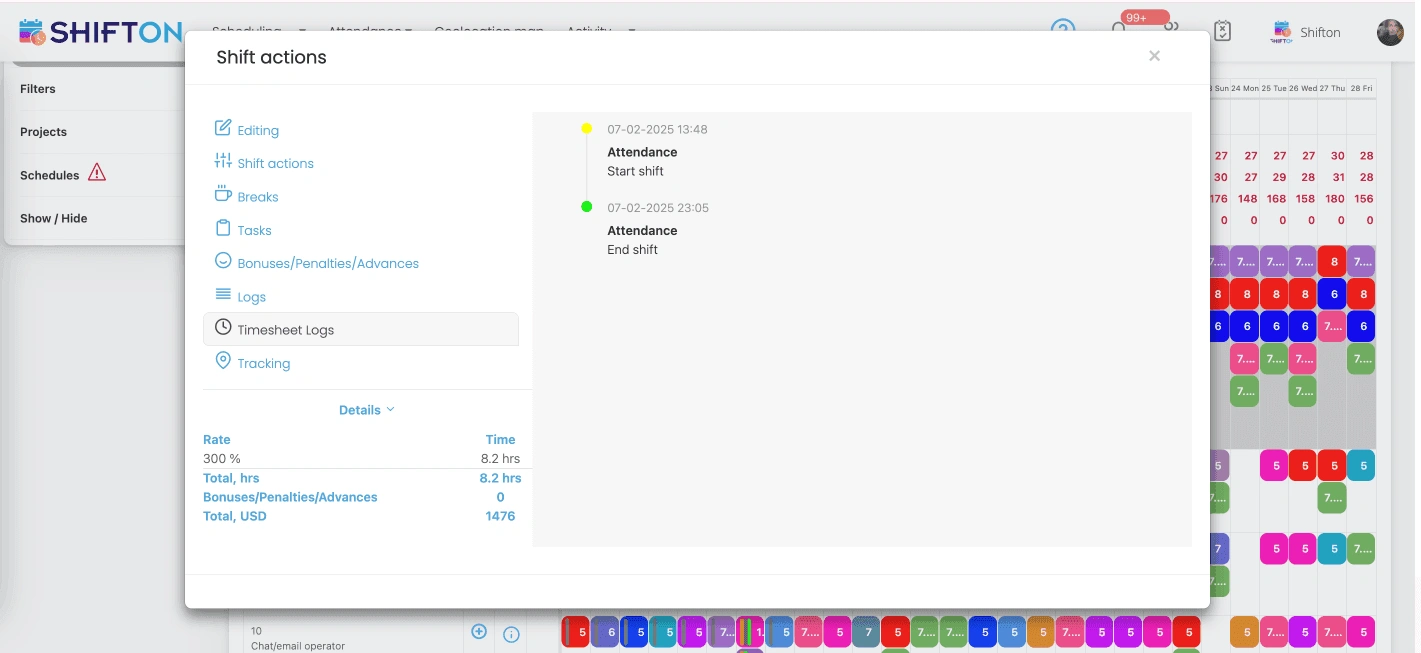
Keep the hours the invoice is built from
In an agency the timesheet is both the invoice and the payslip. Recording the real start and finish against the client keeps the two sides on one set of numbers instead of a spreadsheet each.
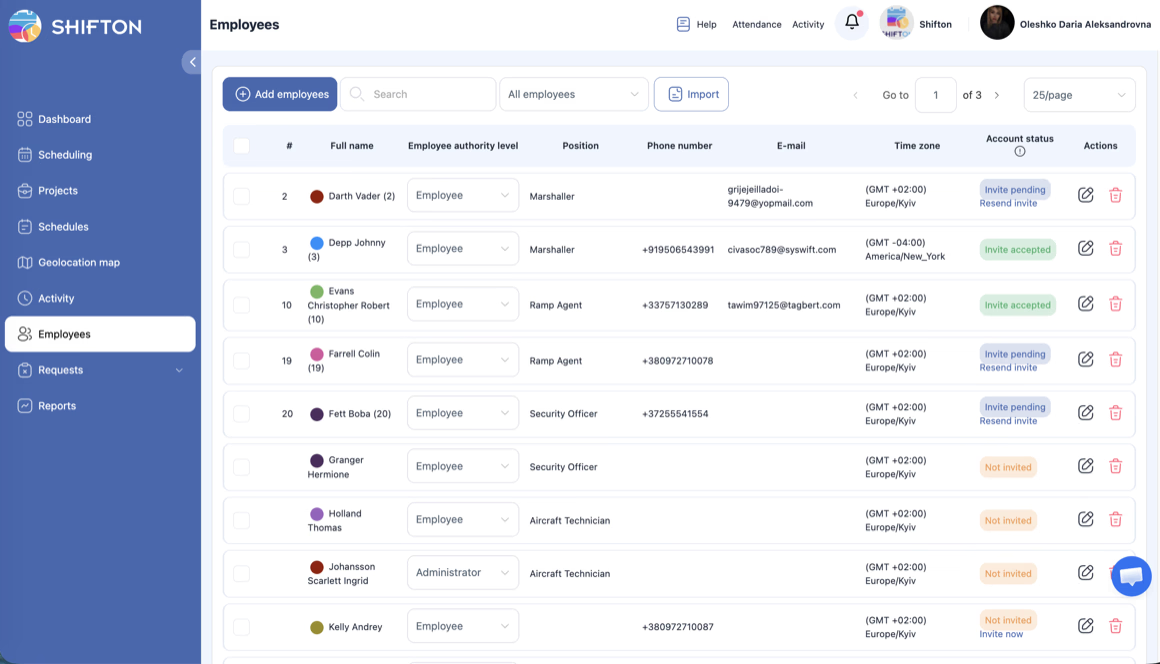
Hold credentials beside the worker
Placing somebody without the certificate a site requires is a client problem within the hour. Keeping certificate and licence dates on the employee record puts the check where the booking is made.
Start with the Free Plan
No time limits. Get full access to core features and upgrade when you're ready.
What makes agency scheduling different
A staffing agency schedules for organisations it does not control. The client decides when the shift is, how many people it needs and what qualification they must hold, and the agency has hours to find somebody. That inversion is what separates agency scheduling from ordinary workforce planning.
It creates a second difference that matters more. The timesheet is the invoice as well as the payroll document. An hour recorded wrongly is charged wrongly and paid wrongly, and both errors surface with a customer or a worker rather than internally.
One worker, many clients
The structural problem is simple to describe and easy to get wrong. A temp who works three sites in a week must exist once in the system and appear on three schedules. Systems that model the client first end up with three copies of the same person, three sets of hours and a manual addition at the end of the week.
Keeping one record per worker and attaching shifts to client projects fixes it in both directions. The consultant sees everything one worker is booked on. The client report shows only that client. Nobody adds anything up by hand.
Bookings without a name on them
A confirmed booking with nobody assigned is the most important item on an agency board and the easiest to lose. Held as an open shift, it stays in front of the person who has to fill it until it is filled.
One person, one record, three clients.
The cancellation problem
Everything in agency work compresses around the hours before a shift. A worker drops out at seven, the client expects somebody at nine, and the consultant starts calling. The calls are the bottleneck, not the availability: the right person is usually free, they just have not been asked yet.
Publishing the shift to everyone available and qualified inverts that. The offer goes out once, acceptance is first come, and there is a record of who was asked. The consultant spends the remaining time on the client conversation rather than on the phone tree.
Availability marked in advance makes the same mechanism sharper, because the offer only reaches people who could actually say yes.
One set of hours, two documents
The moment an agency keeps client hours and payroll hours in separate places, they begin to drift. A break recorded one way for the invoice and another for the payslip. An overtime hour approved by the site and never told to payroll. Every discrepancy is a conversation with somebody who is annoyed.
Recording actual start and finish against the client project, with breaks logged separately, gives both documents the same parent. When a client queries Tuesday, the answer is in the same record that produced the payslip.
Certificates where the booking happens
Sites that require a licence or a certificate do not accept an apology. Holding expiry dates on the worker record, visible to the person making the booking, moves that check to the moment it is useful rather than to an audit later. The system holds the dates; the judgement stays with the consultant.
Choosing a tool as an agency
Applicant tracking systems recruit and stop at placement. Vendor management systems serve the client side of large contracts. Full agency platforms do everything and cost accordingly. Underneath all of them sits the same narrow question: who is on which shift at which client, and were the hours right.
Practical checks: can a worker hold two client bookings in a week without duplication, can an open shift be pushed to a filtered group, are planned and actual hours stored separately, does the report group by client without an export first.
The calls are the bottleneck, never the availability.
Compliance that lives in the schedule
Agency work carries obligations that ordinary employment does not. Working time limits apply across every client a worker covers rather than per site. Rest between shifts has to hold when the two shifts belong to different customers. A worker booked forty hours across three clients is working forty hours, whatever three separate systems believe.
One record per worker is what makes that visible. The consultant booking Wednesday can see Monday and Tuesday, including the shifts that belong to other clients, which is exactly the information three separate spreadsheets would have hidden.
The client who wants a report
Larger clients ask for hours by site and by period, usually in a format of their own choosing. Producing that from the same records that feed payroll takes a filter and an export rather than an afternoon, and it means the number the client sees and the number the worker is paid on cannot diverge.
Starting small
Shifton is free for up to 10 workers with no time limit, which covers a new agency or a single desk. Scheduling, the basic time clock, the mobile app and reporting are included. Modules are added one at a time from $0.50 per employee a month, each with a trial of up to 60 days.
Frequently Asked Questions
Can one worker be booked across several clients in a week?
Yes. Each client is a project and the worker keeps a single record, so Monday at one site and Wednesday at another sit on the same person without duplication. Reports still split their hours by client.
How do I fill a shift when a temp cancels?
Open the shift and it is offered to every worker who is available and qualified. The first acceptance fills it, and the office sees who responded. Read confirmation shows who has actually opened the booking.
Can I see the hours per client for invoicing?
Reports group recorded hours by client and by period, with breaks kept separate from worked time. The same figures feed the payroll export, so the invoice and the payslip are built from one record.
Does it hold certificates and licence expiry?
Employee records carry certificate and licence dates beside the person, so the consultant making the booking can check currency before placing somebody on a site that requires it.
Can workers see their bookings on a phone?
Yes. The mobile app for iOS and Android carries the published week including notes attached to a shift, such as the site contact or access instructions, and workers mark their availability in the same place.
Is there a free plan for a small agency?
Shifton is free for up to 10 workers with no time limit, including scheduling, the basic time clock, the mobile app and reports. Paid modules start at $0.50 per employee a month with a trial of up to 60 days.





Book next week across every client
Free for up to 10 workers, with clients as projects, shifts that fill from the phone and hours you can invoice from.