

Dental Practice Staff Scheduling and Attendance
A rota for the whole practice, hours recorded as they happen, and leave planned against real cover. This schedules your team, not your patients.

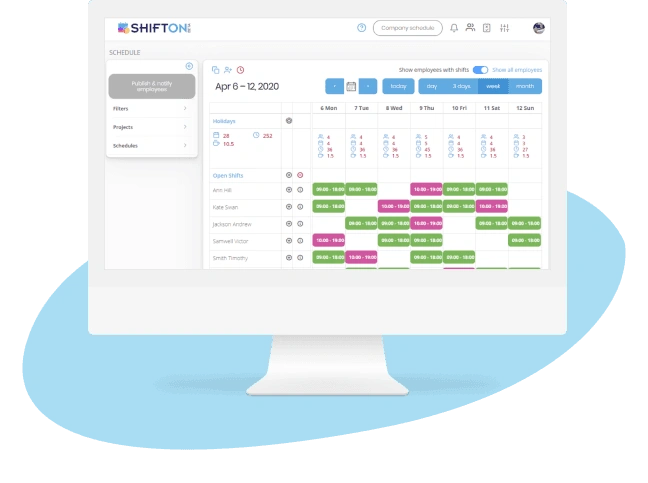
Cover surgeries, not just headcount
A practice runs on pairings. A dentist without a nurse cannot work, a hygienist needs a room, and reception has to be staffed the whole time the door is open. The rota has to show whether each of those holds, room by room.
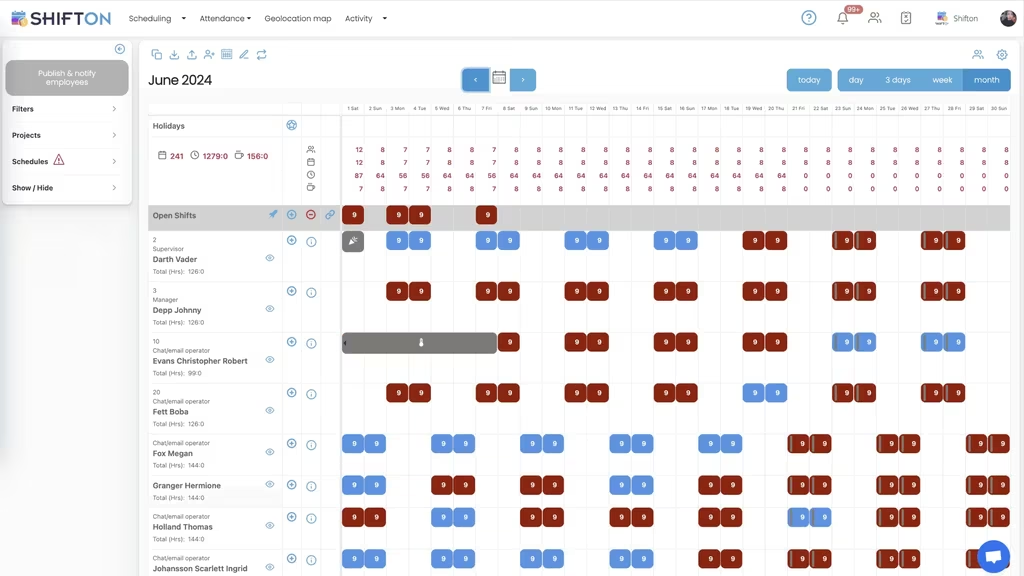
Handle absence without closing a surgery
A nurse calling in sick stops a dentist working. The fastest route to cover is a notification to everybody qualified rather than a round of calls made between patients.
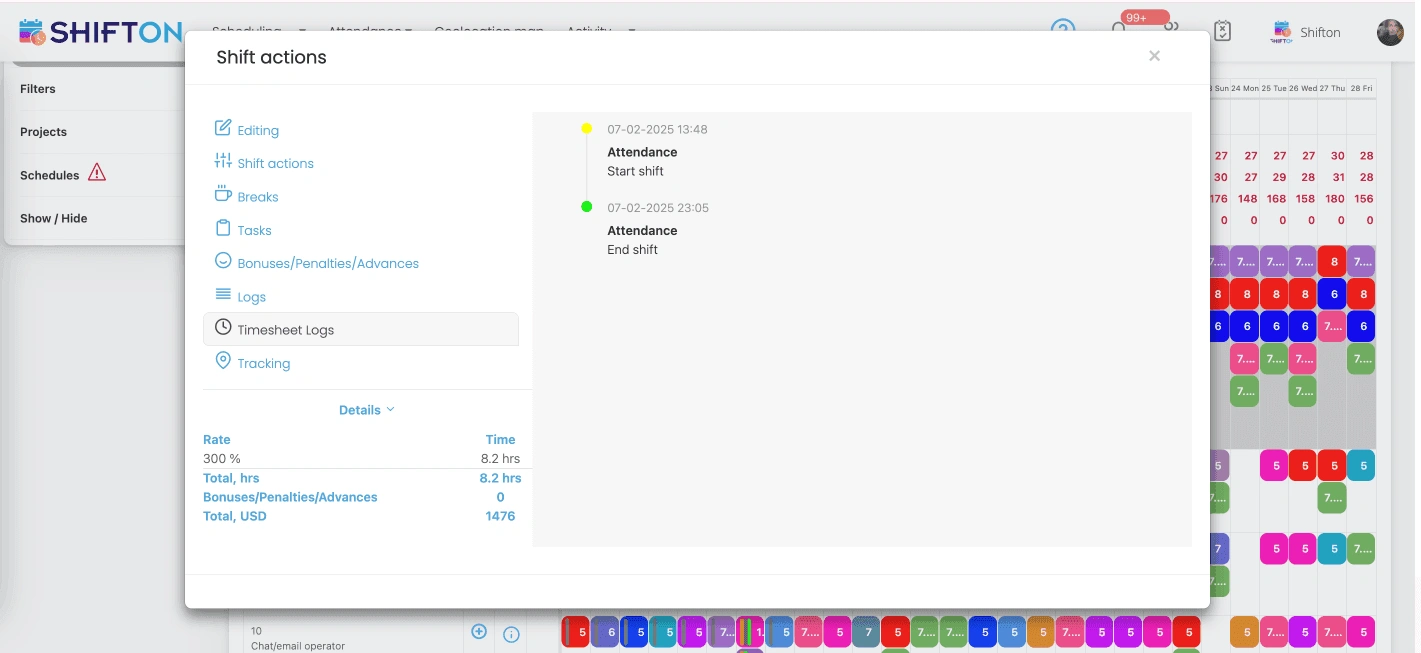
Record hours and leave in one record
Practices usually run the rota in one place and attendance in another, then reconcile at month end. Holding both against the same employee removes the reconciliation and the disagreements that come with it.
Keep registration and training dates in view
Clinical staff carry registrations and mandatory training with expiry dates. Holding them beside the person means the check happens while the rota is being built rather than during an inspection.
Start with the Free Plan
No time limits. Get full access to core features and upgrade when you're ready.
Staff scheduling is not patient scheduling
In dentistry the word scheduling nearly always means the patient diary: recalls, appointment lengths, cancellations, the chair utilisation report. Practice management systems do that job and do it well, and no practice would replace one.
Underneath the diary sits a second question that those systems answer poorly. Who is working which session, is every surgery staffed properly, what did everybody actually work, and who is on leave in three weeks.
The pairing problem
A dental rota is not a list of individuals, it is a set of combinations. A dentist without a nurse cannot see patients. A hygienist without a room cannot work. Reception has to be covered from the first appointment to the last, whatever is happening clinically.
That is why headcount is a misleading number in a practice. Six people in the building can be fully productive or half idle depending on how they pair up, and the rota is where that is decided.
Roles and rooms on one week make the pairing visible.
Associates and part-time clinicians
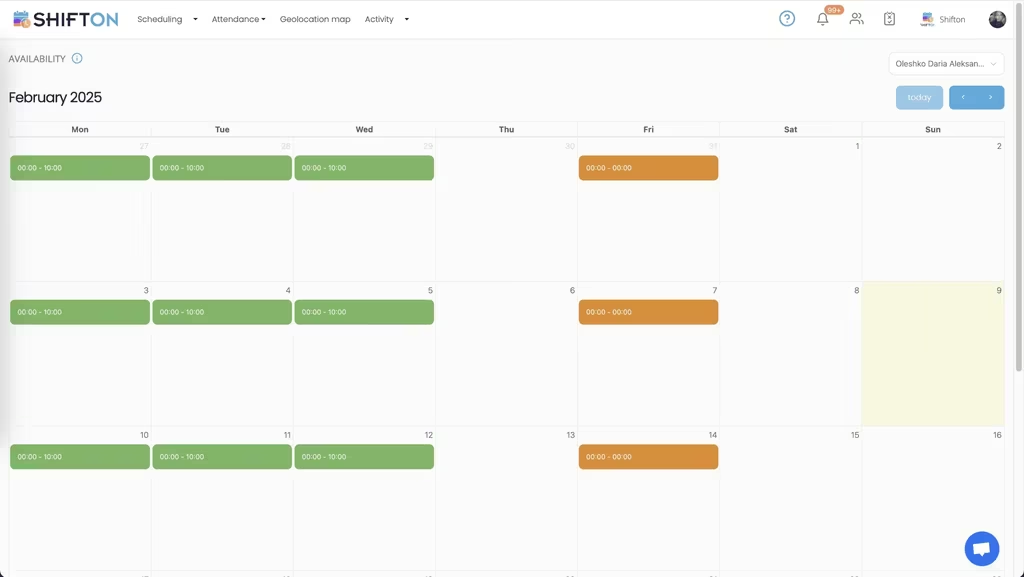
Most practices run on people who are not there every day. Associates with fixed sessions, hygienists who split the week between two practices, nurses on school hours. Capturing availability before the rota is built removes most of the back and forth that otherwise follows publication.
Absence has a clinical cost
In most businesses an absent colleague means work moves. In a practice it can mean a surgery does not run, a list is cancelled and patients are rung. The value of covering quickly is therefore higher than the hourly rate suggests.
A notification to everybody qualified beats a call list made between patients, because the practice manager is usually the person with the least free time on the day it matters.
One record for hours and leave
The common setup is a rota on a wall or a spreadsheet, attendance in a separate system or on paper, and leave in a third place, usually an email folder. Each of those is fine alone and together they guarantee a month-end reconciliation.
Holding the schedule, the clock and time off against the same employee removes it. The person approving leave can see who else is off and whether the session is covered, which is the check that email approval structurally cannot make.
Registrations and mandatory training
Clinical staff carry registrations and training with expiry dates, and the cost of missing one is not administrative. Holding those dates on the employee record puts them in front of whoever builds the rota. The software displays them; the practice makes the judgement.
What the reports are for
Two questions come up repeatedly. How many hours did each person actually work, which matters for payroll and for part-time contracts. And where is the practice consistently short, which is usually reception rather than clinical, and usually at the start and end of the day.
Starting small
Shifton is free for up to 10 people with no time limit, which covers a single-site practice outright. Scheduling, the basic time clock, the mobile app and reporting are included, and modules are added one at a time from $0.50 per employee a month with a trial of up to 60 days.
Frequently Asked Questions
Does this book patient appointments?
No. Shifton schedules staff. It plans who is working which session, records hours, and handles time off. Patient appointments stay in the practice management system you already use.
Can I make sure every dentist has a nurse?
Roles and rooms are planned on the same week, so a manager can see whether each surgery has the pairing it needs before publishing. The check is visual rather than automatic, but it happens at the right moment.
How do I cover a nurse who calls in sick?
Open the shift and it is offered to everyone qualified. The first acceptance fills it, and the practice manager sees who responded without working through a call list between patients.
Can part-time clinicians mark their availability?
Yes, before the rota is built. Associates and hygienists who work across more than one practice usually have fixed days, and capturing that up front prevents most of the swap traffic later.
Does it hold registration and training expiry dates?
Employee records carry those dates beside the person so they are visible when the rota is made. The system holds and displays them; the compliance judgement stays with the practice.
Is there a free plan for a small clinic?
Shifton is free for up to 10 people with no time limit, including scheduling, the basic time clock, the mobile app and reports. Paid modules start at $0.50 per employee a month with a trial of up to 60 days.






Put the practice rota in one place
Free for up to 10 people, with roles, cover that fills from the phone, and hours and leave in the same record.