

Agriculture Staff Scheduling Software for Farm Teams
Crews planned by block and by season, hours recorded in the field, and a labour cost you can put against the harvest.

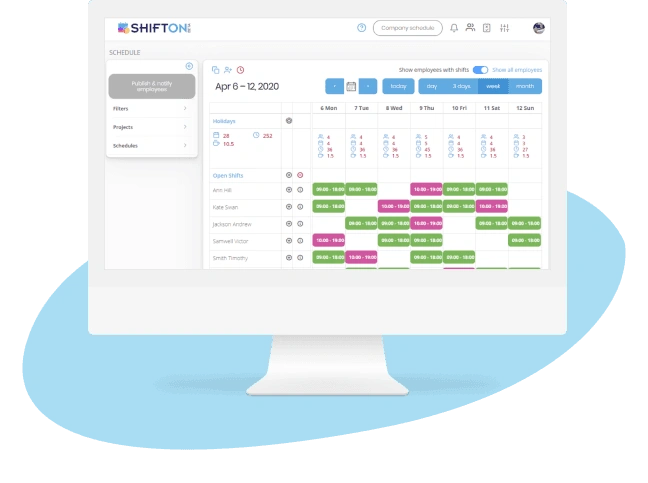
Plan by block and by task, not by office week
A farm week is set by the crop, the weather and the machinery, and it changes on the morning it starts. Planning by block and by task rather than by a fixed rota keeps the plan close to what the land actually needs.
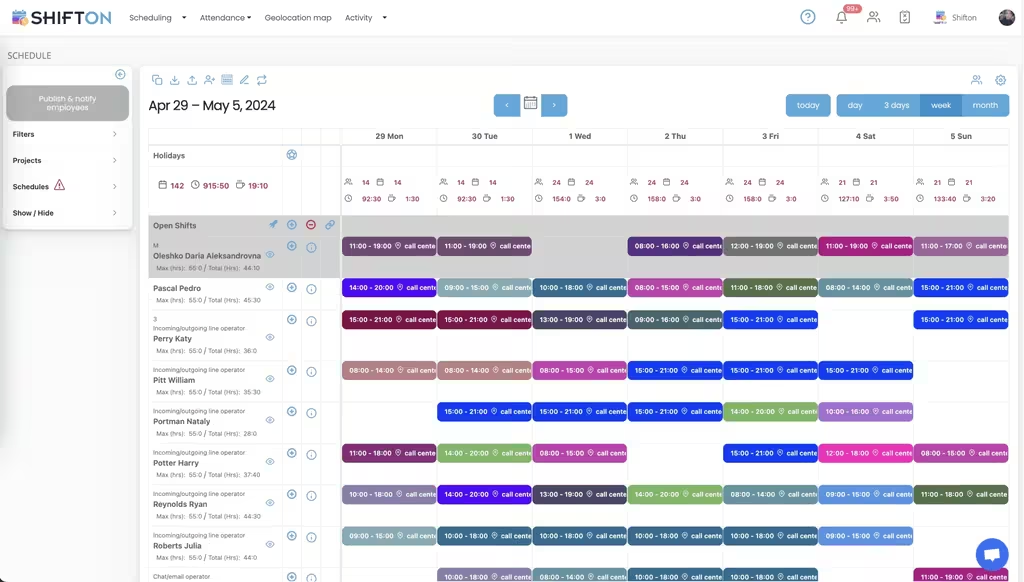
Record hours where there is no office
Nobody clocks in at a desk on a farm. Recording start, finish and breaks from a phone puts the hours in the system on the day, instead of on a sheet that gets filled in from memory at the end of the week.
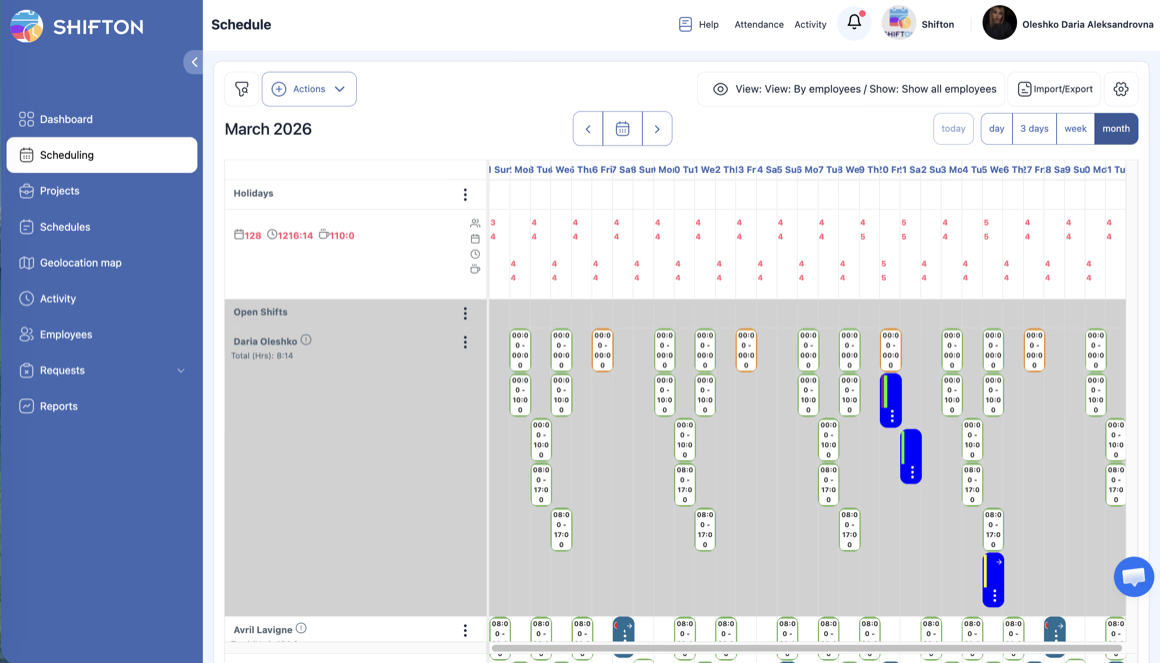
Scale up for harvest and back down after
Seasonal labour is the norm, not the exception. Departments keep permanent staff, seasonal workers and contractors distinct while everybody sits on the same plan.
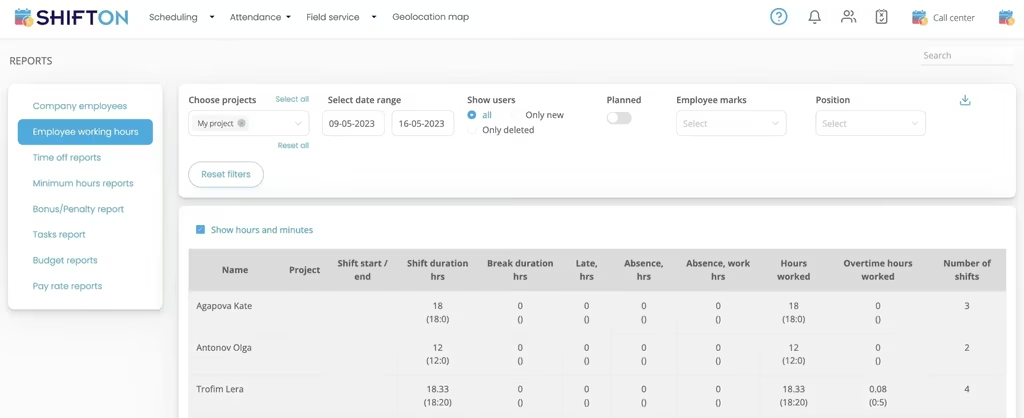
Cost the season while it is running
Labour is the largest variable cost on most farms and the hardest one to attribute. Grouping recorded hours by block and by task turns a single wage bill into a figure you can put against a crop.
Start with the Free Plan
No time limits. Get full access to core features and upgrade when you're ready.
Why farm labour resists ordinary scheduling
Three things make agricultural workforce planning its own problem. The plan is set by weather and by crop rather than by an operating calendar. The workforce swells and shrinks by a factor of five or more between seasons. And there is no office, no terminal and often no reliable signal at the place where the work happens.
Any one of those breaks a tool designed for a shop or a call centre. Together they explain why so many farms still run on a paper sheet and a phone call, and why the wage bill arrives every month as a single number nobody can break down.
Blocks and tasks as the unit
Planning by person produces a list. Planning by block produces a plan. Once each field, block or task is a project, the day can be read as the work that has to happen rather than as a set of names, and the pieces nobody has been assigned to are visible as gaps rather than as omissions.
It also fixes the reporting problem at the source. Hours recorded against a block become a cost per hectare and per crop without anybody reconstructing anything, which is the difference between knowing that labour cost went up and knowing which field caused it.
The plan changes at six in the morning
Rain, a broken machine, a crop that ripened faster than expected. Reshuffling is the normal case, so the useful measure is not how good the plan is on Sunday but how cheaply it can be changed on Tuesday and how reliably the change reaches the crew.
Recording hours without a terminal
Paper timesheets on a farm are not a filing problem, they are an accuracy problem. Hours written down at the end of the week are remembered hours, and remembered hours round themselves towards convenient numbers in whichever direction the writer prefers.
A phone in a pocket removes the reconstruction. Start, finish and breaks land in the record on the day, held next to the planned shift, and the difference between the two is there while somebody can still ask about it.
No terminal, no paper, no Sunday night arithmetic.
Seasonal is the normal state
A farm with twelve permanent staff might run sixty people through the harvest, many of them returning from previous years, some of them supplied by contractors. Treating that as an exception produces a spreadsheet per season and no history at all.
Keeping one record per worker means somebody who returns for a fourth harvest arrives with their history rather than as a new entry, and keeping permanent, seasonal and contract staff in separate departments keeps the operational plan complete while the payroll export stays limited to the people the farm employs directly.
Compliance follows the record
Agricultural labour carries obligations that vary sharply by country and by the status of the worker. The software does not make those judgements. What it does is hold a defensible record of who worked, when and for how long, which is what every one of those obligations eventually asks for.
Costing the harvest
Most farms measure inputs precisely. Seed, fuel, fertiliser and machinery hours are all tracked to the field. Labour, usually the largest variable cost of the three, arrives as one figure per month.
Grouping recorded hours by block and by task closes that gap without new hardware. The picking cost per hectare becomes comparable between blocks and between years, and a task that consistently overruns its estimate is visible in the report rather than in a feeling.
Where to start
Shifton is free for up to 10 workers with no time limit, which covers a small farm or a single crew outright. Scheduling, the basic time clock, the mobile app and reporting are included. Modules are added individually from $0.50 per employee a month, each with a trial of up to 60 days, so a farm can test location control through one harvest before committing to it.
Frequently Asked Questions
Can I schedule crews by field or block?
Yes. Each block, field or task is set up as a project, so the day can be read one block at a time or as the whole farm. Reports group recorded hours the same way.
How do workers clock in when there is no office?
The time clock works from the mobile app on any phone, so hours are recorded where the work happens. For farms that need clock-in tied to a location, work location control is available as a paid module at $5 per employee a month.
Does it handle seasonal workers who return every year?
Yes. A returning worker keeps one record with their history rather than being re-entered each season, and seasonal staff sit in their own department so the payroll export stays clear.
Can I see labour cost per crop or per block?
Reports group hours by project, and if blocks and tasks are set up as projects the wage cost attaches to the crop rather than to the month.
What happens when the weather changes the plan?
The day is edited and republished, and everybody scheduled is notified on their phone. Read confirmation shows who has actually opened the change, which matters when the crew is already on the way.
Is there a free plan for a small farm?
Shifton is free for up to 10 workers with no time limit, including scheduling, the basic time clock, the mobile app and reports. Paid modules start at $0.50 per employee a month, each with a trial of up to 60 days.




Put the season on one plan
Free for up to 10 workers, with blocks as projects, clock-in from the field and labour costed against the crop.