

Scheduling Software for Law Enforcement and Public Safety Agencies
Plan agency-wide cover, keep training hours on record and see exactly what premium time costs with scheduling software for law enforcement and public safety teams.

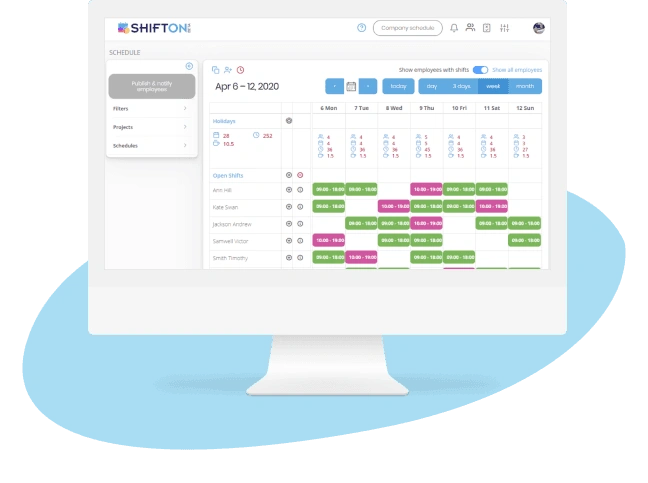
Build the Week of Cover and Publish It
Agency cover is planned in whole weeks, not in single days. Every person sits on their own row and every assignment appears as a colour-coded block with start and end times, so a planner can see where the week runs thin before anything is published. Filters, projects and schedules keep a large agency readable on one screen.
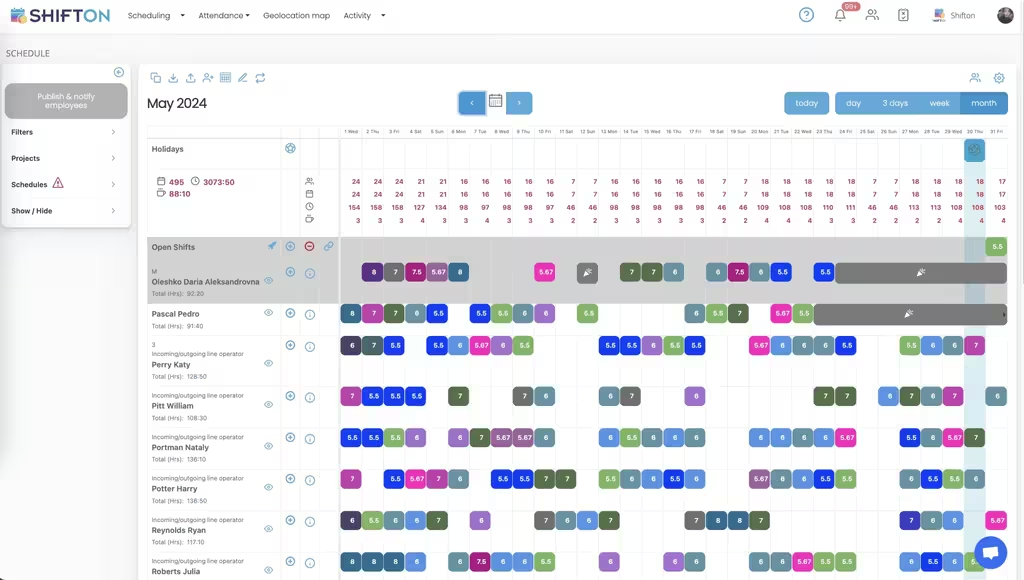
Every Shift Carries Its Own Record of Hours
Workforce planning falls apart when the planned week and the worked week live in separate documents. Each assignment opens onto its own detail view, where the hours recorded against a shift sit next to the hours that were scheduled for it. A supervisor corrects the shift once and the totals it feeds follow automatically.
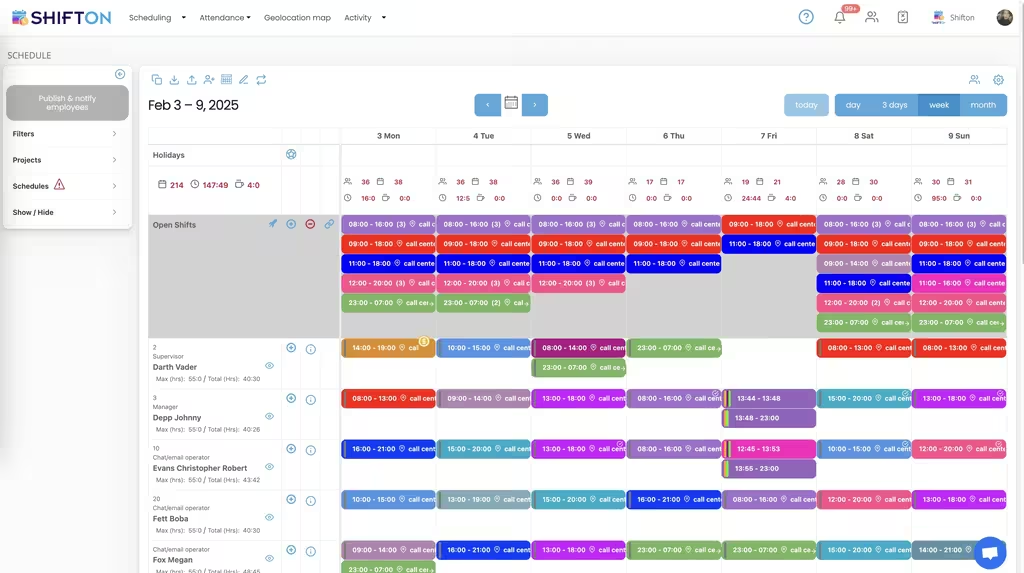
Round-the-Clock Cover Across Every Rank
Public safety does not close, so a normal week carries several shifts a day plus an overnight block running from 23:00 to 07:00. Roles appear beside names in the grid, which is how a planner keeps a supervisor on every watch instead of finding the gap at handover. Maximum and total hours per person stay visible while the week is still being filled.
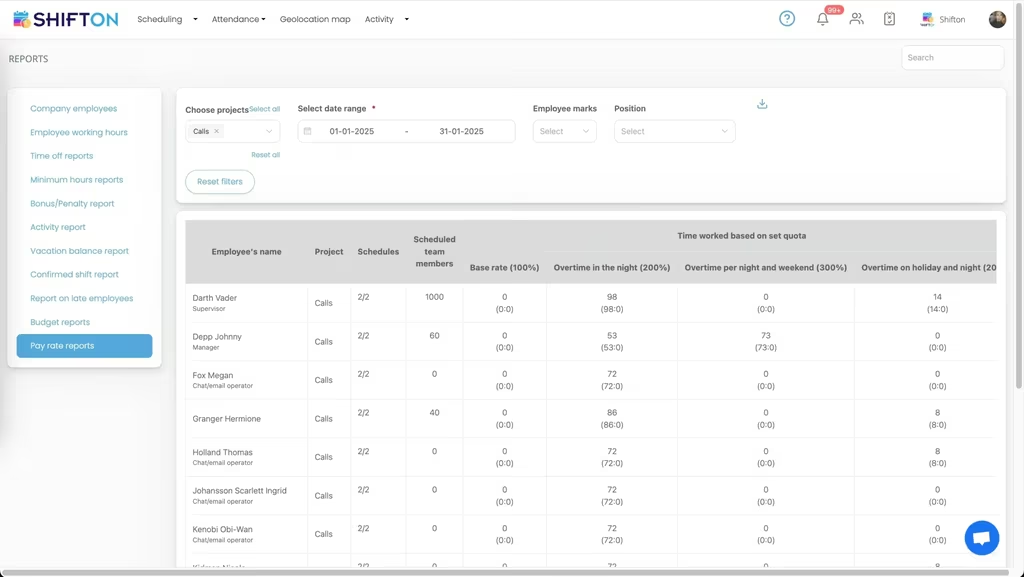
See Which Hours Fell Into Which Pay Tier
Overtime in an agency is rarely one number. Hours land at base rate, at a night premium, at a night and weekend premium and at holiday rates, and the wage bill is the sum of all four. The pay rate report splits every employee's hours across those tiers by project and by schedule, so the cost of a staffing decision is readable before payroll closes the period.
Start with the Free Plan
No time limits. Get full access to core features and upgrade when you're ready.
Read the full guide to law enforcement workforce management
Agency staffing is a budget problem wearing a schedule's clothes. Minimum staffing levels are set by policy or by contract, the area being covered does not shrink to fit an absence, and every hour above the baseline is paid at a premium that lands on a public budget. Scheduling software for law enforcement earns its place by making two things visible at the same moment: whether the cover is safe and lawful, and what it costs.
Few agencies arrived at their current process by choice. A spreadsheet grew a second tab, then a third, then a set of colour rules only one person fully understands. Training records live in a different file. Premium hours get reconciled after the fact, in payroll, when nothing can be changed. The work still gets covered, but nobody can answer a plain question quickly: how many hours did this unit run above baseline last quarter, and what drove it.
What scheduling software for law enforcement has to do
Strip the category down and the job is narrow. Publish cover that meets the minimum staffing standard for every hour of the week. Keep a record of who was actually on duty rather than who was planned. Track the hours each person accumulates against the limits that apply to them. Produce figures that survive contact with a finance office and, eventually, an auditor.
Anything beyond those four is decoration. A public safety scheduling solution that produces an elegant grid but cannot say what the grid cost has solved the easier half of the problem.
Training and certification hours that have to stay current
Sworn and civilian staff both carry requirements that expire. Firearms qualification, defensive tactics, first aid, driving, specialist accreditation for particular assignments: each carries an hours requirement and a renewal date, and each has to be delivered without leaving a watch short. That is a scheduling problem before it is a compliance problem, because training time is time somebody is unavailable for cover.
The workable approach is to treat training as work. Schedule it as its own project, assign people to it the way you assign them to any other block of duty, and let the hours accumulate in the reports that already carry everything else. At the end of a quarter the working-hours report shows how much training each person absorbed and which units slipped, with no parallel file to maintain. Positions and roles held on each employee record make it obvious who is cleared for a given assignment when a slot needs filling at short notice.
Compliance, union agreements and the hours nobody may exceed
Public safety is one of the few sectors where the schedule functions as a legal document. Collective agreements set rest periods between tours, maximum consecutive days, notice periods for changes, and how premium hours are shared out. Statutory working-time limits sit on top of that. Break the rules and the cost is not only a grievance, it is a rewrite of the whole period.
Software helps here by doing two unglamorous things well. It shows each person's maximum hours next to the hours already assigned while the schedule is being built, so a limit acts as a live constraint instead of a later discovery. And it keeps a durable record of what was published, when, and to whom, which is what a grievance or an audit actually turns on. Public safety workforce management software that stores only the current version of the plan cannot answer questions about the past.
Where overtime cost actually builds up
Premium time in an agency is almost never one decision. It accumulates through vacancies covered by extension, court appearances landing on rest days, callouts, planned events, and the slow drift of a unit running one person under strength for months. By the time payroll consolidates the figure, the causes are indistinguishable from each other.
Splitting hours by pay tier turns that fog into a number somebody can act on. Base hours, night premium, night and weekend premium and holiday hours reported as separate columns per employee, per project and per schedule tell a commander which unit generates the expensive time and whether the driver is structural or a single bad month. Our reporting tools build that breakdown from the same shift records used to plan the period, so the planning view and the cost view never disagree with each other.
Staffing benchmarks and headcount planning
Every agency carries an authorised strength and an actual strength, and the gap between them gets filled with premium hours. Making the case for more headcount, or for moving the headcount you already have, needs evidence expressed in the units a budget is written in.
That evidence comes from history: hours worked per unit per month, the ratio of premium hours to base hours, how often open shifts went unclaimed, how much of the establishment was absorbed by leave and training. Read across a full year those figures describe the real staffing benchmark rather than the one written on paper. A law enforcement scheduling system that exports cleanly into a spreadsheet contributes more to headcount planning than one that locks its data inside a dashboard.
Law enforcement dispatch software and where scheduling stops
Several different products get searched under the same words, and it is worth being precise. Computer-aided dispatch handles live incidents, unit status and call routing. Public safety management software, in the broad sense, bundles records, evidence and case files, and fire service management software does the equivalent on the fire side. Shifton is none of those. It answers the staffing question the rest of them assume has already been settled: who is on duty, for how long, at what rate, and what happens to the week when two people call in sick.
The boundary is deliberate. Agencies already own their records and dispatch platforms and rarely want to replace them. What they more often lack is a workforce layer that a planner and a finance office both trust, which is the gap police workforce management software is supposed to fill.
The watch view and the agency view
Day-to-day planning and agency-level planning are different jobs done by different people. A supervisor filling next week cares about who is available and who is close to a cap. A deputy chief cares about premium hour trends across six months and whether a unit is structurally understrength. The same shift data has to serve both, which is why our public safety scheduling page covers the cover and pattern side in depth while this one stays on workforce management, compliance and cost.
Keeping them in one system also removes the reconciliation step. When the schedule, the attendance record and the pay rate report are three separate artefacts, most of the analysis time goes on making them agree. When they are three views of the same records, the analysis starts where it should.
Choosing a public safety scheduling system
Test any platform against a messy period rather than a clean one. Build a week with an overnight block, a training day, a vacancy and two short-notice absences, then ask the system what it cost and which limits it came close to breaking. Check whether a member of staff can see their own hours and request leave from a phone, because adoption is decided by people who do not sit at a desk. Confirm that figures export in a form your payroll process can consume, since a report nobody can move is a report nobody uses.
Shifton runs free for up to ten team members with no time limit, which covers a small department or a single unit outright and includes scheduling, the basic time clock, the mobile app and standard reports. Paid plans are charged per employee per month and add the deeper cost reporting, multi-project structure and location controls a larger agency needs. If your current process only tells you what a period cost once the period is finished, the change worth making is the one that tells you while there is still a decision left to make.
Frequently Asked Questions
What is scheduling software for law enforcement?
It is a system for planning who is on duty across an agency, recording the hours they actually worked, and reporting what those hours cost. Shifton builds the cover week by week or month by month, posts open shifts for staff to claim, tracks worked and overtime hours per person, and splits the result across base and premium pay rates. It sits on the staffing side of an agency rather than the incident side.
How does a public safety scheduling solution handle training hours?
Training is scheduled as work. Set it up as its own project or schedule, assign people to those shifts the same way you assign them to any other block of cover, and the hours accumulate in the same working-hours reports as everything else. At the end of a period you can see how many training hours each person absorbed and which units fell behind, without keeping a second spreadsheet.
Is law enforcement dispatch software the same as staff scheduling software?
No, and the distinction matters when comparing tools. Computer-aided dispatch handles live calls, unit status and incident routing. Law enforcement staff scheduling software decides who is on duty to answer those calls, for how long, and at what rate. Shifton is the second of the two and works alongside the systems an agency already uses for records and dispatch.
How does law enforcement scheduling software control overtime cost?
By making premium hours visible while they can still be changed. Each person's maximum hours sit next to the hours already assigned as the schedule is built, so a cap is a constraint rather than a surprise. Afterwards the pay rate report splits hours into base, night, night and weekend and holiday tiers per employee and per project, which shows where premium time is generated and whether the cause is structural.
Can officers check hours and request leave from a law enforcement schedule app?
Yes. Staff use the Shifton mobile app on iOS and Android to see their published shifts, check their accumulated hours, submit availability, and request time off for approval. Push notifications reach them when the schedule is published or changed, so the version on a phone is always the version that is true.
Is there a free plan for a small public safety agency?
Yes. Shifton is free for up to ten team members with no time limit, which covers a small department or a single unit, and includes shift scheduling, the basic time clock, the mobile app and standard reports. Larger agencies move to paid tiers charged per employee per month, and geolocation and work location controls are a paid module rather than part of the free plan.





Put Your Agency's Workforce Planning on Shifton
Build cover, record the hours that were really worked and see the overtime bill before payroll closes it.