

Salon Staff Scheduling Software for Shifts and Hours
A rota for stylists, assistants and reception, with hours recorded as they happen. This plans your team, not your client diary.

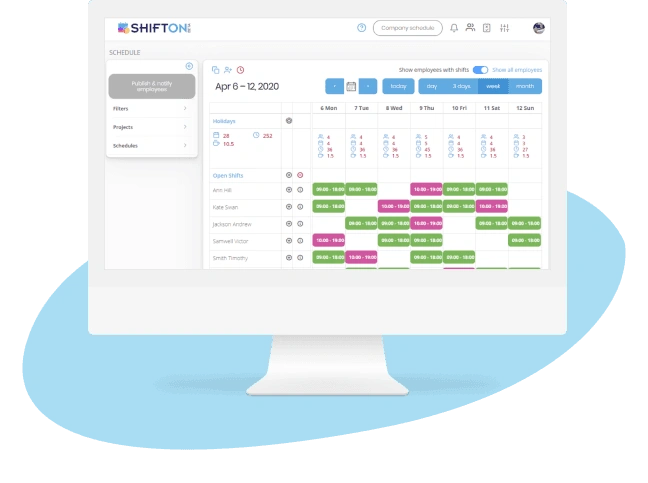
Plan the floor, chair by chair
A salon week is shaped by who is on the floor and when, not by an even spread of hours. Saturdays need everybody, Tuesdays need two people, and the junior who is training on Thursdays cannot be counted as cover.
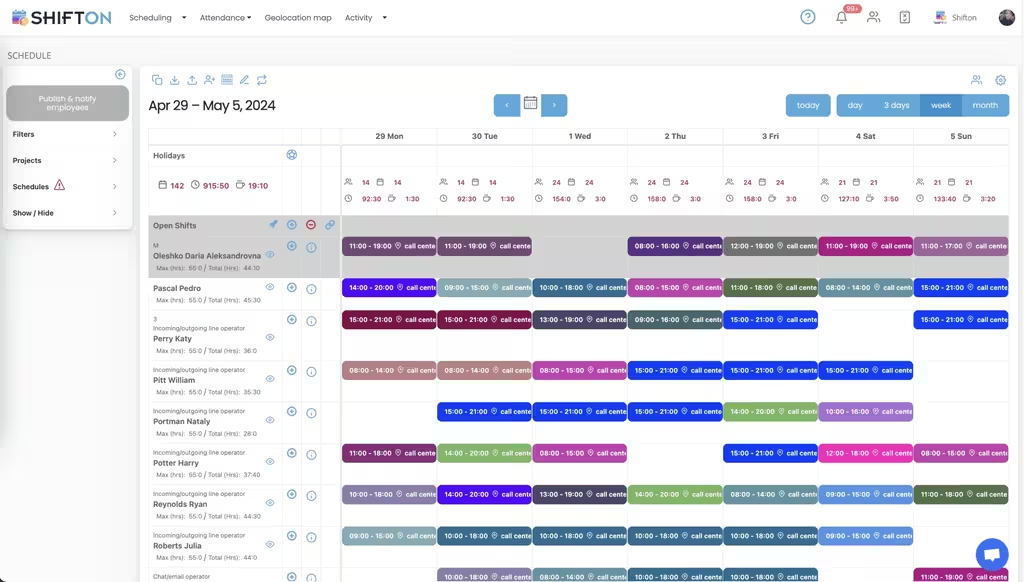
Cover a sick day before the first client
A stylist calls at eight with clients booked from nine. The rota cannot rebook the diary, but it can find who is free and get them in, which is the half of the problem that is actually solvable.
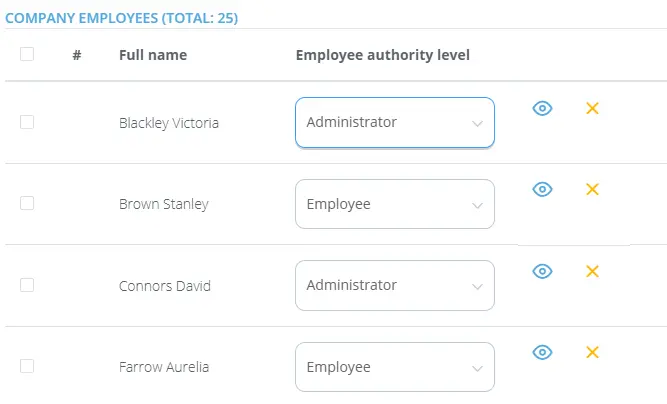
Record hours without a paper sheet
Clock-in from a phone puts the hours in the system on the day. The planned shift and the worked shift sit together, which is what payroll needs and what a disagreement always asks for.
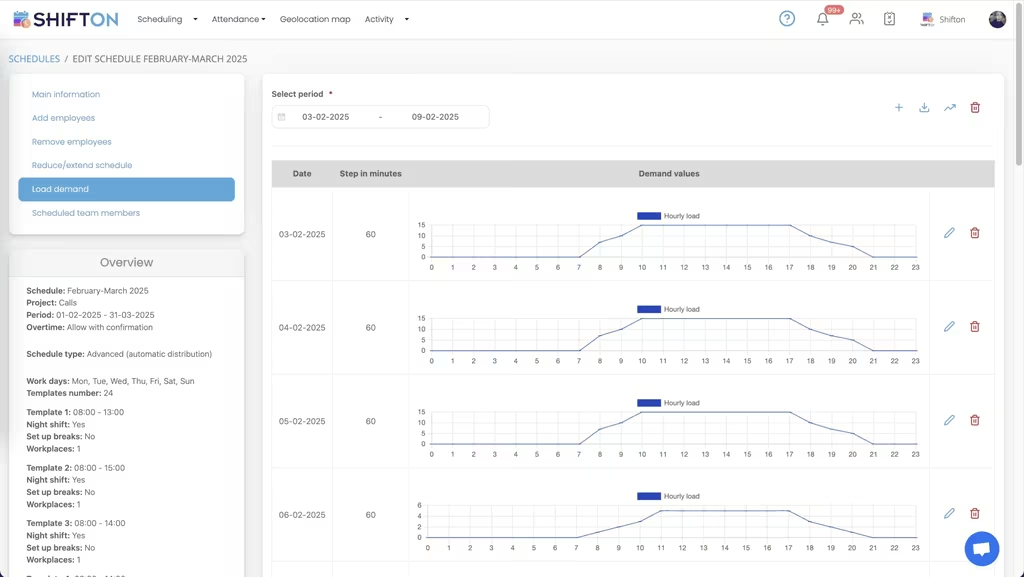
See what the floor costs
Wages are the largest controllable cost in most salons and the least examined, because the figure only appears monthly. Hours by person and by day make the expensive habits visible in a week.
Start with the Free Plan
No time limits. Get full access to core features and upgrade when you're ready.
Two different problems that share a name
Search for salon scheduling software and almost everything that comes back books clients. Appointment diaries, online booking pages, reminders, deposits, retail and stock. Those are good products and most salons need one.
This is the other problem. Who is on the floor on Saturday, whether the junior is free to shampoo at eleven, what everybody actually worked last week, and how much that cost. A booking system knows when clients are coming. It usually knows very little about the rota behind the chairs.
Different question, different tool.
Why the rota resists a spreadsheet
Salon teams are small, part-time and mixed in skill, which is exactly the combination a grid handles badly. A stylist who works three days, an assistant who is at college on Wednesdays, a junior who can wash but not colour, and a Saturday that needs all of them.
The information that makes the rota correct is not who is available. It is who is available and can do the thing that is needed. Roles carry that, and they are the difference between a gap offered to eight people and a gap offered to the two who can actually fill it.
The wall in the back room
Most small salons still run on a printed sheet, and it works until a change happens after somebody has gone home. Publishing to phones with read confirmation is the small fix: the owner can see who has opened the week rather than assuming everybody has looked.
What the software can and cannot fix
When a stylist calls in sick on a Saturday, two things break. The client diary has to be rearranged, and the floor has to be covered. Only the second is a scheduling problem, and being precise about that beats promising to solve both.
Covering the floor is the part that responds well to a notification. Pushing the shift to everybody who could work it reaches the person who is free but would never have been called, and it does so in the ten minutes that matter.
Hours, and the conversation nobody enjoys
Salon payroll disputes are almost always small and almost always about the same thing: the client who ran over, the fifteen minutes at the end, the break that was taken in pieces between appointments.
Recording clock-in and clock-out on the day, with breaks logged as their own entries, removes the class of argument. It also gives the owner something more useful than a settled dispute: a pattern. A closing shift that overruns four days out of five is scheduled wrong.
Commission and pay structures
Many salons pay a mix of base hours and commission. The hours side of that is what belongs here, recorded accurately and exported. The commission calculation stays wherever it lives today, usually in the booking system that knows what each client spent.
Reading the week as cost
Hours by person and by day is a blunt report and a useful one. It exposes the two habits that quietly cost a salon money: overstaffing quiet mornings out of caution, and understaffing the two hours on a Saturday when everybody wants an appointment.
What it costs
Shifton is free for up to 10 people with no time limit and no credit card, which covers most independent salons outright. The rota, the basic time clock, the mobile app and reporting are all included. Beyond ten people modules are added one at a time from $0.50 per employee a month, each with a trial of up to 60 days.
Frequently Asked Questions
Does this book clients into the diary?
No. Shifton schedules staff, not clients. It plans who is working which shift, records their hours and handles time off. Client bookings stay in whatever salon booking system you already use.
Can I plan stylists, assistants and reception separately?
Yes. Roles keep the groups distinct so a rota can be checked one at a time, and everybody receives one published week with only their own shifts visible in the app.
How do I cover a stylist who calls in sick?
Open the shift and it is offered to everyone who can work it. The first acceptance fills it and the owner sees who responded. Rebooking the client diary is a separate job in a separate system.
Can part-time staff mark when they are available?
Yes, before the rota is built. That keeps study timetables and second jobs visible at the moment the week is being made rather than producing a round of requests after it is published.
Do I need a terminal for clock-in?
No. The basic time clock works from the mobile app or a browser on any device, so nothing has to be installed in the salon.
Is there a free plan for a small salon?
Shifton is free for up to 10 people with no time limit, including the rota, the basic time clock, the mobile app and reports. Paid modules start at $0.50 per employee a month with a trial of up to 60 days.




Get the salon rota off the back room wall
Free for up to 10 people, with roles, cover that fills from the phone and hours you can hand to payroll.