

Bank Workforce Management Software for Branch Teams
Set branch cover against the hours that are actually busy, keep the pairing and authorisation rules that cash handling requires, and answer for any past date from the record itself.

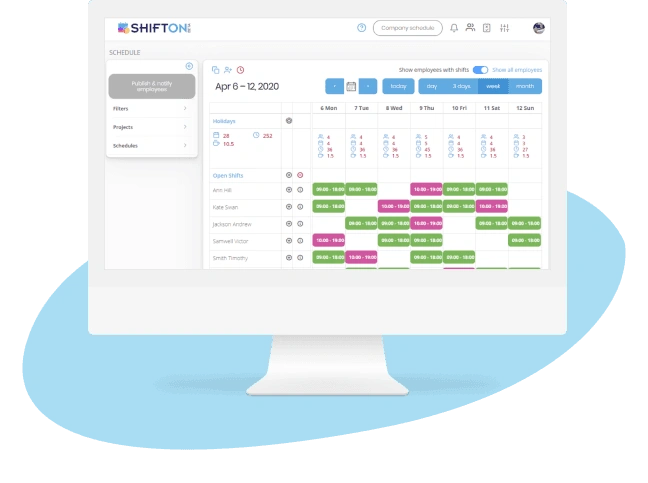
Cover that follows footfall, not the clock
A branch is busy in waves. The half hour after opening, the lunch hour, the day pensions credit, the last two working days of the month. Between those the counter is quiet and the advisers are in appointments. Five identical days pay full price for the quiet and run short for the queue.
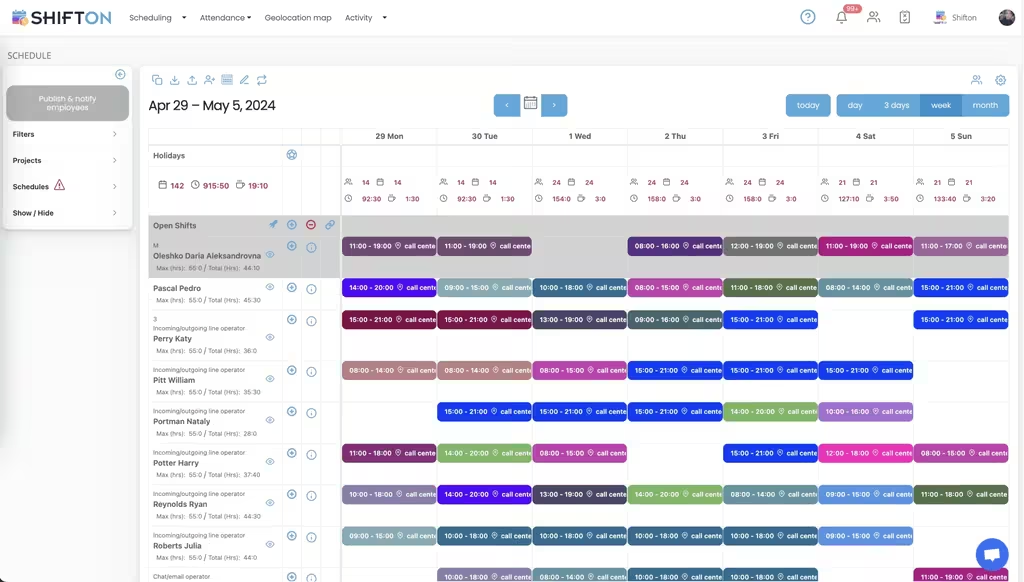
Rules that came from the regulator
Two people to open, two at the safe, a second signature above a limit, and an unbroken period of leave every year so that nothing being concealed can be maintained. These are conditions of the licence, and a rota that breaks them produces a finding rather than an inconvenience.
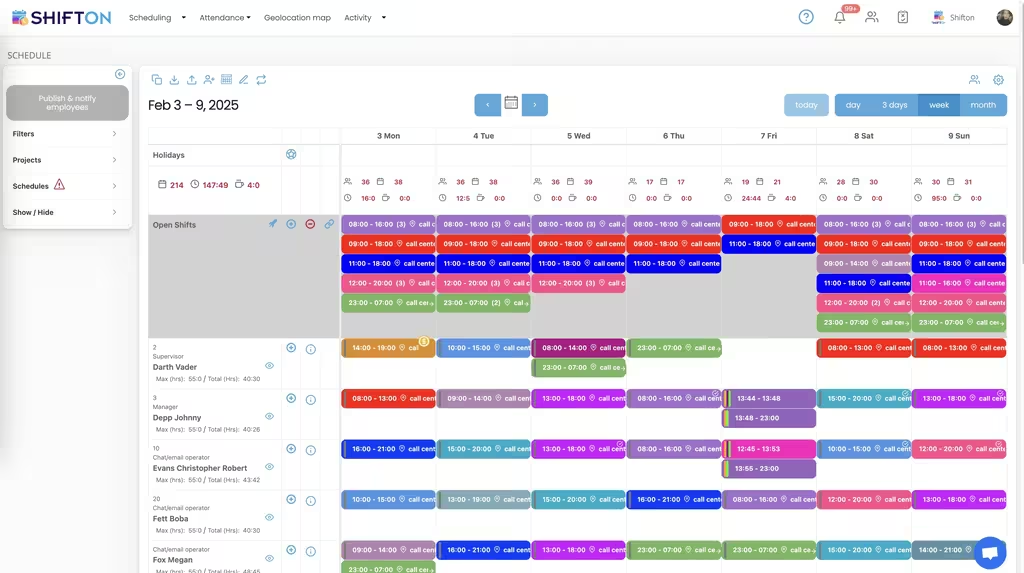
A region, not a list of branches
One branch is queueing out of the door while another twenty minutes away has an adviser free all afternoon. With no shared view the region learns about both in the monthly service report, by which time the queue and the idle hour have each been paid for.
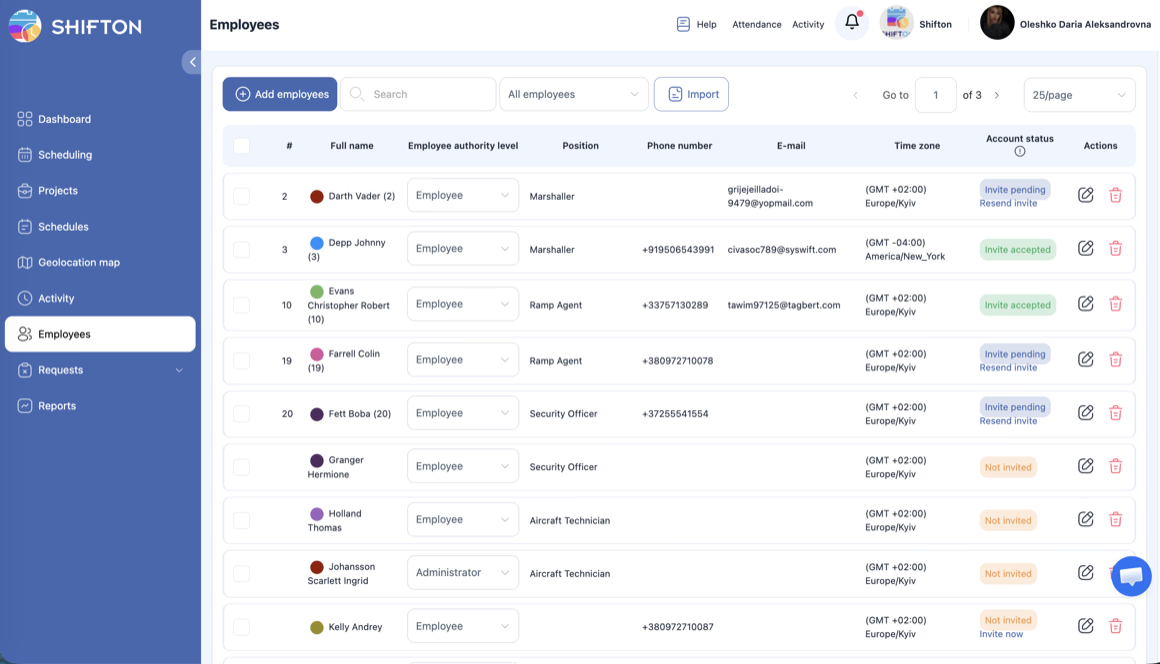
An absence on a morning that cannot go uncovered
A branch cannot open on one keyholder or staff a counter with somebody who is not cleared for it. When the call comes at half past seven the question is not who is free, it is who is free and cleared.
Start with the Free Plan
No time limits. Get full access to core features and upgrade when you're ready.
Read the full guide to bank workforce management
A branch day is not flat
Footfall arrives in waves that are almost entirely predictable and almost never planned for. The half hour after opening, the lunch hour, the day benefits and pensions credit, the final working days of the month, the week before a public holiday. Between the waves the counter is quiet and the diary is full of appointments that could have sat elsewhere.
Branches keep drawing the flat week because the alternative takes longer by hand than anybody has on a Friday afternoon. Half hour cover, two separate roles and a rule about who may stand at a till alone are all answerable questions, just not in a spreadsheet.
Two rotas in one building
The counter and the advisory side share a door and almost nothing else. One is governed by queue length and has to be covered minute by minute. The other is governed by a diary booked days ahead, where an empty slot is a lost mortgage conversation rather than a queue.
Planning them as a single pool is why an adviser ends up on a till at half past nine while the customer booked for ten waits. Keeping them apart, on one screen, with a floor under each, is the whole of the difference.
The hour the doors open
Opening needs a particular pair of people rather than any two. A rota that knows who holds keys and who holds authorisations avoids the morning where everyone present is qualified for everything except unlocking the door.
Constraints that are not preferences
Cash handling carries requirements a rota either respects or quietly breaks: dual control at the safe, a second signature above a threshold, a period of uninterrupted leave each year so that anything hidden cannot be sustained. None of these are matters of taste and all of them are checked.
Held inside the rota they are ordinary constraints and the week is drawn around them. Held in a manager memory they surface eighteen months later as a finding, discovered from the same records that could have prevented it.
Answering for a date
The question is never what the rota says today. It is what it said on the fourteenth of March, who clocked in against it, and who amended it afterwards. That is a storage problem, and it can only be solved before somebody asks.
The region is where the money is
A single branch cannot fix its own staffing. A region can. The queue at one site and the free afternoon at another are the same problem, and both are paid for while nobody is looking at them together.
A shared board shows it on the morning it happens, which is the only morning anything can be done. An adviser covers a branch for a day, a regulatory training day is planned instead of absorbed, and a pattern that works at one site is copied rather than reinvented. The Shifton feature set brings the rota, attendance, alerts and reporting into a single account.
Staff who are not at their own desk
Branch people are at a counter, in an interview room or travelling to another site. The rota that matters to them is the one on the phone, and the amendment that matters is the one that reaches them before they set off.
Swaps, leave requests and uncovered shifts belong in the same place as the rota itself. What used to be a printed sheet, a phone call and an argument about which version was current becomes one record that everybody is reading.
What this does not do
This is not a core banking platform and it never touches a customer record. It holds people, hours, qualifications and cost. Institutions tend to start looking when the network passes about four sites, or when an audit asks a question the spreadsheet cannot answer.
Getting started
The first ten people are free and stay free, with the rota, the basic clock, the phone app and reporting included. Beyond that, modules are priced at $0.50 per employee a month, each with a trial of up to 60 days, which is long enough to run a full quarter of month ends through the cost reporting before anything is decided.
The contact centre and the counter are one workforce
Most institutions plan the two apart and then wonder why an adviser is idle at eleven while the telephone queue runs to nine minutes. Often it is the same demand arriving through a different door, and the people who could answer it hold exactly the same authorisations.
Putting both on one board does not merge the teams or change who reports to whom. It makes the overlap visible: the hour when the branch is quiet and the line is not, the afternoon when somebody trained could take calls from a desk instead of waiting for a walk-in that the weather has already cancelled.
The days that repeat every single month
Benefit and pension credit dates, the final two working days, the first Monday after a bank holiday. None of these arrive as a surprise, and every one of them deserves a saved pattern rather than a fresh discussion about cover that reaches the same conclusion it reached last month.
Frequently Asked Questions
What does bank workforce management software cover?
It plans the branch week against opening hours and footfall, holds the pairing and authorisation rules that cash handling requires, records attendance against the plan and keeps every amendment. Staff read the rota and arrange swaps from a phone.
Can it plan a whole region rather than one branch?
Yes. Every branch in the region sits on one board, so a queue at one site and an idle adviser at another are visible the same morning. Trained people can float between branches, and a week that works at one site is copied to another of the same size.
Does it keep records an auditor will accept?
Each version of the rota is kept alongside the attendance recorded against it, so who was planned, who actually worked and what was amended can be answered for any past date. Block leave and authorisation levels are held per person rather than in a spreadsheet.
How does a branch cover an absence at short notice?
The empty shift is offered only to people cleared for that position, whoever accepts is confirmed by the manager, and the branch sees the corrected rota before the doors open. Nothing depends on a chain of phone calls.
Is there a free tier for a small institution?
The first ten people cost nothing and there is no time limit, which covers a single branch, a credit union or a small mutual. Beyond that, modules are priced at $0.50 per employee a month and each one carries a trial of up to 60 days.






Plan the branch week around the queue
Ten people at no cost and no time limit, cover set against footfall, dual control planned in, and every amendment kept on the record.