

Bar Staff Scheduling Software for Pubs, Clubs & Bars
Put the right number of people behind the bar for the hours that actually take money, keep the licence conditions inside the rota, and settle the tronc from hours that were recorded rather than remembered.

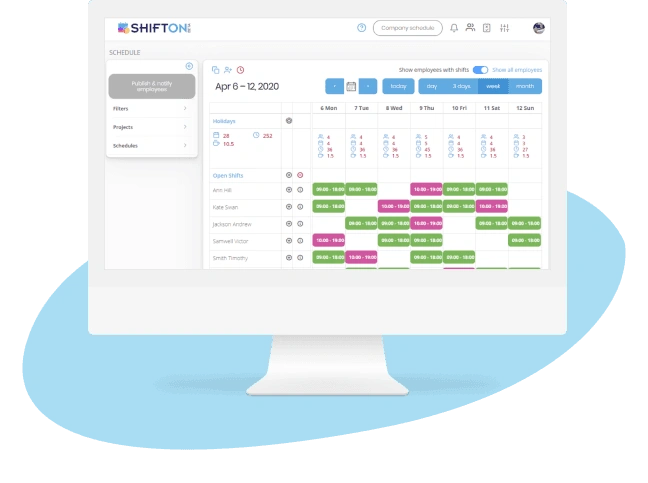
Staffing the hours that take the money
A bar takes a large share of its week between nine and midnight on two nights. The rest is preparation, cellar work and a quiet room. A rota that spreads people evenly across seven days pays for the quiet room and leaves a two deep queue on Friday.
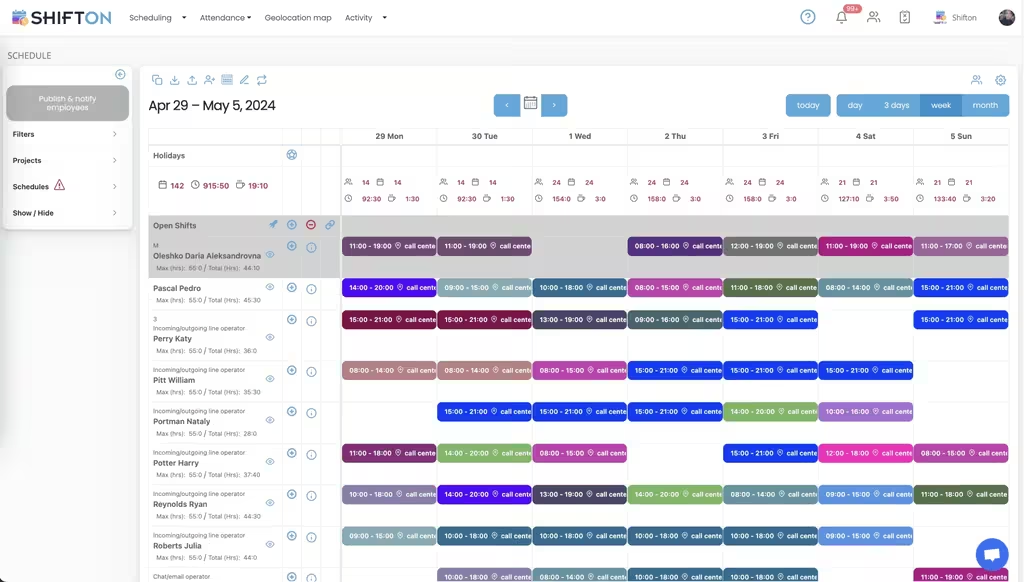
Licence conditions that live in the rota
Who may serve alcohol, who may work past midnight, who is old enough for which duties and who holds the personal licence on a given night. These are not preferences to be balanced, they are the terms the venue trades under.
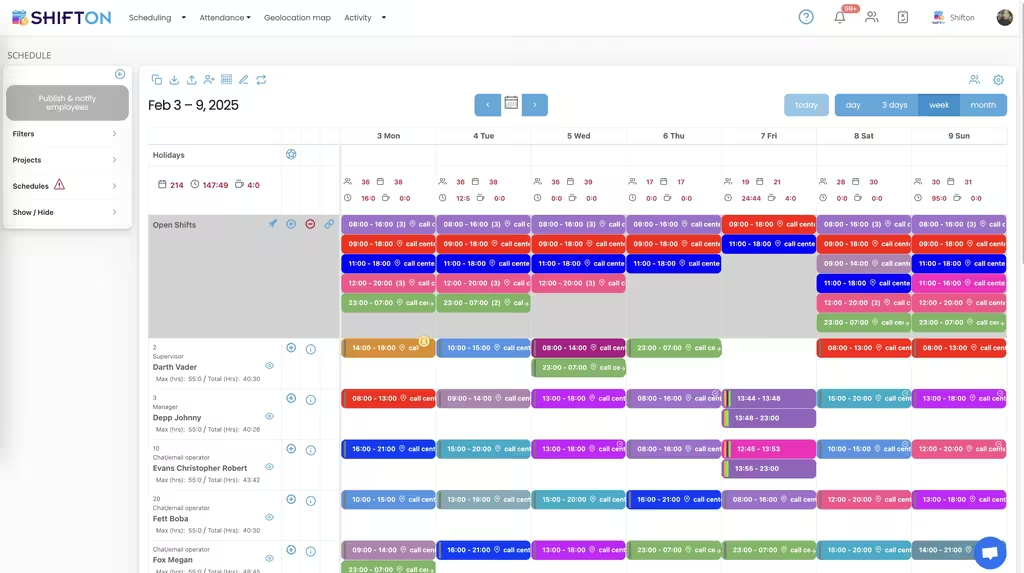
Hours the tronc can be settled from
Service charge and tips are shared from hours worked, and an argument about them starts the moment those hours are approximate. A till receipt does not settle it. A record of who was on and for how long does.
Cover at seven on a Friday evening
Somebody is not coming in and the doors open in two hours. The venue does not need a phone tree, it needs the shift in front of everybody who can work it before the first customer arrives.
Start with the Free Plan
No time limits. Get full access to core features and upgrade when you're ready.
Read the full guide to bar staff scheduling
A bar week is three shapes, not seven days
There is the quiet weekday, where two people and a cellar delivery is the whole operation. There is the busy evening, where the room fills between nine and midnight and the queue at the bar is the only thing anybody remembers about the night. And there is the exception: a fixture, a function, a bank holiday, the first warm evening of the year.
Almost every staffing mistake in a bar comes from treating those three as one repeating week. The quiet Tuesday is overstaffed because that is what the pattern says, and the Saturday that mattered was one person short because nobody looked at the fixture list.
Publishing early is worth more than it looks
Bar work is done by people with lectures, second jobs and lives that need two weeks of notice. A rota posted on Wednesday for a Friday is the most common reason a good bartender leaves for the place down the road. Posting a fortnight ahead costs nothing and removes half the churn.
The licence is a scheduling constraint
A venue trades under conditions, and several of them are questions about who is on which shift. Who may sell alcohol. Who is old enough for the duty. Who holds the personal licence on the night. Whether the person who closed at two is being asked to open at ten.
Kept outside the rota, these become the thing somebody checks on their way out of the door. Kept inside it, the rota simply stops offering shifts that cannot be worked, and the manager stops holding four separate rules in their head at the end of a long night.
Tips are settled from hours, so the hours have to be real
Every dispute about a tronc is really a dispute about hours. Somebody stayed until half past one and the sheet says midnight. Somebody covered an hour at the start of a shift that nobody wrote down. Once the underlying numbers are approximate the share cannot be defended, and the argument comes back every month.
Clocking in behind the bar and approving the week makes the figures the same for everybody. Payroll and the tronc are calculated from one set of hours, the late finish after last orders is counted, and the conversation moves from what happened to what the policy is, which is a conversation that can actually be settled.
Cost while the week is still editable
The wage line for a Friday is worth seeing on the Tuesday. Seen in the payroll run it is a fact. Seen while the rota is open it is a decision, and often the decision is simply that the fourth person starts at nine rather than seven.
The night the plan breaks
It breaks most weeks. Somebody is ill at five for a seven o clock start, a function books late, a delivery arrives during service. What separates a venue that copes is not a better plan, it is a shorter path between finding out and fixing it.
One move puts an open shift in front of everybody eligible to take it. Whoever accepts is confirmed by the duty manager, and the people affected see the change on their phone rather than hearing about it when they arrive. The Shifton feature set keeps the rota, the clock, alerts and reporting in a single account.
More than one room
A group of venues shares staff whether or not anybody planned for it. The bartender who works Thursdays at one bar and Saturdays at another exists on two rotas and one payroll, and the hours only add up if both sites are looking at the same record.
One screen for the group fixes that and a few other things with it. A pattern that works in a busy room is copied to a newer site, cover for a function is drawn from whoever is free across the group, and the cost of a weekend is compared between venues rather than assembled by hand.
What this is not
This is not a till system, a stock system or a booking platform, and a venue of any size already runs those. This holds the people: who is on, what they are cleared to do, what hours they actually worked and what the week cost. Bars usually start looking when the team passes about a dozen and the group chat stops being a rota.
Getting going
Up to ten people there is no charge and no time limit, which covers a small bar outright: the rota, the basic clock, the phone app and reporting. After that, modules are added one at a time at $0.50 per employee a month with a trial of up to 60 days on each, so a venue can run a full season through the reporting before it decides anything.
The cellar belongs on the rota
Line cleaning, a delivery, a gas change: none of it happens during service and all of it takes somebody who knows what they are doing. Left off the plan it becomes an hour somebody stayed behind for, or a Sunday afternoon nobody actually agreed to, and both are reliable ways to lose a good cellar person.
Placed on the rota as its own shift the work becomes visible, paid and attached to whoever is trained for it. It also makes something else obvious that a venue often prefers not to look at, which is that only one person in the building can currently do it.
Door staff and the ten o clock surprise
On the nights that require them, door supervisors belong on the same rota as the bar, whether they are employed directly or supplied. A venue that keeps them on a separate list discovers at ten in the evening that the agency sent one person where the licence expects two.
Frequently Asked Questions
What does bar staff scheduling software do?
It builds the rota for a bar around the hours that actually trade, holds the age and licence conditions the venue works under, records the hours worked behind the bar and shows the wage line while the week can still be changed.
Can it handle late finishes and split shifts?
Yes. A close at two is planned as a close at two, a split day is two shifts rather than one long one, and the rest a person is owed after a late finish is respected when the next shift is placed.
How does it help with tips and tronc?
The share is calculated from approved hours rather than from memory. Staff clock in behind the bar, the manager approves the hours, and the same figures feed both the payroll export and the tronc calculation.
How is a shift covered at short notice?
The open shift is offered in one move to everybody eligible to work it, whoever takes it is confirmed by the manager, and the corrected rota reaches the team before the doors open.
Does it work for a group of venues?
Yes. Every bar sits on one screen, staff who work across sites appear on one record rather than several, and a pattern that works in one venue can be copied to another instead of drawn again.




Get Friday night staffed before Friday
Ten people free with no time limit, hour by hour cover, licence conditions held in the rota and a tronc settled from hours that were actually recorded.