

Alarm Company Management Software for Install and Service
Surveys, installations, recurring inspections and service calls on one board, with test results and signatures captured on site.
Installation and service are two different businesses
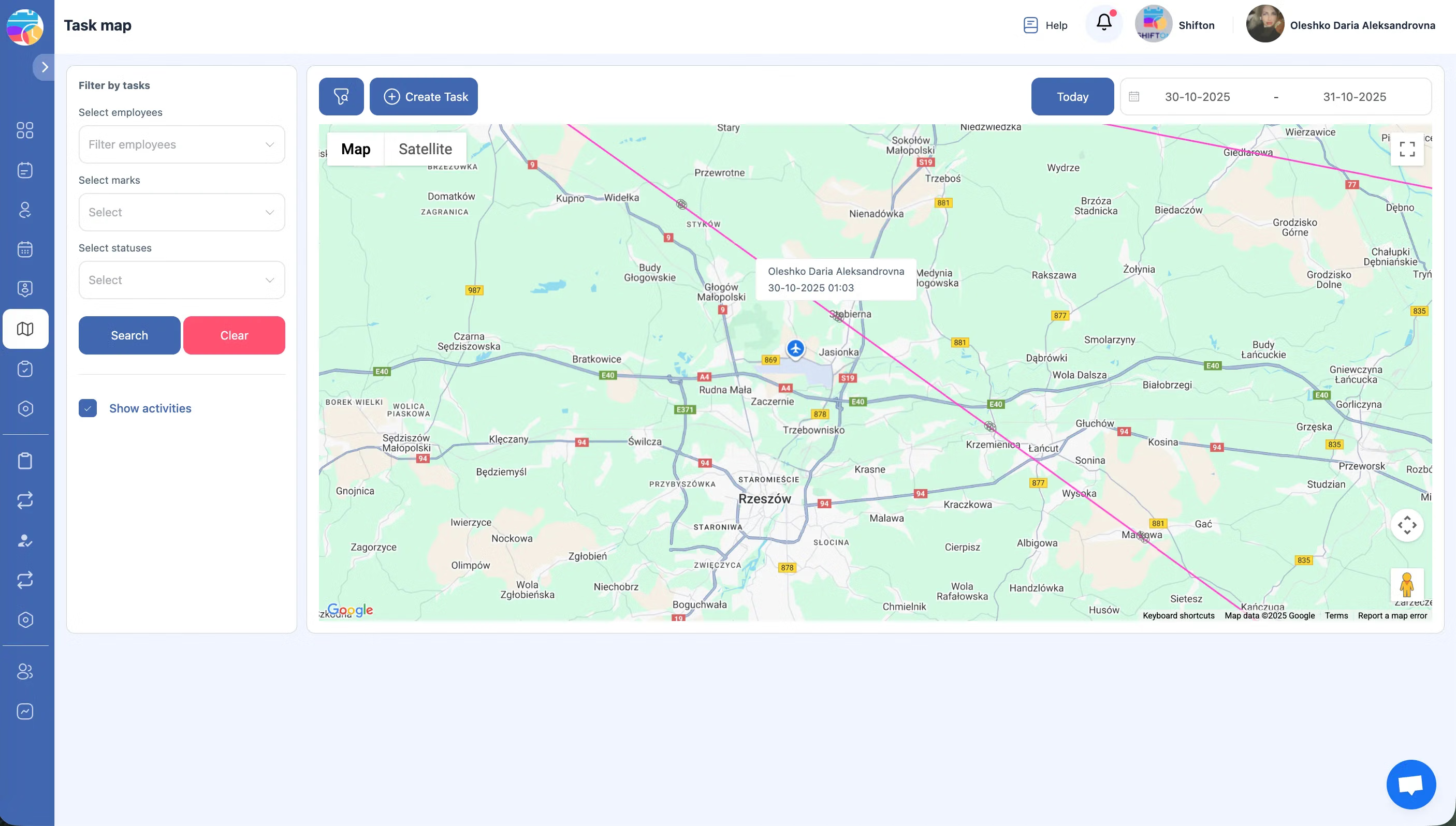
A security firm runs projects and a service desk at the same time. Installations are planned weeks ahead and consume whole days; service calls arrive from a monitoring centre and need someone within hours. Held in separate calendars, the two starve each other, and the engineer who should be commissioning a system spends the afternoon resetting a faulty detector.
Recurring inspections that generate themselves
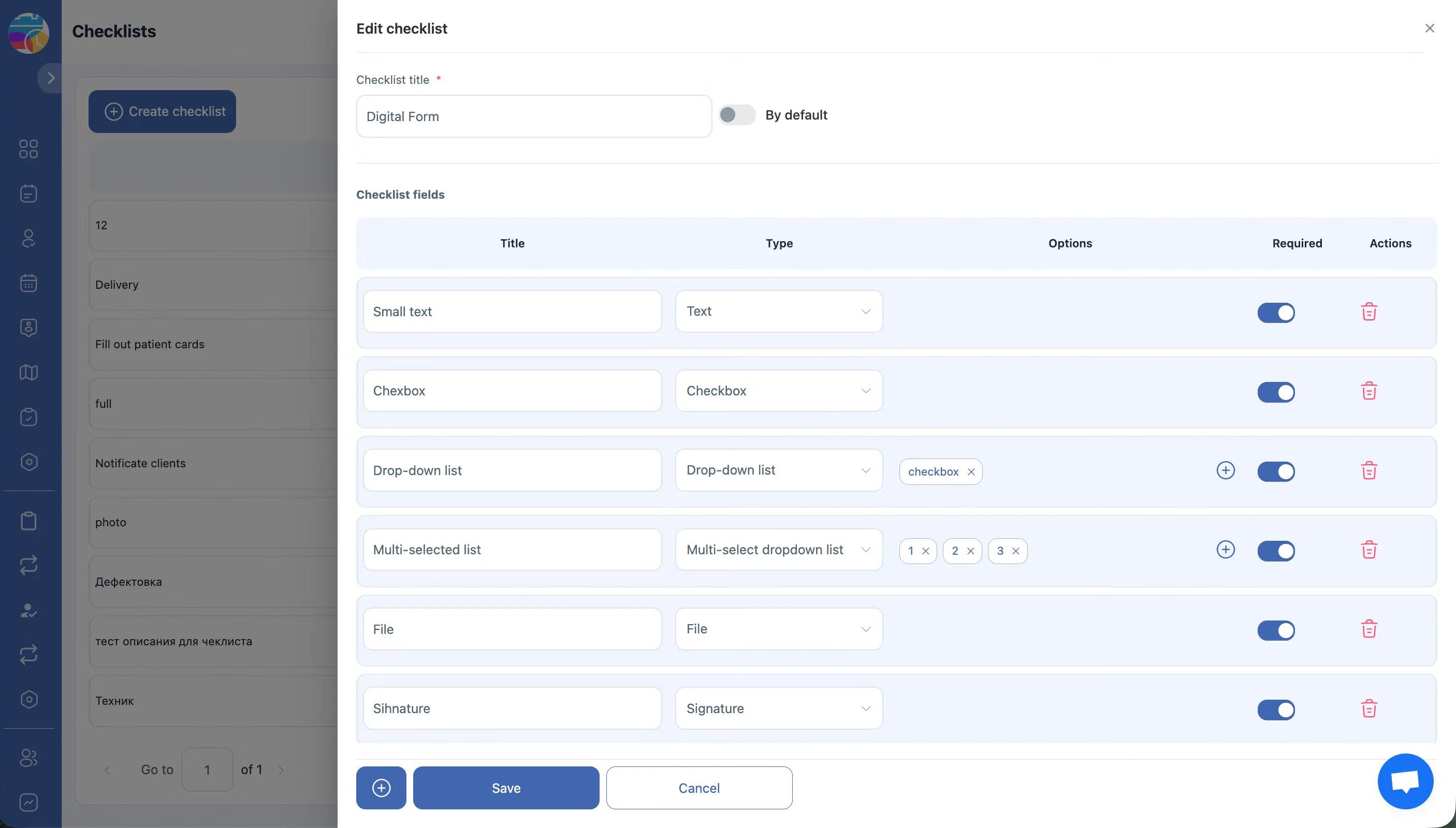
Fire alarm inspection software exists because the obligation repeats forever and the penalty for missing it is severe. Weekly, quarterly and annual cycles are created ahead, the engineer completes the test on site, and the certificate is produced from the same record rather than typed up afterwards.
The engineer arrives knowing the system
Security work is unforgiving of missing information. Panel type, firmware, credentials, cable routes and access arrangements decide whether a visit succeeds. Holding them on the site record means the next engineer is not the one who has to work it out again.
Contracts, recurring revenue and the numbers
Monitored accounts and maintenance contracts are the value in a security business, and they are held together by service delivery. Reporting per account shows whether the promises attached to that revenue are being met.
Start with the Free Plan
No time limits. Get full access to core features and upgrade when you're ready.
Read the full guide to alarm company software
What a security firm actually has to schedule
Security and CCTV companies are usually sold two different products: a package for managing monitored accounts and recurring billing, and a package for managing engineers. The second is where the operational risk sits. An account is only as good as the response behind it, and response is a scheduling problem before it is anything else.
The complication is that the work is not one shape. A survey takes an hour and needs the right person. An installation runs for days and consumes a team. An inspection repeats on a fixed cycle and produces a document that must exist. A reactive call arrives from a monitoring centre with a clock attached. Alarm company management software that can only hold one of these leaves the others in a spreadsheet.
Inspections are the backbone
Fire alarm inspection software is bought for a reason that has nothing to do with convenience: the tests are mandatory, the intervals are fixed, and the evidence is examined after an incident. Building the cycle into the schedule means the visit is generated rather than remembered, and the report is a product of the visit rather than an evening job for whoever has the clearest handwriting.
Device level recording is what makes those reports useful later. A site that logs each detector, sounder, camera and panel individually accumulates a history that shows which devices fail repeatedly, which sites need rewiring rather than resetting, and where a maintenance contract is being priced below the work it demands.
The information an engineer needs before arriving
The system as installed
Panel type, firmware version, zone layout, device positions and cable routes decide whether a visit is productive. Held on the site record, they travel with the job to whichever engineer attends. Held in one engineer's head, they leave when that engineer does.
Access
Security systems live in the parts of buildings that are hardest to reach: locked plant rooms, occupied offices, sites with escorts and permits. Access arrangements on the job card are the difference between a completed inspection and a wasted trip that still costs a day.
Parts
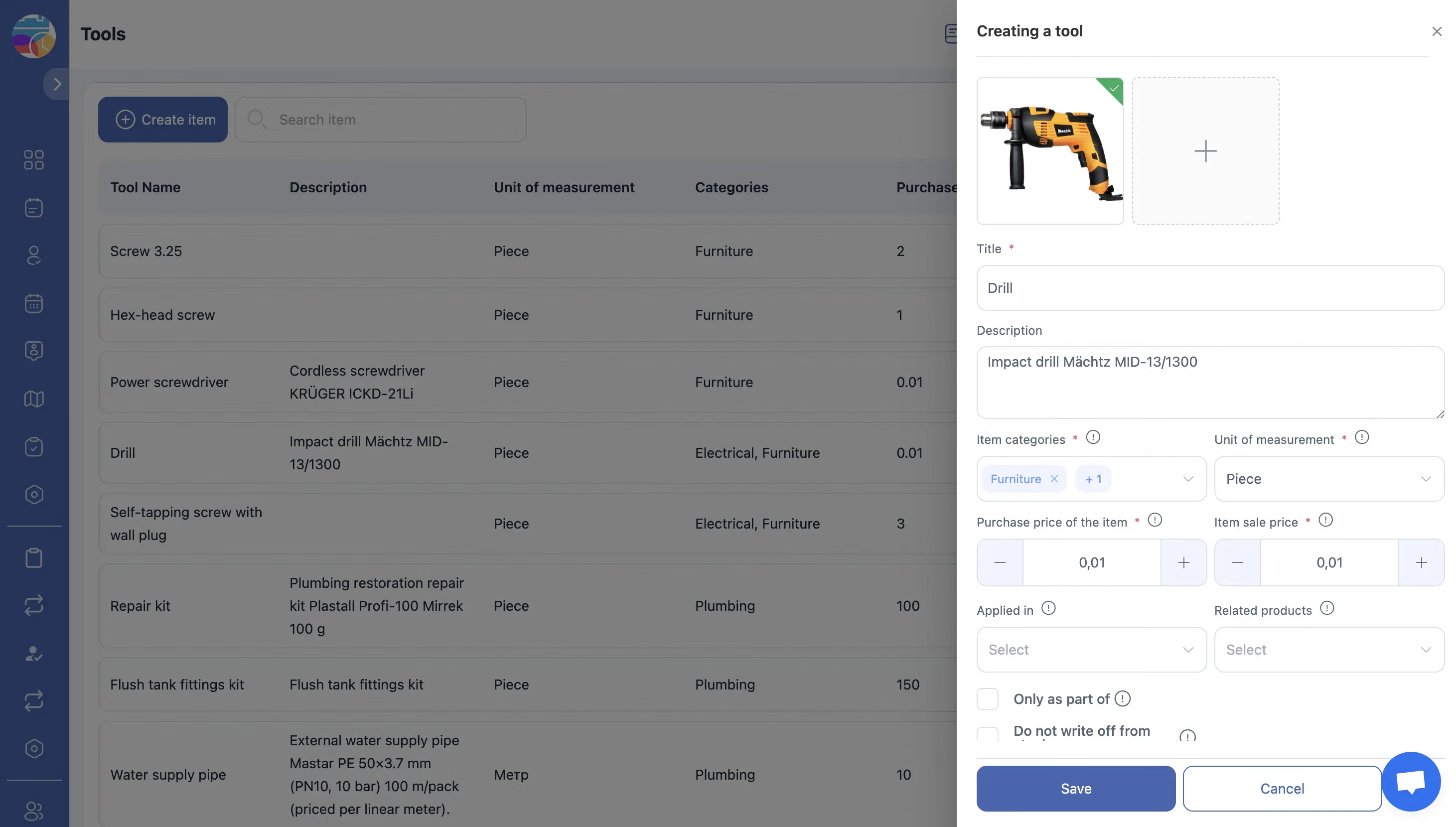
Detectors, cameras, cable, panels and mounts have a habit of leaving the van without leaving a trace. Recording them against the job keeps stock honest and makes the invoice reflect the work rather than an estimate of it.
Why first time fix is the number to watch
Every security firm knows its callback rate is expensive, and few can say what causes it. When jobs carry their history, the pattern emerges: sites where the wrong part was carried, systems that need a specialist, customers whose faults are environmental rather than technical. Improving first time fix is the fastest available margin improvement in this trade, because a second visit earns nothing and costs a full slot.
Serving monitored accounts credibly
Recurring revenue depends on the customer believing the response is real. Reporting per account, with response times and visit records attached to individual jobs, turns that belief into evidence at renewal time. It also shows the firm which accounts consume more service than they pay for, which is a conversation better had with figures than impressions.
Starting without stopping the work
Nothing needs migrating first. Put the reactive calls and the next inspection cycle on the board, let engineers complete forms on the phone, and the history begins from that day. Installers with two or fewer employees stay on the free plan permanently, and paid modules carry a trial of up to 55 days, which comfortably covers a full inspection cycle.
Frequently Asked Questions
Can it handle installation projects and reactive service calls together?
Yes. Both sit on one board, so an urgent call from a monitoring centre can be assigned without silently destroying an install day. The office sees exactly what a reactive job displaces and can tell the affected customer before they ring.
How are recurring fire alarm and CCTV inspections scheduled?
As recurring jobs. Weekly, quarterly and annual cycles are created ahead of time, each with its own checklist and device list. The engineer records results on site, and the completed report stays attached to the system rather than to an individual.
Can engineers record results device by device?
Digital job forms carry the device list for the site, so each detector, sounder, camera or panel is recorded individually with its result, notes and photographs. The report is complete before the engineer leaves.
What happens in a plant room or basement with no signal?
The mobile app for iOS and Android holds the job and the form on the device. Tests completed underground or inside shielded buildings sync when the phone finds signal again, and nothing has to be retyped.
Can we see which engineer is nearest to an urgent call?
With the work location control module, live engineer positions show who is closest and what they already have on. It is a paid module, added when the size of the team justifies it.
Is it worth running in a small security firm?
Yes. Teams of two or fewer use the free plan permanently: scheduling, digital job forms, the mobile app and reports are included. Inventory, invoicing, location control and the customer portal are paid modules added as the business grows.
How is the platform priced for a security firm?
The free plan covers up to two employees with no time limit. Beyond that pricing is per employee per month, and every paid module carries a free trial of up to 55 days, long enough to run a full quarterly inspection cycle through it.
Ready to transform your field operations?
Join thousands of field service companies that trust Shifton to run smarter every day.