

Water Damage Restoration Software for Crews and Claims
Emergency call-outs, drying visits and reinstatement on one board, with the readings, the photos and the equipment on the job.
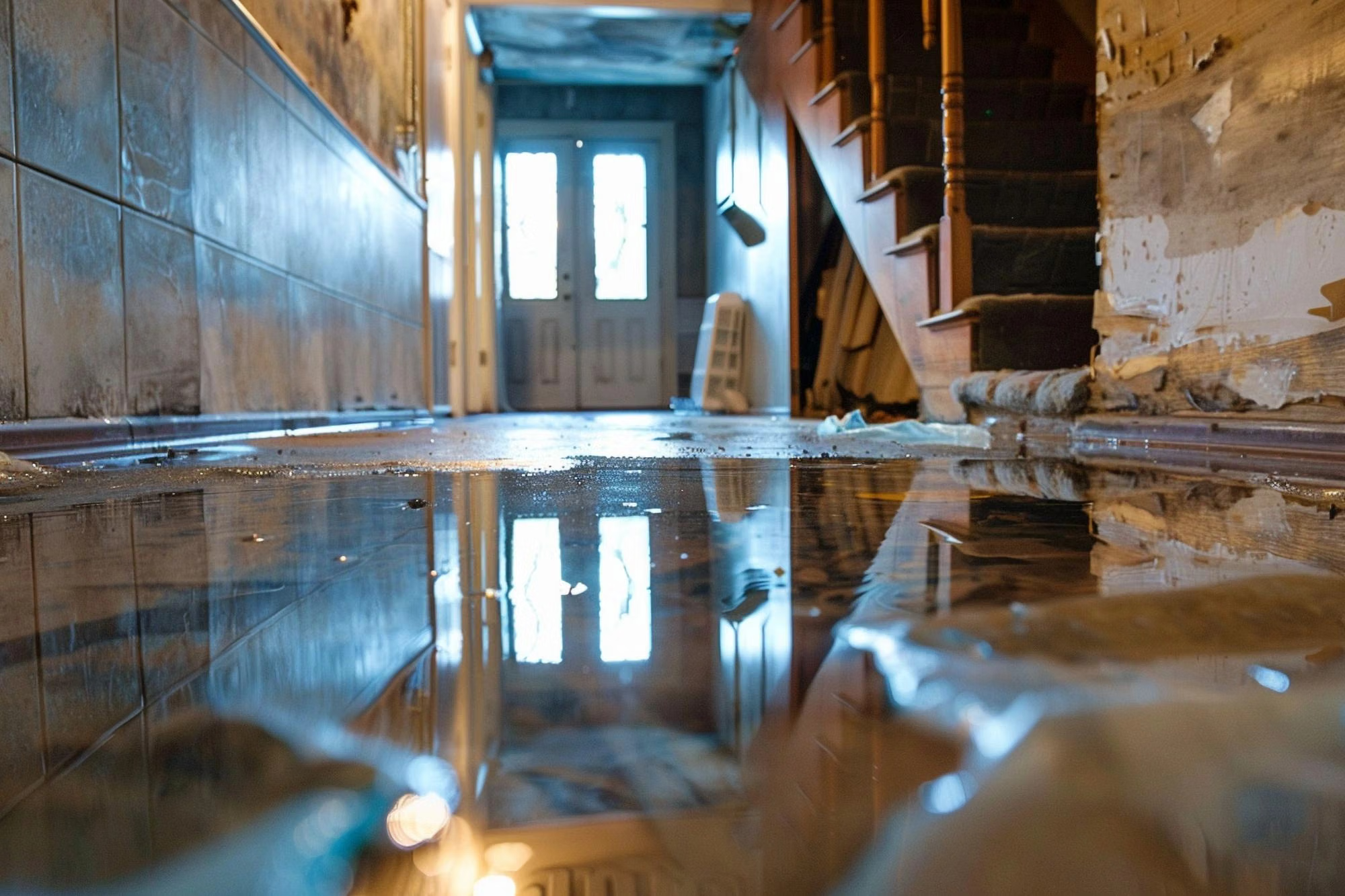
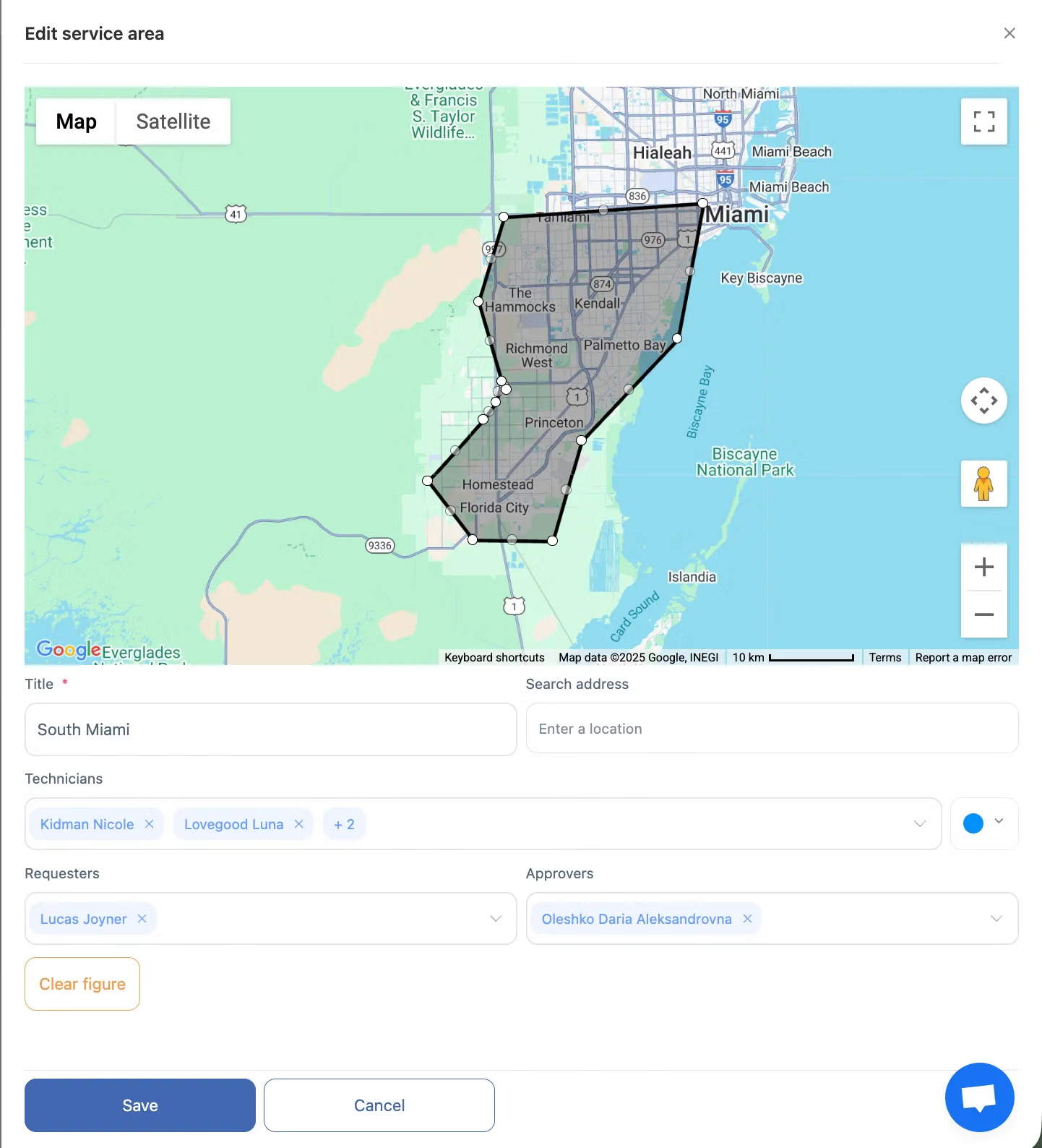
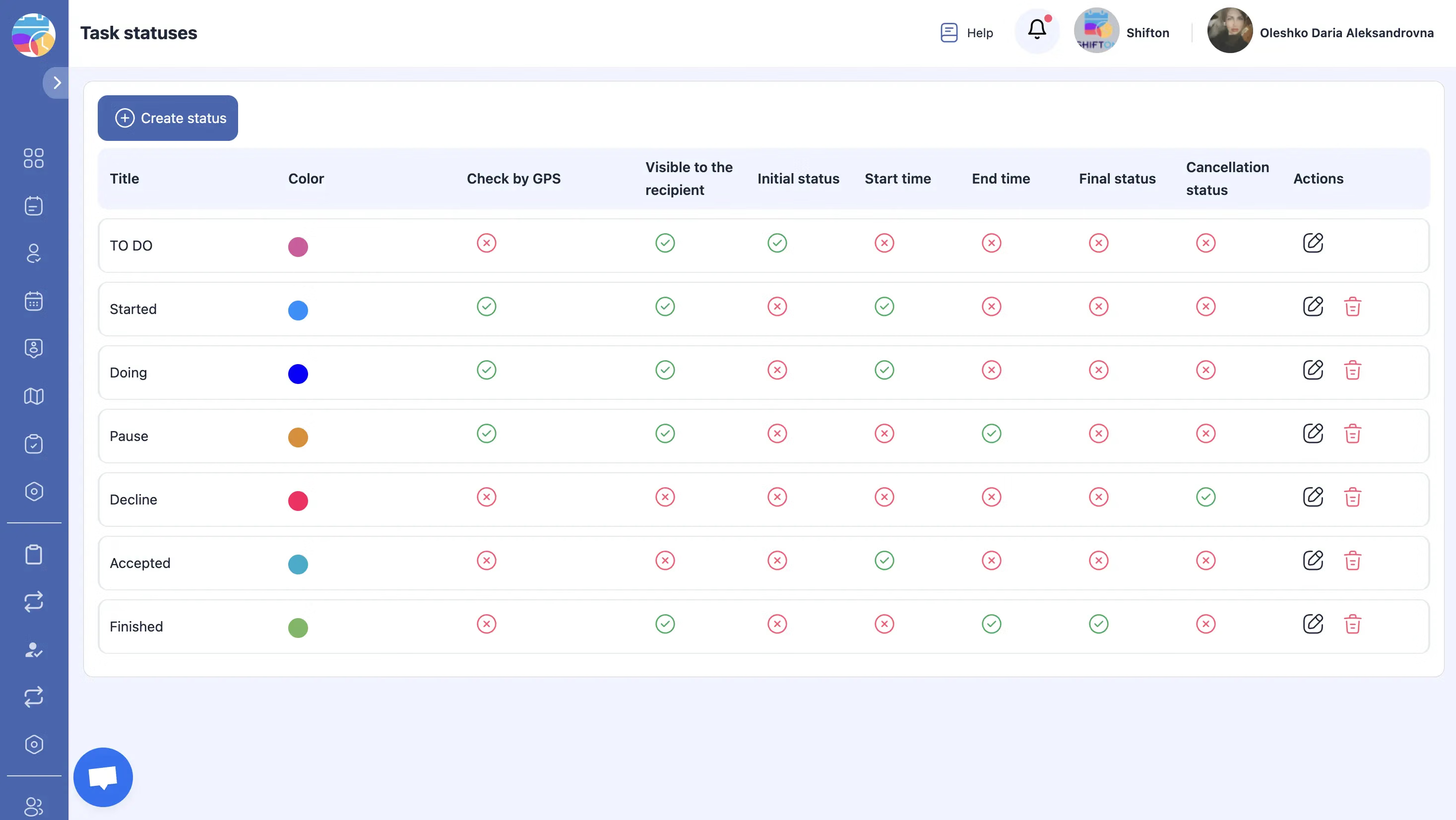
The first two hours decide the job
Restoration work starts with a phone call from somebody standing in water. Response time decides how much of the property survives and, often, whether you keep the referral. That needs a board where the nearest available crew is obvious and the job reaches their phone in seconds, not a group chat and a hope.
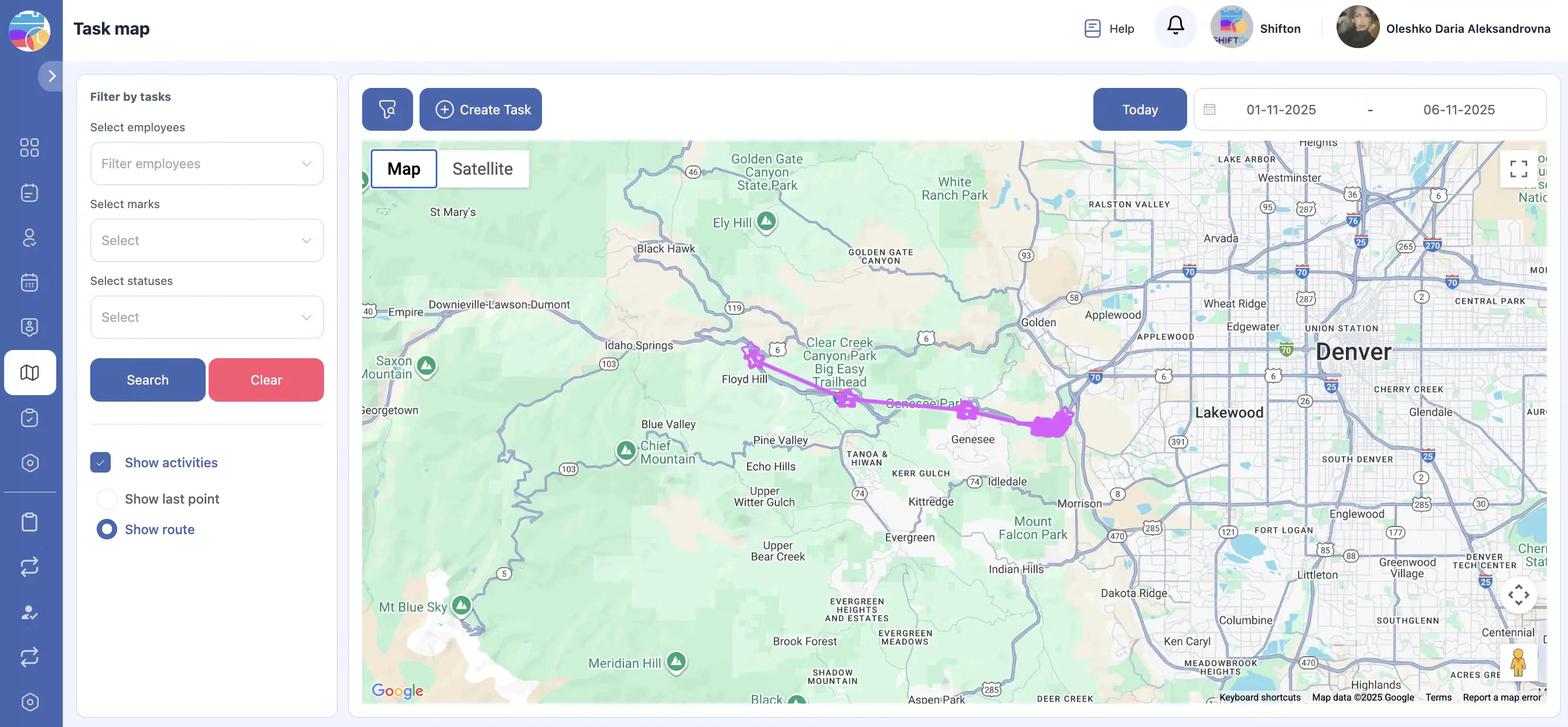
Drying is a daily record, not a single visit
A water damage job is a sequence of return visits: equipment placed, moisture readings taken, dehumidifiers moved, readings taken again. The value of the job to an insurer is entirely in that record. Kept on the job card, each visit adds to a history that reads as a drying curve.
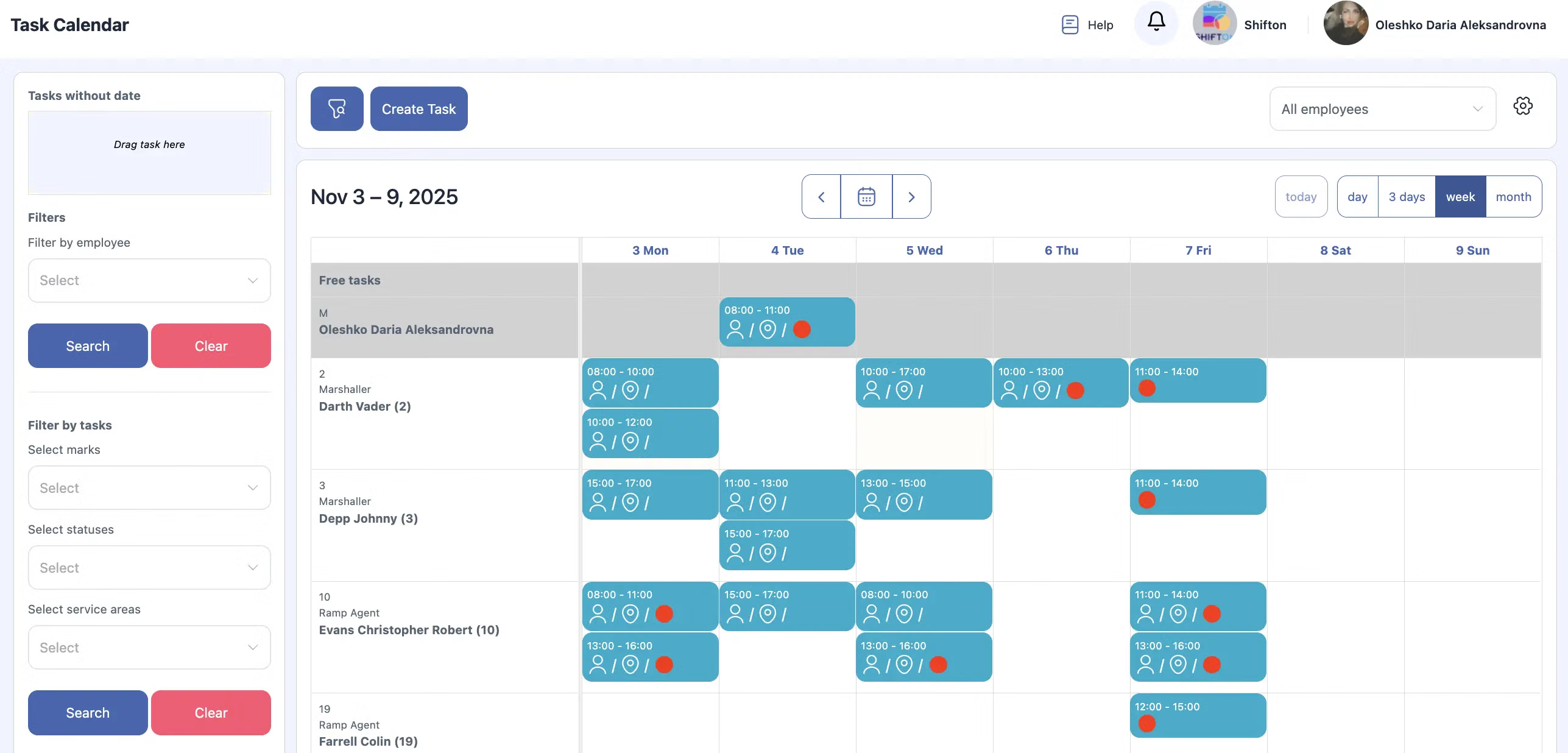
Equipment you can find and account for
Air movers and dehumidifiers are the most expensive things a restoration business owns and the easiest to lose. Assigned to jobs rather than to a shed, they can be found, charged for and collected when the job closes.
Proof, sign-off and the invoice the adjuster accepts
Restoration invoices are challenged more than most because they are paid by somebody who was never at the property. The answer is evidence assembled as the work happens: dated readings, photographs, equipment logs and signatures.
Start with the Free Plan
No time limits. Get full access to core features and upgrade when you're ready.
Read the full guide to water damage restoration software
A trade where the paperwork is the payment
Most field trades are paid by the person who watched the work happen. Restoration usually is not. The invoice goes to an insurer, and it is assessed by somebody who has never seen the property, working from whatever record you can produce. That makes documentation not an administrative chore but the mechanism by which the business gets paid.
Everything else follows from that. The dispatch has to be fast because damage grows. The visits have to be recorded because drying is a process. The equipment has to be tracked because it is billed by the day. And all of it has to end in a file that answers the questions an adjuster will ask.
Response, and the referral behind it
Restoration work arrives through relationships: loss adjusters, letting agents, plumbers, insurers. Those relationships are maintained almost entirely by response time. A crew on site within two hours produces a happy referrer. A crew that arrives the following morning produces a property with more damage and a referrer who calls someone else next time.
Out of hours has to live on the same board
The most common failure in emergency response is not slowness, it is confusion about who is on call. Holding the rota in the same place as the day schedule means the person taking the call at eleven at night can see who is available without waking two people to find out.
Drying is a curve, and the curve is the evidence
A water damage job is not one visit. It is placement, then a series of returns over days, each with readings that should trend in the right direction. Recorded properly, that series is a drying curve which justifies the equipment days you are billing. Recorded on paper, it is a folder that may or may not be complete when the query arrives.
The practical difference is where the readings are entered. On a phone, at the property, they take a minute and cannot be lost. On a sheet, they take the same minute and then require somebody to type them up, which is the step that fails.
Equipment is inventory that walks
Dehumidifiers and air movers represent real capital and they spend their lives in other people's buildings. Businesses that do not track them by job routinely discover units left in properties long after the claim closed, and cannot bill for the days they were there.
Assigning equipment to the job and scheduling the collection as its own visit fixes both problems at once: the kit comes home and the days are billable because they are recorded.
Reinstatement is a different job
After drying comes making good: plastering, flooring, decorating, sometimes over weeks. Treating that as a continuation of the same emergency job blurs two very different kinds of work. Held as scheduled jobs against the same property, with their own materials and their own sign-off, the reinstatement can be planned like the construction work it actually is.
What to look for
Can an emergency job be created and dispatched in under a minute. Can a technician record readings, photographs and equipment on a phone in a property with no power. Can the complete file for a claim be produced without assembling it from three places. Those are the questions that matter; everything else is preference.
Starting free
Two people run free with no time limit, including scheduling, digital job forms, the mobile app and reports, which is enough to run real claims through the system before committing to anything.
Paid modules follow: inventory when equipment tracking starts to matter, invoicing when claim billing needs to come straight from the job, location control when crews cover a region, the customer portal when referrers want visibility. Each carries a free trial of up to 55 days.
The parts are documented separately: dispatch and task management, digital job forms, the mobile app, equipment and inventory, job history and invoicing. Prices are on the pricing page.
Frequently Asked Questions
How quickly can a crew be dispatched to a water damage call?
The job is created with the address and the reported damage and pushed to the nearest available crew, who receive it on the mobile app immediately. The on-call rota sits on the same board as day work, so out of hours calls do not depend on someone remembering who is on.
Can daily moisture readings be recorded on the job?
Yes. Each return visit adds its readings, photographs and notes to the same work order, so the drying process builds a dated history rather than a stack of loose sheets. That history is what an insurer or adjuster asks for later.
How is drying equipment tracked?
Air movers and dehumidifiers are recorded against the job they are placed on, with the date they went out. The collection visit is scheduled as its own job, which is how equipment stops being left in properties for weeks after the work has finished.
Does the app work in a property with no power or signal?
The mobile app for iOS and Android stores the job, the checklist and the photographs on the device and syncs when a connection returns. Flooded basements and empty properties are recorded normally.
Can we produce the evidence a claim requires?
Every visit keeps its readings, photographs, checklist and signature against the job, so the complete file for a claim opens in one place: what was found, what was placed, how the property dried and who authorised the work.
Is this restoration software workable for a small firm?
Teams of two or fewer run on the free plan with no time limit, including scheduling, digital job forms, the mobile app and reports. Paid modules such as inventory, invoicing, location control and the customer portal are added as the business grows.
What does it cost and how long can we trial it?
The free plan covers up to two employees permanently, and above that pricing is per employee per month. Every paid module carries a free trial of up to 55 days, long enough to take several claims from first response to invoice.
Ready to transform your field operations?
Join thousands of field service companies that trust Shifton to run smarter every day.