

Hospitality Scheduling Software for Restaurants, Cafés & Venues
Plan the kitchen and the floor against the covers you expect, keep allergen and food safety training on the shift, and read the labour percentage while the week can still be changed.

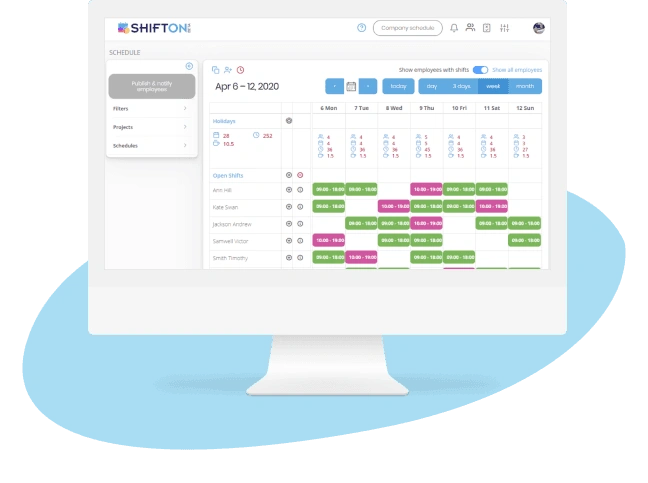
Covers first, then the rota
A restaurant week is a booking sheet before it is a rota. Two seatings on Saturday, a quiet Monday, a function on Thursday that needs three extra on the floor and one more on the pass. Staffing drawn from an average week misses all four.
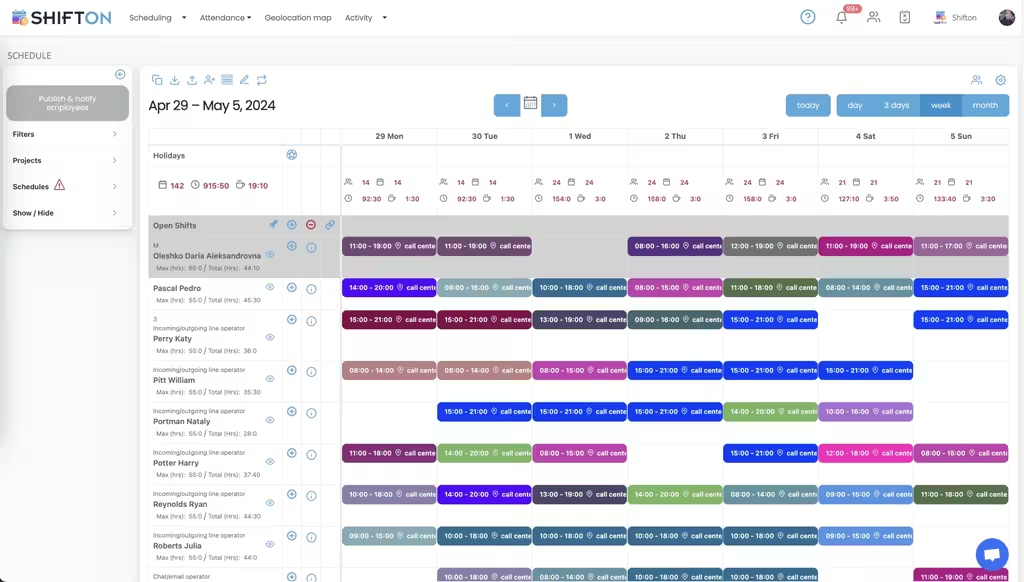
Training that has to be on the shift
Allergen handling, food safety, the person responsible for opening and the person who closes the kitchen. Hospitality carries requirements that are checked, and a rota that cannot show who was on which shift is a weak answer to an inspector.
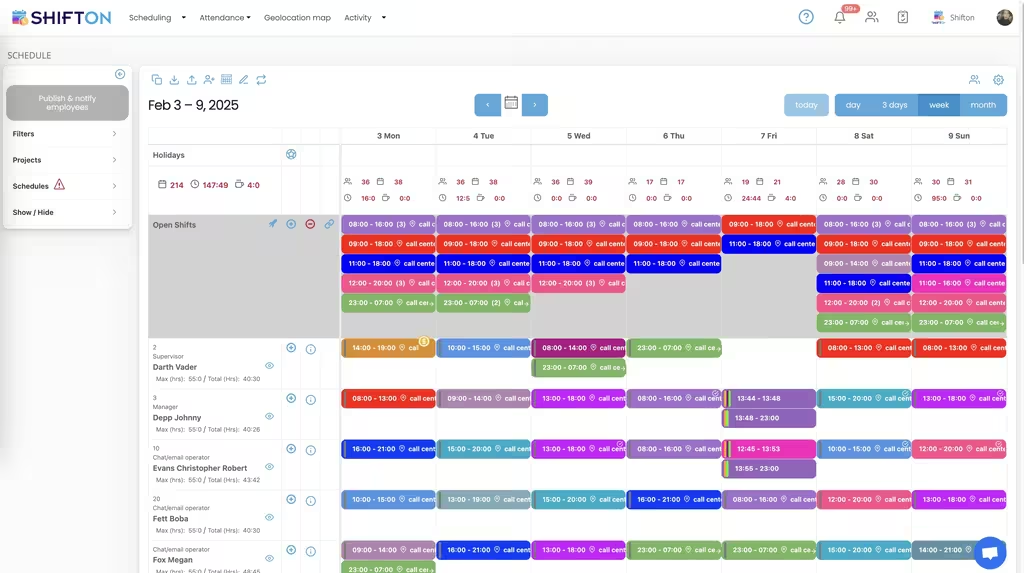
Labour percentage while the week is open
The number that decides a restaurant month is labour against sales, and it is normally read a fortnight late. Seen while the rota is still editable, the same number is a choice about who starts at five rather than four.
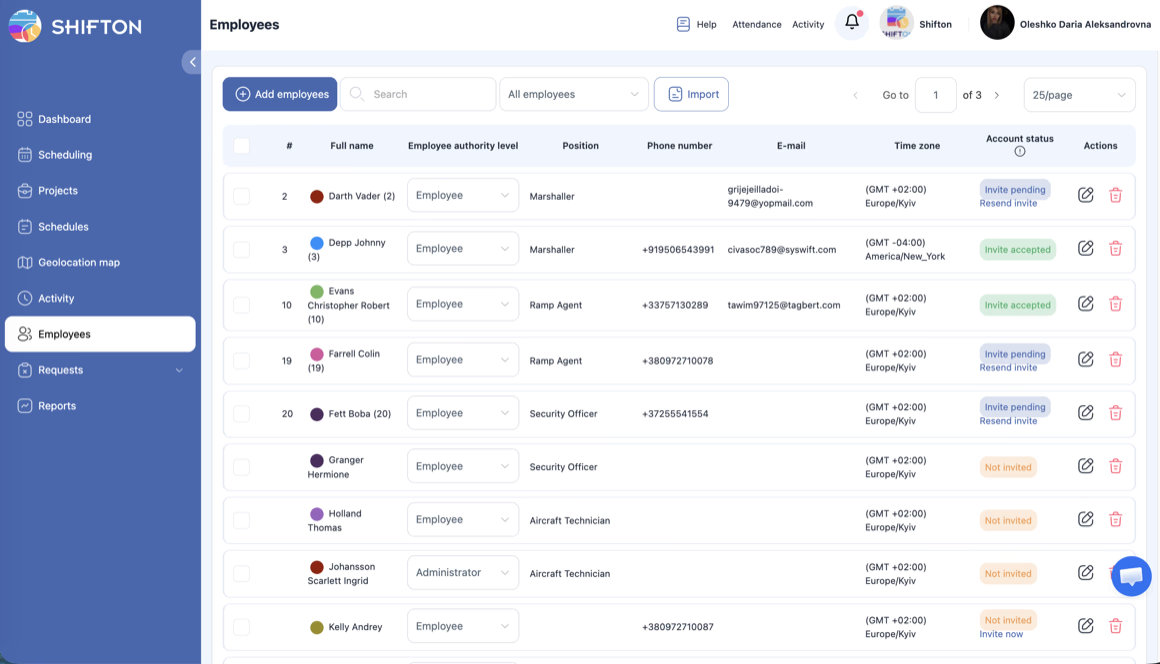
Service starts in an hour and somebody is missing
A chef de partie is ill at three and there are ninety covers booked. Whether that becomes a difficult service or a bad one depends entirely on how quickly the gap reaches everybody who could fill it.
Start with the Free Plan
No time limits. Get full access to core features and upgrade when you're ready.
Read the full guide to hospitality scheduling
The booking sheet comes first
Everything a restaurant decides about staffing is downstream of one document, and it is not the rota. It is the covers expected. Ninety on Saturday with two seatings needs a different floor and a different pass than forty on a Monday, and the gap between those two nights is larger than the gap between two ordinary weeks in most other businesses.
A rota drawn from a template is therefore wrong in a specific and expensive way. It is roughly right on the average night and clearly wrong on the two nights that carry the week. Building from the bookings instead is not more work, it is the same work done in a different order.
Prep is a shift, not a favour
The two hours before service are real hours and they are frequently missing from the plan. When they are absent from the rota they are also absent from the cost, which is why a kitchen can look correctly staffed on paper and still be twenty hours over by the end of the month.
Two teams with one door
The kitchen and the floor share a service and almost nothing else. One is a brigade with stations and a running order. The other is a room where the constraint is how many tables a person can look after without the service falling apart. Their busy moments are half an hour apart, their skills do not transfer, and a person short in either one is felt by both.
Planning them separately on one screen is what makes a total cost meaningful. Each has its own floor, each is drawn on its own pattern, and the labour number at the bottom is still a single figure the general manager can act on.
Training that an inspector will ask about
Food safety and allergen responsibility are not internal policies, they are conditions under which a venue operates, and they are checked. The question is rarely whether the training exists. It is whether somebody trained was on the floor during that service, on that date.
Holding certificates against the person, with expiry dates, turns that from an audit exercise into an ordinary constraint. A lapsed certificate stops the shift being offered. A service without allergen cover shows up before the rota is published rather than after an inspection.
Labour against covers, read early
Every operator knows their labour percentage and most of them learn it too late to do anything about it. Read after the fact it is a verdict on a month that has already happened. Read while the rota is open it is a series of small decisions: a start time moved by an hour, a fourth server who begins at six rather than five, a prep shift that does not need to be a full day.
That only works when the hours are recorded rather than remembered. A shift reconstructed from memory at the end of the week is close enough to be believed and wrong often enough to matter, and it is the reason the projected number and the payroll number so rarely agree.
The afternoon somebody calls in
A chef de partie is ill at three, ninety covers are booked, and the difference between a difficult service and a bad one is how fast the gap reaches the people who could fill it. Not a chain of calls to whoever answers first, but the same message to everybody qualified, at the same moment.
Agency cover deserves the same treatment. A temporary hand who appears on the rota and in the cost report is a manageable expense. One who exists only on an invoice at the end of the month is the reason a good week ends up with a bad labour figure. The Shifton feature set keeps the rota, the clock, notifications and reporting in one account.
More than one venue
Groups share people whether or not anybody planned it. A server on two sites belongs to one payroll and two rotas, and the hours reconcile only when both venues read the same record. Beyond that, a group gets something a single site cannot have: labour against covers compared between venues, which turns an argument about who is overstaffed into a number.
What this is not
This is not a till, a reservations platform or a stock system, and any venue trading properly already runs all three. This is the layer beneath them: who is working, what they are trained for, what hours they actually did and what the service cost. Operators tend to look at it when the team passes about fifteen or when the second site opens.
Getting started
A team of ten or fewer runs at no cost with no time limit, which covers a café or a small dining room outright: the rota, the basic clock, the phone app and reporting. Above that, modules are added one at a time at $0.50 per employee a month with a trial of up to 60 days on each, long enough to run a full season through the reporting first.
The gap between lunch and dinner
A split day is the ordinary shape of restaurant work and the most common source of quiet resentment in a team. Two unpaid hours in the middle of a shift is either a fair arrangement everybody understood before they accepted the job, or something that was never really agreed, and the difference between those two is whether it appeared on the rota.
Planning the split explicitly, with the break recorded as a break rather than left as a gap, keeps it honest on both sides. It also makes the labour figure correct, because the hours paid and the hours somebody was on the premises stop being treated as the same number.
Seasons, holidays and the week nobody planned for
A menu change, a holiday weekend, the first week of a school break. Each of them moves covers in a direction the venue already knows from last year, and each deserves a saved pattern rather than a fresh guess made on a Thursday. That pattern is the only institutional memory a restaurant has about what actually worked.
Frequently Asked Questions
What does hospitality scheduling software do?
It plans the kitchen and the floor against the covers a venue expects, keeps allergen and food safety training on the shift, records hours instead of estimating them, and shows labour cost while the rota can still be changed.
Can the kitchen and the floor be planned separately?
Yes. The brigade and the front of house are drawn on their own patterns with a minimum set for each, while total cover and total cost stay in one view. Prep hours before service are planned as part of the shift.
Does it handle split shifts and second seatings?
Yes. A split day is planned as two shifts rather than one long one, a second seating is staffed as its own block, and a function is added to the day it falls on without redrawing the week around it.
How is training and compliance kept visible?
Certificates sit against the person with their expiry, so a shift is not offered to somebody whose food safety training has lapsed, and every service can be checked for allergen cover before the rota is published.
Does it work for a group of restaurants?
Yes. Each venue sits on one screen, staff who work across sites are held on a single record, and labour against covers can be compared between locations in the same report.






Plan the next service against the bookings
Ten people free with no time limit, the kitchen and the floor drawn separately, training kept on the shift and the labour percentage visible before the rota is published.