

Car Wash Scheduling Software for Staff and Shifts
Staff the forecourt against the weather and the weekend, keep short shifts and a young crew organised, and see what an hour on site costs before the rota goes out.

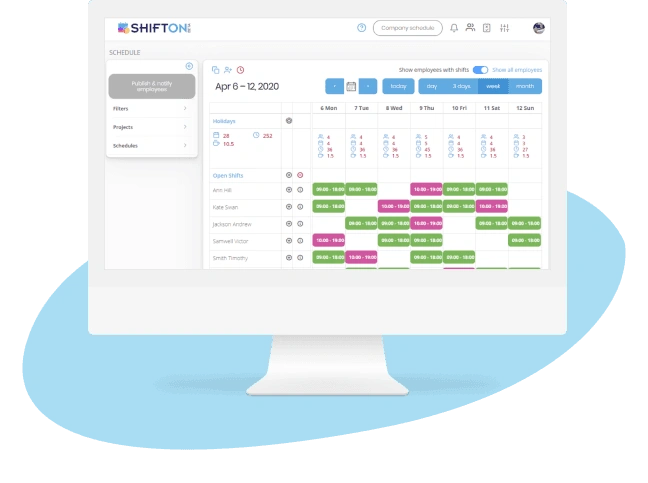
The weather writes half the rota
A dry Saturday after a wet fortnight puts a queue on the forecourt by nine. The following Tuesday it rains and half the crew stands under the canopy. No fixed weekly pattern survives that, and the sites that cope treat the plan as something they adjust on Thursday.
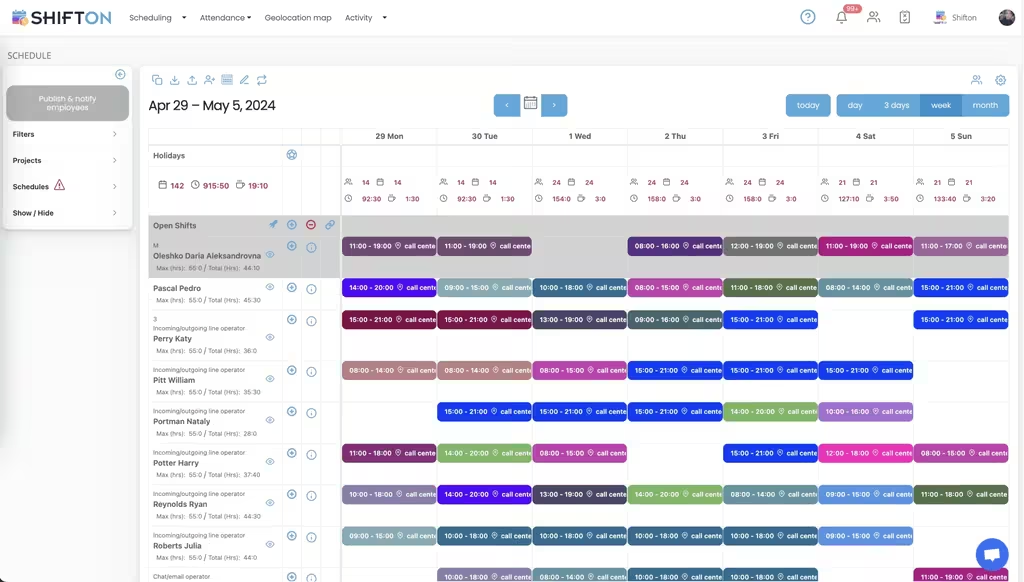
A crew that turns over and a rota that does not
Weekend staff, students, first jobs and seasonal help. People arrive, work a summer and leave, and the site keeps running because the plan does not depend on anybody remembering how last August worked.
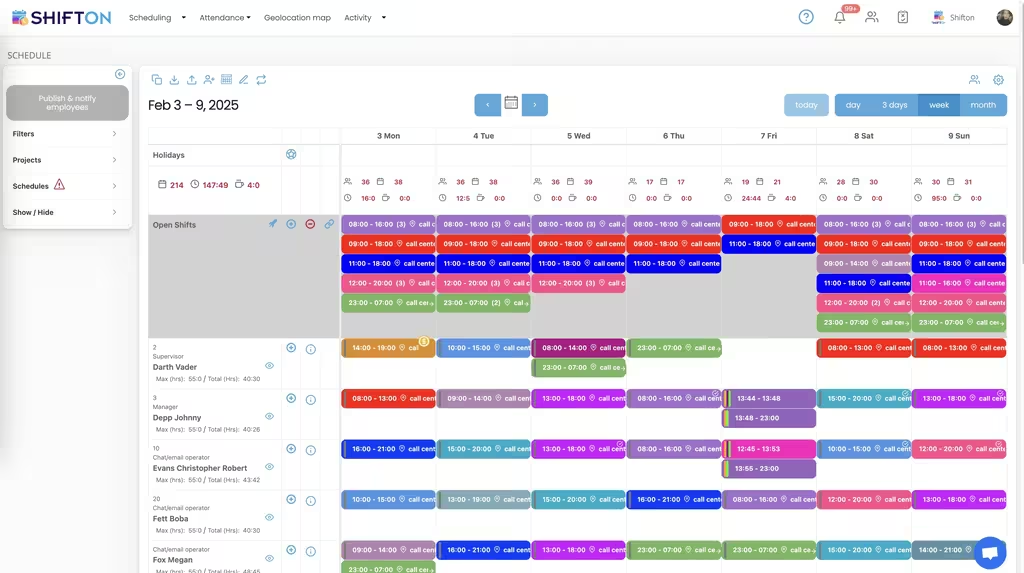
What an hour on the forecourt actually costs
Wages are the one number a wash site can move on the day, and the one it usually sees a fortnight late. An extra hand on a rained-off afternoon costs the same as an extra hand on the queue, and only one of them earned anything.
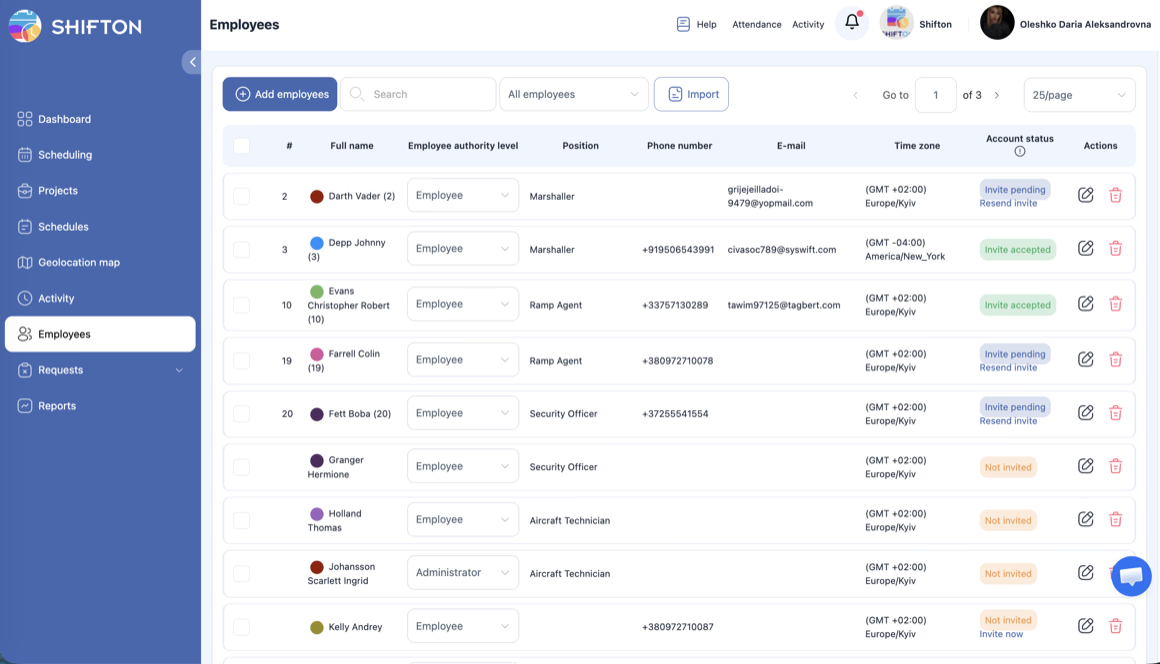
More than one site, one crew list
Two sites twenty minutes apart do not have two staffing problems, they have one. The queue at one and the idle hour at the other happen on the same afternoon and are paid for twice.
Start with the Free Plan
No time limits. Get full access to core features and upgrade when you're ready.
Read the full guide to car wash scheduling
The forecast is a staffing document
A wash site has one input nobody controls and everybody plans around. Three dry days after a wet week and the queue reaches the road by mid morning. A wet Saturday and the same crew stands under the canopy being paid to wait. The difference between those two days is the entire margin of the weekend.
This is why a fixed weekly pattern fails here in a way it does not fail in an office. The pattern is not wrong on average, it is wrong on the particular days that matter, and being wrong on a dry Saturday costs several times what being wrong on a Wednesday does.
Thursday is the real planning day
Sites that handle this well do not try to predict the month. They draw a reasonable week, look at the forecast on Thursday, and adjust. That only works if adjusting takes minutes and the crew finds out immediately, which is a tooling question rather than a management one.
Short shifts are not a rounding error
A peak on a wash site can be three hours long. Staffing it with a full shift wastes half of it, and staffing it with nobody loses the cars. Systems built around eight hour blocks quietly push a site towards one of those two mistakes, because the awkward option is the one that takes longer to enter.
When a three hour shift is as easy to place as a full one, the plan starts matching the day. Two people from ten until one, four from one until five, one closing. That is not a complicated schedule, it is just tedious to build by hand every week.
A crew that changes and a site that cannot
Wash sites run on weekend staff, students and first jobs. People arrive in April, work a summer and go back to college, and the site has to keep opening. The knowledge of who can run the tunnel, who is trusted on the kiosk and who is still learning the prep line cannot live in the head of whoever happens to be on shift.
Recording training against the person solves it quietly. A new starter is placed into a pattern that already works, the rota only offers positions they are cleared for, and the shorter hours that apply to younger staff are enforced by the plan rather than remembered by a supervisor.
The first week decides whether they stay
High turnover is partly a wage question and partly an organisation one. A new starter who is told their shifts by text the night before leaves faster than one who can see their next fortnight on a phone. Published early, visible to them, and changed with notice: that is most of the retention lever a site actually controls.
The wage line while it can still be changed
Labour is the one cost a wash site can move day to day, and it is normally seen a fortnight late in a payroll summary. By then the rained-off afternoon with four people on it is history and so is the money.
Showing projected wages as the week is drawn changes the decision, not the report. A supervisor sees what Saturday will cost before publishing it, sees the hour that pushes somebody into overtime before it is worked, and compares the hours a site spent with the cars it actually took. Those two numbers side by side are the whole of cost control on a forecourt.
Two sites, one problem
A second location does not double the staffing work, it changes its shape. The queue at one site and the quiet hour at the other are the same afternoon, and both are paid for while nobody is looking at them together.
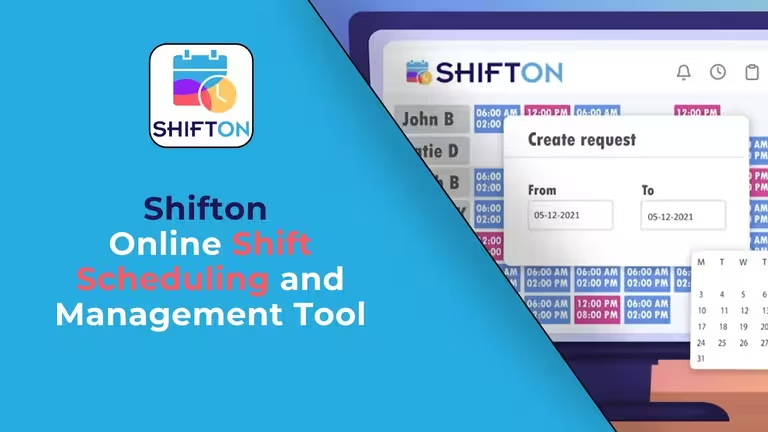
One screen for the group makes that visible while it can still be fixed. Somebody trained is sent to the forecourt with the queue, a summer weekend pattern that worked is copied to the newer site, and hours and cost are compared between locations in the same report rather than in two spreadsheets. The Shifton feature set holds the rota, the clock, alerts and reporting under one login.
What this is not
This does not sell washes, run the membership plans or take payment at the kiosk. It covers the people: who is on, what they are trained for, what hours were worked and what the week cost. Sites usually start looking at it when the crew passes about eight people or when a second location opens.
Starting out
A crew of ten or fewer runs at no charge with no time limit, and that covers a single site: the rota, the basic clock, the phone app and reporting. Beyond ten, modules are added one at a time at $0.50 per employee a month, each with a trial of up to 60 days, so a site can put a full summer through the cost reporting before committing to anything.
Memberships change the shape of the week
An unlimited plan converts occasional customers into regular ones, and regular customers arrive on their own schedule rather than waiting for the first dry Saturday. Sites that sell memberships watch the peaks flatten a little and the weekday floor rise, which is a different staffing problem from the one the site was built around.
The plan has to follow that change rather than the memory of how the forecourt used to trade. Hours worked against cars washed, compared week over week, is the only way to notice the shift while it is still happening rather than in a quarterly review.
Closing down is a shift, not a favour
The half hour after the last car matters: chemicals, mats, brushes and the tunnel itself. When that time is missing from the rota it is either unpaid, which is a large part of why crews leave, or paid without ever having been planned, which quietly moves the wage line every single evening.
Frequently Asked Questions
What does car wash scheduling software do?
It builds the crew rota for a wash site, holds who is trained on which position, records hours where the shift happened and shows the wage line for the week before the rota goes out. The crew reads it and swaps shifts from a phone.
Does it cope with part-time staff and constant turnover?
Yes. A new starter drops into an existing pattern rather than triggering a rewrite, training is recorded against the person, and shorter legal limits for younger staff are held in the plan. Availability is collected before the week is drawn.
Can the rota be redrawn when the forecast changes?
Yes. The week is edited rather than rebuilt, the change publishes to phones immediately, and a standby list shows who said they would come in at short notice for a dry weekend.
How are hours and wage cost tracked?
Staff clock in and out on site, the recorded hours sit against the location they were worked at, and the projected wage line is visible while the rota can still be changed. Overtime is flagged on the day it happens.
Does it work for a group of wash sites?
Yes. Every site sits on one screen, trained crew can be sent to whichever forecourt has the queue, and hours, cost and cover can be compared between locations in the same report.





Staff the forecourt for the weekend you will actually get
Ten people free with no time limit, short shifts planned as short shifts, training held against the person and the wage line visible before the rota goes out.