

Automotive Scheduling Software for Shops & Dealerships
Build the week against the booking diary, keep ticketed technicians on the jobs that require them, and read the wage bill for the week before any of it is published.

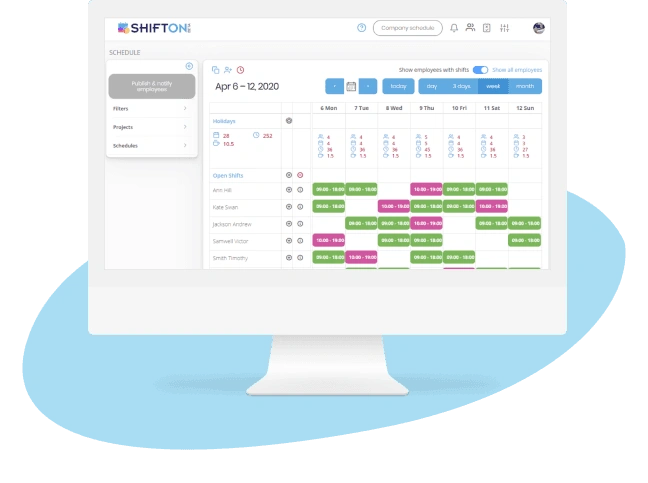
Loading the week against the booking diary
A workshop plans against bookings, not against an average week. Monday carries the cars that would not start over the weekend, Friday carries the collections, and the diagnostic slots fill first because fewer people can take them. Capacity is counted in ramps and in the people cleared to stand at them.
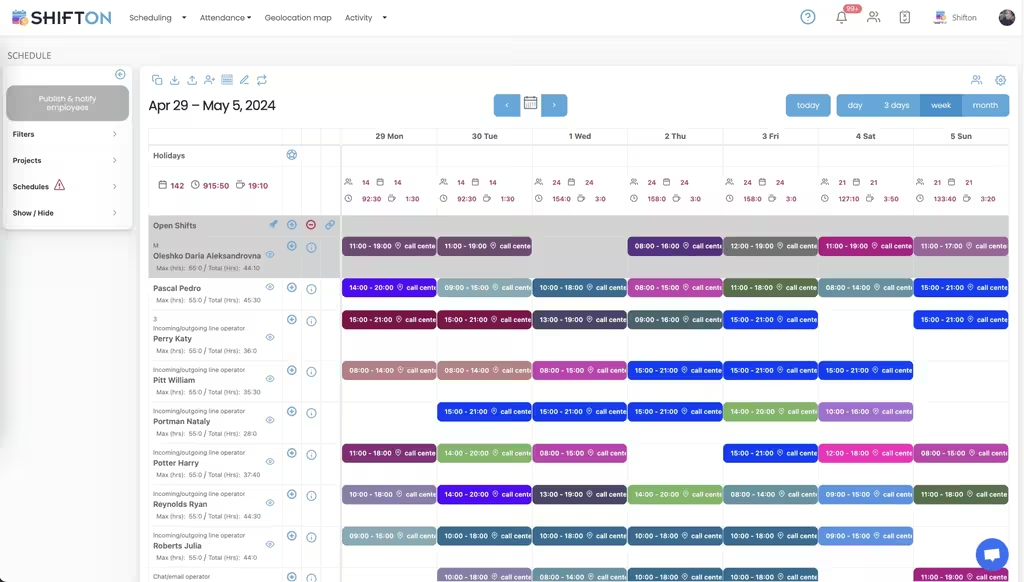
Sold hours against paid hours
A service department sells time in flat-rate hours and buys it in clock hours, and the margin lives in the gap between them. A job quoted at two hours that consumed three is only visible if both numbers are stored somewhere.
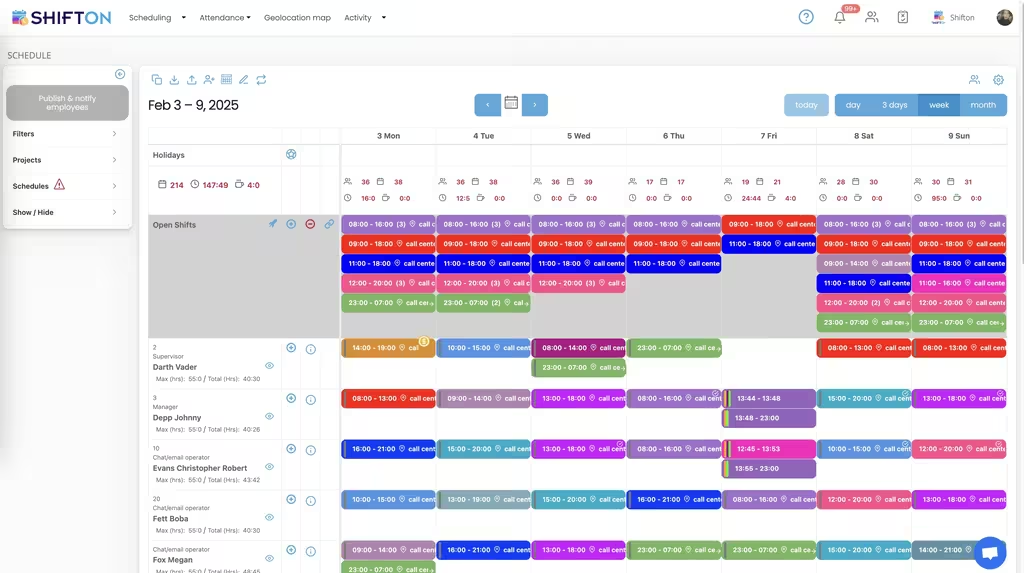
Branches that lend each other people
A second site turns a rota into an allocation question. One workshop is buried in warranty work while the other has a diagnostic technician with nothing booked, and nobody notices until the month closes and labour recovery is down.
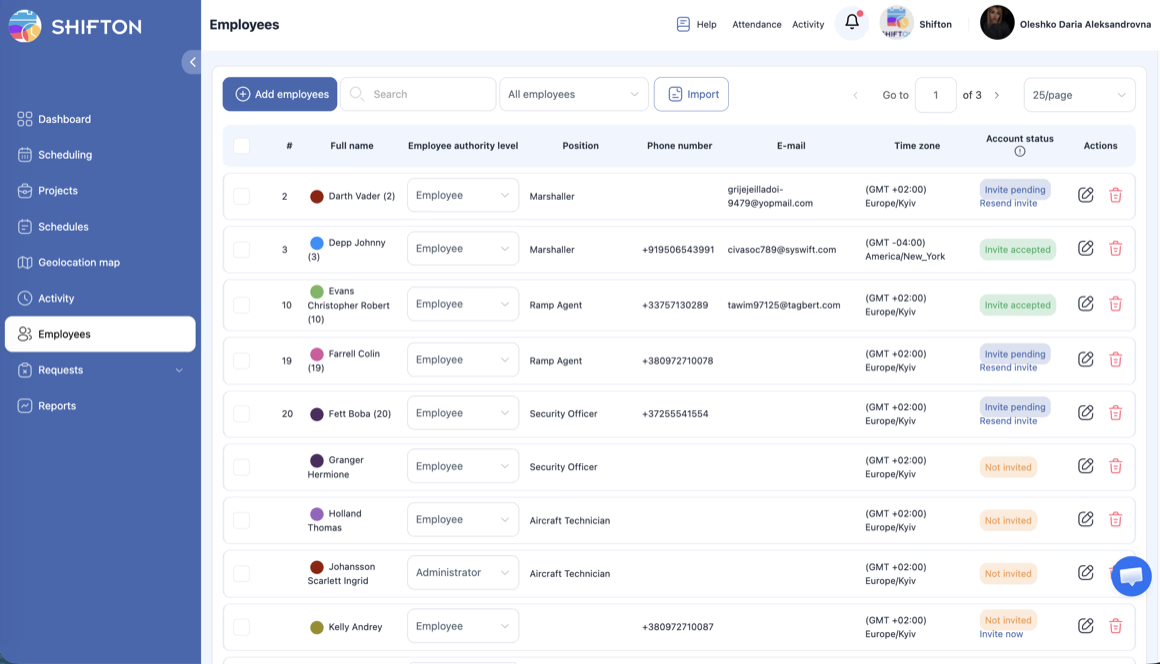
When the day breaks before the first car
Somebody rings in at seven, a gearbox job runs into a second day, and the four o clock collection still has to happen. The rota has to absorb that without a round of calls between the desk and the ramps.
Start with the Free Plan
No time limits. Get full access to core features and upgrade when you're ready.
Read the full guide to automotive scheduling
A workshop is a queue, not a calendar
Everything in a service department sits downstream of one number: how many vehicles can be worked on at once, by people qualified to work on them. A rota that ignores that number produces mornings where three technicians share two ramps, and afternoons where a ramp stands empty because the only person cleared for air conditioning is halfway through a clutch.
That is why a general staff planner fits a workshop badly. It assumes a week that repeats. A workshop has a diary that moves every afternoon, a January of dead batteries, a run of inspections before a deadline, and a customer at the desk asking whether the car will be ready by five.
Roles that cannot stand in for each other
A dealership floor holds at least four groups: technicians, diagnostic specialists, service advisors and the parts desk. They start at different times, they hold different tickets, and none of them can cover for another when somebody is missing. Planning them as one pool is how a Saturday ends with four technicians on the ramps and nobody to hand a car back.
Roles fix that. Each group is drawn on its own pattern, a floor minimum is set for each, and the cost of the week is still one number at the bottom. The advisor on the desk and the technician on the ramp are planned apart and paid from the same sheet.
The ticket decides who takes the job
Air conditioning, high voltage, brake testing: each of these gates who is allowed to touch the work. Holding the qualification against the person rather than in somebody memory means the rota stops offering a job to the six people who are not cleared to do it.
Sold hours and paid hours
A workshop quotes in flat-rate hours and pays in clock hours, and the difference between the two is the margin of the department. Nobody argues with that. What goes wrong is that only one of the two numbers is usually stored, so the comparison happens monthly, in arrears, when nothing about it can be changed.
Clocking against the job stores both. The two hour service that took three appears the same day, and a job type that always overruns appears inside a fortnight. That is a pricing conversation, and it can only happen once the data exists.
Two numbers, one vehicle. The rest is arithmetic.
The seasons a workshop actually has
The year is not flat. The first cold week fills the diary with batteries and starters, the weeks before an inspection deadline fill it with inspections, and the fortnight after a public holiday is quiet enough to be worrying. A pattern built once for each of those and reapplied saves redrawing a week that has already been solved.
The second branch changes the question
Running one workshop is a rota. Running three is allocation. A warranty campaign lands at one branch, the technician who could clear it fastest is at another, and the group learns about it when the month closes and labour recovery is down.
Putting the branches on one board makes the imbalance visible on the day, which is the only day anything can be done about it. Somebody can be lent for a shift. A week that works at one branch can be copied to a new one instead of being drawn from an empty grid. The Shifton feature set covers the rota, the clock, notifications and reporting from one account.
Nobody in a workshop sits at a desk
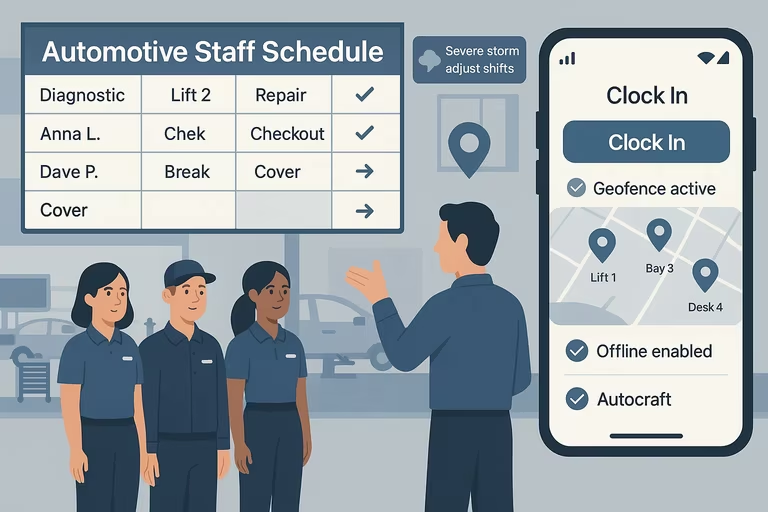
The people who need the rota are under a car, in the parts store or on the forecourt with a customer. A sheet printed and taped to the wall is out of date by the second phone call of the morning.
So the rota lives on the phone. Cover is arranged there, time off is asked for there, and a change reaches the four people it touches rather than the whole workshop. What used to be a series of calls between the desk and the ramps becomes a notification.
Seven in the morning is the real test
The useful measure of any rota tool is not how it looks when the week is drawn on a Friday. It is what happens at seven on a Tuesday when somebody cannot come in and eleven cars are booked for nine.
What this is not
This is not a dealer management system. It does not hold the vehicle record, order parts or raise the invoice, and any workshop large enough to need those already runs one. What sits underneath is the people layer: who is in, what they are cleared to do, what the hours actually were and what the week cost.
Workshops usually reach for it when the whiteboard stops working, which lands somewhere around six technicians and a second advisor.
Starting
Up to ten people the platform costs nothing and carries no time limit, which covers an independent workshop outright: the rota, the basic clock, the phone app and reporting. Paid modules start at $0.50 per employee each month and carry a trial of up to 60 days, so a group can run the cost reporting through a full quarter before it commits to anything.
Parts, and the waiting that comes with them
A job that stops because a part is two days away is not a scheduling failure on its own, but it turns into one the moment the technician assigned to it has nothing else booked. The vehicle holds a ramp, the labour stands idle, and neither shows up anywhere until the week is reviewed and the recovery figure is already short.
Holding the job on the board in a waiting state keeps the ramp honest. The technician is planned onto something else, the promise made to the customer sits against the vehicle rather than in somebody recollection of a phone call, and the day the part lands the work returns to the diary instead of depending on who happened to take the message.
A comeback is a rota problem as well as a quality one
A car that returns for the same fault costs the department twice: the labour is unbilled and the slot it occupies was sold to somebody else. Keeping the return attached to the original job, with the same technician where the rota allows it, is a small planning decision with a direct line to the month.
Frequently Asked Questions
What does automotive scheduling software actually do?
It draws the workshop rota against the booking diary, keeps ticketed technicians on the jobs that require them, records the time each vehicle consumed and shows what the week will cost before it is published. Staff read the rota and arrange cover from the phone.
Can technicians and service advisors be planned separately?
Yes. Every person carries a role, so the ramps and the front desk are drawn on their own patterns while total cover and total cost stay on one screen. A floor minimum can be set for each role, which stops a Saturday opening with nobody to hand a car back.
How are flat-rate hours reconciled with paid hours?
Time is clocked against the job rather than against the day, so hours sold and hours paid can be read against each other per vehicle. A job type that always overruns its quote shows up inside a fortnight, while the pricing can still be changed.
How is cover arranged when a technician rings in sick?
The empty shift is offered to everyone cleared for that work at once, and whoever picks it up is confirmed by the manager. The change reaches the handful of people it affects rather than the whole workshop.
Does it work for a dealer group with several branches?
Yes. Every workshop and service centre sits on one board, a ticketed technician can be lent to a busy branch for the day, and a week that works at one site is copied to another instead of being drawn from a blank grid.





Draw the workshop week properly
Up to 10 people at no cost and no time limit, with bookings driving the rota, hours recorded against the vehicle and the wage bill visible before you publish.