

Project Management for Interior Designers and Decorators on Site
The site side of a design project: measures, deliveries, trades and snags, planned on one board with hours kept per client.

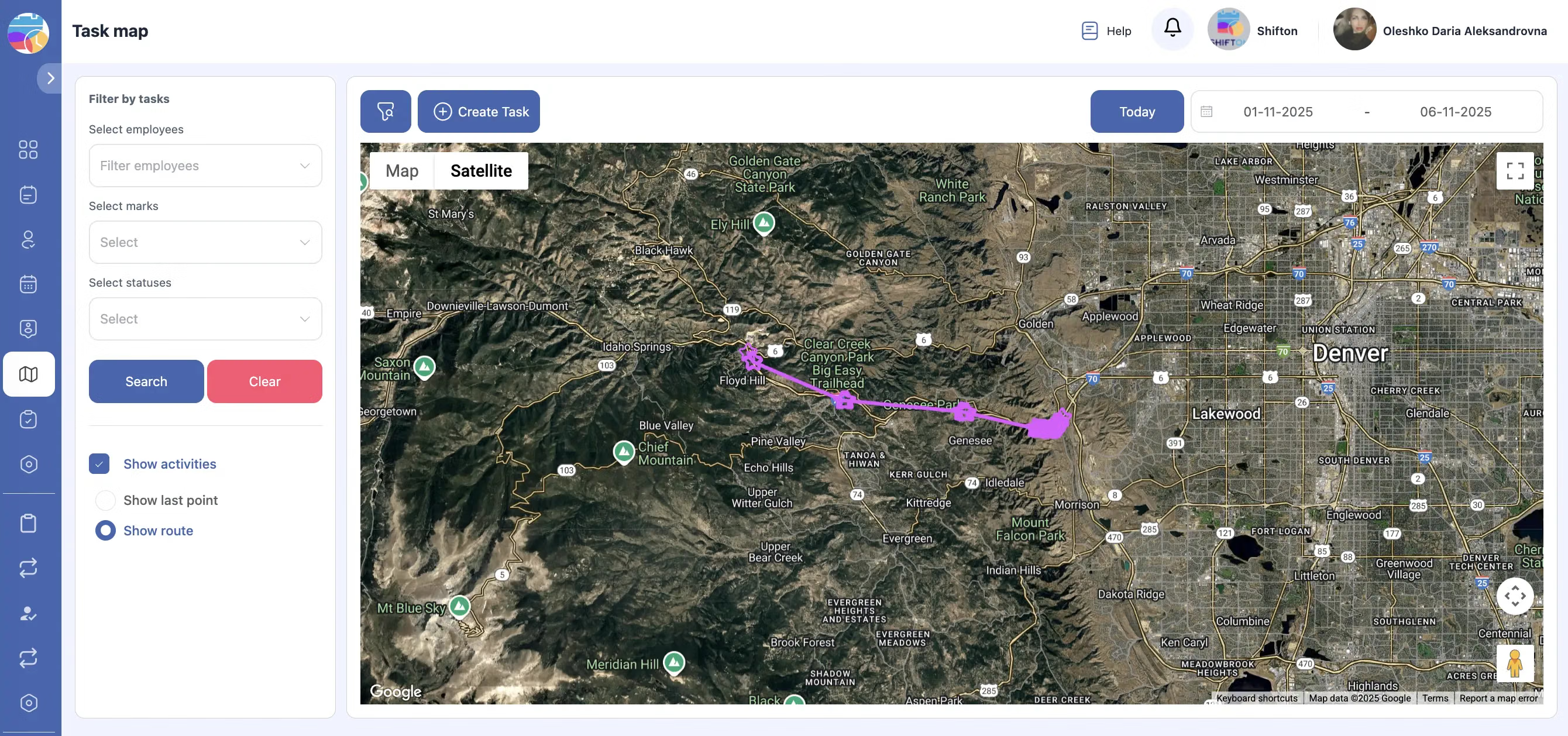
A design is delivered on site, not on the mood board
Once the concept is approved, an interior project becomes a sequence of site days: measure, strip-out, decorators, curtain fitter, furniture delivery, styling. Each one depends on the last, and each one involves someone outside your studio.
Deliveries are where projects slip
Bespoke sofas, made-to-measure curtains and imported lighting arrive late, damaged or incomplete. A delivery that nobody inspects on the day becomes a problem you find at the reveal.
Client approvals in writing
Clients change their minds about paint colours, fabric samples and furniture positions. When the approval was verbal, the cost of the change becomes an argument.
Hours that belong to a project
Designers who bill by the hour, or who want to know whether a fixed fee paid, need their site time and travel logged against each client. Recreating it at month end from a calendar is guesswork.
Start with the Free Plan
No time limits. Get full access to core features and upgrade when you're ready.
Read how design studios run site visits, deliveries and sign-offs
Where interior design project management software fits
Interior design project management software is often expected to do everything, from mood boards to procurement. In practice, studios already have tools for the creative work. What breaks is the site side of the project: who is going where, which delivery is due, which trade is booked, and what the client approved on the last visit. That is the part this page is about.
A residential project with a kitchen, two bathrooms and a living room can involve a dozen trades and forty deliveries. A commercial fit-out adds building management rules and working-hour limits. None of that is creative work, and all of it decides whether the reveal happens on the promised date.
The measure and the survey
Everything starts with accurate measurements: window widths, ceiling heights, the angle of a sloping wall, the width of the stairs a sofa has to pass through. Measures taken on a phone checklist, with photos of awkward corners, are available to everyone who needs them later, including the curtain maker and the furniture supplier.
Sequencing trades
Painters before curtain fitters, flooring before furniture, electricians before the lighting goes up. When one trade is late, the ones behind it need moving. A board that shows every trade booked on a project makes that reshuffle a ten-minute job rather than an afternoon of calls.
Commercial fit-outs and building rules
Offices, shops and restaurants add a layer of rules: work only after hours, deliveries booked with the loading bay, contractors signed in at the security desk, noise limits during trading. Each rule belongs on the project so every trade and every delivery sees it before arriving. A fitter turned away at reception costs a day and usually a fee.
Clients who live in the house during the work
Many residential projects happen around a family that is still living there. Rooms are done in sequence, furniture is moved twice, and the children's bedtime limits when a decorator can work upstairs. Recording those limits on the project, and planning around them, keeps a client on your side through a long job.
Interior designer project management software on site
On site, the designer or an assistant needs a short list: what is happening today, who is expected, what should arrive, what must be checked. Interior designer project management software puts that list on the phone for each visit and collects the results: photos of progress, notes on problems, signed approvals from the client.
Snag lists
Before handover, the room is walked and every defect listed: a paint drip, a curtain that does not clear the radiator, a scratch on a new table. Each snag needs a photo, an owner and a return date. Snags recorded as jobs are harder to forget than a list in a notebook.
Returns and replacements
A chair in the wrong finish or a rug in the wrong size has to go back, and the replacement needs a new delivery date and possibly a new installer visit. Keeping the return and the replacement on the same project, with photos and dates, stops the item falling out of sight until the client asks about it.
The reveal and handover
The final visit is styled, photographed and accepted by the client. A signed handover, with photos of each room, closes the project and marks the start of any warranty period for work done by your trades.
Keeping the studio's time honest
Design fees are often calculated on hours or checked against them. Site visits, supplier meetings and travel eat more time than most studios estimate. Logging start and finish on each site job gives a real total per project, which is useful both for billing and for pricing the next project more accurately.
The same records show where the hours actually went. If a project's overrun came from six extra site visits waiting for late deliveries, that is a supplier conversation. If it came from repeated changes of mind, it is a conversation with the client about how variations will be charged next time.
What Shifton Field Service does for a design studio
It plans site visits, trade days and deliveries on one board, sends each job to the phone of the person going, and collects photos, notes, signatures and hours. Reports show time by project and by person. Studios that stay at two people or under never pay for the scheduling and site records. Invoicing, inventory, a client-facing portal and location control are priced as modules.
It is not a design tool, it does not produce drawings, mood boards or renders, and it does not place orders with suppliers. It covers the practical side: the plan of site work and the record of what happened there.
Frequently Asked Questions
Can I schedule site visits, trades and deliveries for several projects at once?
All of them sit on one board as jobs with dates and people assigned. You see each project's next site day and which of your team or trades are booked where.
How do we record client approval of samples or colours?
At the site visit, open the job, add the approved item with a photo and ask the client to sign on the phone. The signed record stays with the project.
Can I log damaged furniture deliveries?
The person receiving the delivery adds photos and a note to the job before the courier leaves. You then have a dated record to send to the supplier.
Is this interior designer software for drawings or mood boards?
No. It handles the site and time side of the project. Concepts, drawings and mood boards stay in the design tools you already use.
Can hours be tracked per client for hourly billing?
Each site job records start and finish times, and reports group hours by project and person. You use those figures to bill or to check a fixed fee against real time.
Can outside trades use the app?
Anyone you add as a user sees the jobs assigned to them on their phone, with the address, access notes and checklist. Each person counts as a user of the account.
What does a sole designer with one assistant pay?
A designer and one assistant schedule site work, use the phone app, fill in forms and run reports without a fee, and nothing about that expires. Invoicing, stock of samples and materials, location control and a client portal can be added later at a price.

Ready to transform your field operations?
Join thousands of field service companies that trust Shifton to run smarter every day.