

Software for Tree Removal, Pruning and Stump Grinding Crews
Estimates that become jobs, climbers and grinder operators on one board, and a photo record of every tree you touched.
The estimate walk decides the whole job
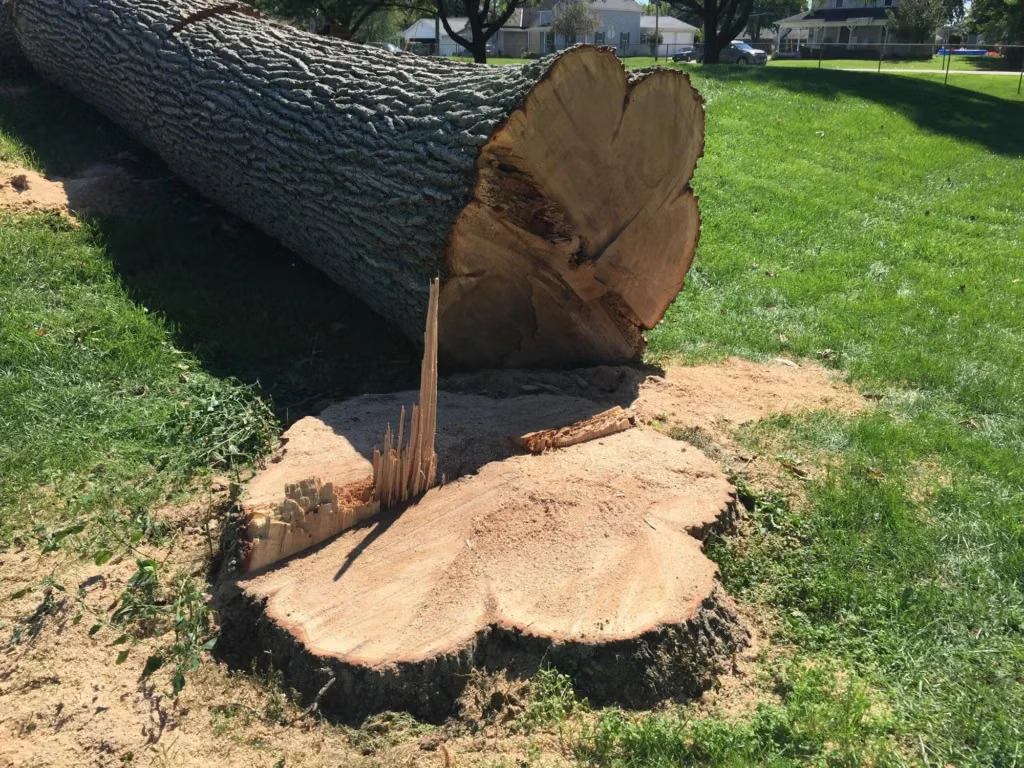
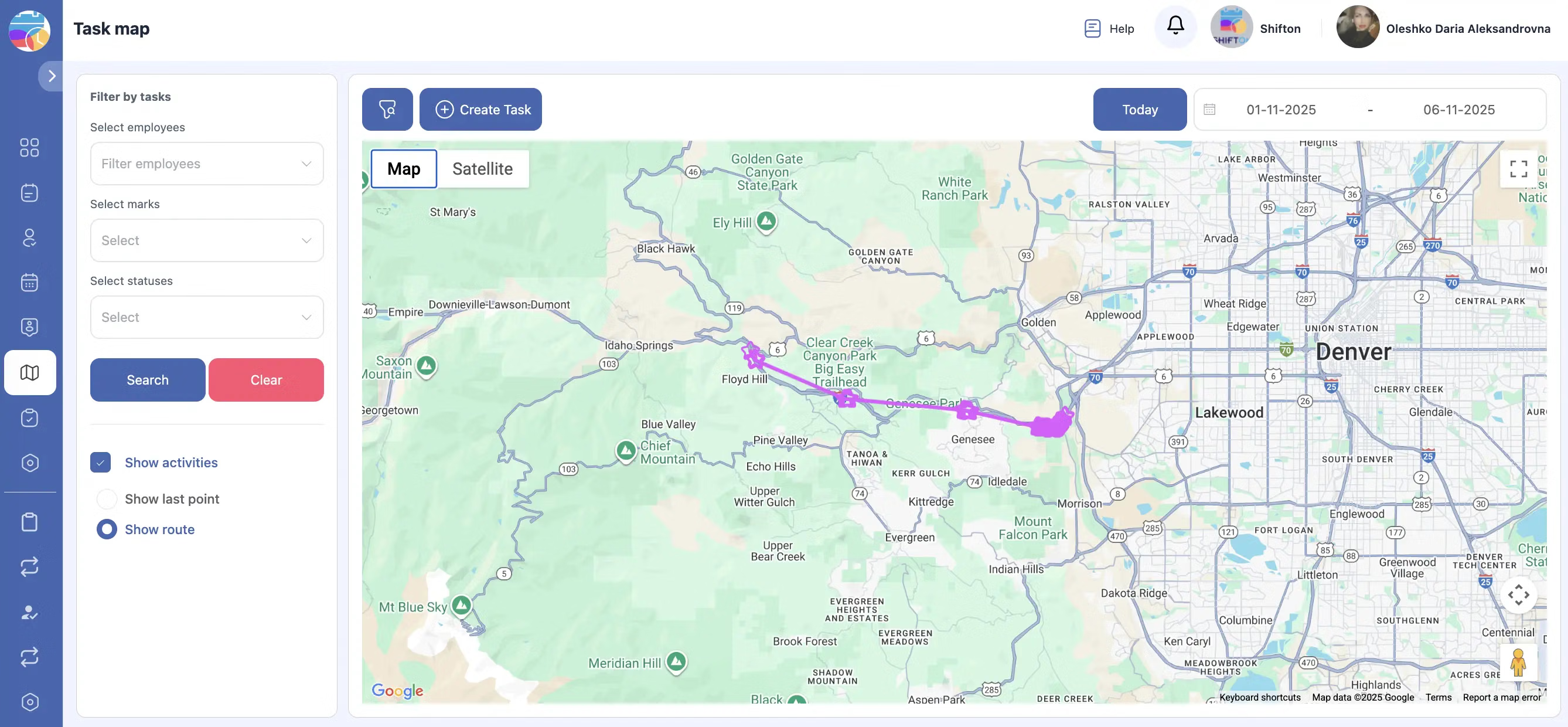
Most tree jobs are won or lost on the walk round with the customer. The estimator marks the trees, looks at what sits under the canopy, checks whether a chipper can get close and agrees what happens to the wood. If that knowledge stays in one head, the crew arrives on the day and starts guessing.
Removal day and grinding day are separate jobs
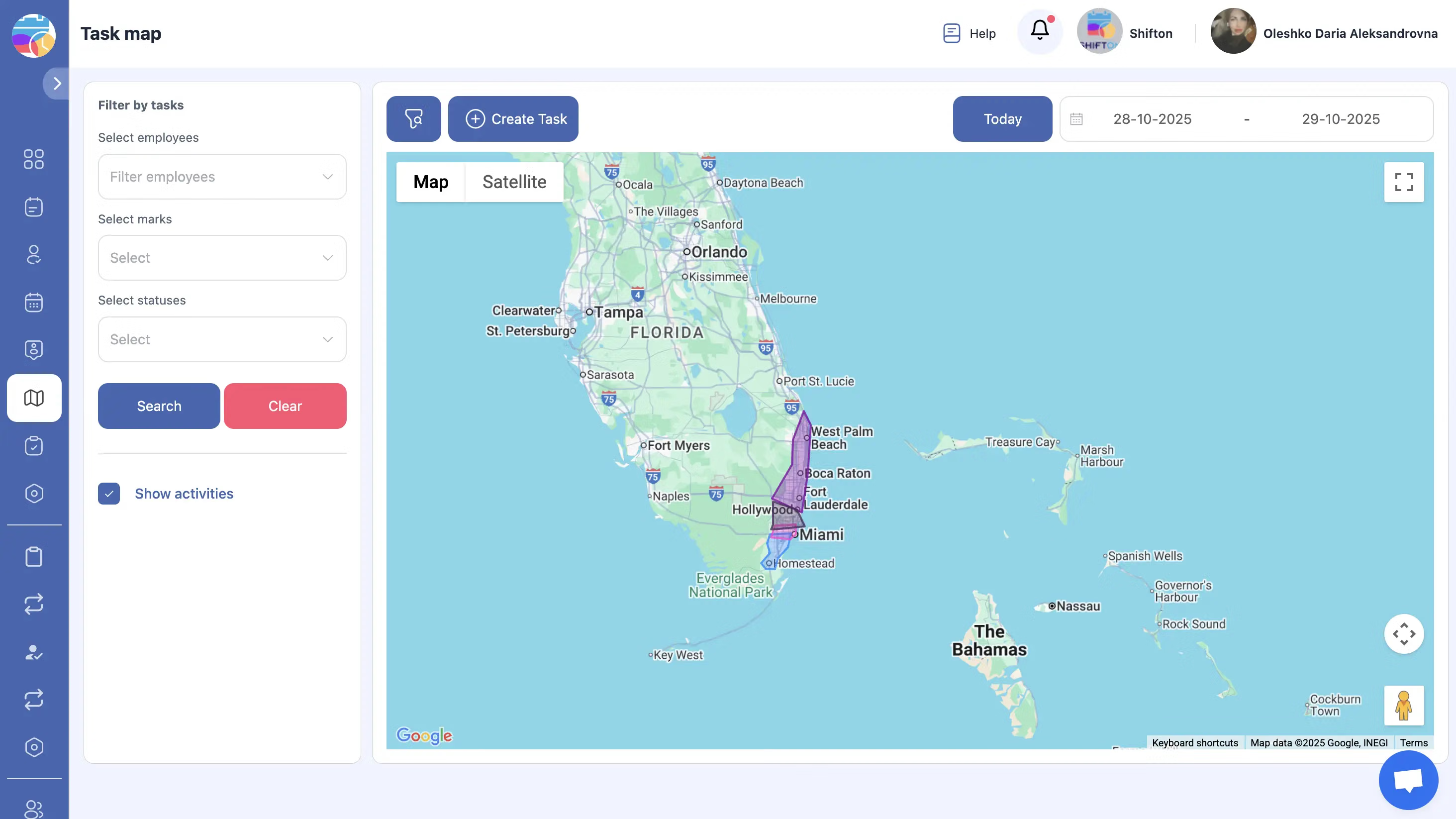
The stump rarely goes on the same day as the tree. The grinder is a different machine, often a different operator, and it cannot start until the underground services have been marked. Treating it as a line on the removal ticket is how stumps get forgotten for three weeks.
Wind and storms rewrite the week
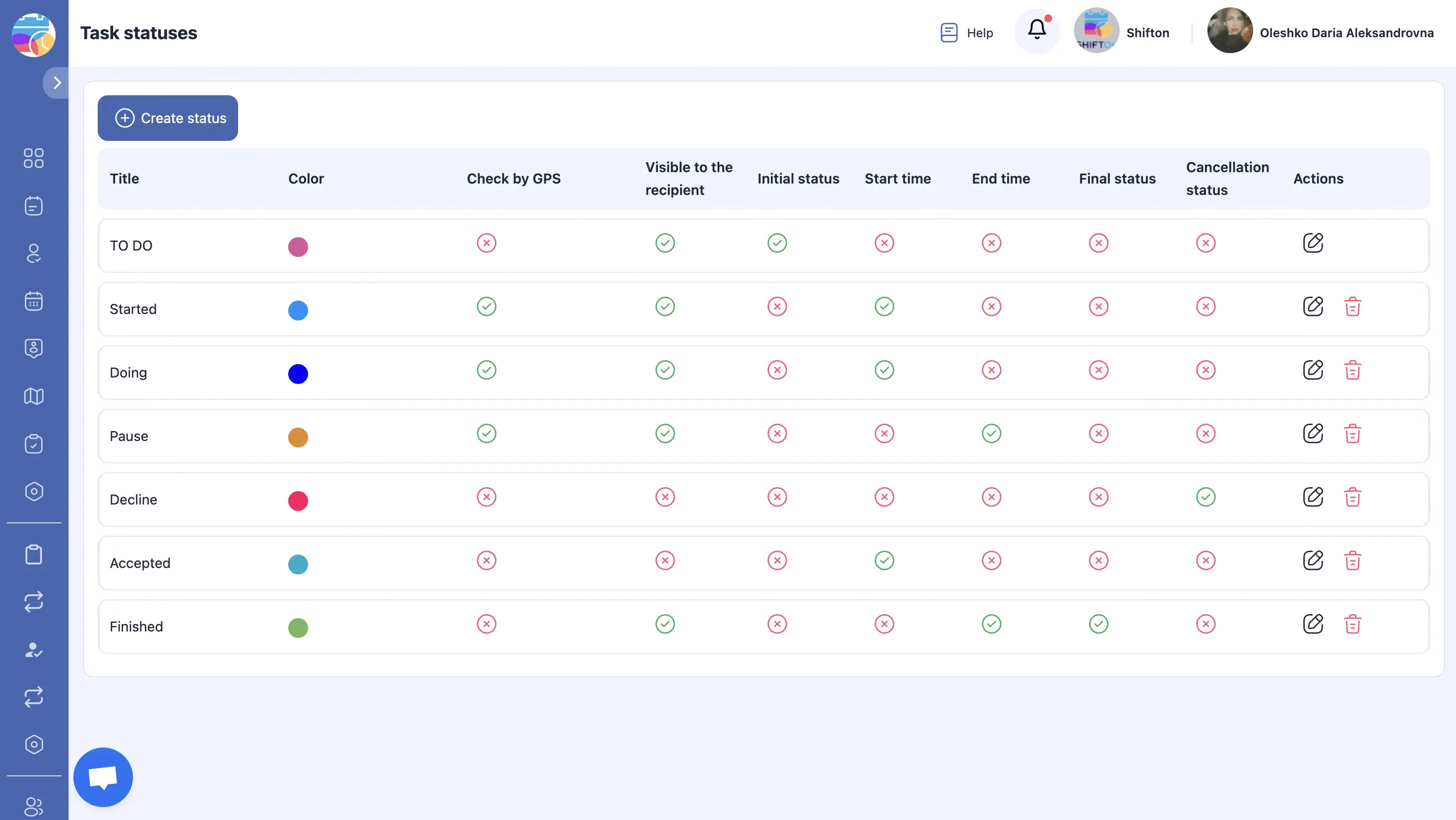
Climbing stops when the wind picks up, and a storm fills the phone with fallen limbs on roofs and cars. The planned pruning work has to move, and it has to move without losing the notes that were attached to it.
Proof for the customer and the insurer
Tree work goes over houses, fences and lawns. When a customer says the rut in the grass or the cracked slab was not there before, the only good answer is a photograph taken before the first cut.
Start with the Free Plan
No time limits. Get full access to core features and upgrade when you're ready.
Read how tree crews plan removals, pruning and stump work
What tree service software needs to cover
Good tree service software has to follow the job the way a tree company actually runs it: an estimate walk, a quote, a date for the removal or pruning crew, a separate date for the grinder, then clean-up, photographs and an invoice. Tools built for lawn mowing rounds assume every visit is the same length. Tree work is the opposite. One day is a small crown lift, the next is a dead ash over a garage that needs a full rigging setup and every ground worker the company has.
Removals
A removal is planned around the drop zone. Can the tree be felled in one piece, or does it come down in sections on ropes? Does the chipper fit through the side gate, or is every branch dragged the length of the garden? Is a crane or a lift needed, and on which day is it available? Each answer changes how many people go and how long they stay. The estimator knows these answers; the job card is where they need to live.
Pruning and tree care
Pruning is lighter on equipment and heavier on judgement. Crown reductions, deadwooding, clearance from roofs and lamp posts, formative pruning of young trees: the climber needs to know what was agreed, because "take a bit off the top" means different things to different people. Tree care software earns its keep here by holding the agreed scope, a marked-up photo if the estimator took one, and the notes from the last visit to the same tree.
Stump grinding
The grinder needs the underground services marked, a clear route in and a decision about the grindings. Many companies run it as a separate small team, which means it has its own queue. When stumps sit as a note on the removal job, they drift. When they are jobs in their own right, the office can see how many are waiting and group them by area.
Scheduling around wind, permits and locates
Tree service scheduling software is less about filling the diary and more about knowing what is allowed to start. A protected tree needs consent from the council before anyone climbs it. A grinding job needs locate marks that are still valid. A removal over a road may need traffic management booked. These are dates and conditions outside the company's control, and the schedule has to show them.
Then there is the weather. Rain slows ground work; wind stops climbing altogether. A company with three crews can lose a day and a half in a gusty week, and every postponed job has a customer waiting. Moving jobs on a board, with their notes and photos attached, is faster and safer than rebuilding the week from a paper diary.
Hired equipment adds one more constraint. A crane or a tracked lift is booked for a specific morning, often with an operator, and it is expensive to cancel. The big removal that depends on it cannot slide to any convenient day; the smaller pruning jobs around it can. Marking which jobs are tied to hired kit tells the dispatcher what to protect when the forecast turns, and which work can give way.
The business side of a tree company
Tree service business software also has to deal with the unglamorous parts. Crew hours per job show whether the estimates are right: if every large removal runs over by half a day, the pricing is wrong, not the climbers. Equipment is the other big cost. Chainsaws, the chipper, the grinder and the truck all have service intervals, and a checklist the operator completes at the end of the day catches a worn belt or a damaged tooth before it stops a job.
Chips and logs are a logistics problem in their own right. Some customers keep the rounds for firewood, some want everything gone, some want the chips spread on the borders. Writing the decision on the job avoids a second trip and an awkward phone call.
What Shifton Field Service does
It puts estimates, removals, pruning visits and stump jobs on one schedule board, sends each crew the scope, hazards and photos on their phones, collects checklists, before and after pictures and customer signatures, and records hours against each address for reporting. A climber and a groundsman working as their own company can run the board, the app, forms and reports for free with no end date; invoicing, stock, GPS location control and the customer portal are added as paid modules when the business needs them.
It is not an arborist's tree inventory with risk ratings, it does not measure trees from photographs, and it does not file permit applications or locate requests for you. It decides which crew goes where, and it keeps the record of what they did when they got there.
Frequently Asked Questions
Can the stump grinding be booked apart from the tree removal?
Yes. The stump gets its own job with its own date and operator, linked to the same customer and address, so it stays on the board until someone actually grinds it.
Where do we keep the underground locate information?
On the job card. The office adds the marking reference and notes, the operator reads them on the phone before unloading, and photos of the paint marks can be attached on site.
Can a climber see what is under the tree before arriving?
The estimator's notes and photos travel with the job, so the crew leader sees the roof line, the cables and the greenhouse on the phone before the truck is parked.
How do we reshuffle after a storm without losing the pruning bookings?
Postponed jobs are moved on the board with their notes intact, and emergency call-outs are added as new jobs at the top of the day. Nothing is rewritten from memory.
Can we keep jobs near power lines for the right climbers?
The hazard is written on the job and the dispatcher assigns it to climbers you know are cleared for line work. The software does not check qualifications by itself; your dispatcher still decides.
Is there a way for a two-person tree outfit to use it without paying?
Yes. Up to two employees pay nothing, with no end date, for the schedule board, the mobile app, forms and checklists, and reports. Invoicing, inventory, GPS location control and the customer portal are paid modules.
Does the app work on a rural lot with no mobile signal?
The crew can keep filling in the job, taking photos and closing checklist items where the signal drops out in the woods; the entries reach the office once the phone is back in coverage.
Can we invoice per tree and per stump?
With the paid Invoicing module the invoice is built from the finished job, with a line for each tree, each stump and the haul-away, at the prices your estimator agreed.


Ready to transform your field operations?
Join thousands of field service companies that trust Shifton to run smarter every day.