

Snow Removal Business Software for Routes and Storms
Storm callouts, seasonal contracts and salting runs on one board, with the site photos, the times and the material used on the job.

The season is waiting, then everything at once
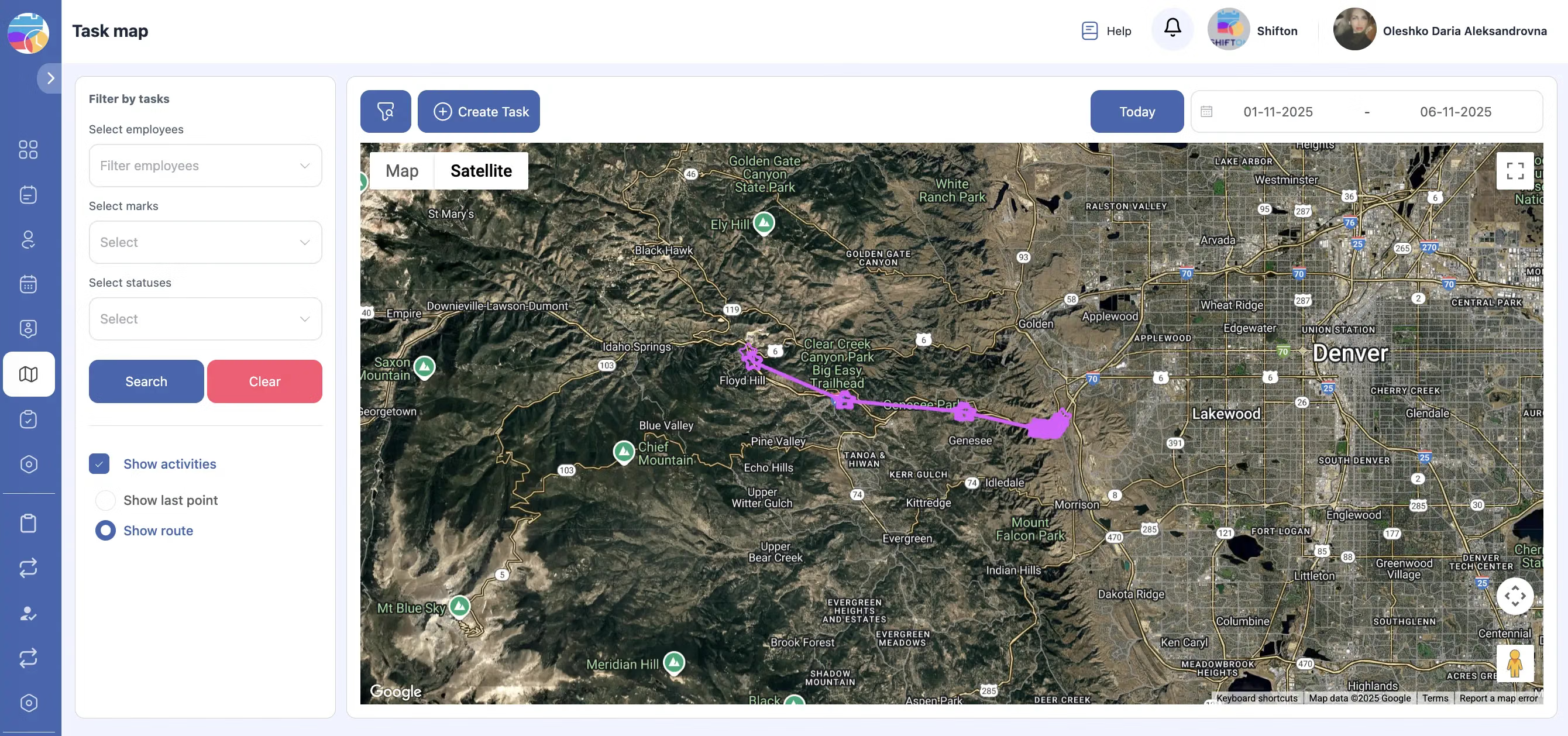
Snow work is weeks of nothing followed by eighteen hours where every site needs clearing before its business opens. The plan cannot be built during the storm. It has to exist beforehand, with the route order, the priorities and the crews already set, so that activating it is one decision rather than forty phone calls.
Proof each site was cleared, and when
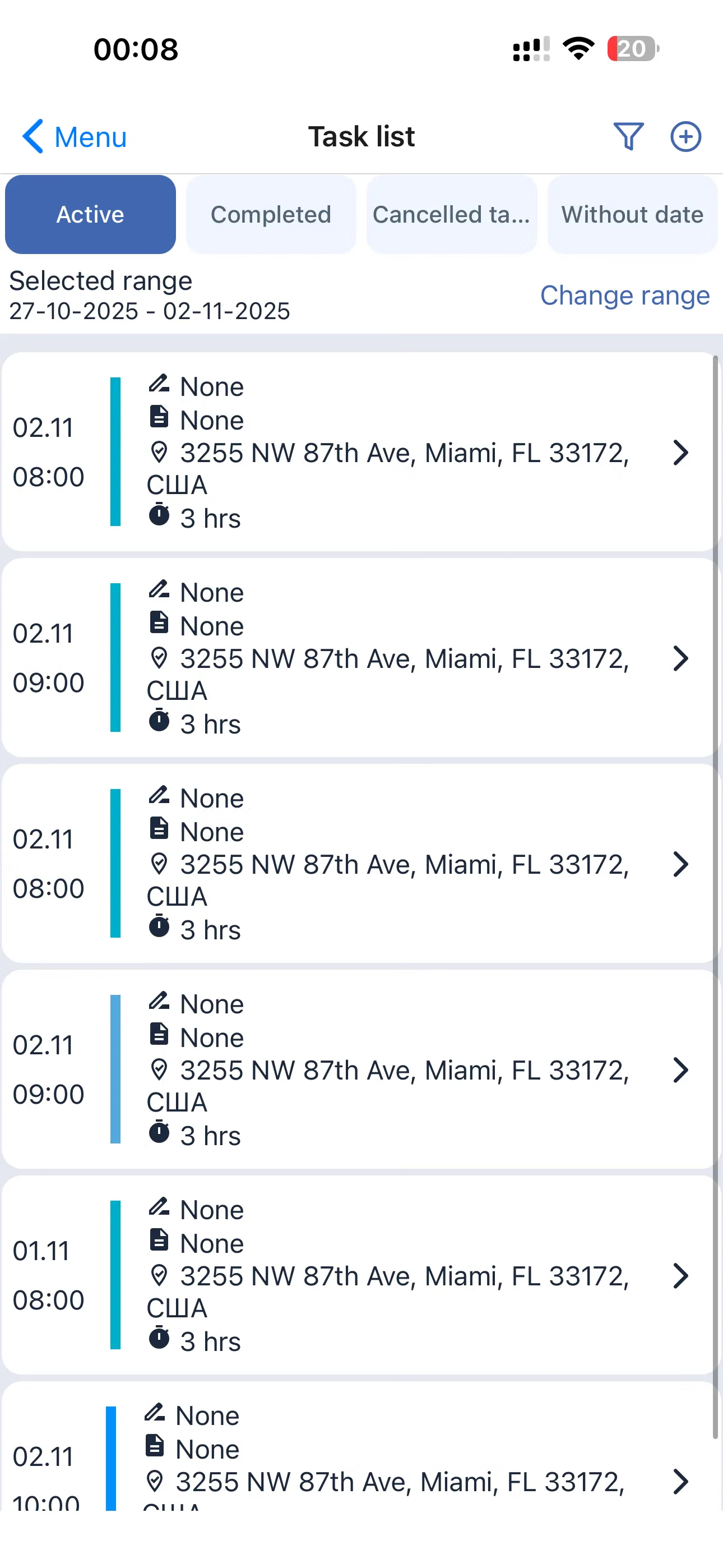
Snow contracts are disputed more than any other seasonal service, because the evidence melts. A client who arrives at nine sees a wet car park and asks whether anyone came. A time stamped photograph of the site at half past five answers that in one message.
Salt and material, counted where it was spread
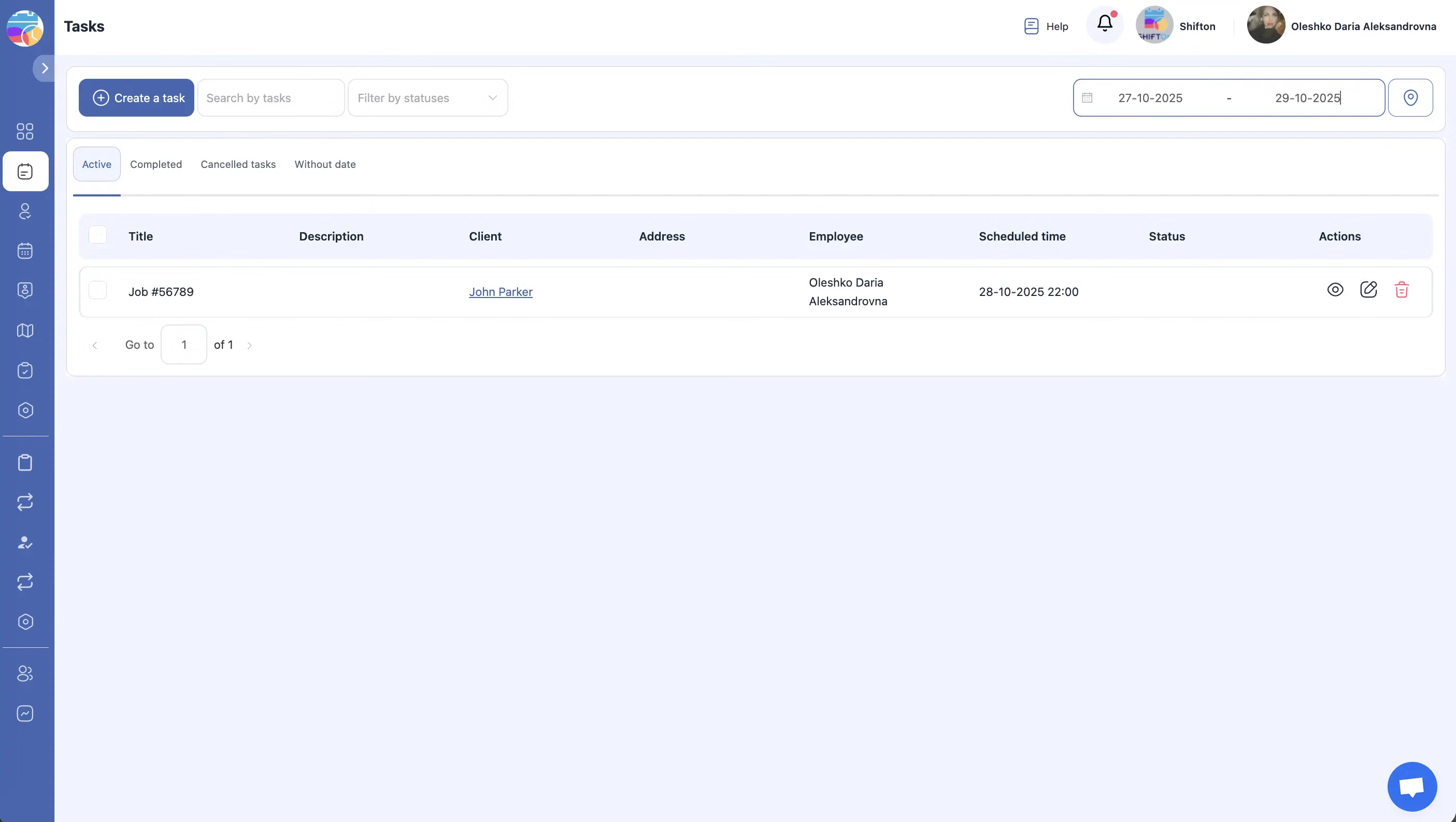
Salt is bought by the tonne and spread by the load, and the reconciliation at the end of the season is usually a subtraction with a large unexplained gap. Recording material on the job puts the usage where the cost belongs and makes per-site pricing possible.
Billing a season that nobody can remember
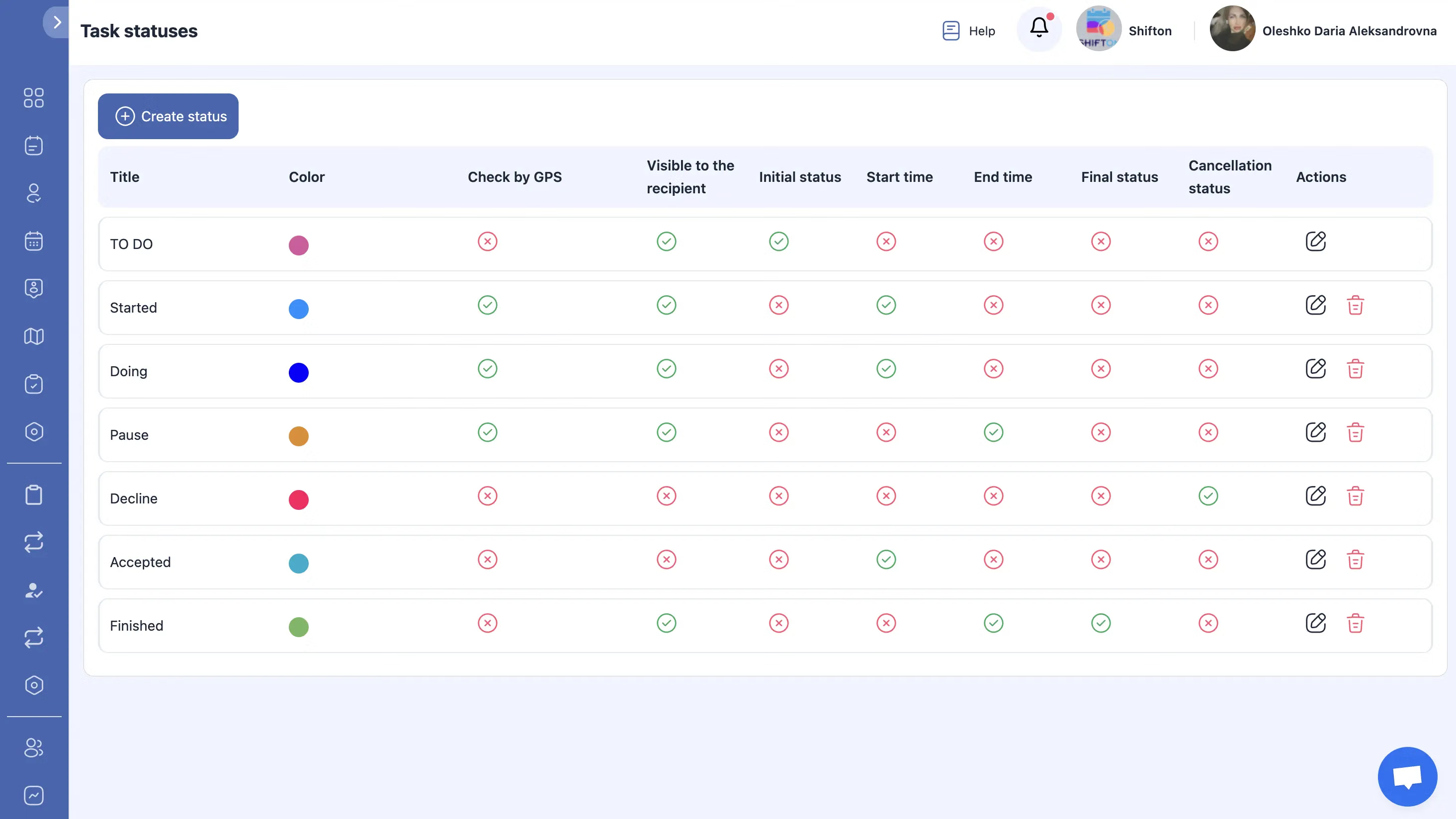
Whether contracts are per push, per event or seasonal, the invoice has to match what happened, and what happened took place at four in the morning in the dark. Building the bill from the recorded visits removes the argument and the guesswork.
Start with the Free Plan
No time limits. Get full access to core features and upgrade when you're ready.
Read the full guide to snow removal business software
A business with two states
Snow removal has no normal week. It has a waiting state, which can last a fortnight, and an active state, which starts at two in the morning and requires every site to be cleared before its occupants arrive. Almost every operational failure in the trade happens in the first hour of the second state, and almost all of it is caused by planning that was never done during the first.
The useful test for snow removal business software is therefore not what it does during the storm. It is what it lets you set up beforehand, so that the storm requires one decision instead of a hundred.
Routes are built in advance or not at all
Clearing order matters more here than in any other route trade, because opening times are absolute. A retail park that opens at nine and a hospital that never closes cannot be treated as equal stops. Setting priorities in October, when there is time to think, means the run in January is simply executed.
One activation, not forty calls
The moment a storm starts is the worst possible time to be assigning work. If the route already exists, activating it sends every crew their sites at once, and the office spends the night watching progress instead of dialling numbers.
Evidence, because the snow melts
Snow contracts generate more billing disputes than any comparable service, for a simple physical reason: by the time the client looks, the evidence has gone. A client arriving at nine to a wet surface genuinely cannot tell whether it was cleared at five or never touched.
Time stamped photographs and recorded arrival times end that argument permanently, and they take a crew fifteen seconds per site. In a trade where a single disputed invoice can wipe out the margin on a whole contract, that is the best fifteen seconds available.
Material is the hidden cost
Salt and de-icer are bought in bulk and applied by judgement. Without a record, the season ends with a large gap between what was purchased and what can be accounted for, and no way to tell whether a particular site is genuinely expensive or simply being over-treated.
Recording material on the visit turns that into a per-site figure. At renewal, that figure is the difference between repricing on evidence and repricing on a feeling.
Contracts that bill differently from the same record
Per push, per event, per inch, seasonal flat rate: the trade uses all of them, sometimes across the same client list. What they all need is an accurate record of visits, times and materials. Get that right and the billing model becomes a question of how the record is summarised rather than a separate exercise in remembering.
What to check
Can routes be built and stored before the season starts. Can a whole run be activated in one action. Can a crew record a site with a photograph in under thirty seconds at four in the morning with cold hands. Can the invoice be built from those records afterwards.
Starting free
One or two people run free with no time limit, including scheduling, digital job forms, the mobile app and reports. That is enough to run a small route properly through a winter.
Paid modules follow the growth: inventory when material cost needs explaining, invoicing when billing a season by hand becomes unmanageable, location control when several trucks are out at once. Each carries a free trial of up to 55 days.
The parts are documented separately: task management and dispatch, the mobile app, digital job forms, job history, inventory and invoicing. Prices are on the pricing page.
Frequently Asked Questions
How do we activate a snow route when a storm arrives?
The routes are built in advance with sites in clearing order and priorities set. When the storm comes the run is activated and every crew receives their sites on the mobile app at once, instead of the office making forty calls in the middle of the night.
How do we prove a site was cleared?
Each visit carries time stamped photographs, the arrival and finish times and the completed checklist. When a client asks whether anyone attended at five in the morning, the answer is a photograph with the time on it rather than a recollection.
Can we track salt and material used per site?
With the inventory module, yes. Material spread is recorded on the visit, stock is reduced automatically and reports show consumption per site and per storm, which is what makes per-site pricing honest at renewal.
Does the app work in the middle of the night with poor signal?
The mobile app for iOS and Android holds the job, the checklist and the photos on the device and syncs when the phone reconnects. Rural sites and industrial estates without coverage are recorded normally.
Can it handle per push, per event and seasonal contracts?
Yes. Visits are recorded as they happen and the invoice is built from them, so contracts billed per push, per event or as a flat seasonal fee all draw on the same record of what actually took place.
Is it suitable for a small snow removal operation?
Teams of two or fewer run free with no time limit, including scheduling, digital job forms, the mobile app and reports. Paid modules such as inventory, invoicing and location control are added when the route list grows.
What does it cost across a season?
The free plan covers up to two employees permanently, and beyond that pricing is per employee per month. Every paid module carries a free trial of up to 55 days, which covers most of a winter before any decision is needed.



Ready to transform your field operations?
Join thousands of field service companies that trust Shifton to run smarter every day.