

Volunteer Scheduling Software for Shift Sign-Ups and Hours
Open shifts volunteers can claim themselves, availability collected before the roster is built, and hour totals ready for trustees and funders whenever they ask.

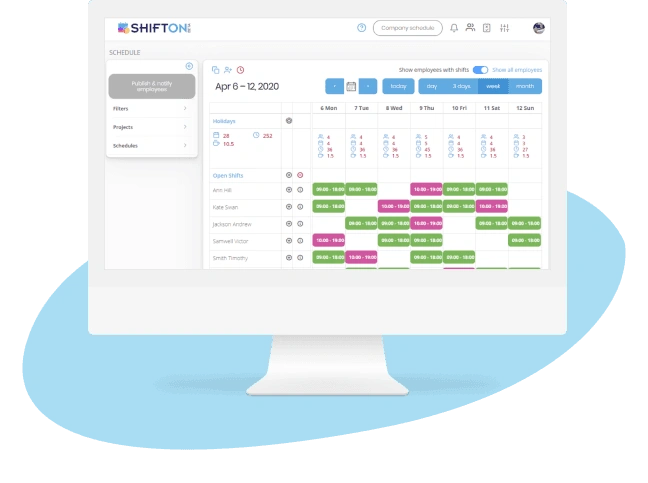
Build the Week and Publish Open Shifts
The weekly calendar holds every volunteer on their own row, with colour-coded shifts and exact start and end times. Anything still uncovered sits in the open shifts row at the top of the week, where it stays visible to the whole team instead of hiding in a coordinator's inbox.
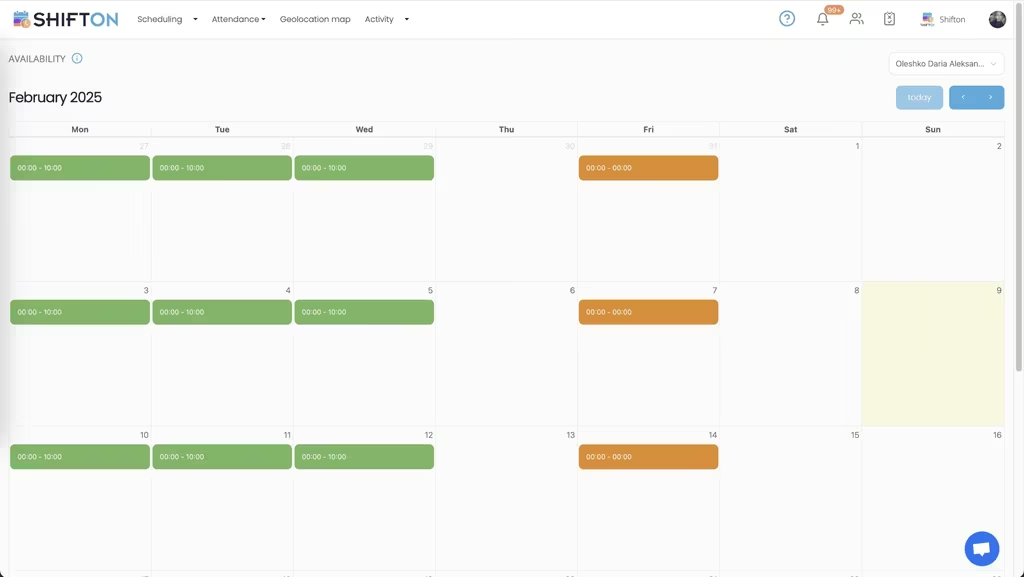
Collect Availability Before You Build the Rota
Volunteers give the hours they have, not the hours a schedule needs. The availability calendar shows a full month per person, with green marking the hours somebody can work and orange the hours they cannot, so the roster is built against what people have already told you.
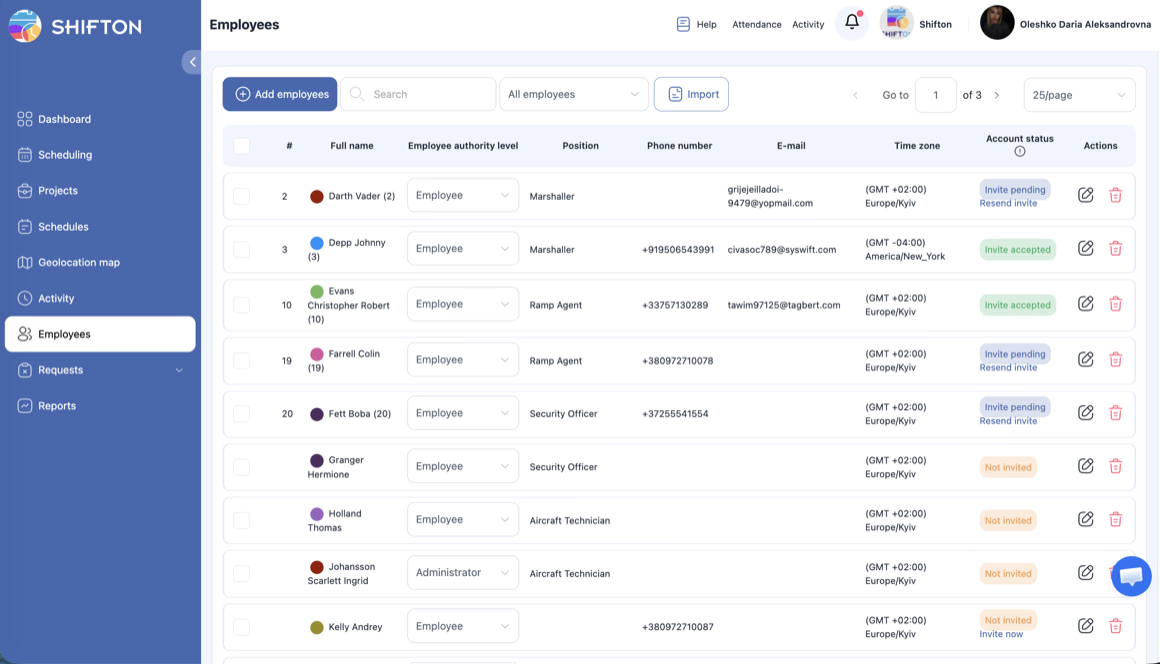
One Volunteer Roster With Roles and Access
The employees screen is the single list of everyone involved in the programme. Each person carries a name, position, phone number, email, time zone and an authority level that decides whether they see their own shifts or manage the whole schedule.
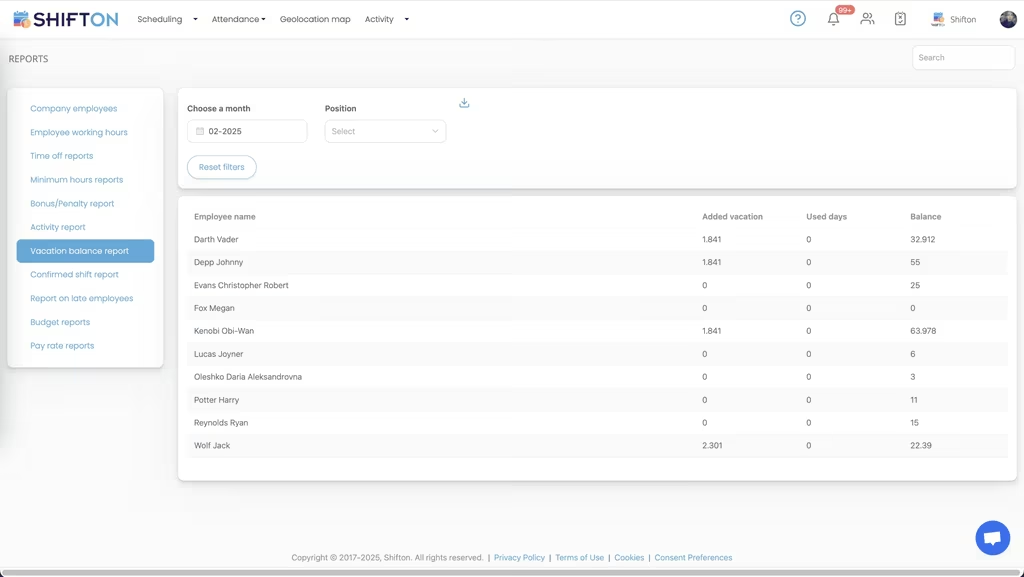
Hour Reports for Trustees and Funders
Every shift worked feeds the reports screen, where working hours, confirmed shifts, activity and time-off balances are filtered by month and position. Grant returns and trustee packs stop being a manual count through a diary.
Start with the Free Plan
No time limits. Get full access to core features and upgrade when you're ready.
Read the full guide to volunteer scheduling
Volunteer programmes run on goodwill and a schedule somebody rebuilds every single week. People give the hours they can spare, availability changes without notice, and the coordinator is usually handling the rota alongside another full-time role. Volunteer scheduling software takes that weekly rebuild off one desk and turns it into a process the whole team can see.
One constraint shapes everything else. You cannot instruct a volunteer to work Saturday, you can only offer the shift and hope it is taken. That single difference is why rota tools designed for paid staff sit unused across the non-profit sector, and why a volunteer scheduling app has to lead with sign-up rather than assignment.
What volunteer scheduling software has to do differently
The job comes down to four things. Publish shifts that people can claim rather than shifts they are told to work. Collect availability before the roster is built, because rebuilding it after three declines is what burns coordinators out. Reach a team that has no work email and no reason to check a notice board. And produce hour totals that stand up in front of trustees, funders and insurers.
Anything beyond those four is optional. A volunteer shift scheduling software that handles them well beats a heavier platform whose settings nobody has time to learn.
Why the volunteer schedule template stops scaling
Almost every programme starts on a volunteer schedule template in a spreadsheet, printed and pinned to a wall. It works for one site and fifteen people. Then a second location opens, a seasonal appeal doubles the roster, and the file becomes the problem. Two coordinators edit different copies. A volunteer roster template that lives on one laptop is out of date the moment somebody drops out on a Friday night. An event volunteer schedule template built for a single weekend rarely survives the second one intact.
Moving to a volunteer scheduling system does not throw the template away, it makes it live. A recurring weekly pattern is saved once and applied to any future week, so the volunteer shift schedule template you refined over a year keeps working while everyone reads the same version of it. A volunteer schedule maker is only useful if the schedule it makes reaches people.
Letting volunteers claim their own shifts
Self-service is the feature that changes a coordinator's week. Publish the uncovered slots as open shifts and every qualified person sees them at the same moment, on the phone they already carry. A volunteer shift sign up is one tap, and approval can stay with the coordinator when a role needs training or a background check.
The alternative is what most programmes do now: a group chat, a round of messages, and the same three reliable people asked first every time. Shifton's shift scheduling module handles open shifts, swaps and templates in one place, so the offer reaches everyone at once and the answer is recorded rather than remembered. Volunteer shift management software earns its place at the moment a Saturday slot fills without a single phone call.
Availability first, roster second
A volunteer availability form collected once a quarter goes stale in a fortnight. Availability that people update themselves stays useful. Each volunteer marks the hours they can give on a monthly calendar, in real time ranges rather than whole days, and the coordinator builds against that picture instead of guessing.
This is the quiet difference between a scheduling app for volunteers and a shared calendar. The calendar records decisions after they are made. Volunteer scheduling tools record what is possible before the decisions are made, which is where the time is actually saved.
Roles, access and onboarding a rotating team
Volunteer teams churn. New people arrive for a campaign, others return after six months away, and a handful become coordinators. The people screen keeps that manageable: every volunteer holds a position, contact details and a time zone, and an authority level decides whether they see only their own shifts or manage the whole roster.
- Invite new volunteers by email and watch invite status move from pending to accepted
- Import a list when a campaign brings in a group at once
- Give experienced volunteers administrator rights without handing over the whole account
- Keep remote helpers in their own time zone so nobody misreads a start time
Onboarding measured in minutes rather than an evening of phone calls is what keeps a growing programme from stalling.
Tracking volunteer hours for funders and trustees
Hours are currency in the non-profit sector. They appear in grant applications, annual reports, insurance declarations and the case for the next round of funding, and counting them out of a paper diary at year end is painful and inexact.
Volunteer time tracking software solves that only when it is tied to the schedule. Volunteers clock in and out against their planned shift using time tracking in the mobile app, and the working-hours report totals contributed time per person, position or period, ready to export. A volunteer time tracking app that lives apart from the roster creates a second set of numbers to reconcile, which is why time tracking software for volunteers belongs inside the scheduling system rather than beside it. Programmes that also run paid staff keep nonprofit timesheet software, a nonprofit time tracking app and volunteer records in one account instead of three that never agree. Location-based clock-in through the geolocation module is available as a paid add-on where confirming arrival on site matters.
Church, charity and community group rotas
Faith and community organisations schedule the hardest version of this problem. Services repeat weekly, several roles are needed on the same date, and most people serve once or twice a month rather than every week. Church scheduling software has to carry recurring patterns, multiple positions per service and a sign-up flow that works for people who are not comfortable with software at all. Church schedule software that assumes a fixed weekly team misses how most rotas are actually staffed, and a church volunteer scheduling app is judged on whether a greeter can find next Sunday in three taps. Free church volunteer scheduling software is a fair place to start while the rota is small.
The same structure covers charity scheduling software and non profit scheduling software more broadly: food banks running daily sorting shifts, shelters covering nights, festivals staffing a weekend with hundreds of people who each give four hours. A church rota software problem and a food bank problem look identical once you strip away the vocabulary, and charity staff scheduling software has to serve both the paid coordinator and the weekend helper. Volunteer rostering software that only fits one of them will be worked around within a month.
Choosing a volunteer scheduling tool people will open
Judge any platform on the volunteer's side, not the coordinator's. Open the app on an old phone. Time how long it takes somebody who has never seen it to find their next shift and claim an open one. Ask what happens when a volunteer drops out at short notice, and whether the replacement offer reaches everyone or only the people the coordinator thinks of first.
The best volunteer scheduling app is the one your least technical volunteer can use without being taught, and the best volunteer scheduling software is the one a coordinator still opens in month six. A free volunteer scheduling app is a sensible trial, provided the free tier is a real plan rather than a countdown. Under ten people, Shifton is free with no time limit, which suits a small community group testing whether a volunteer roster app is worth the switch. As the programme grows, paid plans add multi-site scheduling, deeper reporting and the modules a larger nonprofit scheduling tool is expected to carry. The goal stays the same: shifts that fill themselves, volunteers who know exactly when they are needed, and hour totals ready before anyone asks for them.
Frequently Asked Questions
What is volunteer scheduling software?
Volunteer scheduling software plans, publishes and tracks shifts for an unpaid team. Shifton covers weekly and monthly schedules, open shifts volunteers can claim, availability, a mobile app for iOS and Android, and reports on hours contributed. Coordinators stop rebuilding the rota by hand every week.
How do you schedule volunteers without a spreadsheet?
Collect availability first, then build the week against it and publish the slots nobody has taken as open shifts. Volunteers claim what suits them from their phone and everyone sees the same version. The coordinator only handles the gaps that are genuinely still open.
Can volunteers sign up for shifts themselves?
Yes. Open shifts are visible to every qualified person in the mobile app, and a volunteer shift sign up takes one tap. A coordinator can require approval before the slot is confirmed, so self-service never means losing control of who is on site.
Is there free volunteer scheduling software for a small charity?
Shifton is free for up to 10 team members with no time limit, which covers a small charity or community group. Shift scheduling, basic time clock and attendance, the mobile app and reports are included. Larger volunteer teams move to paid plans priced per person per month.
Can I track volunteer hours for grant reporting?
Yes. Volunteers clock in and out against their scheduled shift and the working-hours report totals contributed time per person, position or period. Reports export to spreadsheet, which is usually the format funders and trustees expect for hour returns.
Does it work for church volunteer scheduling?
It does. A church rota follows the same pattern as any rotating team: recurring services, several roles on the same date, and people who serve once or twice a month. Save the weekly pattern as a template, publish the open roles and let the team sign up.





Fill every volunteer shift without another group chat
Shifton is free for up to 10 team members, so a small programme can move off the spreadsheet this week.