

Conference Venue Staff Scheduling and Attendance
Setup, event and turnaround crews planned per room, checked in on site, with labour costed against the booking.
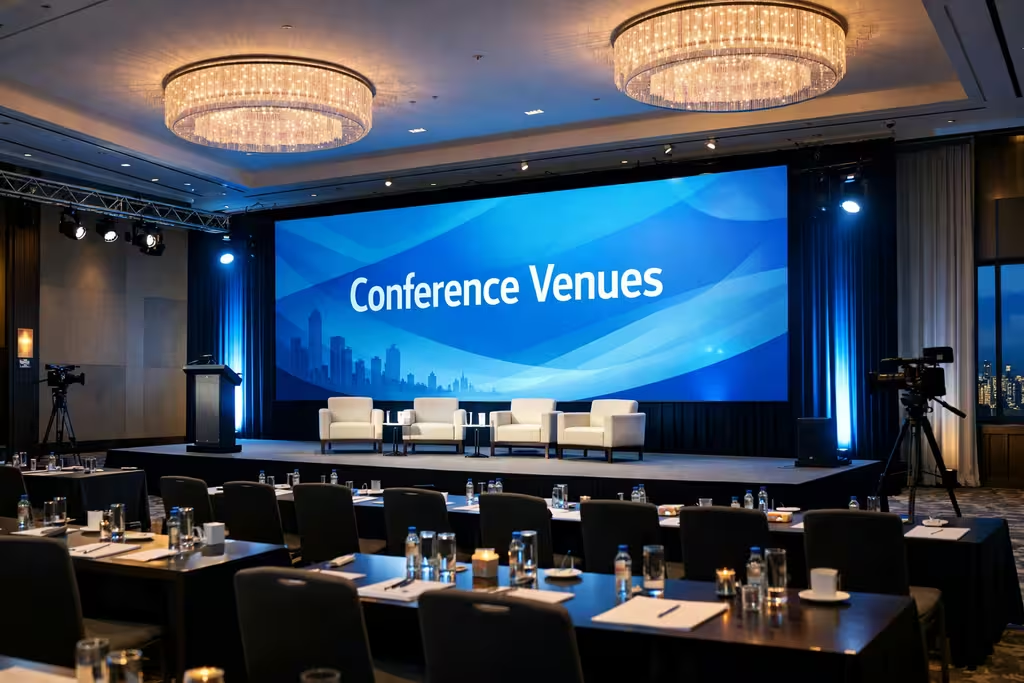
Plan by room and by phase
A conference centre runs several bookings at once, each with a setup, an event and a turnaround. Planning by room and by phase is the only way to see whether tomorrow is actually staffed.
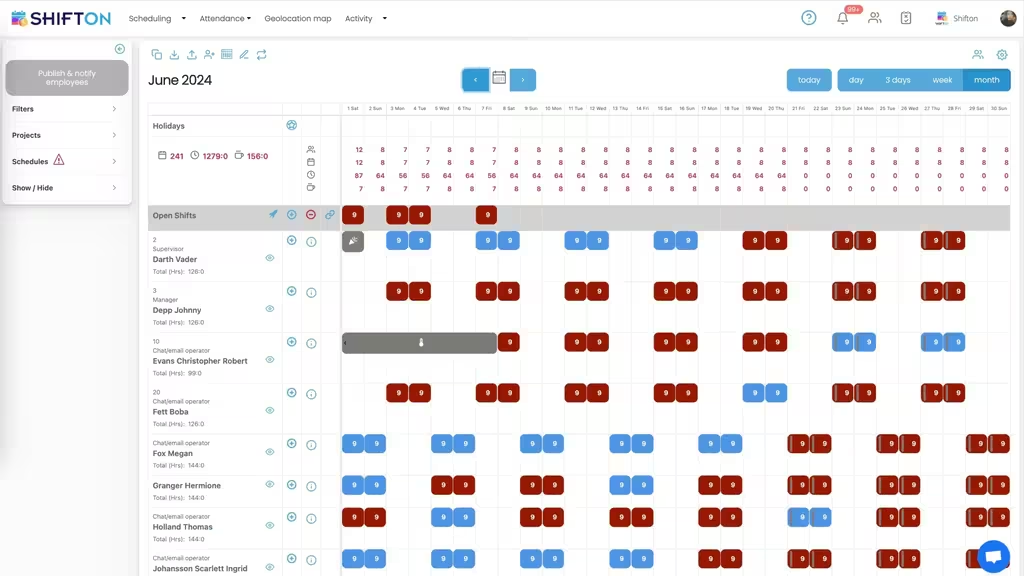
Bring in casual staff quickly
Venues scale for big weeks with casual staff and agency cover. Adding somebody, giving them a role and getting the week onto their phone has to take minutes.
Check people in where the event is
On the day the team is spread across rooms and corridors. Check-in from a phone records who actually arrived, which is the difference between a plan and a headcount.
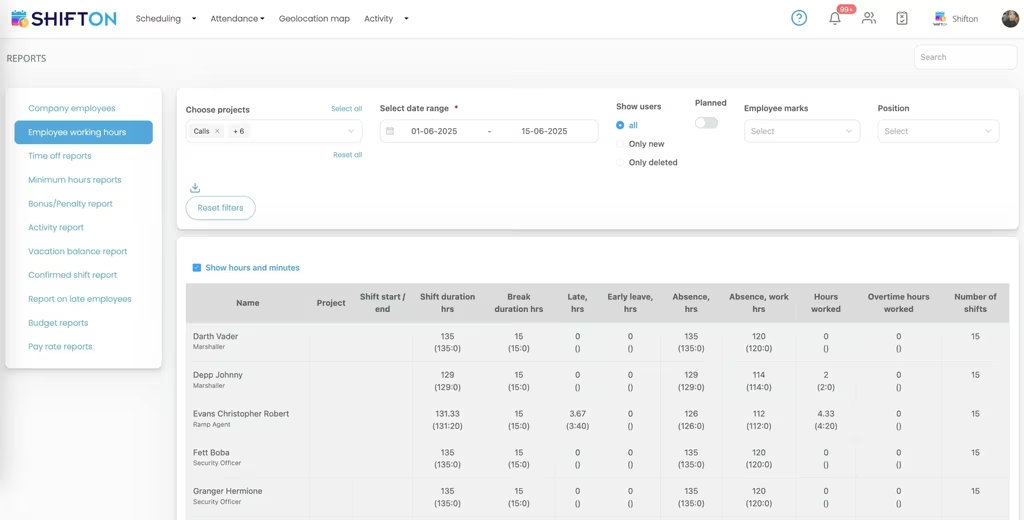
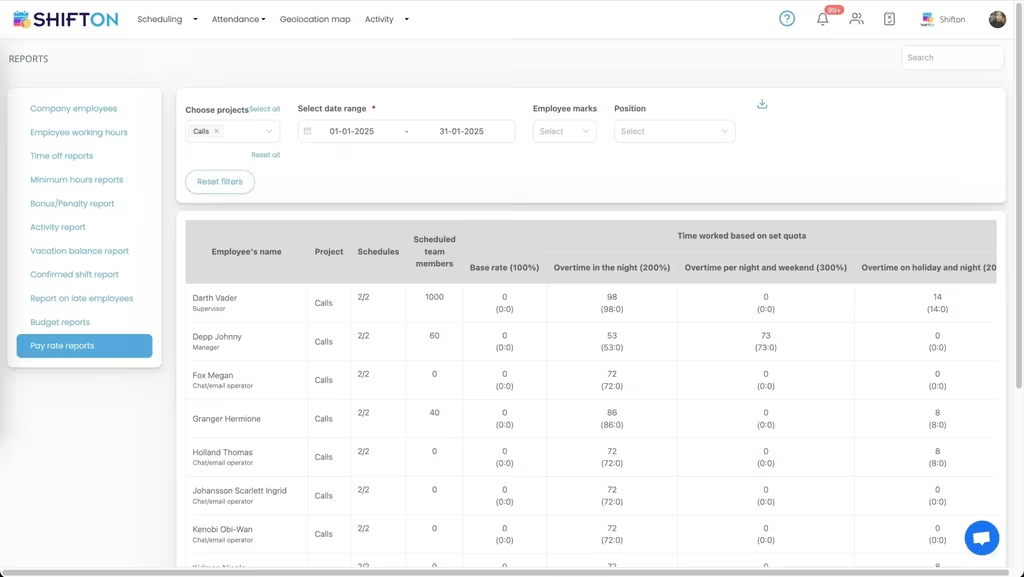
Cost each booking properly
Venue quotes are built on assumed labour and reconciled afterwards from a single wage figure. Grouping hours by room and by phase turns that into a comparison you can act on.
Start with the Free Plan
No time limits. Get full access to core features and upgrade when you're ready.
What a conference venue actually schedules
Venue software usually means the commercial side: enquiries, room availability, delegate registration, catering orders, AV requirements. That is the system a sales team lives in and it is not what this page is about.
The operational side is the people. A conference centre with six rooms is running six setups, six events and six turnarounds on any given day, staffed by a small permanent team topped up with casuals. Whether tomorrow works depends entirely on that rota, and it is usually built in a spreadsheet.
Rooms and phases as the unit
Planning a venue by person produces a list nobody can act on. Planning it by room and by phase produces something a duty manager can read: this booking is set up, this one has nobody on the turnaround, this one needs two more on the door at nine.
The phases matter as much as the rooms. Setup is a small crew doing heavy work for a long time. The event itself needs presence rather than effort. Turnaround is fast, late and often staffed by people who have already been in the building since seven.
Three phases, three different staffing shapes.
Back to back bookings
The hardest hour in a conference centre is the one between two events in the same room. It is short, it is fully committed and it is invisible in a rota that plans by day. Keeping turnaround as its own scheduled phase is what stops it being an assumption.
A workforce that changes every week
Almost no venue staffs its peak permanently. The core team is small and the busy weeks are covered by casual staff, agency people and returning faces from last season. Onboarding them has to be fast enough to happen during a busy week, because that is when it happens.
Departments keep the groups distinct without splitting the plan. The duty manager sees everyone in the building. The payroll export holds only the people the venue employs.
Checking in across a building
A terminal at a staff entrance works for a factory. In a venue the team arrives at different doors, at different times, for different rooms, and the person who needs the headcount is walking the building rather than sitting at the terminal.
Check-in from a phone puts the arrival record where the work is. Knowing who actually came, rather than who was booked, is what allows a duty manager to reallocate people in the twenty minutes before doors.
Long days recorded honestly
Venue shifts break the tidy assumptions of ordinary time tracking. Fourteen hour build days happen. Breaks are taken when the room allows. Somebody booked for eight stays for eleven because the client overran. Recording actual against planned, with breaks kept separate, keeps that in the record instead of in a memory.
What each booking cost
Venue pricing assumes a labour figure. The reconciliation afterwards usually cannot test it, because the wage bill arrives as one number covering every room in the building.
Hours grouped by booking and by phase make the test possible. A recurring client whose events consistently need two more people than the quote assumed is a pricing conversation, and it only exists as a conversation once somebody can see the number.
Where to start
Shifton is free for up to 10 people with no time limit, which covers a small venue or a single department. Scheduling, the mobile app, the basic time clock and reporting are included, and modules are added one at a time from $0.50 per employee a month with a trial of up to 60 days.
Frequently Asked Questions
Does this manage the events themselves?
No. Registration, delegates, room bookings and AV requirements belong in venue or event management software. Shifton schedules the people: setup crews, event staff, hospitality and turnaround teams.
Can I schedule several rooms running at once?
Yes. Each room or booking is a project, so a duty manager can look at one event or at the whole building. Reports group recorded hours the same way.
How do I handle setup, event and turnaround?
Each phase is planned as its own project, and the same person can hold shifts in more than one. That keeps the long build days visible and makes the cost of each phase measurable afterwards.
Can casual and agency staff be added quickly?
Adding a person takes a name, a role and a department, and the published week reaches their phone as soon as they are assigned. Casual and agency staff sit in their own departments so payroll exports stay clean.
Do staff need a terminal to check in?
No. Check-in works from the mobile app, which suits a building where the team is spread across rooms. For venues that need check-in tied to a location, work location control is available as a paid module.
Is there a free plan for a small venue team?
Shifton is free for up to 10 people with no time limit, including scheduling, the mobile app, the basic time clock and reports. Paid modules start at $0.50 per employee a month with a trial of up to 60 days.






Put next week of bookings on one board
Free for up to 10 people, with rooms as projects, check-in on site and labour costed per booking.