

Paving Software for Asphalt, Sealcoating and Line Marking
Work planned around weather and deliveries, crews and plant assigned to the job, and site hours recorded where the work happened.

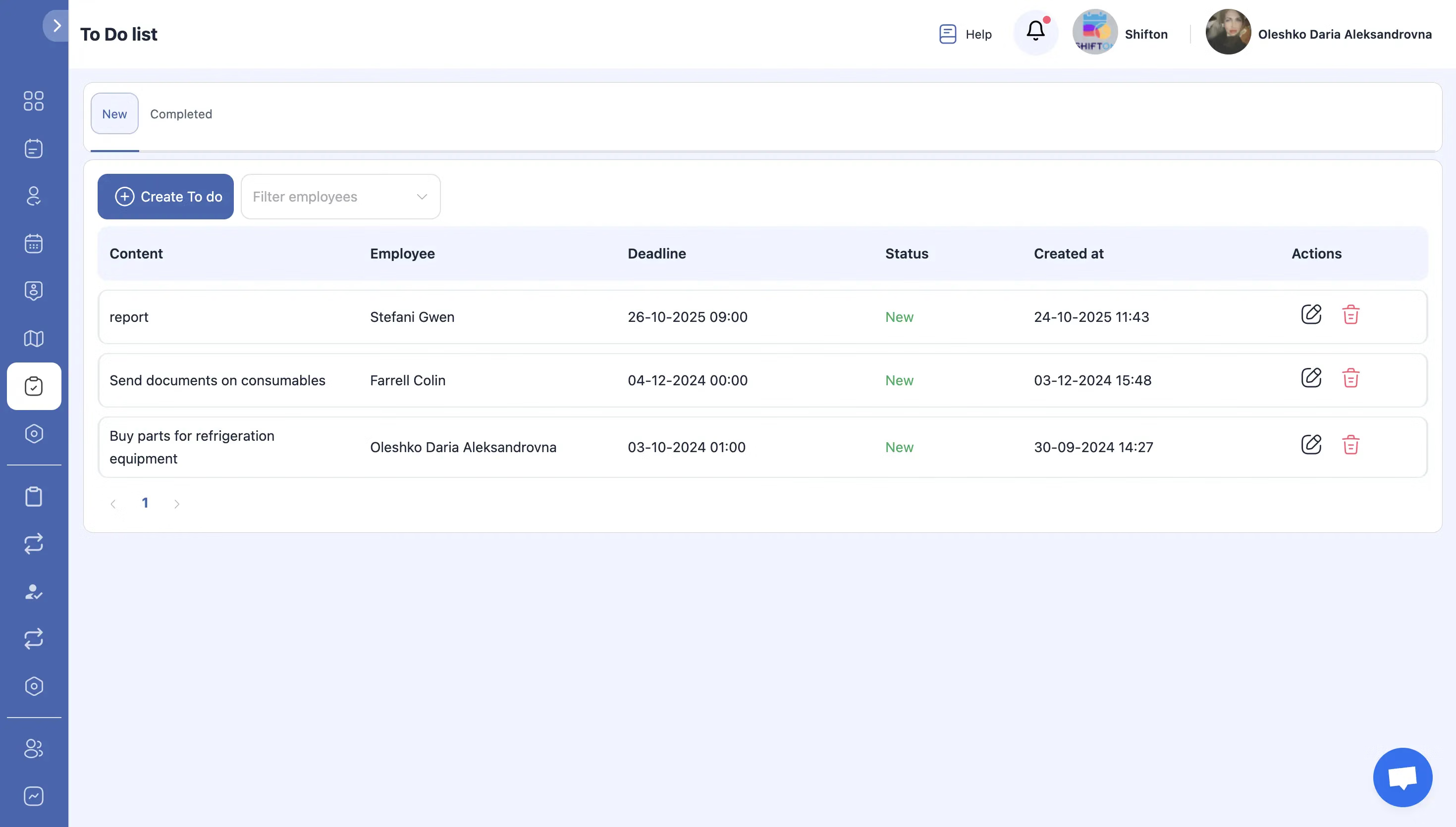
Weather decides the week, so the plan has to move
Asphalt and sealcoating are weather-dependent in a way that few trades are. Surface temperature, rain in the previous twenty four hours and overnight lows all decide whether a job can be done at all, and a plan that cannot be rebuilt in ten minutes is a plan that gets abandoned.
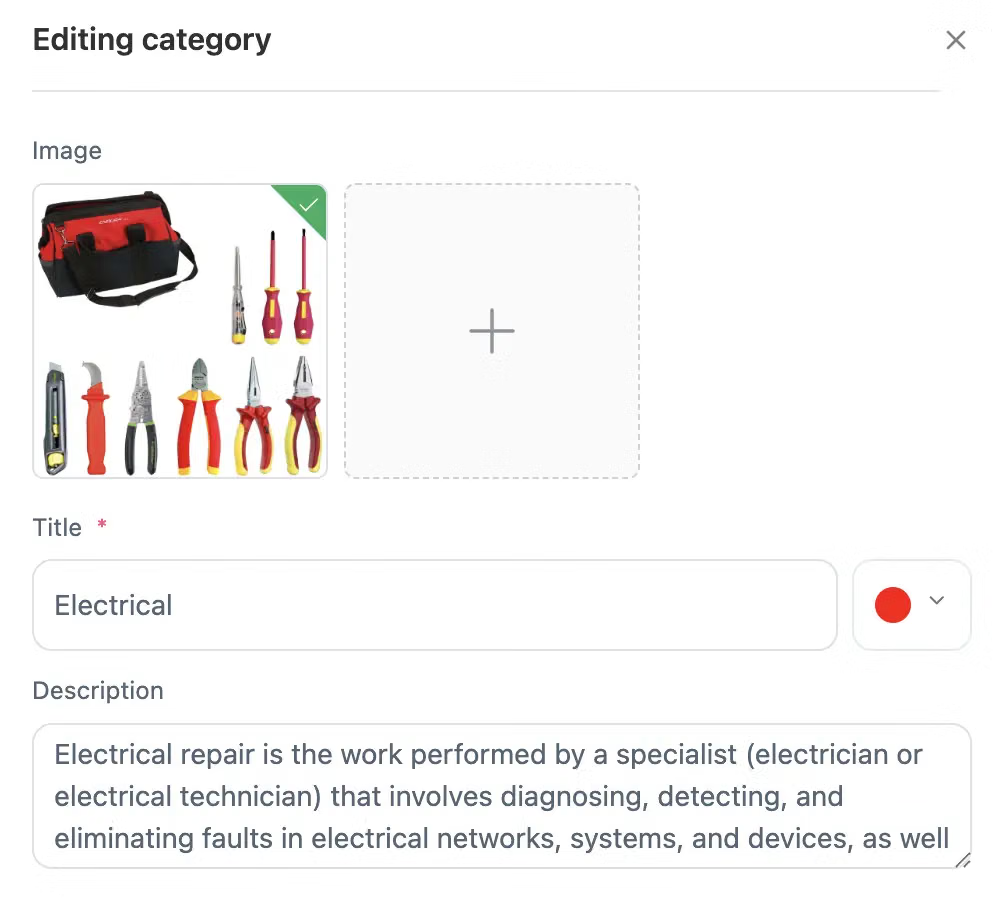
Plant, crews and the cost of standing still
A paving crew is expensive and a paving crew with plant attached is more so. Idle equipment does not invoice, and the hours it spends waiting for a delivery or a site to be cleared are the least visible cost in the business.
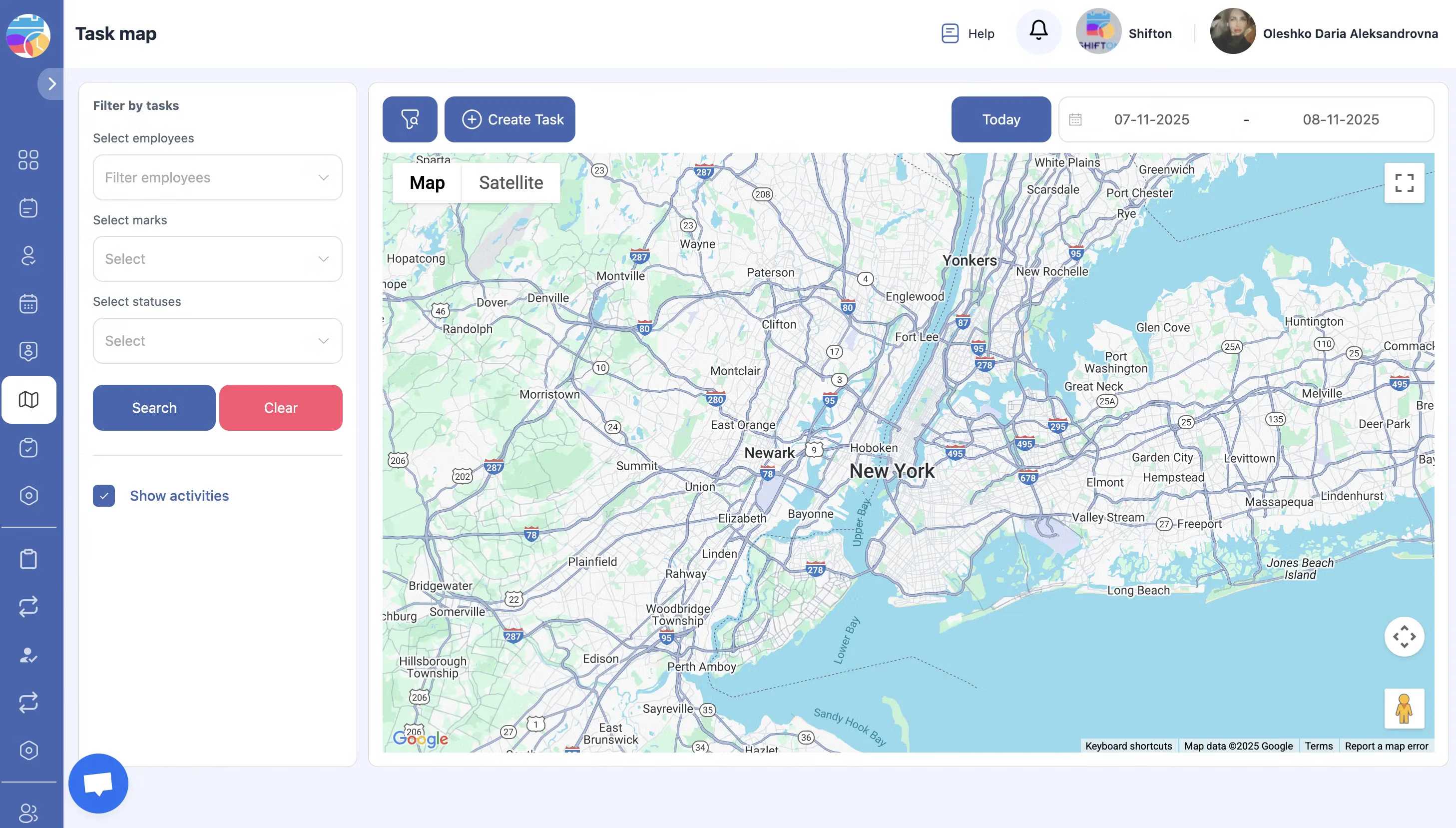
The record that settles a surface dispute
Surfacing complaints arrive weeks later and concern things that are invisible once the job is finished: depth, preparation, the state of the base, how long the surface was left before traffic. Photographs taken during the work are the only defence.
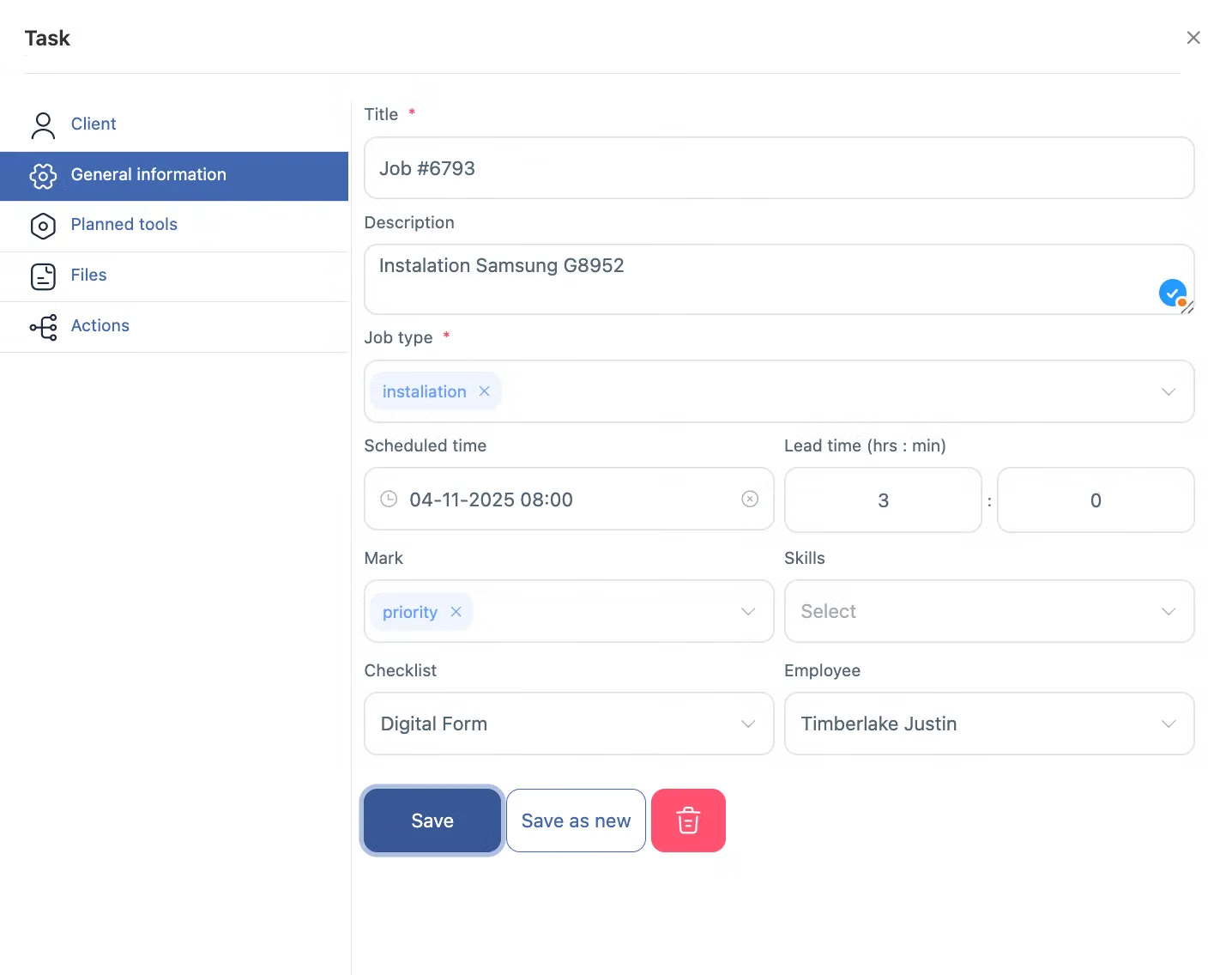
From finished surface to invoice
Paving mixes small domestic driveways with commercial car parks and municipal contracts, and each has its own billing rhythm. What they share is that the invoice depends on what was actually laid rather than on what was quoted.
Start with the Free Plan
No time limits. Get full access to core features and upgrade when you're ready.
Read the full guide to scheduling asphalt and sealcoating work
Surfacing is scheduled against the weather, not against the calendar
Every field trade complains about weather. In surfacing it is not a complaint, it is the primary constraint. Asphalt has a temperature window. Sealer will not cure below a threshold or if rain arrives within hours of application. Line marking needs a dry surface that has been dry for long enough. A week planned on Monday is a hypothesis.
Paving software therefore succeeds or fails on one question: how long does it take to move a day's work when the forecast changes. If the answer involves phoning six crews and rewriting a whiteboard, the plan will be abandoned by the second wet week of the season.
Three things that move together
The crew
Surfacing crews are specialised and not interchangeable. The people who lay asphalt are not the people who mark lines, and a schedule that treats headcount as fungible produces jobs staffed by whoever was free rather than by whoever can do them.
The plant
A job needs its paver, its roller, its sprayer. Scheduling people without equipment creates a crew standing beside a machine that is on another site, and moving that machine is itself half a day of somebody's time.
The material
Hot mix cannot wait. It is ordered for a slot, and if the site is not ready the cost is immediate. Planning the delivery as part of the job rather than as a separate phone call is what stops that happening twice.
The invisible cost: mobilisation
Ask a surfacing contractor where the day goes and the honest answer is that a third of it is not laying anything. It is loading, driving, unloading, setting out, and doing the same in reverse. That time is real, it is paid for, and in most businesses it is never measured.
When hours are recorded by job rather than by day, mobilisation becomes visible as a number. That changes pricing: jobs that are too small to justify a move can be identified, grouped geographically, or priced to cover the move rather than absorbed in the hope that the next one is bigger.
Disputes and the evidence that ends them
Surfacing complaints have a long delay built in. A driveway that fails does so after a frost. A car park that ponds reveals it after heavy rain. By the time the customer calls, the evidence is under the surface.
Photographs of the excavation, the base, the edges and the finished surface, with dates attached, are the difference between a rectification and a conversation. So are the details captured on the day: material, depth, temperature, and the fact that the customer signed for the work when it was finished.
What Shifton Field Service is here
It is the scheduling and record layer for surfacing crews. It plans jobs with their people and equipment, moves them quickly when conditions change, carries the job to the crew's phone, captures evidence on site and turns hours into reports and invoices. For teams of two or fewer the scheduling, the app, job forms and reporting are free with no countdown attached; invoicing, inventory, location control and the customer portal are the modules that cost.
It is not estimating software, it is not a takeoff tool and it does not design pavements. Contractors keep those and use this for the part of the business that happens after the price is agreed.
Frequently Asked Questions
Can we move a day's jobs quickly when the weather turns?
Yes. Jobs are moved on the board with their crews and equipment attached, so reallocating a rained-off day does not mean rebuilding the week by phone. Everyone affected sees the change on their phone.
Is plant scheduled along with the crew?
Equipment can be assigned to the job with the people, which is how paving actually works: a crew without a roller is not a crew that can finish. Mobilisation between sites can be planned as work in its own right.
How do we prove the base was prepared properly?
Photographs and forms are captured during the work and stay attached to the job with their dates. Preparation, depths, materials and temperatures recorded at the time are what answer a complaint that arrives in the autumn.
Can a crew record a job on a rural road with no service?
Yes. Everything the crew needs is already on the phone before they leave, and the record of what was laid, photographed and signed for uploads when the device reconnects.
Can it handle sealcoating and line marking as well as laying?
They are job types with their own durations, checklists and materials, so a sealcoat round, a line marking visit and a full resurfacing job can all sit on the same board without being treated as the same work.
Does it estimate or price paving work?
No. It plans and records the work; pricing stays in whatever estimating package you already use. What it does give you is the actual time and material per job, which is what the next estimate should be based on.
What does a small surfacing firm pay?
Up to two people the plan is free and stays free. Scheduling, the crew app, job forms and reports are included; invoicing, inventory, location control and the customer portal are added when they are needed.


Ready to transform your field operations?
Join thousands of field service companies that trust Shifton to run smarter every day.