

Scaffolding and Equipment Rental Software for Field Crews
Deliveries, erection, weekly inspections, off-hire collections and asset condition on one board, with photos and signatures attached to every movement.
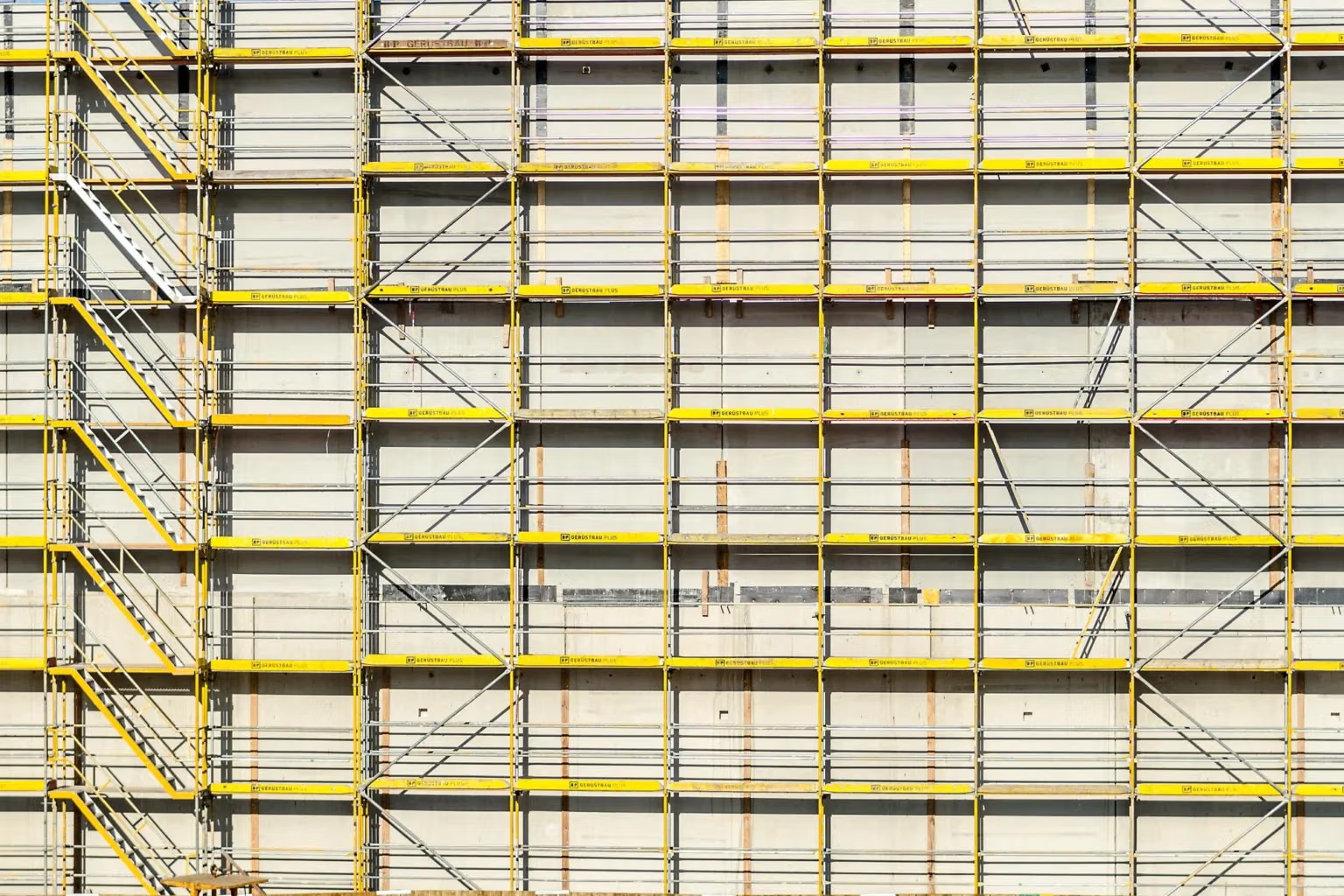
The field half of a rental business
Rental systems handle contracts, rates and invoices. They do not put a crew on a site at seven in the morning with the right sections on the truck. That is where hire businesses lose money: a delivery arrives without the base plates, an erection crew waits for a lift, an off-hire sits on a finished site for three weeks earning nothing. Equipment rental software has to reach the crew, not just the ledger.
Deliveries and collections planned as routes
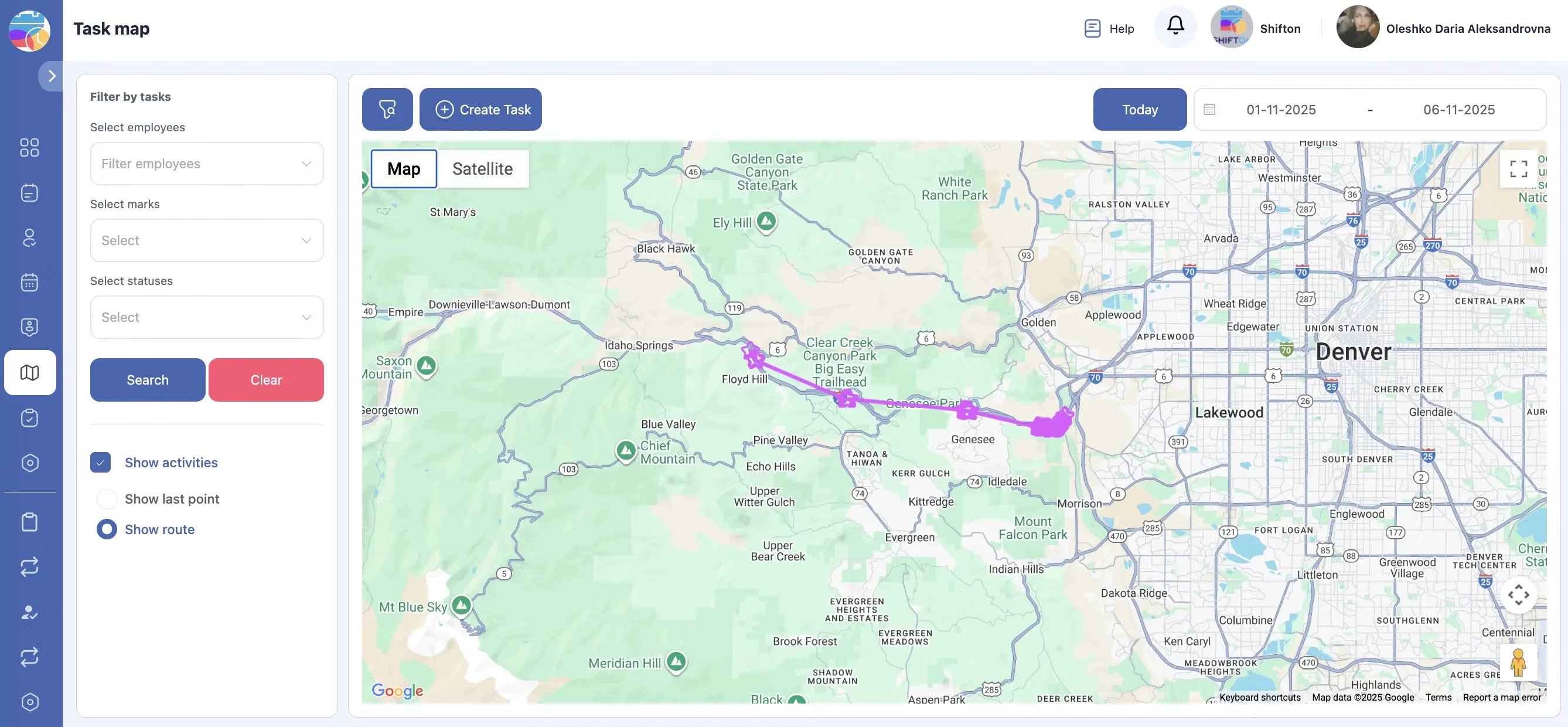
Transport is the cost line that quietly grows. Construction equipment rental software should plan the round the way it will actually be driven: loads grouped by area, collections picked up on the way back, drivers given the address, the contact and the access notes before they pull off the yard.
Erection, dismantle and weekly inspection
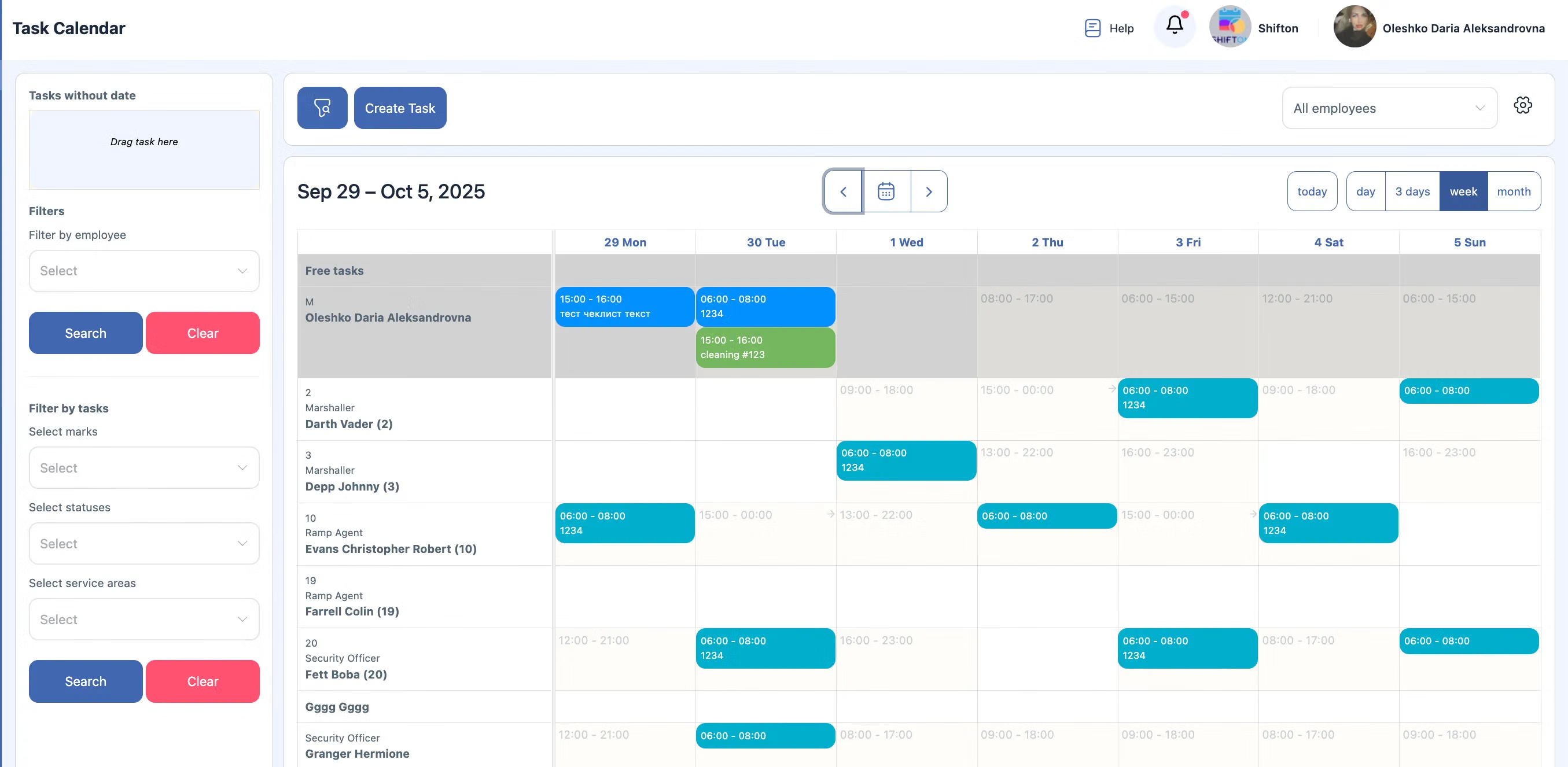
Scaffolding management software has one job the rest of the hire market ignores: the structure is a liability until it is signed off, and it has to be re-inspected every seven days. Recurring inspections generate themselves, the inspector completes the form on the phone, and the record stays attached to the site rather than to whoever happened to attend.
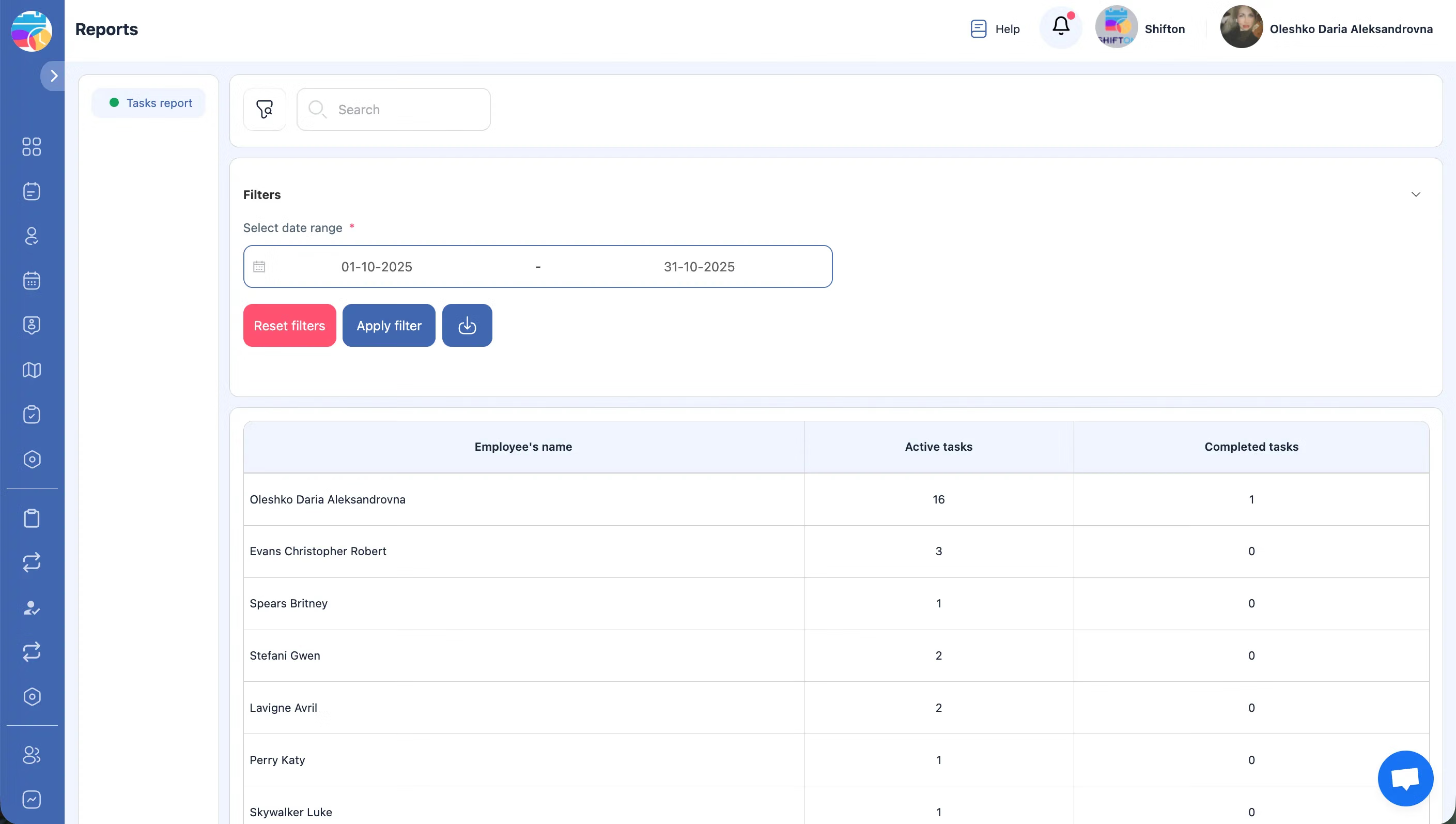
What went out, what came back, in what condition
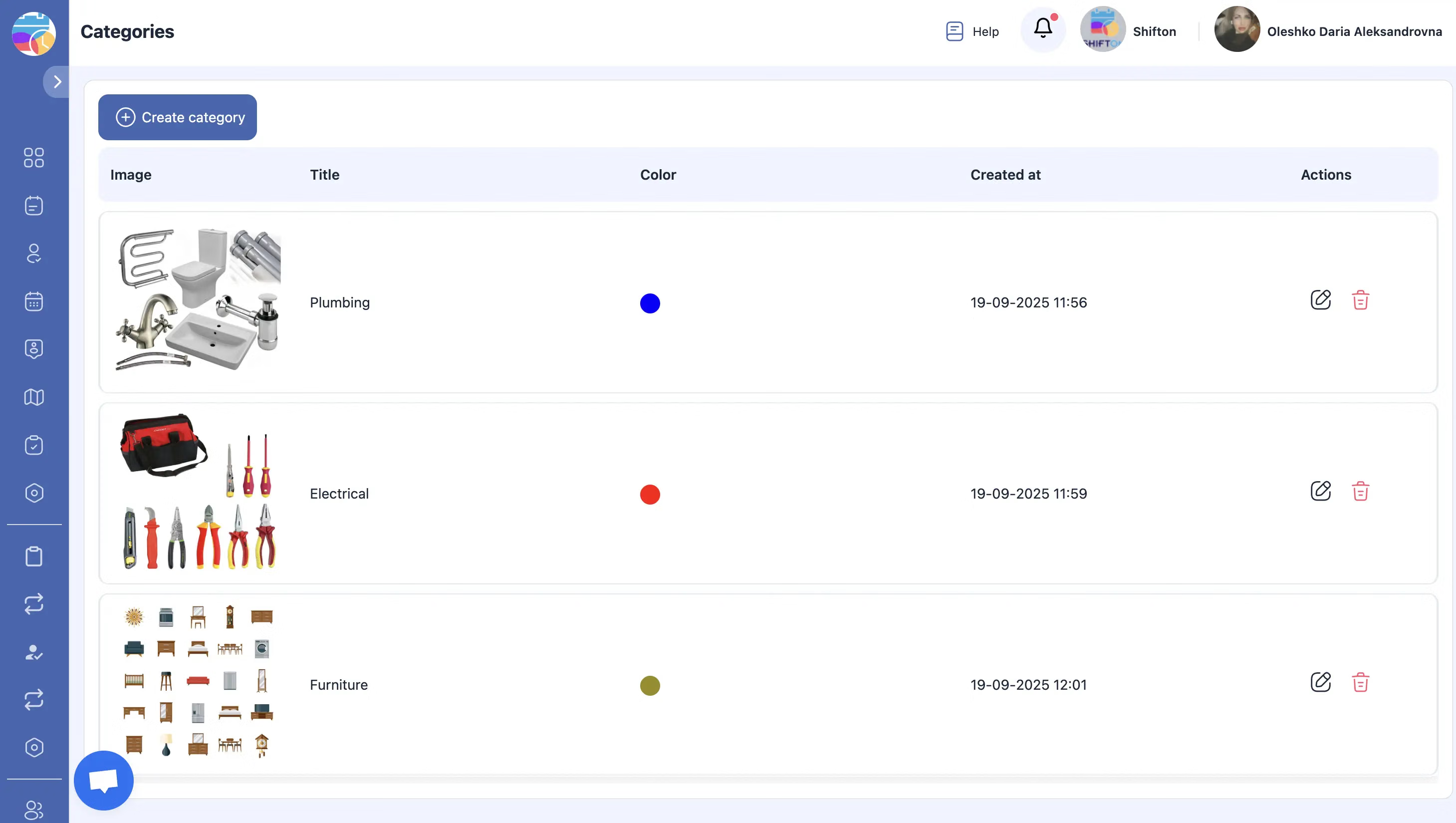
Fleet losses happen between the yard and the site. Rental inventory management software closes the gap by making every movement a record: what left, on which job, who signed for it, and what came back damaged. Condition is captured while the crew is still standing next to the asset.
Start with the Free Plan
No time limits. Get full access to core features and upgrade when you're ready.
Read the full guide to equipment rental software
Where rental software stops and the yard begins
Most equipment rental software is written around the contract. It knows the rate, the hire period, the customer and the invoice, and it is very good at all four. What it does not know is whether the truck left with the right load, whether the crew that erected the tower has signed the handover, or whether the structure that came off hire three weeks ago is still standing on a finished site. That gap is where hire businesses lose margin, and it is the gap Shifton Field Service is built to close.
The distinction matters when you are comparing systems. A rental platform answers what a customer owes. A field service platform answers what a crew did. Running the second one alongside the first is normal in this industry, because the two questions live in different parts of the business and neither system covers both well.
The four movements that decide profitability
Whatever the fleet is, the field side of hire comes down to four movements, and every one of them can be planned, evidenced and reported.
Delivery
A delivery goes wrong for boring reasons: the wrong sections, a missing lift booking, an access window nobody passed on. Construction equipment rental software fixes this by making the load list, the site contact and the access notes part of the job the driver receives, rather than a conversation held in the yard at half six in the morning. Proof of delivery is then captured where it happens, with a photo and a signature against the contract.
Erection and dismantle
Erection is the labour line, and it is the one most often estimated rather than measured. When crews start and finish jobs in the app, the time on each structure becomes a number instead of a memory. Over a quarter that number tells you which jobs were priced correctly, which sites always overrun, and which crews are carrying the rest.
Inspection
Scaffolding management software has to treat inspection as a scheduled obligation, not a reminder. Seven day cycles generate the visit, the form and the record automatically. The value is not the checklist, it is that the evidence exists in order, attached to the structure, on the day a client, an insurer or an inspector asks for it.
Off-hire collection
Collections are the movement that gets postponed, and the one that costs the most. An asset on a finished site is not earning, and it is exposed to damage and theft. Treating off-hire as scheduled work, planned into the same rounds as deliveries, is the single change that most improves utilisation in a hire fleet.
What condition reporting is really for
Damage disputes are won with evidence gathered at the right moment, which is while the crew is still standing next to the asset. Rental inventory management software that records condition on collection, with photographs and notes, turns a difficult conversation into a document. The same record protects the crew when equipment was already damaged when they arrived.
The same principle applies to consumables. Fittings, boards, ties and fixings disappear quietly. Tying them to the job through the inventory module means the yard knows what was used rather than what was ordered, and the difference between the two stops being a rounding error.
Utilisation as a number you can act on
Every hire business talks about utilisation and most measure it monthly, after the fact. When movements are captured as they happen, utilisation becomes something you can act on this week: what is out, what is idle in the yard, what is sitting on a site that closed, and which items keep coming back damaged. Heavy equipment rental software is worth the change only if it produces those four lists without anybody compiling them.
Getting the field side running
Start with one movement rather than the whole operation. Put deliveries and collections on the board for a fortnight and the transport picture changes immediately, because the round is planned instead of assembled by phone. Add recurring inspections next, since they are the obligation with the hardest deadline and the clearest evidence trail. Erection times and condition reporting follow naturally once crews are already working in the app.
Teams of two or fewer stay on the free plan permanently, and the paid modules carry a trial of up to 55 days, which is long enough to run a full season of deliveries, inspections and off-hires through the system before committing to it.
Frequently Asked Questions
Does this replace our rental contract and invoicing system?
No, and it is not meant to. Shifton Field Service runs the field side: the deliveries, the erection and dismantle crews, the weekly inspections and the off-hire collections, with the proof attached to each movement. Contracts and rates stay where they are, and invoicing for the field work is available as a paid module.
How are weekly scaffolding inspections handled?
As recurring jobs. A seven day cycle is set once and the visits appear on the board ahead of time, each with its own checklist, photos and signature. The completed reports stay attached to the site, so the history of a structure survives changes of inspector.
Can drivers see the delivery and collection round on a phone?
Yes. The mobile app for iOS and Android carries the day: addresses, site contacts, access notes, the load list and the order of the round. Proof of delivery is captured on site with a photo, a signature and a time stamp.
What happens when a site has no signal?
The app holds the job and the form on the device. A crew can complete an inspection or a handover in a basement or a lift shaft, and the record syncs when the phone finds signal again. Nothing is retyped.
Can we see which crew is nearest to an urgent collection?
With the work location control module, yes. Live crew positions show who is closest and what they already have on, so an urgent off-hire is given to someone who can actually reach it. The module is paid, added when the fleet justifies it.
Is it suitable for a small hire business?
Teams of two or fewer run on the free plan with no time limit: scheduling, digital job forms, the mobile app and reports are included. Paid modules such as inventory, invoicing, location control and the customer portal are added as the yard grows.
How is the platform priced for a hire business?
The free plan covers up to two employees permanently. Beyond that the platform is priced per employee per month, and every paid module carries a free trial of up to 55 days, so a full season of deliveries and inspections can run through it before you commit.


Ready to transform your field operations?
Join thousands of field service companies that trust Shifton to run smarter every day.