

Roofing Contractor Software for Crews and Jobs
Crews, repairs and re-roofs on one board, with the survey photos, the materials and the sign-off attached to the job.
Weather moves the plan, the plan has to move back
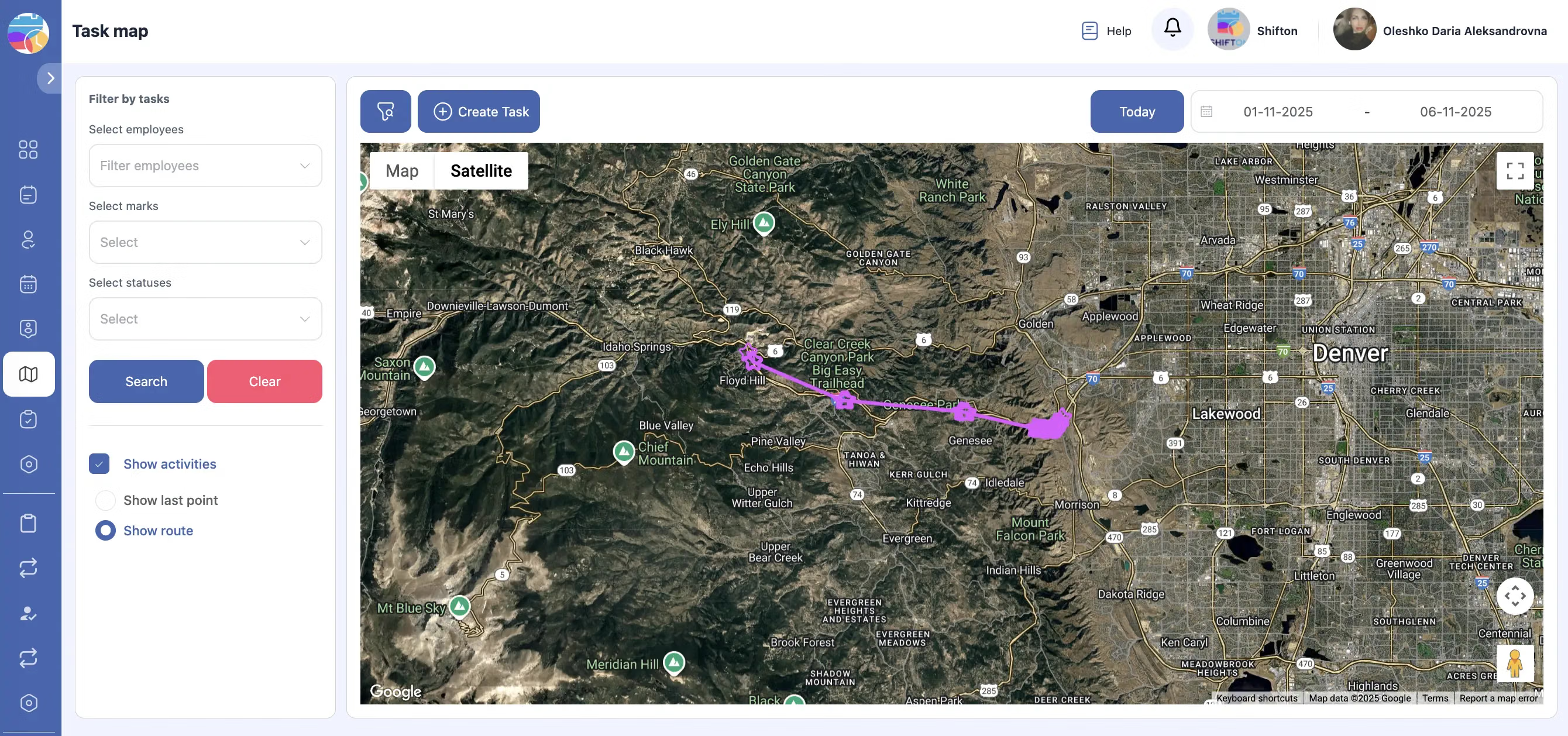
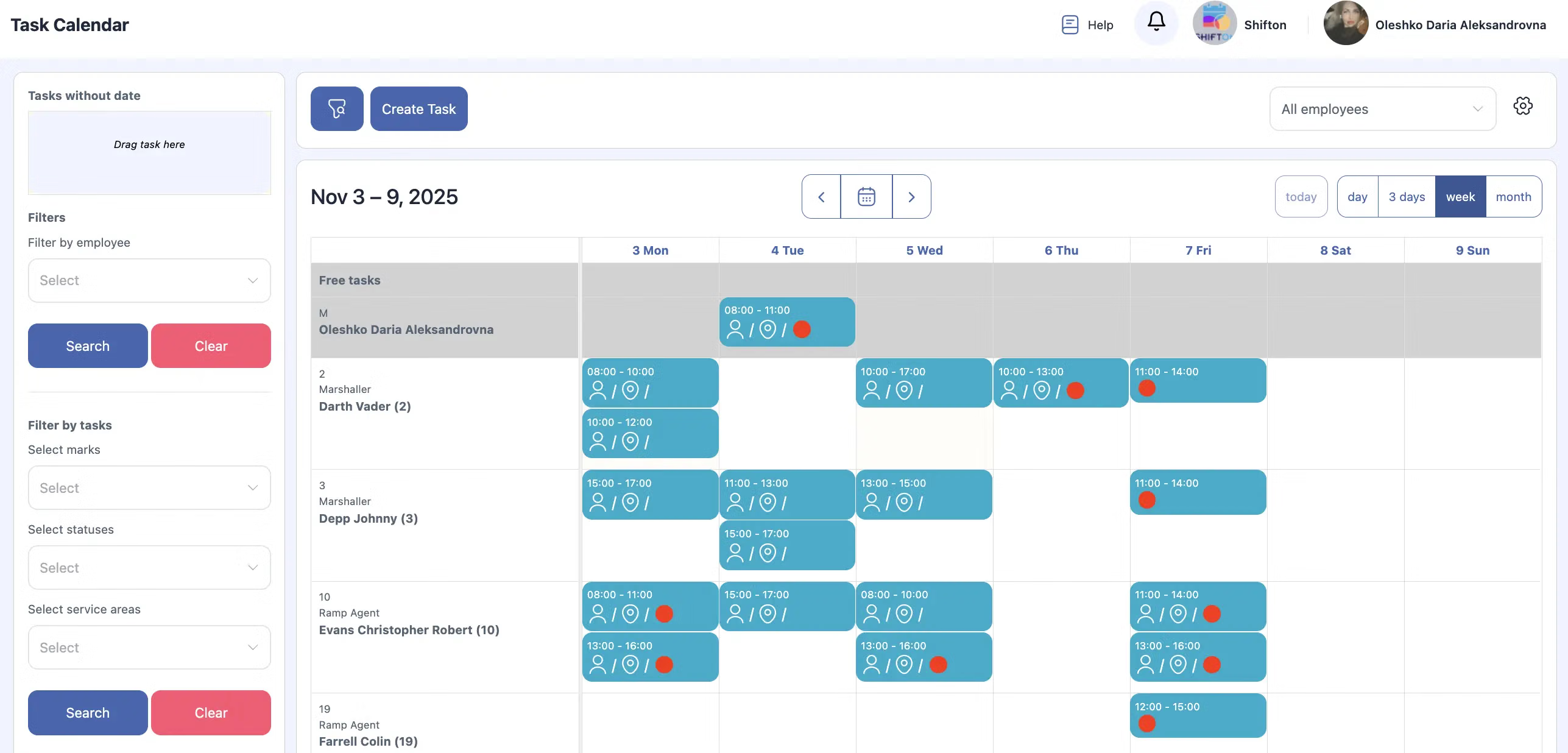
Roofing is the trade where the schedule is decided by the sky. Two days of rain do not cancel work, they push a week of it into the next one, and everything after that has to be re-cut. A paper plan cannot absorb that. A live board can, because moving a crew moves everything attached to it: the job, the materials list, the customer and the follow-up.
The survey, the quote and the job stay the same record
Most roofing disputes begin in the gap between what was surveyed and what was done. Photographs taken on a survey sit on a phone, the quote is written from memory, and the crew arrives with a different understanding of the scope. Keeping survey photos and notes on the job card means the crew leader opens the same record the estimator built.
Materials on the roof, not in a spreadsheet
A re-roof consumes tiles, felt, battens, fixings and flashing, and a repair consumes whatever the van happened to have. Tracked against the job, materials stop being a monthly reconciliation exercise and start being a line on the work order that the invoice can be built from.
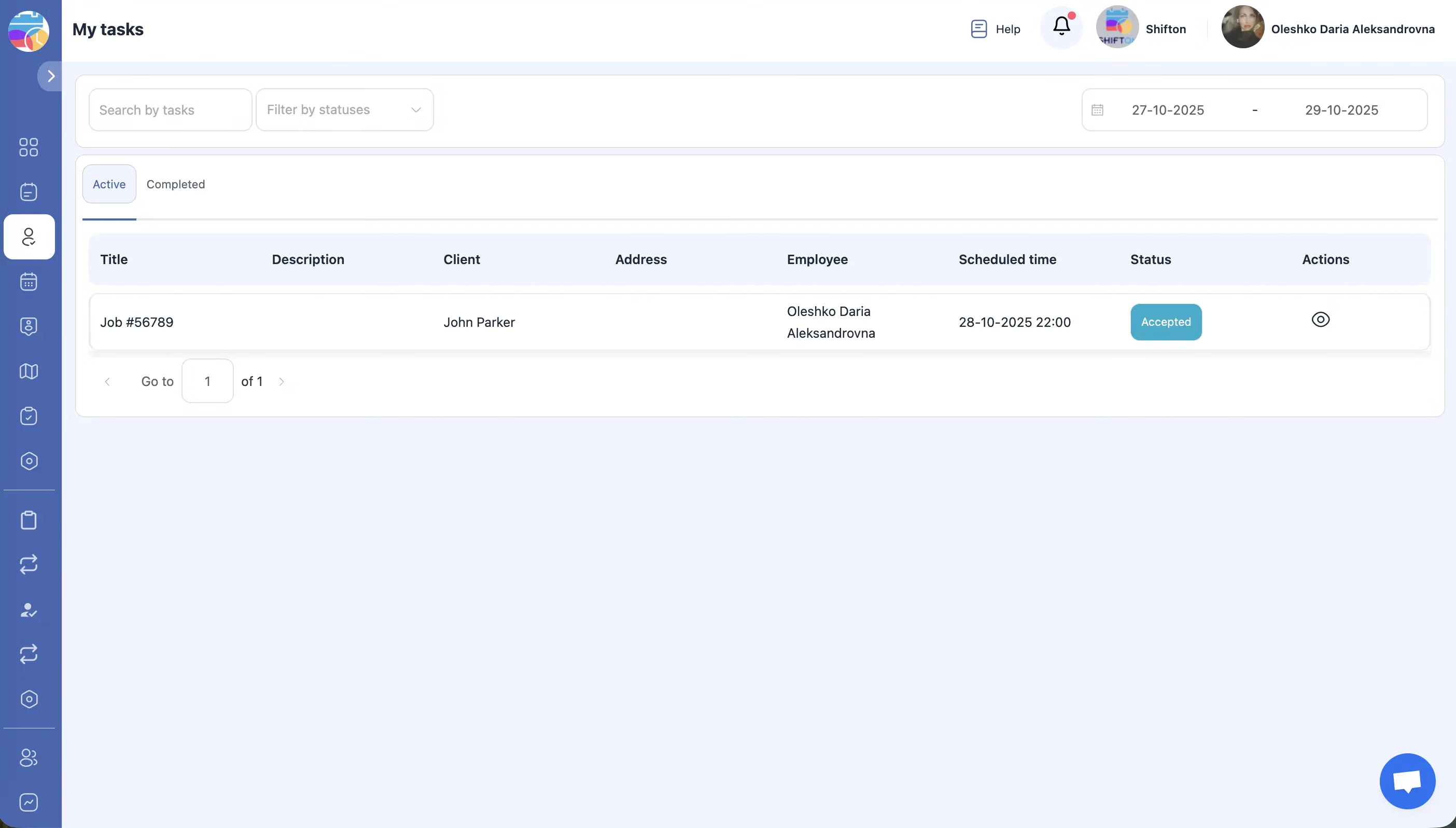
Proof for the guarantee, the insurer and the next storm
Roofing work is guaranteed for years and questioned for longer. When a leak appears three winters later, the useful answer is the record: who worked on it, what was fitted, what the roof looked like before and after, and who signed for the finished work.
Start with the Free Plan
No time limits. Get full access to core features and upgrade when you're ready.
Read the full guide to roofing contractor software
Why roofing schedules break differently
Most field trades lose a job here and there. Roofing loses whole days, and it loses them to something nobody controls. Two wet days in November are not two gaps in a diary, they are a week of re-cutting: the crew that was going to strip a roof on Tuesday now does it on Friday, the customer booked for Friday moves to the following Wednesday, and the materials that were delivered for Tuesday are sitting on a driveway.
This is the reason roofing contractor software should be judged on how it moves work rather than on how it displays it. Moving a crew's day should move the jobs, the notifications and the material expectations together. If it only moves coloured blocks on a screen, the office still spends the evening on the phone.
The survey is the most valuable hour you will spend
A roofing job is priced from a survey and delivered by people who were not there. Everything that goes wrong in between comes from that handover. The estimator saw a valley that needed lead work. The crew leader saw a quote that said re-roof. Both are acting in good faith and the customer is watching an argument.
Photographs travel better than descriptions
Fifteen photographs on the job card are worth more than a paragraph of scope. They show the condition of the felt, the state of the chimney flashing, the neighbour's conservatory that decides where the scaffold goes. They also fix the condition of the roof at a moment in time, which matters when a customer later says a slipped tile on the other slope was your doing.
One record from survey to invoice
When the survey, the job and the invoice are the same record, the scope stops drifting. The crew opens what the estimator built. The invoice is produced from what the crew completed. Nobody reconstructs anything from memory, which is where roofing paperwork usually goes wrong.
Materials are the second margin
Labour is estimated carefully in most roofing businesses and materials are estimated once, generously, and never checked. That is understandable and expensive. A pattern of ordering fifteen per cent more than gets used is invisible per job and obvious across a quarter, and the only way to see it is to record what actually goes on the roof against the job it went on.
The same record solves the smaller irritation of the van. A repair crew that carries a mixed load and never logs it produces invoices that undercount consumables. Recording materials on the job card as the work is done is quicker than a stock take and considerably more accurate than a guess made a week later.
Safety, scaffolding and the things that must happen first
Roofing carries obligations that are checked when something has gone wrong. Access and edge protection, the state of the scaffold, harness and anchor points, the toolbox talk. These are recorded as checklists on the job, completed before work starts, with photographs where they are needed.
Held as digital job forms, they are done once and stored where they can be produced. Held on paper, they are done once, transported in a van, and produced with difficulty if at all. The difference costs nothing on the day and everything on the day it is asked for.
Guarantees are a filing problem
A roof is guaranteed for a decade or two, which means the record has to outlive the crew that built it. People leave, phones are replaced, and the paper file for a job done in 2019 is not going to be found. Keeping the history against the address rather than against the person means a claim in eight years takes a search instead of an archaeology project.
What a roofing business should look at before buying
Three questions separate useful roofing software from expensive roofing software. Can a crew leader complete the job on a phone in the rain, in gloves, without a signal. Can a day be moved without rebuilding the week. Can the invoice be produced from the finished job rather than typed again from notes.
Everything else is secondary. Estimating tools, aerial measurement and the rest are worth having, but they do not decide whether the software gets used, and software that is not used on a wet Tuesday is not software, it is a subscription.
Starting without a project
Two people run free with no time limit: scheduling, digital job forms, the mobile app and reports are included. That covers a small roofing outfit outright and is enough to test the way of working against a real week, including a wet one.
Modules are added when the business asks for them. Inventory when materials stop reconciling. Invoicing when the delay between finishing and billing turns into a cash flow problem. Location control when crews and vans are spread across a county. Each paid module carries a free trial of up to 55 days.
The underlying parts are documented separately: dispatch and task management, digital job forms, the mobile app, inventory, work order history and reports. Module prices are on the pricing page.
Frequently Asked Questions
How does roofing software handle days lost to weather?
The board is moved rather than rebuilt. A crew's day is rescheduled and everything attached to it travels with it: the job, the materials list and the customer notification. The knock-on effect on the rest of the week is visible immediately instead of being discovered on the day.
Can survey photos and measurements be attached to the job?
Yes. Photographs and notes taken during the survey stay on the work order, so the crew that turns up later opens the same record the estimator built. Everything is time stamped, which settles later questions about the condition of the roof before work started.
Does the roofing app work without a signal on site?
The mobile app for iOS and Android stores the job, the checklist and the photos on the device. Crews on a rural roof or inside scaffolding can complete the record, and it syncs when the phone regains coverage. Nothing has to be written down twice.
Can I track materials used on each roof?
With the inventory module, yes. Tiles, felt, battens and fixings are recorded against the job as they are used, stock is reduced automatically, and the same lines flow into the invoice, which makes the gap between the quote and the actual cost visible per job.
How do we prove what was done when a guarantee claim arrives?
Every visit keeps its photographs, its checklist and its signature against the address. Years later the full history of that roof opens in one place: who attended, what was fitted, what condition the roof was in before and after, and what the customer signed for.
Is roofing management software practical for a small crew?
Teams of two or fewer use the free plan with no time limit, including scheduling, digital job forms, the mobile app and reports. Larger crews add paid modules such as inventory, invoicing, location control and the customer portal when the work justifies them.
What does it cost to run this for a roofing business?
The free plan covers up to two employees permanently, and beyond that the platform is priced per employee per month. Each paid module has a free trial of up to 55 days, long enough to run a full season of roofing work through it before deciding.

Ready to transform your field operations?
Join thousands of field service companies that trust Shifton to run smarter every day.