

Waste Hauling Software for Demolition and Removal Crews
Jobs sized before the truck leaves, tip runs counted as work, and every load photographed at the address it came from.

A job that was quoted from a photograph
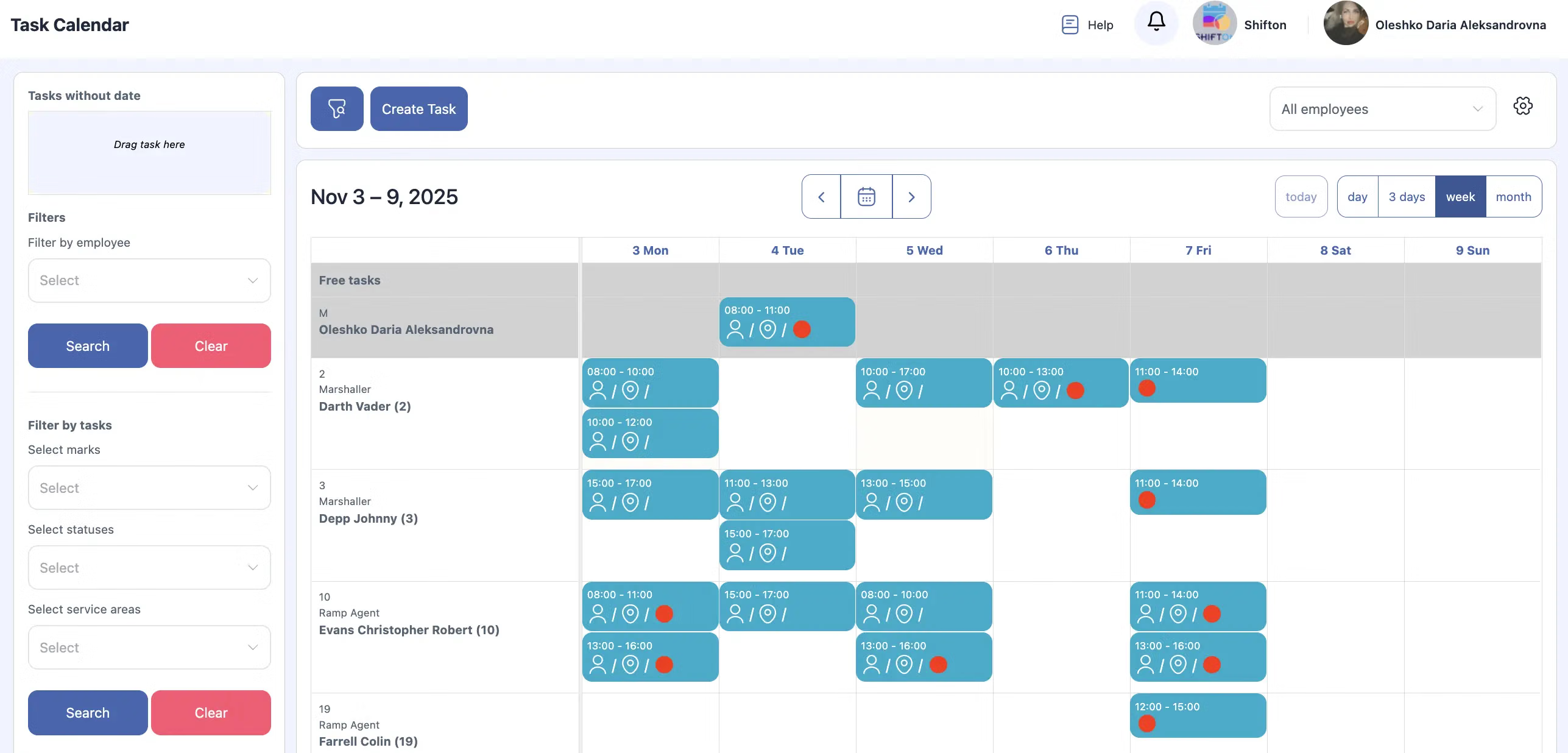
Removal work is priced on volume nobody has measured. The customer describes a garage; the crew arrives to find a garage, a shed and a garden. Without a record of what was agreed, the argument at the door is one the driver has to win alone.
Trucks, tips and the hours in between
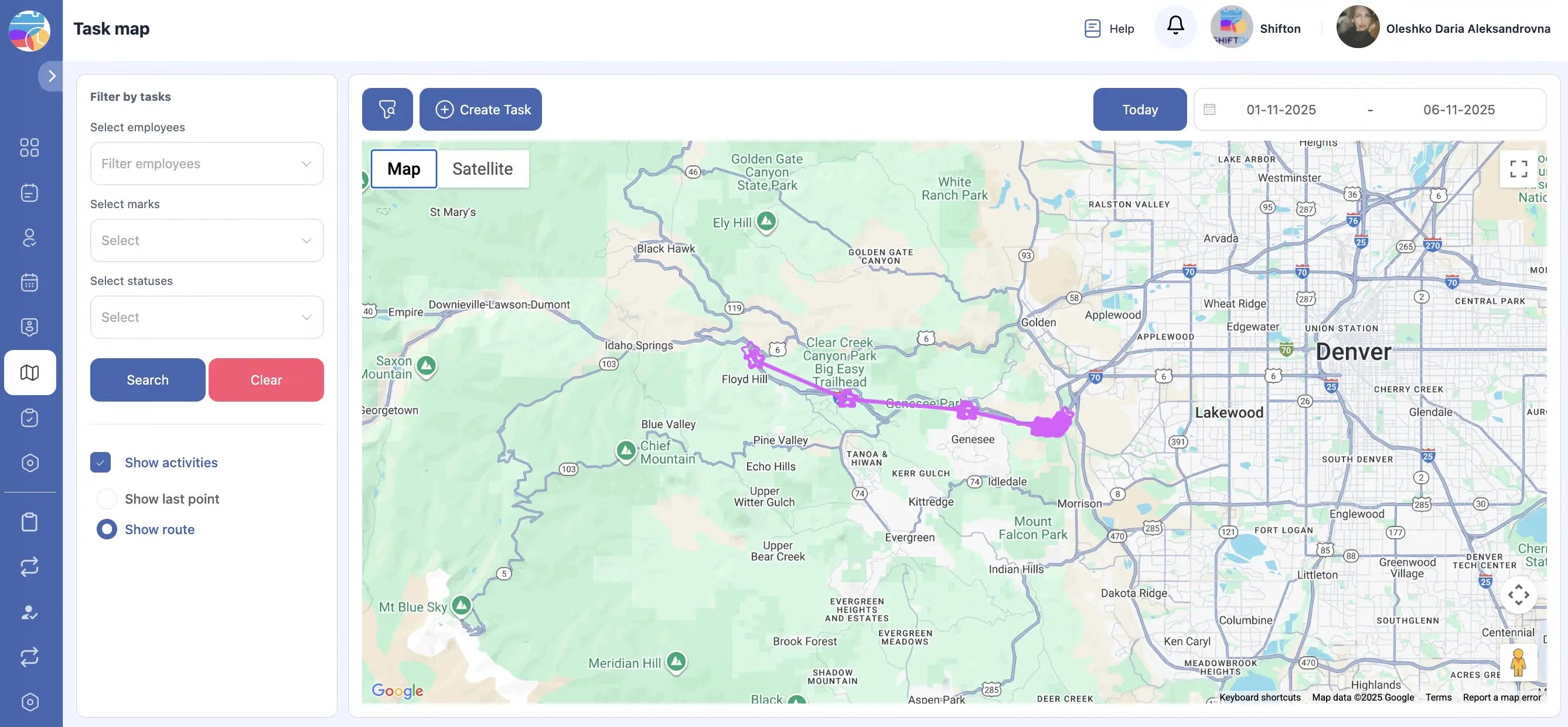
A hauling day is not a list of collections. It is collections plus the runs to the transfer station, and the second half is invisible on most schedules even though it consumes a third of the day.
Demolition work runs to a different clock
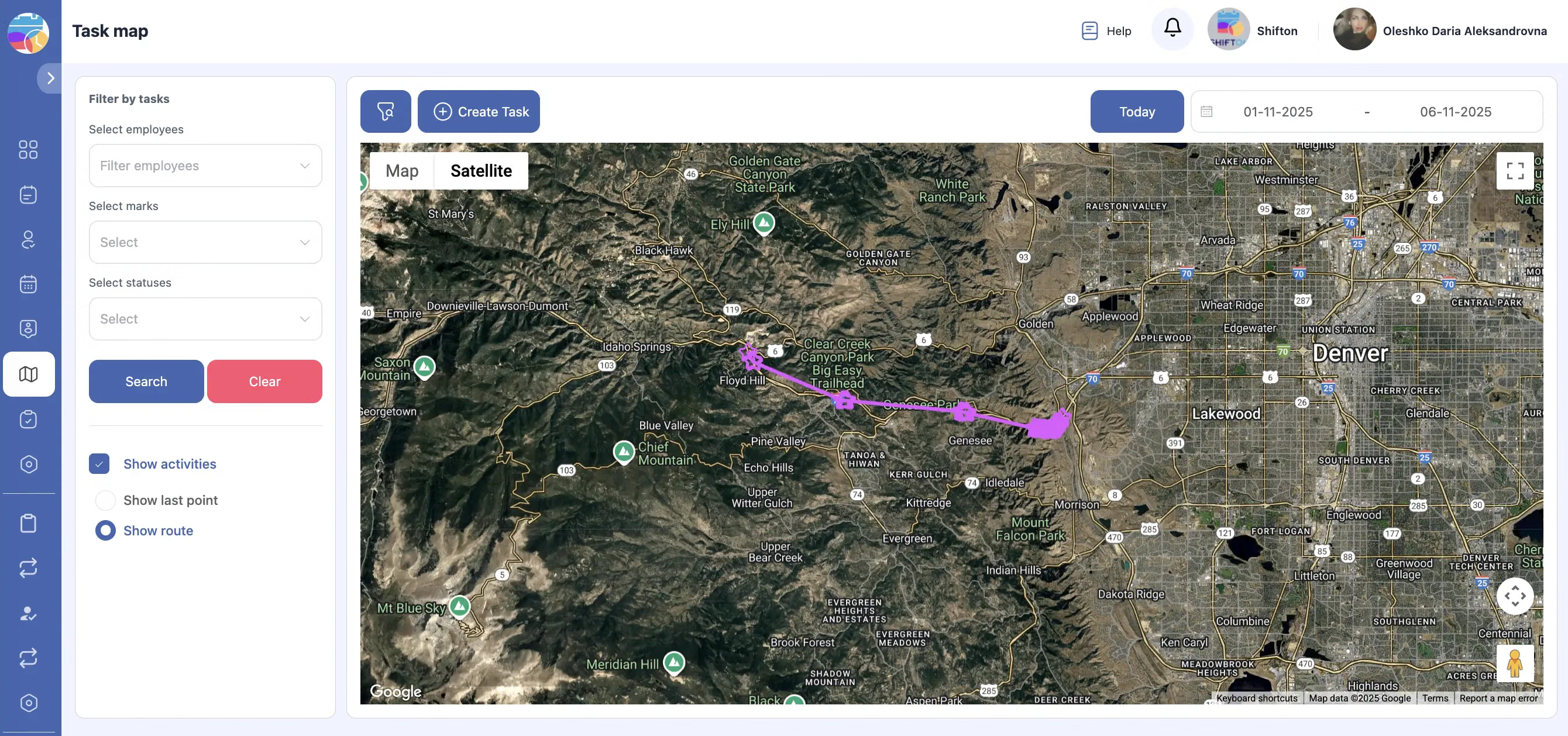
Strip-outs and small demolition are sequenced jobs with trades waiting behind them. A day lost is not a day lost to you, it is a day lost to whoever was due on site next, and that is the relationship that brings the next contract.
Paperwork that follows the waste
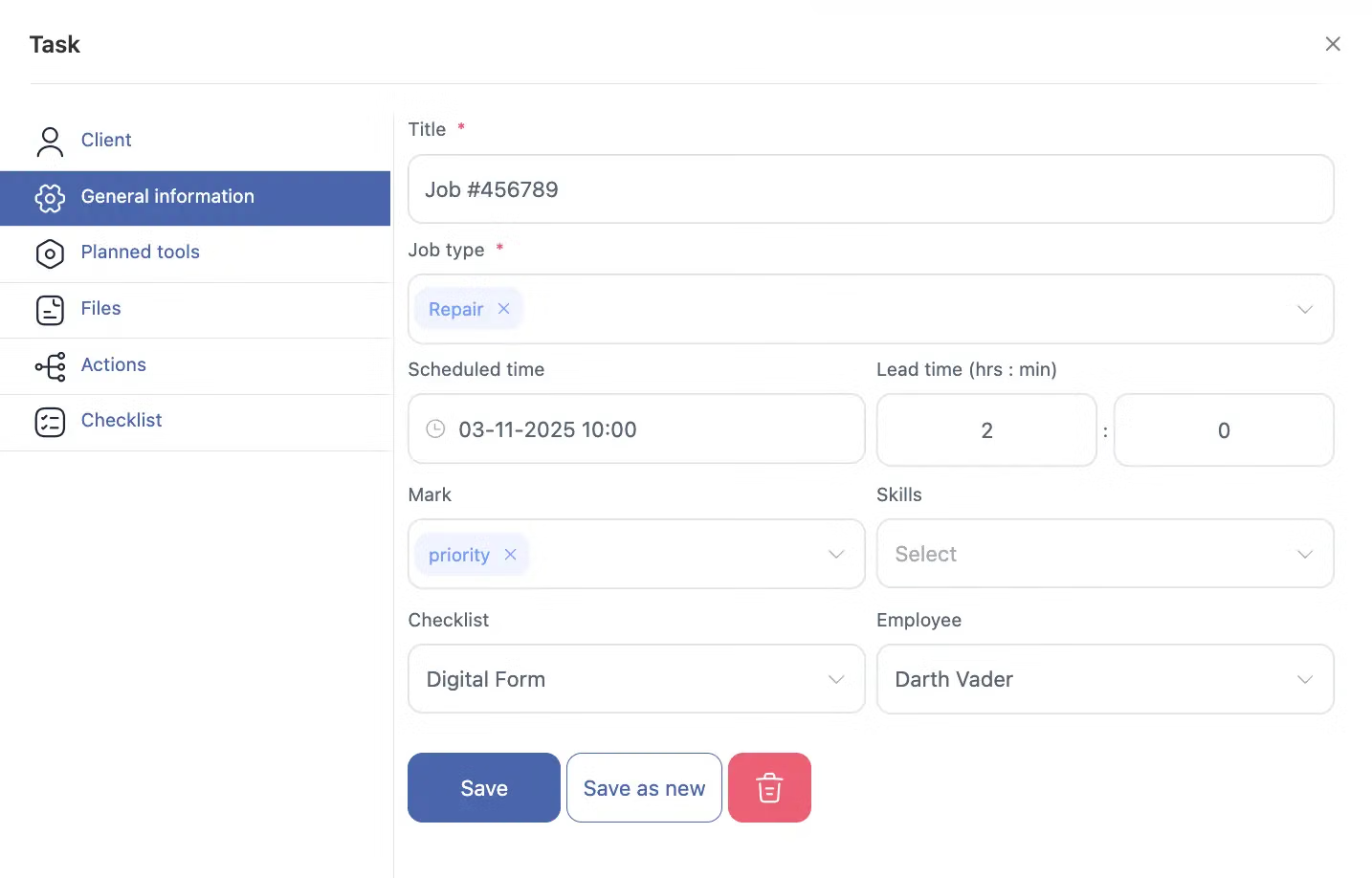
Waste carries obligations. Transfer notes, duty of care records and disposal evidence are required by the regulator rather than by the customer, and they are produced at the least convenient moment: months later, by somebody who was not there.
Start with the Free Plan
No time limits. Get full access to core features and upgrade when you're ready.
Read the full guide to software for hauling and removal crews
Why removal work is priced wrong more often than it is done wrong
Almost nothing goes wrong on a junk removal job technically. Two people and a truck can clear most things. What goes wrong is commercial: the job was quoted from a description over the phone, the reality was half as big again, and the conversation about the difference happened on a driveway with a customer who had already decided what they were paying.
Waste hauling software is bought to fix scheduling and ends up earning its keep on that conversation. When the quote, the description it was based on and a photograph of what was actually there all sit on the same job, the discussion moves from opinion to record.
The parts of the day nobody schedules
The disposal leg
Where a load can go is decided by what is in it. Mixed waste, clean rubble, green waste and anything with an appliance in it each have their own destination and their own gate fee, and the nearest site is often not the one that will take the load. A crew that sorts on the pavement is buying a shorter drive; a crew that does not is paying for the wrong tip twice.
Access
A first floor flat with no lift, a gate too narrow for the truck, a street with a loading restriction until ten: these decide how long a job takes far more than the volume does. They belong on the job card because the crew reads the job card.
The second visit
Returning for what would not fit is the most expensive outcome in this trade, and it is almost always a sizing failure rather than a driving failure. Recording what was left and why gives the office something to price properly next time.
Demolition and strip-out sit differently
Small demolition and strip-out work behaves like construction rather than like removals. The job lasts days, it has trades waiting behind it, and the client is a contractor who is managing a programme rather than a householder clearing a loft.
What that client wants is not a cheaper price, it is knowing on Wednesday that Friday is at risk. A live view of multi-day progress produces that call. Junk removal software that treats every job as a single visit cannot, because it has no concept of a job that is forty per cent finished.
Paperwork as a business asset
Waste is one of the few field trades where the documentation has legal weight of its own. Duty of care obligations, transfer notes and evidence of where material ended up are demanded by regulators, and increasingly by commercial customers who need their own reporting to be defensible.
A firm that can produce that record quickly wins work from firms that cannot. Holding documents and completed forms against the job they belong to turns compliance from an annual scramble into a search. What exactly is required varies by country and by waste stream, and no software vendor should be telling you otherwise.
What Shifton Field Service does here
It plans the jobs, holds what the crew needs at the address, records what happened there and turns the result into hours and reports. A two person operation gets the board, the app, job forms and reporting without paying, permanently; the paid side is invoicing, inventory, location control and the customer portal.
It is not a weighbridge system, a licensed waste tracking platform or an estimating package. Operators generally run it as the workforce layer over whatever their disposal sites, vehicles and accountants already require.
Frequently Asked Questions
Will the crew lose the job in a basement or a shell?
No. Jobs, forms and photographs are held on the phone itself, so a strip-out in a basement or a collection from a property with no service is recorded normally and syncs once the device is back in coverage.
Does it handle the run to the transfer station?
Disposal legs can be planned as jobs in their own right, which puts them on the schedule instead of leaving them as invisible time. Capacity then reflects the day a crew actually works.
What if the job turns out to be bigger than quoted?
The crew records the variation on site, with photographs of what was found. The agreement to the extra volume is captured while the customer is standing there, which is the only moment it can be captured honestly.
Can we attach waste transfer notes to a job?
Documents and completed forms stay attached to the job, so the paperwork for a load is filed with the load rather than in a folder in the cab. What the regulator requires of those records is defined by your own waste authority.
Can a strip-out that runs over several days be tracked?
Yes. A multi-day job stays open with its progress visible, so the contractor waiting behind you can be told on Wednesday that Friday is at risk rather than finding out on Friday.
Can a two truck operation use this?
Two people or fewer pay nothing and are not on a countdown: the board, the app, job forms and reports are all there. What costs extra is invoicing, inventory, location control and the customer portal.
Is this a weighbridge or waste compliance system?
No. It records what your crews collected and the documents they carried, but it is not a licensed waste tracking platform and does not file statutory returns. Businesses use it alongside whatever their disposal sites and regulator require.


Ready to transform your field operations?
Join thousands of field service companies that trust Shifton to run smarter every day.