

Shop Staff Scheduling Software for Independent Retail
A rota an owner can build between customers, published to every phone, with hours recorded as they happen.

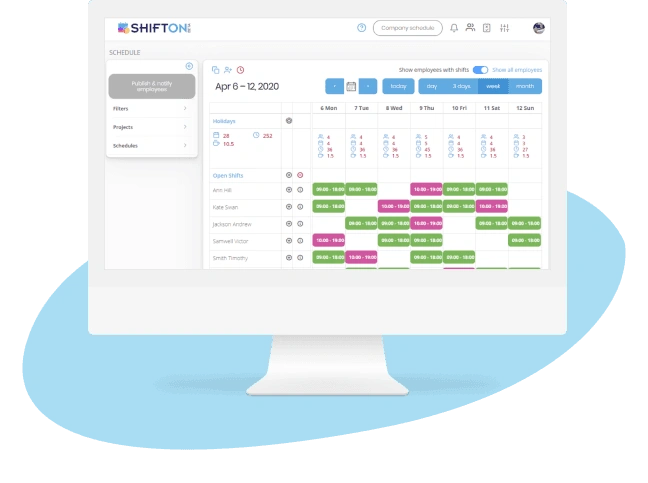
Build it between customers
In an independent shop the person writing the rota is also serving. The tool has to be fast enough to use in the gaps: a saved week, a few edits, publish.
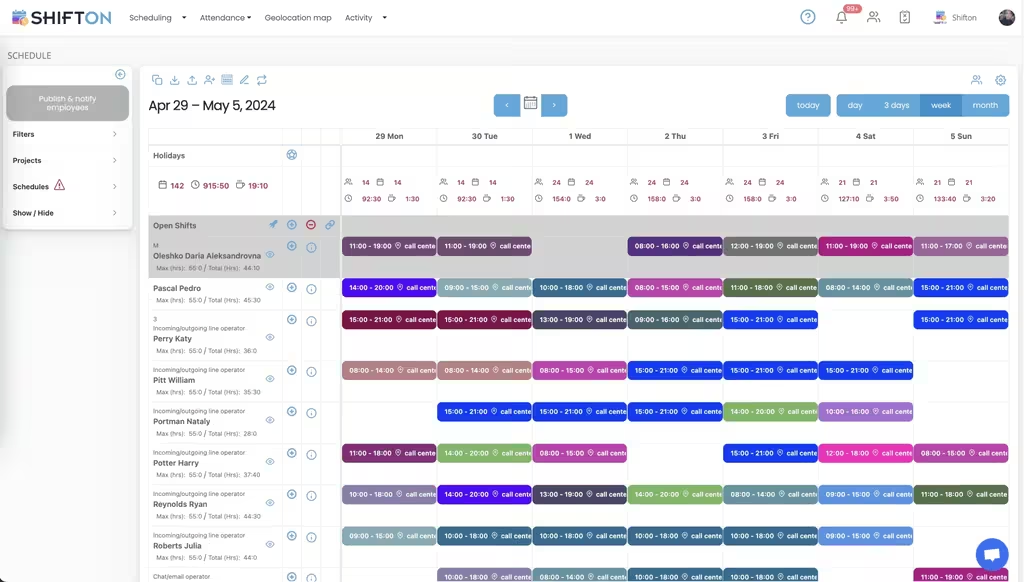
Cover a sick day from the phone
A small shop has no bench. When somebody cannot come in, the answer is usually one of three people, and the fastest route to them is a notification rather than a round of calls.
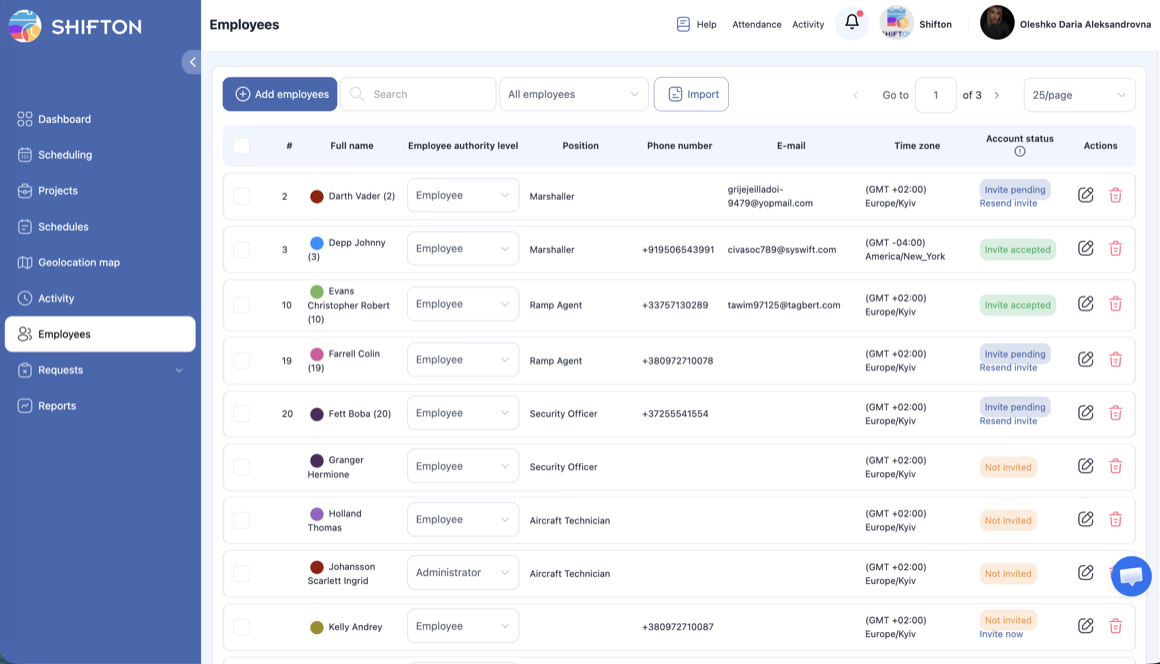
Keep hours without a paper sheet
Clock-in from a phone puts the hours in the system on the day. The planned shift and the worked shift sit together, which is all payroll needs and all a dispute ever asks for.
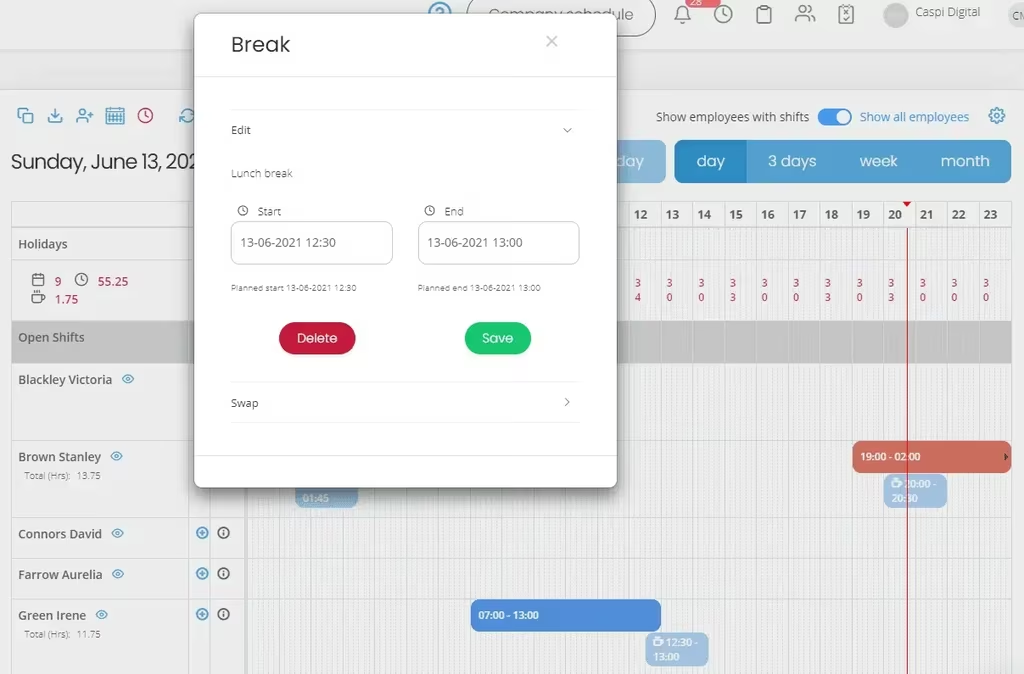
See what the week cost
Wages are the largest controllable cost in most small shops, and usually the least examined. A weekly figure by person and by day is enough to spot the two or three habits that are quietly expensive.
Start with the Free Plan
No time limits. Get full access to core features and upgrade when you're ready.
The rota problem in a small shop
Independent retail has a scheduling problem that large chains do not: the person doing the scheduling has no time to schedule. They are on the shop floor, they are ordering stock, and the rota gets written on a Sunday evening in a notebook because that is the only quiet hour available.
Everything that follows comes from that. The rota lives in one place, usually a wall or a phone photo. Changes are verbal. Hours are remembered. And the whole system works fine until two people are off in the same week.
Speed is the feature
For a shop with four staff, the sophistication of the scheduling engine is irrelevant. What matters is how long it takes to produce next week and how reliably it reaches everybody.
A saved template answers the first. Most small shops repeat the same shape of week with small edits, so the honest workflow is to build the good week once, apply it forward and change the two or three things that differ.
Twenty minutes, not two hours.
Publishing beats telling
A verbal change on a Tuesday is a no-show on a Saturday. Publishing to phones with read confirmation is the smallest possible fix: the owner can see who has opened the week, and chase the one person who has not, instead of assuming.
No bench, no slack
A shop with four people has no spare capacity by definition. When somebody cannot come in, the options are known, small and usually the same three names, which is exactly why the phone tree feels adequate.
The reason to replace it is not speed alone. It is that a notification to everybody who can work the shift reaches the person who is free but never gets asked, and over a few months that spreads the extra hours instead of concentrating them on whoever answers first.
Hours without paper
Small shops rarely have a payroll dispute, right up until they do. The usual trigger is a shift somebody stayed late on and nobody wrote down, or a break that was taken but not recorded. Both are small amounts and neither is really about the money.
Recording clock-in and clock-out on the day, with breaks kept separate, removes the class of argument entirely, and it takes nothing more than a phone. There is no terminal to buy and nothing to install in the shop.
Part-timers and their other lives
Small shops are staffed by people with other commitments: students, parents, somebody with a second job. Letting them mark availability before the rota is built prevents the round of requests that otherwise follows publication, and it makes the owner look organised rather than inflexible.
The cost nobody looks at
Wages are usually the largest controllable cost in a small shop and the one least often examined, because the figure only appears once a month and by then the week is gone.
A weekly total by person and by day is enough to expose the two habits that cost most: doubling up on quiet mornings out of caution, and a closing shift that runs fifteen minutes over every single day because it was scheduled to the minute the door locks.
What it costs
Shifton is free for up to 10 staff with no time limit and no credit card, which covers most independent shops outright. Scheduling, the basic time clock, the mobile app, unlimited schedules and locations and reporting are all included. Beyond that, modules are added one at a time from $0.50 per employee a month with a trial of up to 60 days on each.
Frequently Asked Questions
Is this suitable for a shop with three or four staff?
Yes. The free plan covers up to 10 people with no time limit, and nothing has to be configured beyond adding the staff and building the first week.
How long does the first rota take to build?
The first one takes as long as writing it normally does. After that it is saved as a template, so the following weeks are edits rather than rebuilds.
Can staff see their shifts on their own phones?
Yes, through the mobile app for iOS and Android. Read confirmation shows the owner who has opened the published week and who has not.
Can two people swap a shift without asking me first?
They can arrange it between themselves, but the change only takes effect once it is approved. The published rota never changes without the owner agreeing.
Do I need a terminal or a card reader for clock-in?
No. The basic time clock works from the mobile app or a browser on any device. Nothing has to be installed in the shop.
What does it cost once we grow past ten people?
Paid modules start at $0.50 per employee a month and are chosen individually rather than as a bundle, each with a trial of up to 60 days.





Write next week once
Free for up to 10 staff, with a saved template, cover that fills from the phone and hours you can hand to payroll.