Gusto vs ADP vs Paychex: Which Is Best?
A real-data comparison of Gusto, ADP, and Paychex on pricing, payroll features, and HR tools - plus a fourth option that costs less.
Gusto vs ADP vs Paychex: What This Page Covers
Choosing a payroll platform used to mean picking between two names: ADP or Paychex. Gusto changed that. It came in with published pricing, faster setup, and a design built for people who are not HR professionals. Now the payroll software comparison has three serious options - and they solve the same compliance problem in genuinely different ways.
This page covers the gusto vs adp and paychex vs gusto comparisons using publicly available pricing and documented product features. We cover what you actually pay at 20 and 50 employees, where each platform's payroll processing falls short, and which HR features come standard versus locked behind upgrades. We also include Shifton as a fourth option - relevant if scheduling and workforce management need to connect to payroll in the same system.
If you're building a broader picture of HR tooling options, the HR software guide for small businesses covers how payroll, scheduling, and HR administration fit together.
Gusto: Full-Service Payroll for Small and Mid-Sized Businesses
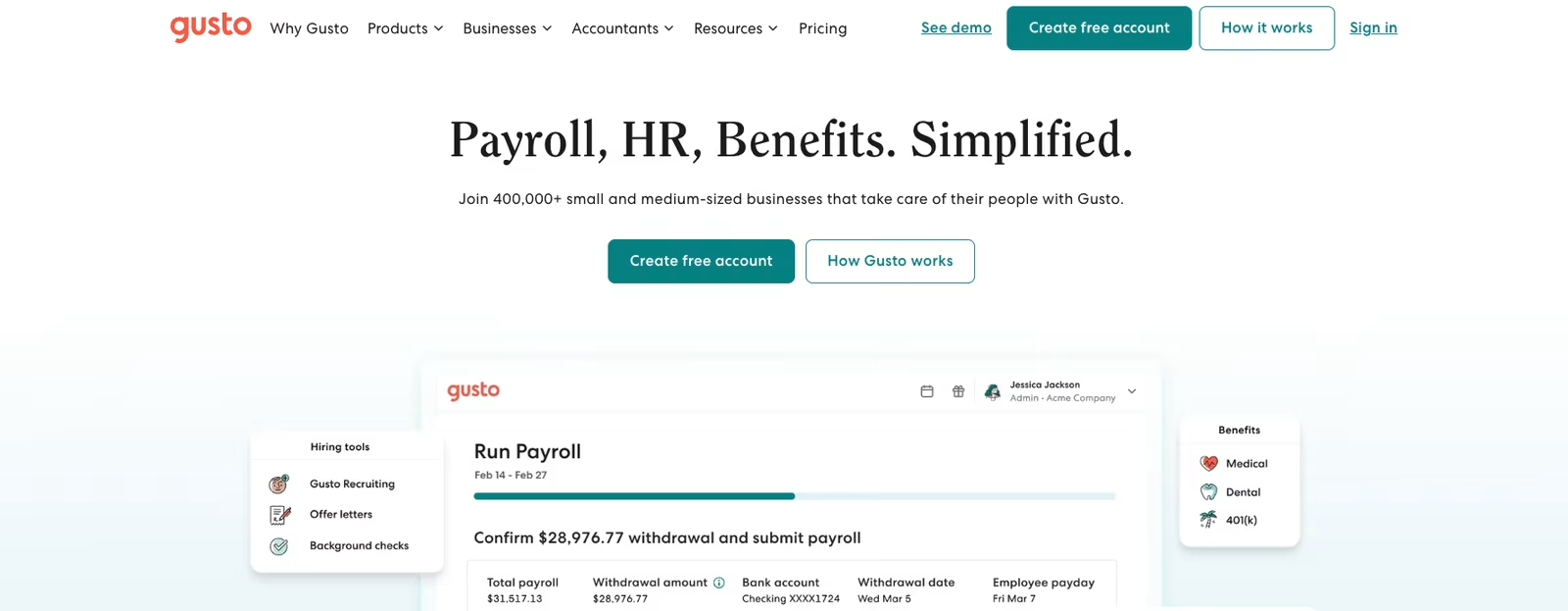
Gusto entered the payroll market targeting small business owners running payroll themselves - no HR department, no dedicated payroll specialist. The platform handles automated tax calculation, federal and state tax filing, W-2 and 1099 processing, direct deposit, and new hire reporting. These are included at every pricing tier.
Pricing is publicly listed, which is unusual in this category. The Simple plan runs $40/month plus $6 per person per month. At 20 employees that comes to $160/month. The Plus plan is $80/month plus $12 per person - at 20 employees, $320/month. Plus adds performance review tools and priority support. The Premium tier requires contacting Gusto for a custom quote.
Benefits administration is one of Gusto's clearest advantages over legacy payroll providers. Health, dental, vision, FSA, HSA, and 401(k) are managed within the same platform in most US states. New hires complete onboarding paperwork through a self-service portal without HR involvement. The limitations are scope: Gusto operates only in the United States, and it does not include scheduling or shift management tools.
ADP: Payroll at Enterprise Scale with a 75-Year Track Record
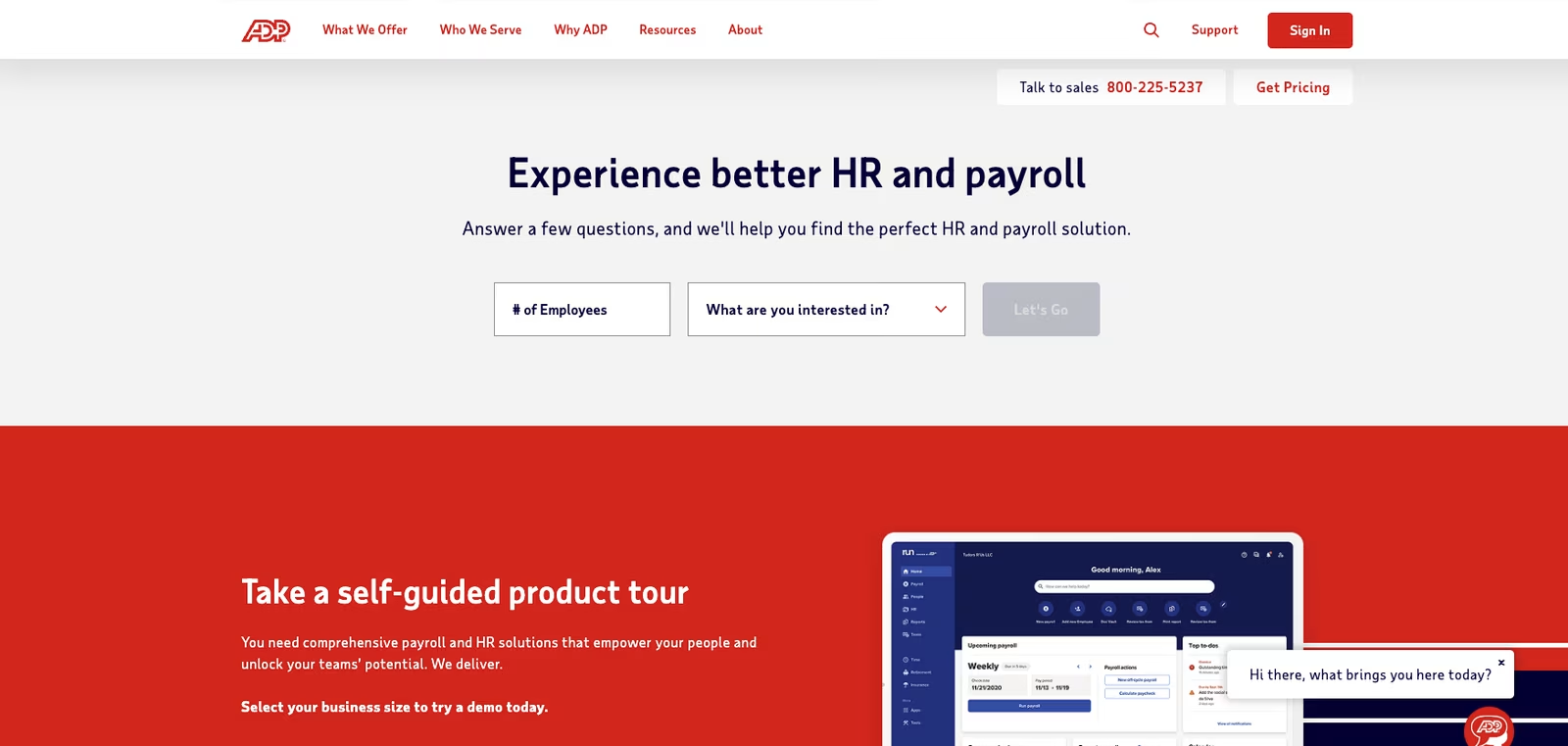
ADP has been processing payroll since 1949. That history translates into a deep compliance database, a large network of HR professionals, and a product line that runs from one-person startups to Fortune 500 companies. ADP Run targets businesses under 50 employees. ADP Workforce Now handles mid-market companies (roughly 50-1,000 employees). ADP Vantage and GlobalView serve larger, multinational operations.
ADP does not publish pricing for any of its products. You need to contact their sales team for a quote. Reported third-party estimates for ADP Run suggest costs that typically start above $59/month plus a per-employee fee, but the actual number varies based on which modules you add: time tracking, HR advisory, benefits administration. The adp vs paychex pricing question is genuinely difficult to answer precisely because neither company publishes rates on their website.
The trade-off with ADP is complexity. The platform is built for businesses with someone managing it - a dedicated HR or payroll administrator. The interface has improved over the years but still requires more navigation than Gusto. ADP Workforce Now, in particular, has a learning curve that small business owners consistently note in reviews. For companies where compliance depth matters more than ease of use, that trade-off often makes sense.
Paychex: HR and Payroll with Built-In Retirement Administration
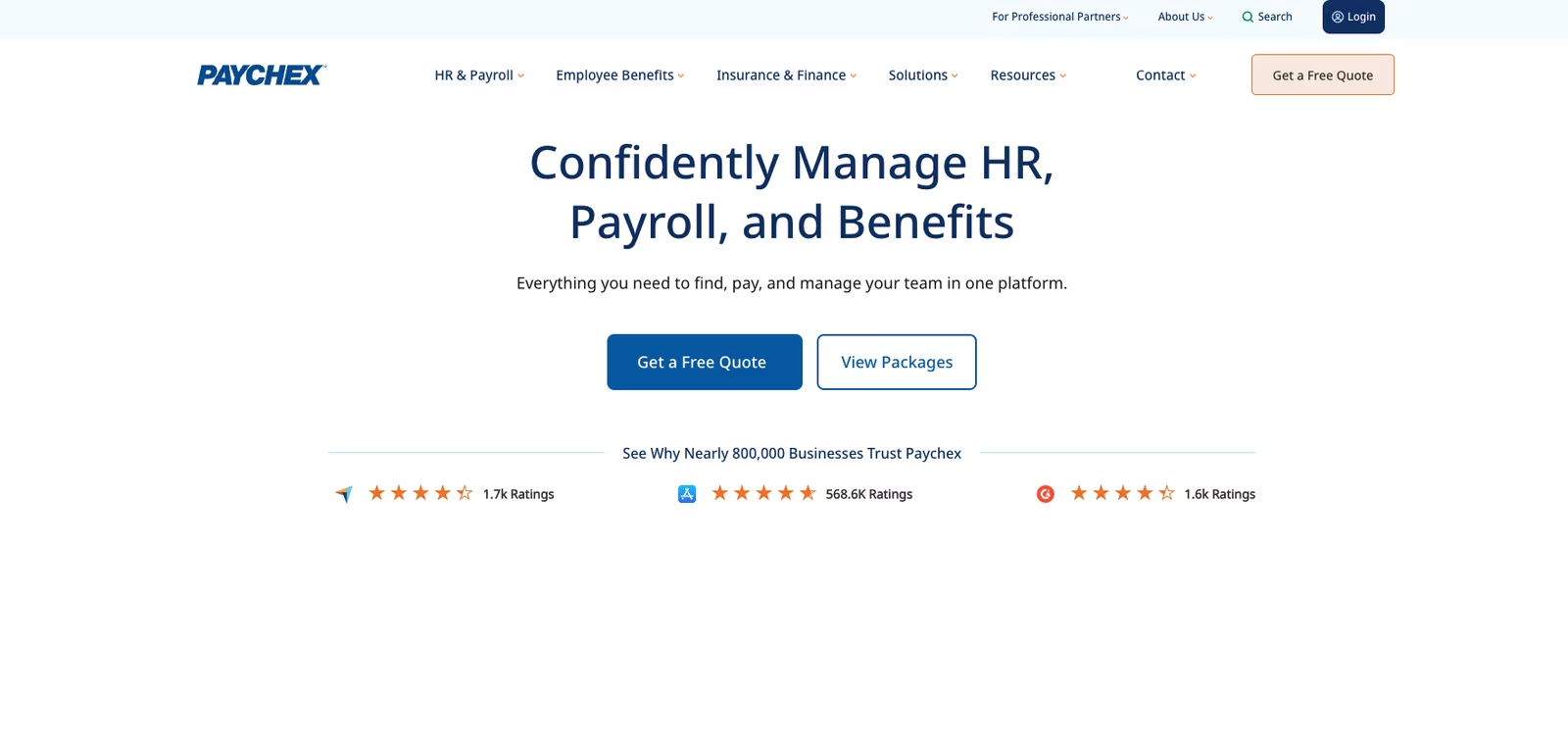
Paychex serves roughly 730,000 businesses across the United States and Europe. Paychex Flex is the main product - a tiered platform with payroll at the core and HR tools layered on top. The Flex Essentials tier covers basic payroll, direct deposit, and new hire reporting. Higher tiers (Flex Select, Flex Pro) add HR advisory services, benefits administration, and dedicated support from licensed HR professionals.
Paychex lists a starting price of approximately $39/month plus $5 per employee for its entry-level tier. The paychex vs gusto pricing comparison at 20 employees puts Paychex Essentials at roughly $139/month versus Gusto Simple at $160/month - comparable at the base. The real difference appears in what's included: Gusto bundles benefits administration tools from the entry tier, while Paychex benefits management typically requires a higher-tier plan or an add-on.
Retirement plan integration is where Paychex separates itself from both Gusto and ADP at small-to-mid business sizes. Paychex Retirement Services administers 401(k) plans directly, connecting retirement deductions to payroll without a third-party integration. For businesses prioritizing employee retirement benefits alongside payroll, this is a meaningful operational difference. The interface has been updated but reflects the platform's age more than Gusto's newer design does.
Gusto vs ADP vs Paychex Pricing: What Teams Actually Pay
Comparing payroll software pricing is harder than it should be. Gusto publishes its rates. ADP publishes nothing - you get a quote. Paychex lists a starting number that often understates what most businesses actually pay once they add the features they need. Here is what the available data shows for two common team sizes.
For a team of 20 employees: Gusto Simple comes to $160/month ($40 base + $6x20). Paychex Essentials comes to approximately $139/month ($39 + $5x20) at the published starting rate. ADP requires a sales conversation, and third-party cost reports typically place ADP Run for 20 employees in a similar or higher range than Gusto, depending on module selection.
At 50 employees: Gusto Simple reaches $340/month ($40 + $6x50). Gusto Plus would be $680/month. Paychex at 50 employees lands near $289/month at the Essentials starting price, but most businesses at this size need features that push them to higher tiers. ADP at 50 employees typically shifts into ADP Workforce Now territory, where pricing is fully custom and implementation adds to the initial cost commitment.
When you run the gusto vs paychex pricing numbers side by side, the gap widens considerably at higher tiers, and neither publishes the complete picture. The adp alternatives and gusto alternatives searches lead to the same practical question: is there a platform with published pricing that covers both payroll and scheduling? That is what the Shifton section below covers.
Payroll Processing: Tax Filing, Multi-State, and Compliance Depth
All three platforms cover the core payroll requirements: automated tax calculation, federal and state tax filing, W-2 and 1099 processing, direct deposit, and pay stub generation. The differences are in coverage depth and compliance expertise.
Gusto files taxes automatically in all 50 US states and handles new hire reporting automatically. Compliance tools flag potential issues before payroll runs. Gusto recently expanded to cover contractor payments in some international markets, but employee payroll remains US-only. For most small businesses operating in a single state, Gusto's compliance coverage is sufficient.
ADP's compliance depth is the strongest of the three by a significant margin. Processing payroll for over 1 million businesses globally means its tax tables and compliance rules are updated continuously across jurisdictions. ADP handles US multi-state payroll, certified payroll for government contractors under Davis-Bacon, and international payroll through ADP GlobalView. Every payroll platform in the US must meet the same baseline federal employment tax obligations set by the IRS - where platforms diverge is in how much compliance guidance and automation they layer on top of those minimums. For companies with operations across multiple states or internationally, ADP has a genuine advantage that Gusto and Paychex do not match at this scale.
Paychex covers all 50 states plus local tax requirements - relevant for businesses in cities with local income taxes (Philadelphia, New York City, Columbus). The platform includes built-in garnishment management and handles certified payroll for prevailing wage projects. The HR advisory tier provides access to licensed HR professionals for compliance questions, practical for businesses navigating complex situations without an internal HR team.
Multi-state payroll is where the gap between platforms becomes most visible in practice. Each state where you employ someone creates a new employer tax registration, a state unemployment insurance account, and sometimes local tax obligations. A Texas-based company that hires one remote employee in California now has California payroll tax exposure - including SUI at California rates. Gusto handles the calculation automatically once setup is complete, but the employer must complete state tax registration before payroll runs. ADP's implementation team guides this process. Paychex will manage state registrations for you on higher tiers - a practical time-saver that most sub-50-person teams underestimate until they hit it.
Benefits Administration and HR Tools
Gusto's benefits offering is its clearest differentiator from legacy payroll providers. Health, dental, vision, life insurance, FSA, HSA, and 401(k) are administered within the same platform in most US states. The broker license Gusto holds in many states means small businesses can access group health benefits without establishing a separate broker relationship. Benefits enrollment connects directly to payroll so deductions update automatically when coverage changes.
ADP's benefits options vary significantly by product tier and company size. Small businesses on ADP Run can access a benefits marketplace, but health insurance administration often requires working with a separate broker. ADP TotalSource - the PEO option - provides co-employment and broader benefits access, but co-employment changes the legal employment relationship in ways that affect HR control. In bamboohr vs adp discussions, the benefits integration complexity on ADP's side is a recurring theme.
Paychex handles benefits through Paychex Insurance Agency, which connects to the payroll platform but operates as a separate service. The 401(k) integration is the strongest in this comparison: Paychex Retirement Services administers plans directly, and retirement deductions sync with payroll without manual reconciliation. HR advisory from licensed professionals (included in Flex Select and Flex Pro) is more hands-on than what Gusto or ADP include at comparable price points. For smaller companies evaluating zenefits vs gusto and similar alternatives, Paychex's HR guidance layer offers something the others do not replicate at this tier.
One thing none of these platforms makes obvious up front: employers running 401(k) plans carry fiduciary responsibilities under ERISA regardless of which provider administers the plan. How tightly the plan administration integrates with payroll affects how easy it is to meet those obligations on time - which is why Paychex's same-vendor retirement integration matters more than it might seem.
Integrations and Software Ecosystem
Gusto integrates with 100+ third-party applications. Accounting integrations with QuickBooks, Xero, and FreshBooks sync payroll data automatically. Time tracking tools - TSheets, Homebase, When I Work - push hours into payroll without manual entry. Integration quality is uneven: QuickBooks sync is reliable, some smaller integrations require manual field mapping on initial setup.
ADP's integration marketplace lists 300+ connected applications across HR, time tracking, benefits, and accounting. The breadth is the advantage for mid-to-large companies with established software stacks. Gusto vs rippling comparisons often focus on integration architecture - Rippling is built around a device management plus HR integration model that is a different category than either Gusto or ADP. For pure payroll integration breadth, ADP has the largest ecosystem of the three.
Paychex integrates with major accounting platforms and time tracking tools. The integration experience is functional but lacks the polish of Gusto's native connectors. One practical advantage: Paychex's own time tracking tool (Paychex Flex Time) integrates with payroll without configuration because they are the same vendor. If you use industry-specific scheduling or field service software, verify Paychex compatibility before committing to the platform.
Why Shifton Stands Out: Payroll and Scheduling in One Platform
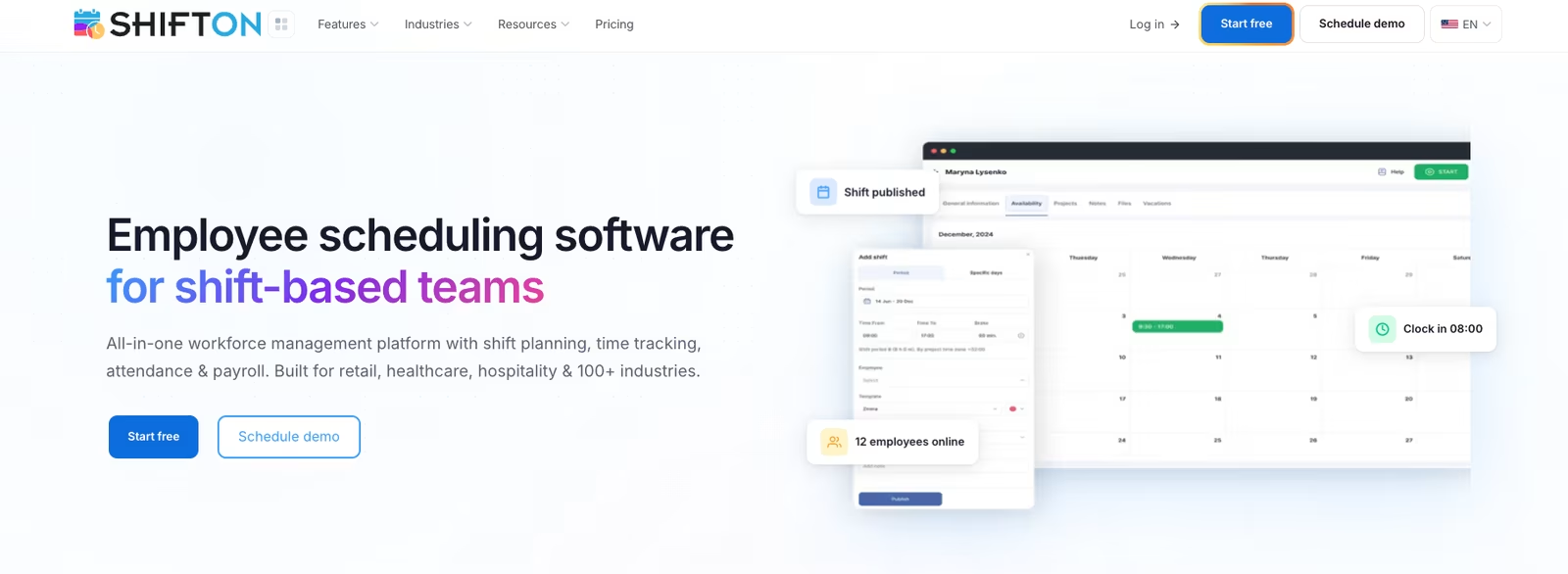
Gusto, ADP, and Paychex are payroll-first platforms. They handle US compliance well. What none of them handles is the scheduling, shift management, and workforce coordination that many businesses run alongside payroll. That creates a workflow gap: you buy payroll from one platform and scheduling from another, then export hours between them every pay period.
Shifton closes that gap with transparent, modular pricing. The base plan runs $1.00 per user per month - covering scheduling and team management; time tracking is the Attendance module at $1.00. Adding the payroll management module costs an additional $0.50 per user per month, bringing the total to $1.50/user/month. For a team of 20, that is $30/month for scheduling plus payroll in one system. Compare that to Gusto Simple at $160/month (no scheduling included) or Paychex Essentials at approximately $139/month (also no scheduling included). Annual billing cuts the cost by 20%.
Shifton operates in 40 languages and covers businesses across 60+ industries globally. For companies with multilingual staff or international teams, this is relevant where Gusto's US-only model is not. The 60-day trial on paid plans allows a real test before committing. For companies exploring adp alternatives that include workforce management alongside payroll, Shifton handles both without requiring a second platform and a data sync between them.
Gusto, ADP, Paychex, or Shifton: Which Fits Your Business?
Gusto is the strongest pick for US-based small businesses wanting modern payroll with benefits administration in one platform. The published pricing, clean onboarding, and built-in tax compliance make it easier to manage than either legacy provider at under 50 employees. The ceiling is scope: no scheduling, no international payroll, US-only operations.
ADP makes sense for mid-to-large businesses with complex multi-state payroll, certified payroll requirements for government contracts, or global operations through ADP GlobalView. The complexity and quote-only pricing are real friction points. But for businesses above 100 employees with serious compliance requirements, ADP Workforce Now has a depth that Gusto and Paychex do not match.
Paychex fits growing businesses that want retirement plan administration tightly integrated with payroll, or those that want access to licensed HR professionals without hiring an internal HR team. The Flex Pro tier includes dedicated HR support that is more hands-on than what Gusto or ADP provide at comparable pricing levels.
Shifton is the right fit when scheduling and payroll need to share the same data in one system. Instead of exporting hours from a scheduling tool into Gusto or ADP each pay period, Shifton handles the complete loop: build the schedule, track hours, calculate payroll - all within one platform. At $1.50/user/month with both modules, it undercuts all three competitors for businesses where workforce scheduling is central to daily operations.
Customer support is worth factoring in - it rarely shows up in comparisons until you have a payroll problem on the 15th. Gusto offers phone and chat support on all plans, with priority access on higher tiers, though response times during W-2 season in January get mixed reviews. ADP provides dedicated implementation support and ongoing account management on mid-to-enterprise tiers; smaller ADP Run customers report longer average wait times. Paychex assigns dedicated payroll specialists to accounts on Select and Pro tiers - the most hands-on model in this comparison, and it's priced to reflect that. For businesses that want a named person to call when something goes wrong, Paychex has the edge over Gusto at this level.
The Bottom Line
Gusto publishes its pricing, onboards fast, and covers payroll plus benefits well for small US businesses. ADP handles complex, multi-state, and international payroll at a depth that neither Gusto nor Paychex reaches - but the opacity of pricing and the steep learning curve are real costs. Paychex sits between them: reliable, established, with stronger retirement plan integration than Gusto and a more accessible interface than ADP's enterprise products.
None of the three was built for businesses where scheduling and payroll need to feed the same data without a manual export step. If you run shifts, dispatch crews, or track variable hours - and you need those hours to flow directly into payroll - Shifton handles both at a per-user price that comes in below Gusto's per-employee rate.
The payroll software comparison ultimately depends on what you are actually solving. US payroll compliance at under 50 employees: Gusto is the easiest entry point. Compliance depth at scale: ADP. Payroll plus HR advisory plus retirement plan administration: Paychex. Payroll plus scheduling in one transparent-pricing platform: Shifton.
Frequently Asked Questions
Is Gusto cheaper than ADP?
For small businesses, Gusto is generally cheaper. Gusto Simple starts at $40/month plus $6 per person - at 20 employees that is $160/month. ADP does not publish pricing, but third-party cost reports for ADP Run typically place it above $59/month plus per-employee fees, landing in a similar or higher range than Gusto depending on which modules you select.
Does ADP publish its pricing?
No. ADP does not list prices for any of its products - ADP Run, ADP Workforce Now, or ADP Vantage. You need to contact their sales team for a quote. Pricing depends on company size, modules selected, and contract terms. This is one of the practical frustrations in any adp vs paychex or gusto vs adp comparison - you cannot compare numbers without going through the sales process.
Which payroll software is best for small businesses under 20 employees?
Gusto is the most commonly recommended payroll platform for businesses under 20 employees, because of its published pricing, straightforward interface, and built-in benefits administration. Paychex Flex Essentials is a close competitor on price at approximately $39/month plus $5 per employee. ADP Run is available at this size but tends to be more complex to configure than a sub-20-person business typically needs.
Can Shifton handle payroll?
Yes. Shifton includes a payroll management module that calculates payroll based on tracked hours and configured pay rules. The module costs $0.50 per user per month on top of the $1.00 base plan, bringing the total to $1.50/user/month for scheduling plus payroll combined. For businesses that also need shift scheduling - which Gusto, ADP, and Paychex do not offer - Shifton handles both without requiring a separate integration between systems.
Which payroll software is best for businesses with employees in multiple states?
ADP Workforce Now handles multi-state payroll at the greatest compliance depth of the three platforms. It covers all US state and local tax jurisdictions, including cities with municipal income taxes, and manages the filing calendar across jurisdictions. Gusto processes payroll in all 50 states but requires you to complete employer tax registration in each new state before payroll can run there. Paychex covers local tax requirements and will manage state tax registrations as part of setup on higher tiers. For businesses with staff across more than two or three states, or with government contract certified payroll requirements, ADP has a depth advantage that Gusto and Paychex do not match at comparable price points.
Is there a payroll platform that also handles employee scheduling?
Gusto, ADP, and Paychex are all payroll-first platforms - none of them includes shift scheduling tools. Businesses that run variable-hour teams end up managing scheduling in one app and payroll in another, with a manual hours-export step between them each pay period. Shifton is built to close that gap: the base plan ($1.00/user/month) covers scheduling and team management, the Attendance module adds time tracking for $1.00/user/month, and the payroll module adds $0.50/user/month for a combined $2.50/user/month. Tracked hours flow directly into payroll without a separate integration or export step.
Want payroll and scheduling in one platform?
Shifton covers both at $1.50/user/month with a 60-day trial. You pay only for the modules you switch on, and there is no separate integration to maintain.