

Stadium Staff Scheduling for Matchday Operations
Stewards, hospitality, cleaning and build crews planned by zone, checked in on site, with the matchday costed afterwards.
Plan by zone and by phase
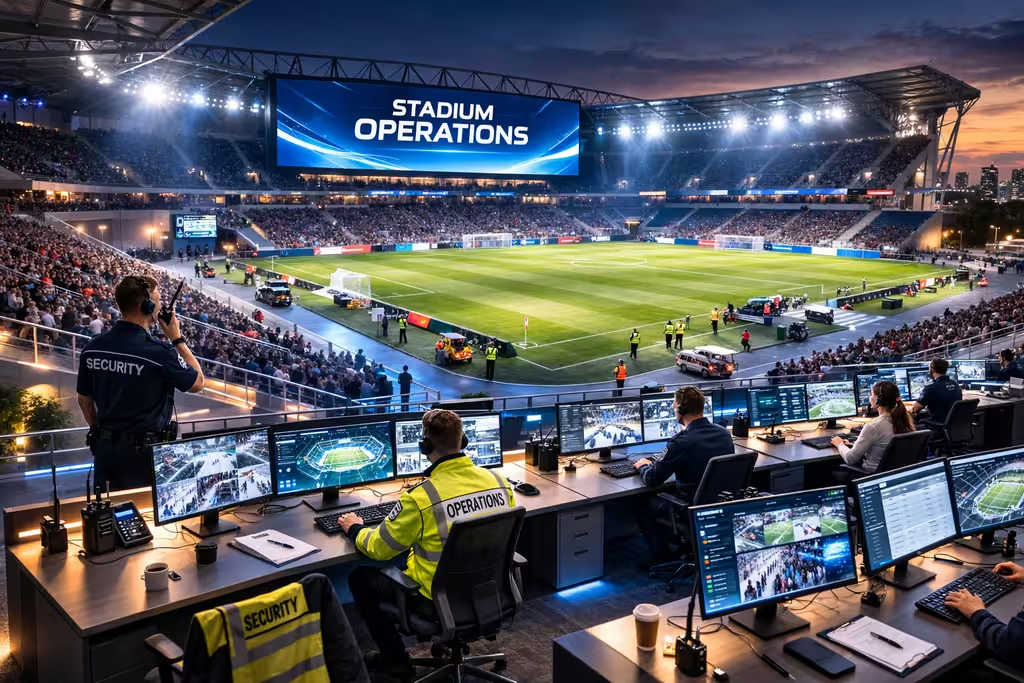
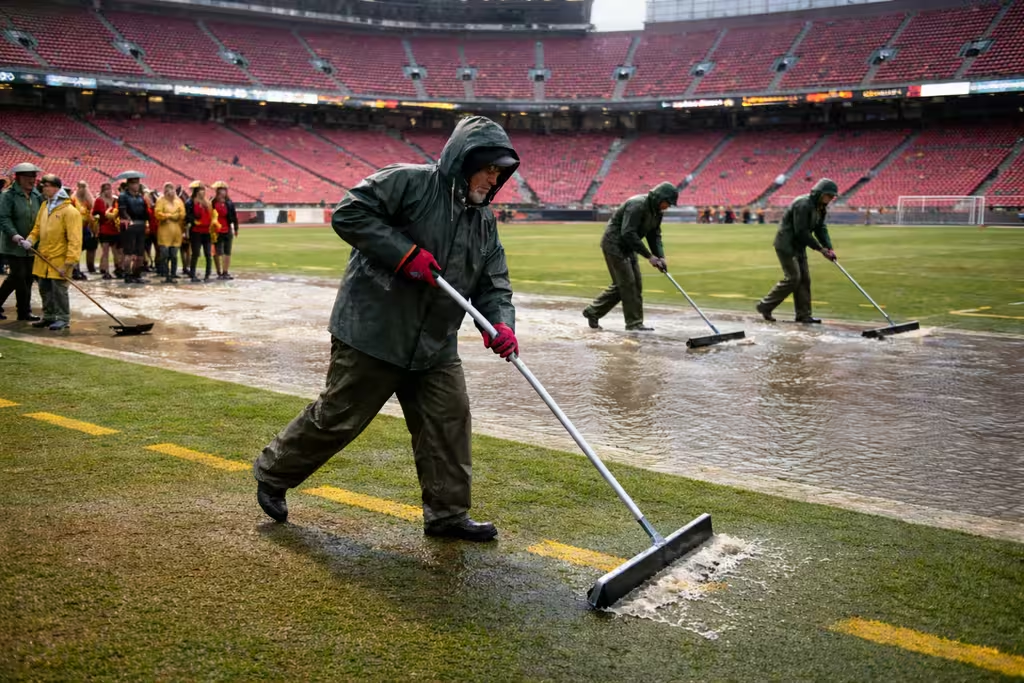
A matchday is several operations sharing a building. Turnstiles, stands, hospitality, pitchside and the post-match clean each have their own window, and planning them as one shift hides every gap.
Brief a large casual workforce
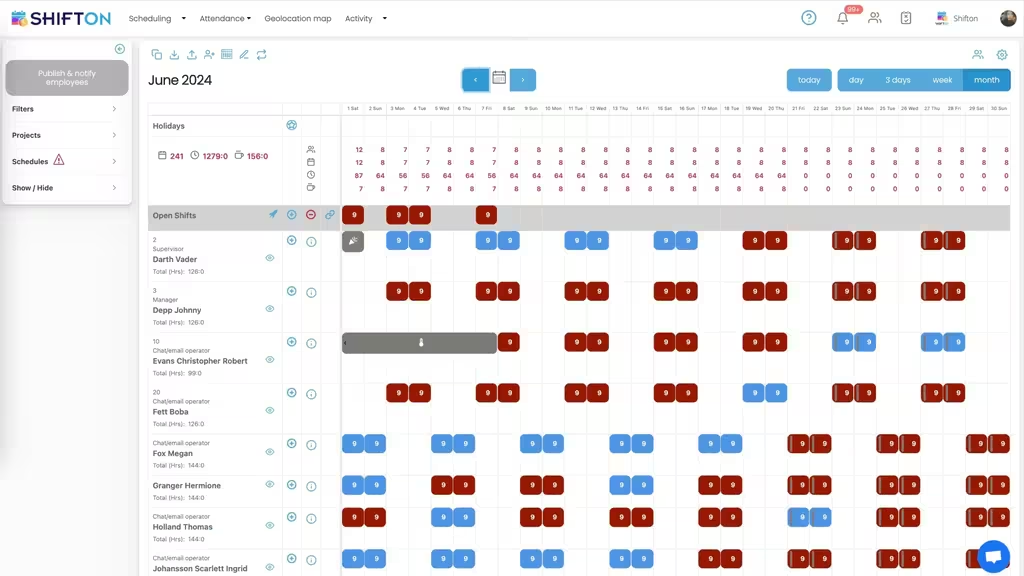
Most matchday staff work a handful of days a year. They need their shift, their zone and their call time on their phone, and the operations manager needs to know it arrived.
Check hundreds of people in
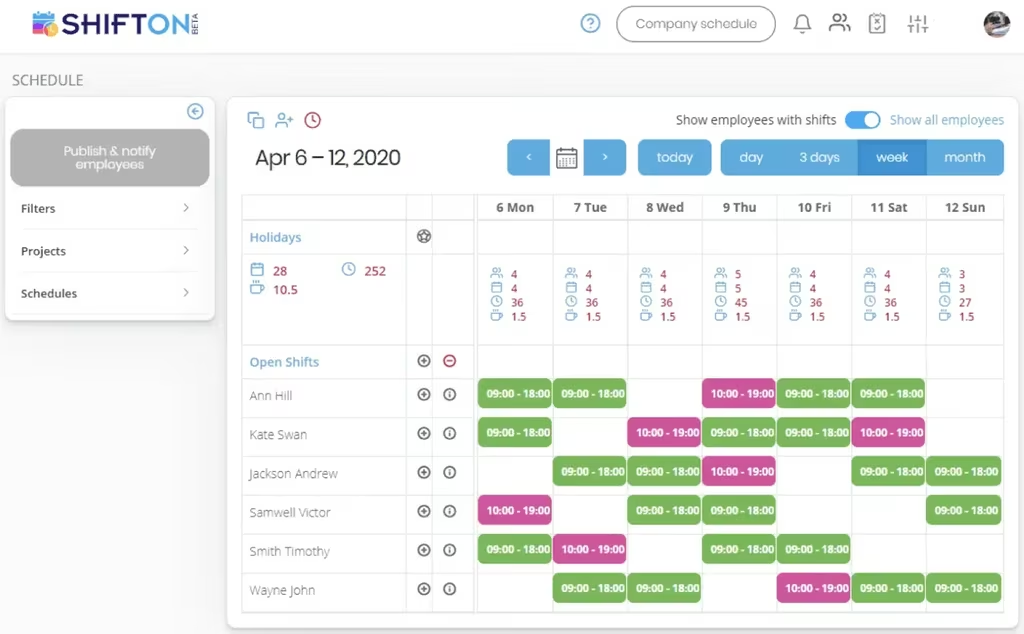
Arrival is the number the whole day depends on. Check-in from a phone, zone by zone, tells the operations room who is actually in the building while there is still time to move people.
Cost the matchday afterwards
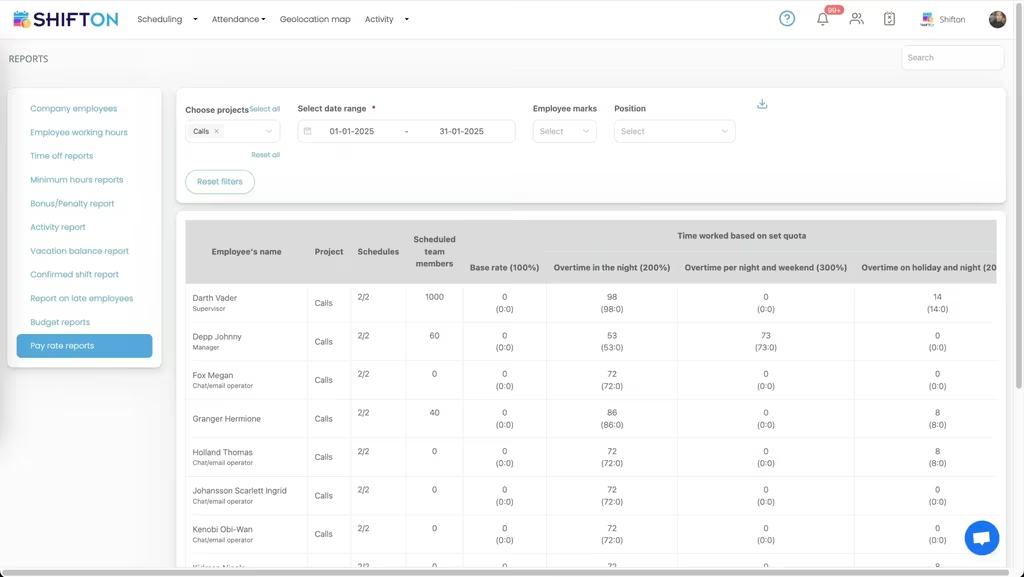
Event budgets are settled after the fact, and labour is the line that moves most. Hours by zone and by phase turn a single wage figure into something comparable between fixtures.
Start with the Free Plan
No time limits. Get full access to core features and upgrade when you're ready.
What stadium operations software usually means
The phrase normally covers the crowd: ticketing, access control, accreditation, incident logging, the systems that decide who gets into the building and what happens if something goes wrong. Every stadium has those and none of them plan the workforce.
Matchday staffing is a separate discipline. Several hundred people, most of them casual, arriving in waves at different gates for shifts that overlap unevenly, in a building where the person who needs the headcount is walking rather than sitting.
Zones and phases
A stadium is not one venue, it is a dozen small ones. Turnstiles need people before anybody else. Stands need stewards for the whole event. Hospitality starts early and finishes late. Pitchside is small and specialised. The post-match clean happens when everybody else has gone.
Planning that as a single matchday shift is how a stand ends up two stewards short while four people stand at a gate that closed an hour ago. Zones as projects and phases planned separately are what make the shortfall visible before it happens.
Build, event, clean. Then every zone inside each.
The turnaround nobody plans
Post-match cleaning is the phase most often treated as an assumption, and it is the one most likely to be staffed by people who have already worked eight hours. Scheduling it explicitly is the only way that fatigue is visible before the shift starts.
A workforce that works six days a year
Most matchday staff are casual. They do not know the building well, they will not remember what they were told last season, and they need their zone, their gate and their call time on their phone rather than in an email they never opened.
Notes attached to the shift carry that, and read confirmation carries the other half: knowing that the briefing arrived rather than assuming it did. With a workforce this size, the difference between assumed and confirmed is measured in unstaffed positions.
Arrival is the operational number
Everything on a matchday hangs on how many people are actually in the building at a given moment, and that number is not the number who were booked. There is always a gap and it is never evenly distributed across zones.
Check-in from a phone, read by zone, turns that into a live picture. An operations room that can see thirty people booked and twenty-two arrived at the north stand at half past one can still move people. The same information at three o clock is a report.
Agency and in-house together
Almost every stadium mixes its own staff with agency stewards and contracted cleaning. Keeping them as separate departments on the same plan preserves both things that matter: the operations manager sees the whole building, and the payroll export holds only the club employees.
Costing a fixture
Matchday labour is usually reconciled from a single invoice total plus a payroll line, which makes comparison between fixtures almost impossible. Grouping hours by zone and by phase turns it into something a finance director can use.
A cup tie with a smaller crowd that cost the same as a league fixture is a staffing model question. It only becomes a question once the two can be laid side by side.
Where to start
Shifton is free for up to 10 people with no time limit, which is enough to run the core operations team before extending to the casual workforce. Scheduling, the mobile app, the basic time clock and reporting are included, and modules are added one at a time from $0.50 per employee a month with a trial of up to 60 days.
Frequently Asked Questions
Does this handle ticketing or access control?
No. Ticketing, accreditation and access control systems handle the crowd. Shifton schedules the workforce: stewards, hospitality, cleaning, build and pitchside teams, and records their hours.
Can I plan stewards by zone?
Yes. Each zone or area is a project, so an operations manager can look at turnstiles alone, at one stand, or at the whole stadium. Reports group recorded hours the same way.
How do hundreds of casual staff receive their shift?
Through the mobile app, with the gate, zone, call time and supervisor attached to the shift as notes. Read confirmation shows who has opened it, which matters when most of the workforce works only a few days a year.
How do people check in without a terminal?
Check-in works from the mobile app on site. For venues that need check-in tied to a location, work location control is available as a paid module.
Can I compare one fixture with another?
Reports group hours by zone, phase and period, so a big fixture can be read against a routine one instead of both arriving as a single wage figure.
Is there a free plan for a small arena?
A team of 10 or fewer runs at no charge with no time limit: the rota, the mobile app, the basic clock and reports. Beyond that, modules cost $0.50 per employee a month, each with a trial of up to 60 days.






Plan the next fixture by zone
Free for up to 10 people, with zones as projects, check-in on site and the matchday costed afterwards.