

Veterinary Scheduling Software for Vets, Techs and Reception
Roster vets, vet techs and reception around real availability, cover on-call and emergency shifts, and run the whole clinic schedule from one system.

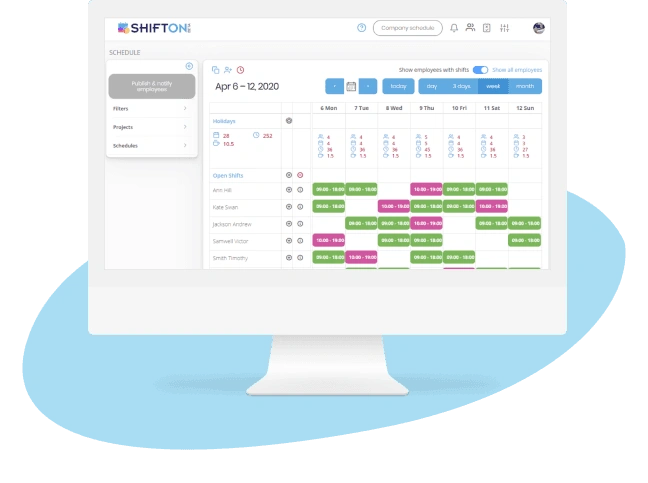
Build and Publish the Weekly Clinic Rota
A practice week runs on overlapping roles rather than one flat shift. The weekly grid puts every vet, technician and receptionist on their own row with colour-coded shifts and exact start and end times, so a gap in consulting or surgery cover is obvious before the rota goes out.
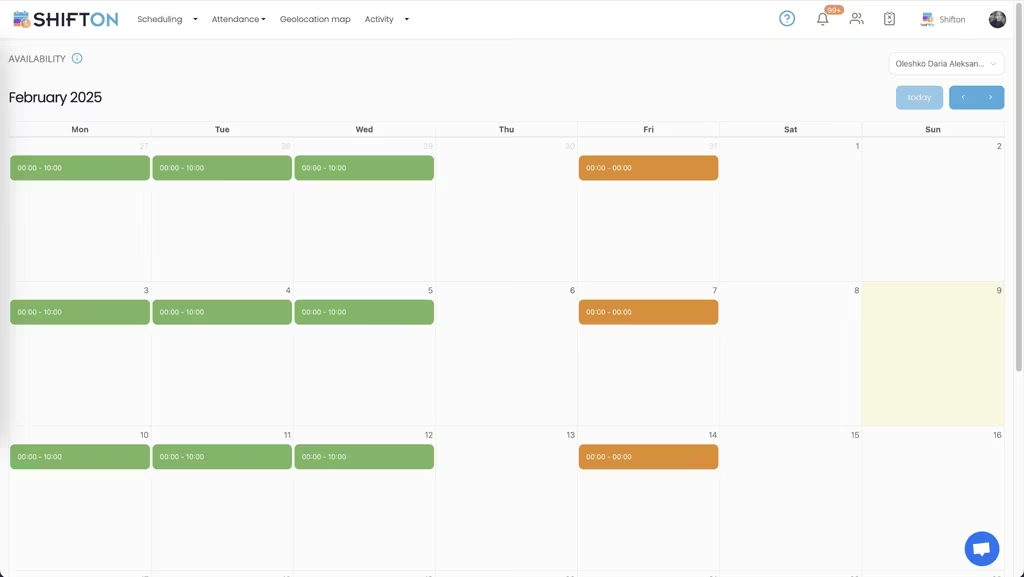
Collect Availability Before You Build
Veterinary teams are rarely all full time. Part-time vets, locum cover and technicians studying alongside the job each carry their own constraints, and the availability calendar collects them in advance instead of turning the rota into a negotiation after publishing.
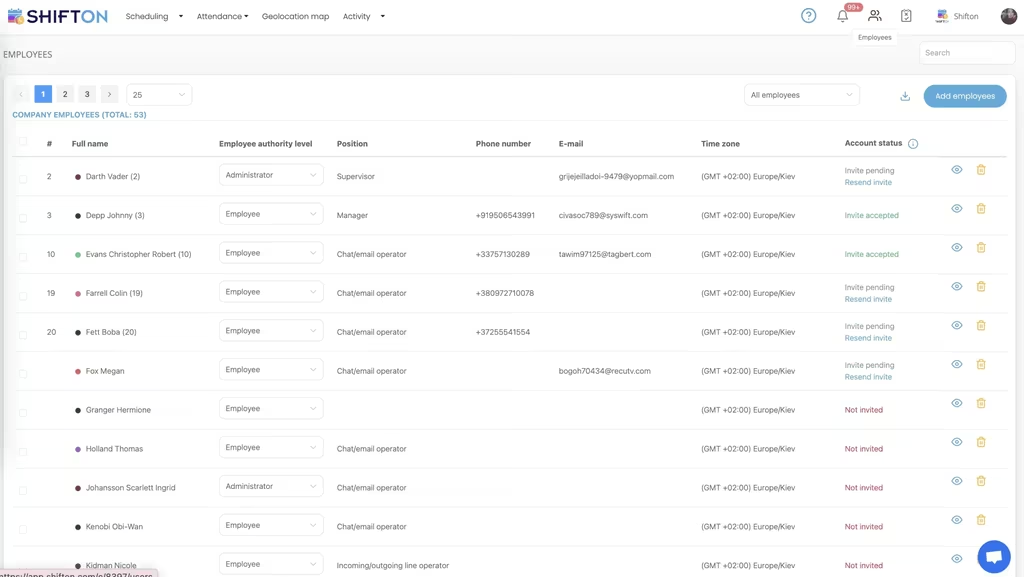
One Roster for Vets, Techs and Reception
Everyone who can be scheduled sits in a single employee directory. Each record carries a position, contact details, a time zone and an authority level, which is what decides whether a person only sees their own shifts or can edit the rota for the whole practice.
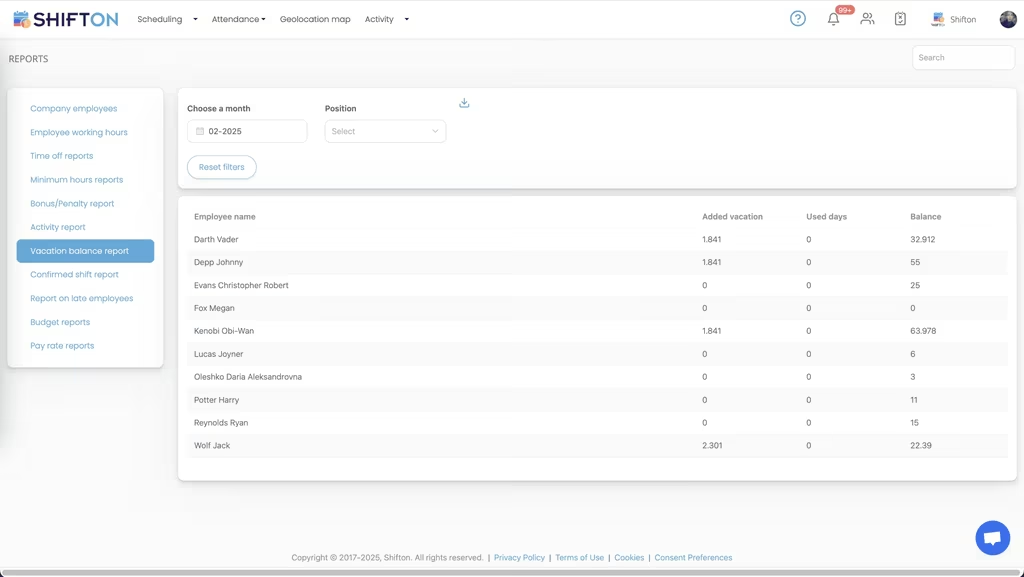
Hours, Time Off and Pay Rate Reports
Staffing cost in a practice is driven by hours, and hours are only controllable when someone can see them. The reports screen holds working hours, time off, minimum hours, bonus and penalty, budget and pay rate reports, filtered by month and position and exportable in a click.
Start with the Free Plan
No time limits. Get full access to core features and upgrade when you're ready.
Read the full guide to veterinary scheduling software
A veterinary practice is one of the harder places to build a rota. Consulting, surgery, inpatient care and the front desk all need cover at once, the people who can do each job are not interchangeable, and a single sick call can leave a clinic short of the one qualified person the day depends on. Veterinary scheduling software is not administration around the edges of the work, it is what decides whether the day runs or unravels.
Most practices reach the same conclusion after a year of spreadsheets and group chats. The rota is too complex to hold in a shared file and too important to leave to memory.
What veterinary scheduling software has to solve
Four problems come up in nearly every practice. Cover has to be planned by role, because a technician cannot stand in for a veterinarian. Availability is fragmented, since part-time contracts and locum work are the norm rather than the exception. On-call and emergency hours need to be visible and correctly paid. And the whole team, most of whom never sit at a desk, needs the current version of the rota on their phone.
A veterinary staff scheduling software that handles those four honestly is worth more than a larger platform aimed at problems the clinic does not have. It is also a different product from the clinical system: a practice information management system holds animal records and billing, while a veterinary scheduling system decides who is in the building. That is also what separates animal clinic scheduling software from a shared calendar with colours.
Rostering by role, not by headcount
Counting bodies on a shift tells you very little in a clinic. What matters is whether the right qualifications are present at the right hours. Every team member carries a position in the employee roster, so a rota can be built and read by role: how many vets are consulting on Tuesday morning, whether surgery has technician support, whether reception is covered through the lunch dip.
A vet tech schedule is usually the hardest part of the week, because technicians move between surgery support, inpatient care and client-facing work and are often the group with the most part-time contracts. Building their hours by role rather than by name is what keeps the cover honest. Roles also control access: authority levels decide who can edit the schedule and who simply sees their own shifts, so a practice manager can hand a site lead control of one clinic without giving away the whole account.
Availability, part-time contracts and locum cover
Very few practices are staffed entirely full time. Vets working three days, technicians studying alongside the job, receptionists on school hours and locums booked for a fixed window all pull the rota in different directions. Collecting that information after publishing is what generates the endless stream of swap requests.
The availability calendar reverses the order. Each person marks the hours they can and cannot work, in time slots rather than whole days, and the rota is built against those constraints from the start. Time-off and holiday requests run through the same flow, with balances visible so nobody approves leave that was already spent. Our time off management feature covers how requests, approvals and balances fit together.
On-call, emergency cover and out-of-hours work
Out-of-hours work is where clinic rotas usually break down. On-call rotations are often kept on a separate list, which means the main rota does not reflect who is genuinely available the next morning, and callout hours get reconstructed at the end of the month from memory and text messages.
Putting on-call shifts in the same schedule as everything else solves both problems. The rotation is visible to the whole team, hour totals include callout time, and shifts that carry a higher rate are priced on the shift itself rather than adjusted afterwards. Uncovered nights can be posted as open shifts and claimed by whoever is willing, instead of a manager working through a phone list. For a site running genuine 24-hour cover, that single change removes most of the friction from the night rota, because an animal hospital rostering software has to carry nights and days on the same board.
Time tracking and attendance in a clinic
Scheduled hours and worked hours are rarely the same in veterinary medicine. Consultations overrun, an emergency arrives at closing time, and a shift that was planned at eight hours ends at ten. If only the plan is recorded, payroll is wrong and the practice never sees how much unplanned time the team is absorbing.
Animal clinic time tracking software records the real start and end of each shift, with breaks, and stores every entry in the timesheet log. Staff clock in from the mobile app, so the record does not depend on a shared computer at the front desk. The working hours, late arrival and confirmed shift reports turn those entries into figures payroll can use, and our time tracking feature page covers the mechanics in detail.
Swaps, sick calls and the day the plan breaks
Every clinic loses a shift at short notice. The only variables are how long it takes to fill and how many people have to be interrupted along the way. Handled by phone, one sick call can absorb a whole morning and still leave the rota wrong for everybody who was not told.
Handled in the app, the same event becomes a swap request or an open shift. Staff propose a trade themselves, a manager approves or declines in one tap, and the published rota updates for everyone at the same moment. Push and SMS notifications reach people who are in surgery or out on a call. The value of a veterinary rostering system is not that it prevents disruption, because nothing does. It is that the version of the rota on every phone stays the true one.
Multi-site practices and group ownership
Group ownership has changed how many clinics operate. Once a practice runs two or three sites, staff start covering across them, and a rota held per site loses sight of who is already working where. Multi-location support puts every clinic in one account, with projects used to separate sites, departments or specific services. A site lead filters to their own clinic; an operations manager sees the group. Being a veterinary online scheduling software rather than a desktop file matters here, since the same rota is reachable from any site or any phone.
The reporting layer counts just as much at that scale, and veterinary workforce management software is judged on it as much as on the rota. Working hours by position, vacation balances, minimum hours and budget and pay rate reports all export by month and site, which turns a conversation about staffing cost into a comparison rather than an argument. Practices with larger clinical teams often look at how we approach healthcare staff scheduling for the wider picture.
Choosing a veterinary scheduling system
Test any vet clinic scheduling software the way the practice will actually use it, because most veterinary schedule software looks identical in a demo and the differences only show up in week three. Build a full week with mixed part-time contracts and time how long it takes. Publish it and check how quickly the notification reaches a phone. Cancel one shift and see whether everyone affected finds out without a message from the manager. Then export a working hours report and see whether payroll could use it without rekeying.
Shifton is built around exactly those steps: weekly and monthly rota views, open shifts and swaps, availability and time-off requests, positions and authority levels, time clock with timesheet logs, breaks, bonuses and penalties, push and SMS notifications, and reporting on hours, time off, budget and pay rates. Practices with up to 10 team members run on the free plan with no time limit, and paid modules are per employee per month as the group grows.
The clinic still has unpredictable days. What changes is that the rota holds, the hours are recorded, and nobody spends an evening rebuilding a spreadsheet. Set up your first week and see how the practice looks with every role in one view.
Frequently Asked Questions
What is veterinary scheduling software?
Veterinary scheduling software builds and publishes staff rotas for vets, technicians, nurses and reception, then records the hours those people actually worked. Shifton covers weekly and monthly rotas, open shifts, availability, swaps, time clock and reporting for a single clinic or a group.
Is Shifton a practice information management system?
No. Shifton schedules and tracks the people who work in the clinic, not animal records, consultations or billing. It sits alongside a clinical system and handles rotas, availability, attendance, time off and workforce reporting.
How do I build a vet tech schedule that actually holds?
Collect availability first, then build the week against it so technicians are only assigned hours they can work. Save the working pattern as a veterinary schedule template and reuse it, adjusting for leave and cover rather than starting from an empty grid each week.
How do I schedule on-call and emergency cover?
Create the on-call shift in the rota so it is visible to the whole team, and post uncovered nights as open shifts that qualified staff can claim from the app. Callout hours can carry their own pay rate, and every hour worked lands in the timesheet for payroll.
Can Shifton handle a multi-site veterinary practice?
Yes. Sites are set up as separate locations or projects inside one account, so a manager can filter to a single clinic or view the whole group. Staff who cover more than one site are scheduled across them without duplicate records.
Is there a free veterinary staff scheduling software for a small clinic?
Shifton is free for up to 10 team members with no time limit, including shift scheduling, basic time clock and attendance, the mobile app and reports. Larger practices and add-on modules such as the geolocation map are priced per employee per month.






Give your practice a rota the whole team can see
Build the clinic rota around real availability, cover on-call shifts and track hours in one place. Free for teams of up to 10.