

Logistics Scheduling Software for Terminal and Hub Teams
Staff every terminal, cross-dock and hub shift around the clock with logistics scheduling software that keeps rotating hours and overtime under control.

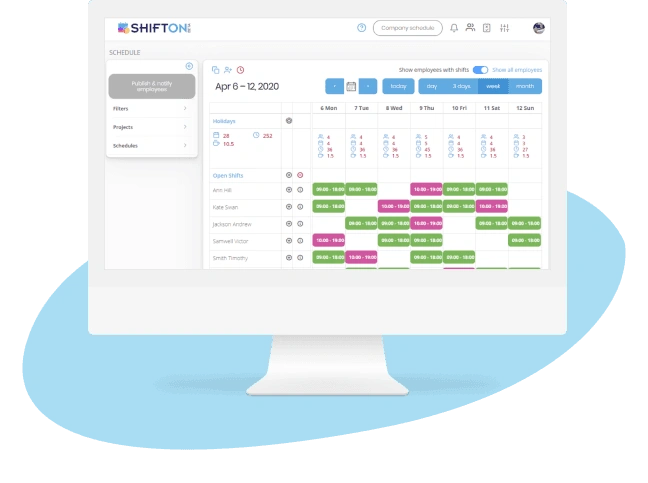
Build the week and get it to the floor
A logistics week is built against volume, not habit, so the plan changes more often than anyone would like. The weekly grid holds every person on their own row with shift times against them, and whatever is still uncovered sits in the open shifts row where the team can see it and claim it.
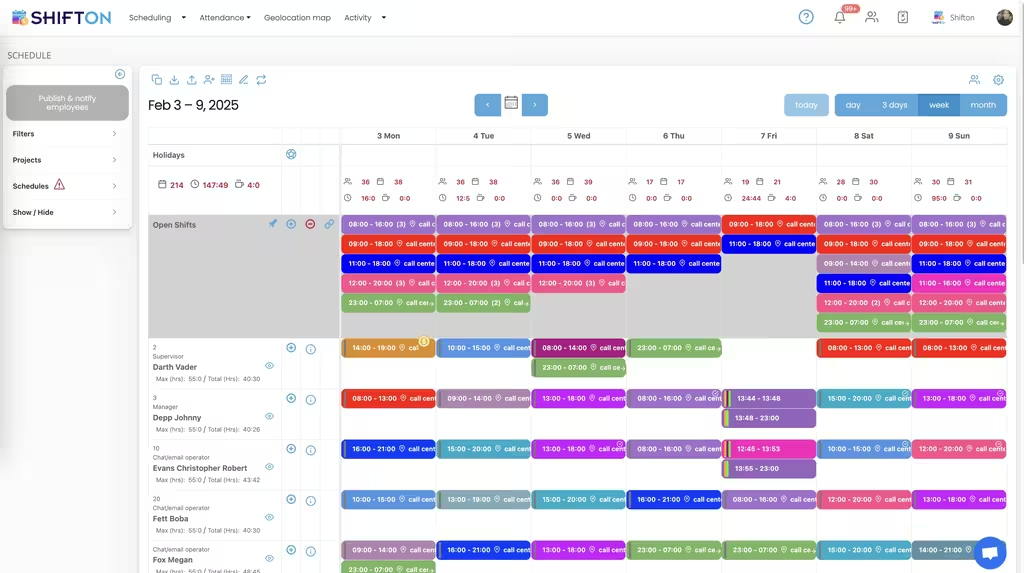
Round-the-clock cover, several shifts a day
A terminal week is not five days of one shift. It is early starts, late finishes and an overnight block from 23:00 to 07:00, often stacked on the same day with different people and different roles. The week view carries all of it at once, with each person's role beside their name and their maximum and running hours in view.
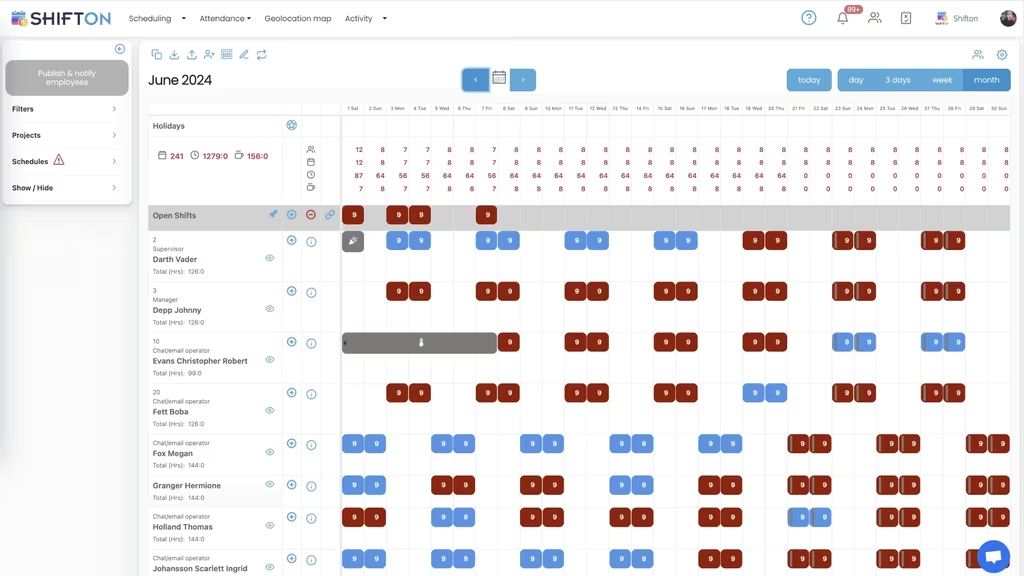
Day and night rotation across a full month
Continuous coverage is a monthly problem, not a weekly one. The month view shows the rotation as it really is: alternating blocks of day and night shifts of equal length, with each person's monthly hour total underneath, so you can tell whether the pattern is balanced before anyone works it.
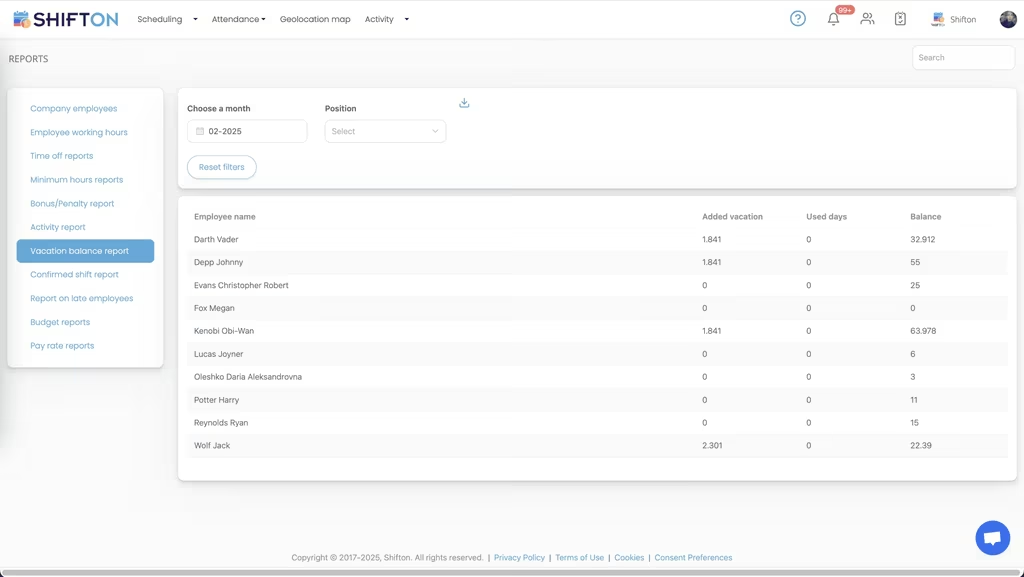
The reports an operations manager opens
Coverage is only half of the job. The reports screen turns the roster into figures you can act on, from working hours and time-off balances through to budget and pay rate reporting, each of them filterable and ready to export.
Start with the Free Plan
No time limits. Get full access to core features and upgrade when you're ready.
Read the full guide to logistics staff scheduling
A logistics operation does not close. Trailers land at three in the morning, a cross-dock has to be clear before the outbound wave, and the shift starting at 23:00 carries as much weight as the one starting at 07:00. Logistics scheduling software exists to keep that continuous pattern staffed without burning through people or overtime budget in the process.
Labour is the flexible cost in a terminal, which is exactly why it absorbs every shock. Volumes move week to week, agency cover is expensive, and a shift running two people short slows everything downstream of it. At the same time the plan itself is intricate: rotating patterns, night hours, rest requirements, holiday balances, and a workforce that is part permanent and part seasonal. Spreadsheets cope with none of that once the site runs more than one shift a day.
What logistics scheduling software has to handle
Coverage comes first. A roster with a hole at four in the morning is not a roster, it is an incident waiting for a start time. Second is hour discipline, because continuous operations generate overtime quietly and only reveal it at payroll. Third is reach: night and weekend staff do not read noticeboards, so the plan has to arrive on a phone. Fourth is evidence, since disputes about who was late, who was absent and who worked a premium block are settled by records rather than memory. Workforce management software for logistics that covers those four is more useful than one with a longer feature list and a weaker grip on hours. In practice logistics shift scheduling software gets judged on the first two, because coverage and hour control are what a site manager is measured on.
Building a rotation people can actually work
Rotating shift patterns are the backbone of a hub, and they are also the fastest way to lose experienced staff if the pattern is unfair. Shifton holds the pattern as a schedule template so the rotation is applied rather than rebuilt each month, and the month view shows alternating day and night blocks with a running hour total for every person. That total is what keeps the rotation honest. Set a maximum per employee and the system flags a shift that would breach it while you are still planning. Overtime can be configured to need confirmation before it is booked, which turns an accidental cost into a decision. Automatic distribution will fill a pattern for you when the shape of the week is already settled and only the names need placing.
Templates also solve the import problem. A logistics schedule template, trucking schedule template or shipping schedule template that already lives in a spreadsheet can be brought in rather than retyped, and if you currently run shipping schedule software that only covers cargo movements then the people side still has to live somewhere. The finished roster exports the same way for anyone who still wants a printed copy at the gatehouse. That matters during a handover between planners, when the fastest route to a working roster is the one that already exists.
Nights, weekends and the shifts nobody volunteers for
Every terminal has hours that are hard to fill. Handled badly, the same three people end up covering them until they leave. Publishing unwanted blocks as open shifts changes the dynamic: anyone qualified sees them, claims are first come, and the supervisor confirms rather than negotiates. Availability and time-off requests are collected before the roster is built, so you plan around what people can actually do instead of discovering a clash on the day. Where a premium rate applies, it is attached to the shift itself, so the pay consequence of covering a night is visible immediately rather than at the end of the month.
Where freight dispatch ends and staff scheduling begins
A large share of searches in this market use dispatch language. Trucking dispatch software, freight dispatch software and logistics dispatch software mostly describe systems that plan freight: what moves, on which trailer, at what price. Shifton is not one of those. It does not plan loads or routes, and it does not price a lane. What it does is decide who is on site to handle the work, record what they actually worked, and report the cost. Freight scheduling software and shipping scheduling software usually belong to that same cargo-facing category, and trucking scheduling software can mean either, so it is worth asking a vendor which of the two they actually built. Read logistics staff scheduling software as the layer next to your freight system rather than a substitute for it, because plenty of trucking company dispatch software listings blur that line and the trial goes badly when expectations are wrong. Freight company scheduling software is another phrase that means two different things depending on who is selling it. Dispatch staff scheduling software is a fair description of one part of the job, since planners and coordinators in the office need rosters as much as the dock does. If your people are inside a building rather than across a network of terminals, our warehouse staff scheduling page fits better, and driver-side rostering is covered on the page for transport teams.
Peak season without a permanent headcount rise
Volume in this sector is seasonal and the ramp is steep. Extra hands arrive for a few weeks, need a role and a rate on day one, and disappear again. Logistics employee scheduling software has to make a temporary intake cheap to add and cheap to stand down. Shifton keeps the team as an employee list with positions, authority levels and invite status, so a seasonal group is added and rostered in one sitting rather than tracked in a side spreadsheet. Demand forecasting builds an hourly load curve for a chosen period, which helps decide how many people a shift genuinely needs instead of copying last month and hoping. Supply chain scheduling software that cannot show the shape of a day will always over-staff the quiet hours and under-staff the peak, whatever else the supply chain scheduling tool does well. Home and office moves peak the same way, and that crew type is covered on our page for moving crew scheduling.
Roles, permissions and who is allowed to move a shift
Terminals run on hierarchy, and the schedule should reflect it. Every person carries a position and an authority level, so a supervisor can be given rights over their own shift while the wider roster stays locked. That matters more than it sounds: most bad schedule data comes from well-meaning edits made by people who could not see the whole picture. Roles are visible on the shift itself, so a block with four operators and no supervisor is obvious before it is published rather than after it fails.
Absence, hours and the reports that catch problems early
Continuous operations leak money in small, repeated ways. Ten minutes of late start per person per shift is a full role across a year. The reports screen is where that becomes visible: working hours per employee, a report on late employees, minimum hours checks, confirmed shift reports, vacation balances with days accrued and used, and budget and pay rate reports that turn the roster into a cost figure. Everything filters by project and period, so one site or one pay run can be pulled on its own and exported for payroll or accounting. QuickBooks and Zapier integrations move the output onward without a second round of data entry. Whether you call it logistics rostering software or staff scheduling software for logistics, this reporting layer is usually what justifies the subscription rather than the calendar view. Buyers searching for logistics staff rostering software or freight rostering software are almost always after exactly this.
Shifton in a logistics operation
There is no single best logistics scheduling software for every network, because a two-site cross-dock and a national hub operation are not solving the same problem. Shifton is logistics workforce management software and nothing wider: it schedules people, records hours, and reports on both across as many sites as you run. That is a deliberately narrow scope, and it is why it stays usable at three in the morning on somebody's phone. Under 10 team members it is free with no time limit, covering shift scheduling, basic time clock and attendance, the mobile app and reports, which is enough for a small hub outright. Beyond that, pricing is per employee per month with forecasting, automatic distribution and geolocation as paid modules, so the bill follows headcount rather than a fixed licence. The outcome is the same either way: every shift covered, rotations that people stay in, and hours you can defend when finance asks.
Frequently Asked Questions
What is logistics scheduling software?
It plans which people work which shifts across a terminal, hub or cross-dock, and records the hours they work. Shifton builds weekly and monthly rosters including overnight blocks, publishes them to the team's phones, and reports on hours, absence and labour cost by site.
Can it handle a 24/7 rotating shift pattern?
Yes. Rotating day and night patterns are built once as a schedule template and then applied across the month, with monthly hour totals shown per person so the rotation stays balanced. Maximum hours can be capped individually and overtime can be set to require confirmation.
Is this the same as trucking dispatch software?
No. Trucking dispatch software plans freight, trailers and loads. Shifton plans the people: who is rostered on which shift at which site, what they worked and what it cost. The two run alongside each other rather than replacing one another.
How do staff find out about a shift change?
Push notifications from the mobile app, with SMS available as well, so a change reaches the night team without a phone call. Staff can also claim open shifts and swap shifts between themselves with a supervisor confirming.
Can we schedule several sites from one account?
Yes. Each site or department is set up as a project, so shifts are tagged with where they belong and you can filter to one location or view the whole network. Employee roles, positions and permissions are set per person and travel with them.
How much does it cost for a logistics team?
Up to 10 team members the plan is free with no time limit, and includes shift scheduling, basic time clock and attendance, the mobile app and reports. Above that, paid modules such as demand forecasting, automatic distribution and geolocation are charged per employee per month.






Cover every shift at every site without the overtime spike
Start free with up to 10 team members and build your first round-the-clock rotation in an afternoon.