

Field Service Planning for Microgrid Installers and O&M Crews
The trades that build a microgrid sequenced on one board, commissioning evidence captured on site, and the maintenance years that follow planned the same way.


Four trades, one critical path
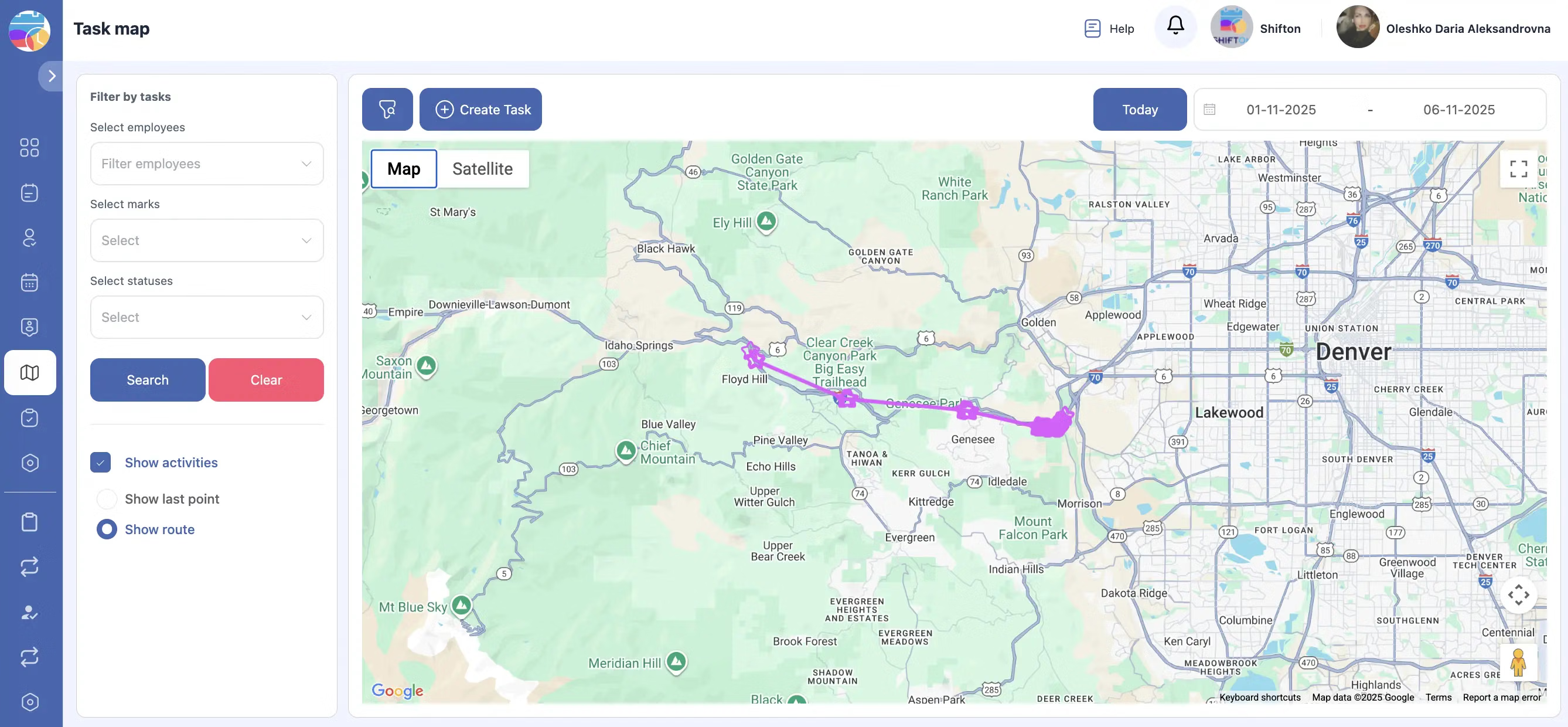
A microgrid build brings together groundworks, mechanical setting of the PV, batteries and generator, electrical installation, and controls commissioning. Each trade waits for the one before it, and a two day slip in trenching can leave an electrical crew standing on site with nothing to terminate.
Commissioning is where the paperwork counts
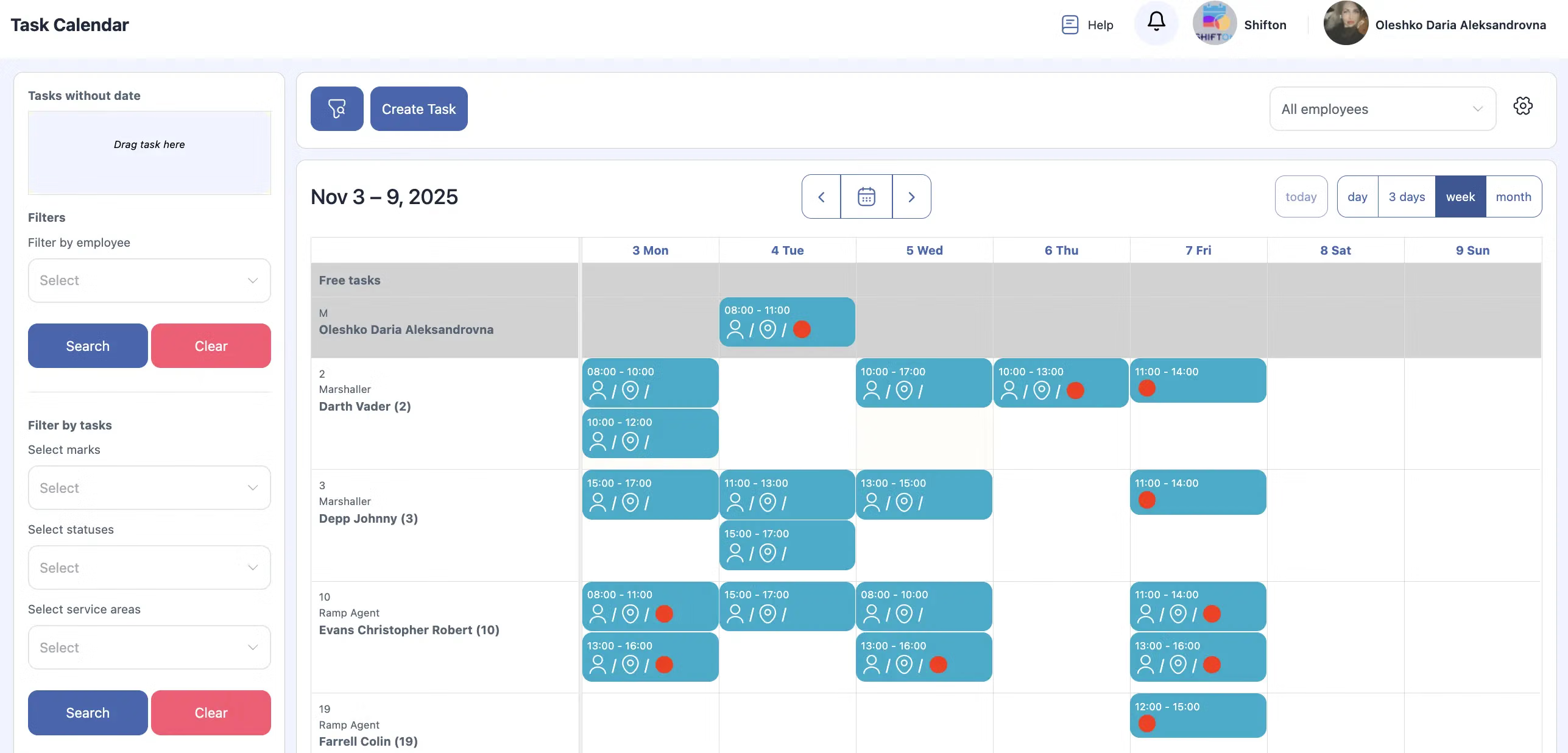
The owner, the utility and sometimes a lender all want proof the system was commissioned properly: insulation tests, polarity checks, protection settings applied, islanding tested. That evidence is collected over several visits by different people.
Handover turns into years of visits
Once the site is live, the work changes shape: quarterly inspections, module cleaning, inverter checks, vegetation control, generator servicing and callouts when something trips. The same board that sequenced the build now carries a recurring programme.
Remote sites need complete jobs
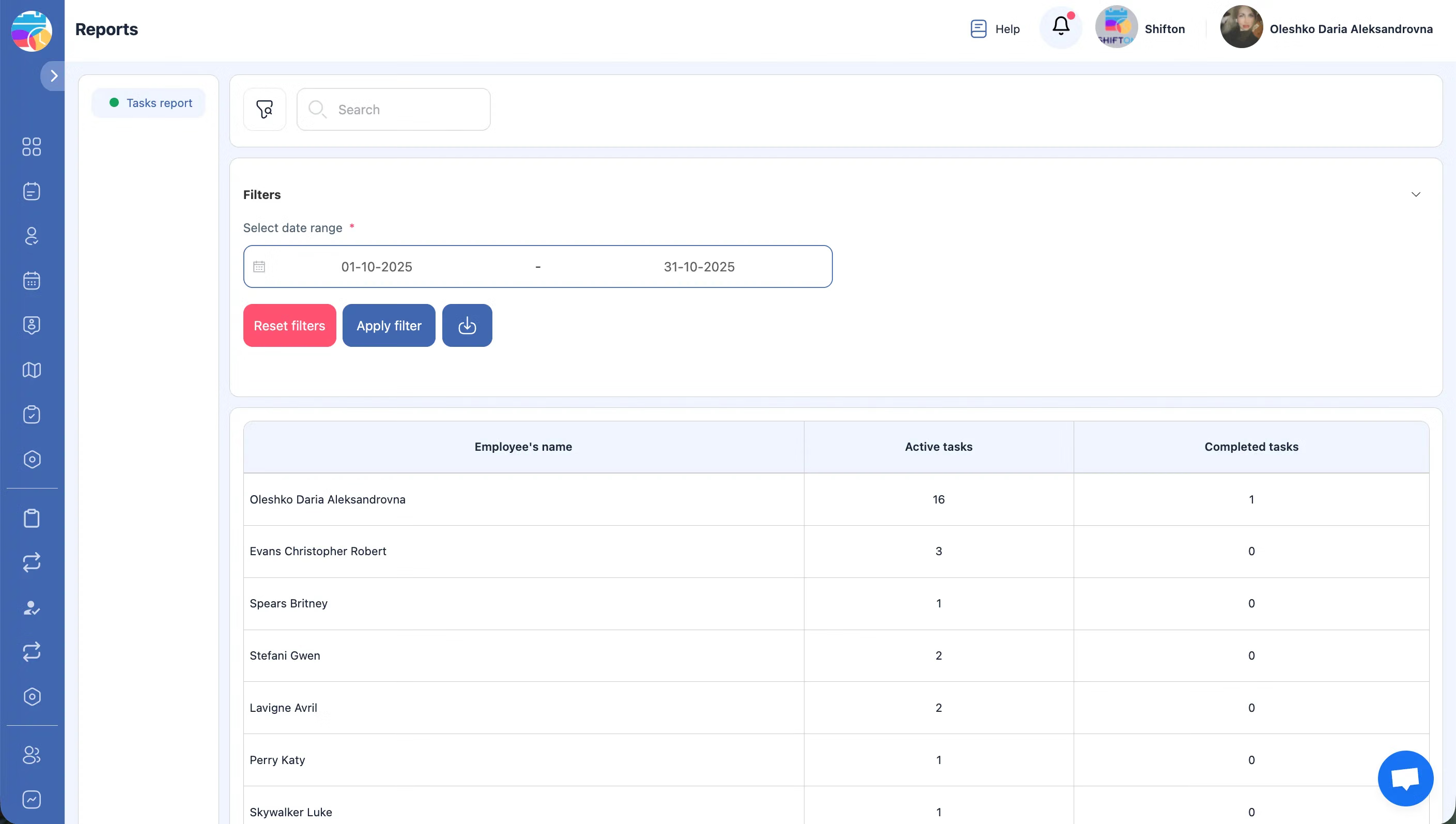
Microgrids often serve farms, islands, mines or campuses a long drive from the depot. A crew that arrives missing a key, a permit or a part loses a whole day.
Start with the Free Plan
No time limits. Get full access to core features and upgrade when you're ready.
See how microgrid installers plan builds and O&M programmes
Which microgrid software this page is about
The phrase microgrid software usually means one of two things. The first is the controller and energy management layer that decides when to run the generator, charge the battery or export to the grid. The second is the operational tooling of the company that builds and maintains the installation. Shifton Field Service is only the second kind. It plans the crews, carries the checklists and keeps the evidence.
That distinction matters when you buy. A controller vendor will not help you work out which electrician goes to which site next Tuesday, and a field service tool will not optimise your dispatch of energy. Most installers need both.
Planning a microgrid build
Sequencing the trades
Groundworks, cable routes and foundations come first; mounting structures and PV modules next; then electrical installation, battery and generator setting, and finally controls and protection commissioning. On a board, each of these is a job with a crew and a date. When one moves, the planner sees at once which later jobs have to move with it.
Keeping subcontractors in the picture
Few installers carry every trade in-house. Civil contractors and specialist commissioning engineers are often external, and they are the ones who most often miss the change of plan. Putting them on the same board means they receive the job details on their phone instead of a forwarded email.
Recording changes made in the field
Drawings rarely survive contact with the site. A cable route moves around a buried service, a combiner box goes on the other wall, a protection setting is changed at the utility's request. If those changes live only in the site manager's memory, the as-built pack is wrong and the O&M crew inherits the confusion. A short change note on the job, with a photograph and the name of whoever approved it, is enough for the design team to update the drawings later and for the next technician to understand what they are looking at.
Solar field service software for the years after handover
For many microgrid companies, the long-term revenue is maintenance. The PV array needs inspecting and cleaning, connectors and combiner boxes need checking, inverters need servicing and firmware, generators need their own schedule, and battery containers have their HVAC and fire systems to look after. As solar field service software, Shifton covers the field side: who goes where, what they check, what they replaced and how long it took.
What it does not do is watch the plant. Performance ratios, string monitoring and alarm handling belong to your monitoring platform. The practical link is people: when monitoring shows a fault, the office creates a job on the board and sends the nearest qualified technician.
Evidence for owners, utilities and lenders
Interconnection approvals, warranty claims and financing reviews all ask for documented installation and maintenance. Checklists filled on site, photos with visible labels and signatures from the client's representative are the raw material for that documentation, and they are far easier to produce when every job collects them as a matter of routine.
What Shifton Field Service does
It sequences build phases and O&M visits on one board, sends crews the job details and checklists through the mobile app, collects readings, photos and signatures, logs hours and produces reports per site. For an installer with at most two people, all of that costs nothing and has no expiry date. Inventory, Invoicing, GPS work location control and the customer portal are sold as modules.
It is not a microgrid controller, an energy management system or a performance monitoring platform. It does not read inverter or battery data, forecast generation or model the design. It is the plan for your people and the proof of what they did on site.
Frequently Asked Questions
Is this microgrid control software?
No. Shifton does not dispatch generation, manage batteries, balance loads or talk to the microgrid controller. It schedules the people who build and maintain the microgrid and keeps the record of their work.
Can we sequence subcontractor trades on the board?
Yes. Subcontractor crews can be added as people on the board, so their jobs sit in the same timeline as your electricians and engineers and everyone sees what comes before and after them.
Can we use it as solar O&M software after the build?
Yes, for the field side of O&M: planned inspections, cleaning, inverter servicing, corrective callouts, checklists, photos and hours. It does not monitor output or raise alarms from the inverters; those come from your monitoring platform.
How do we collect commissioning evidence from several engineers?
Each engineer completes the commissioning checklist on their own job. The forms, readings, photos and signatures stay attached to the jobs for the site, so the file is built as the tests are done.
What does it cost a small microgrid installer?
A company with two employees or fewer pays nothing, with no expiry on that arrangement, for the board, the app, forms and reports. Inventory, Invoicing, GPS work location control and the customer portal are paid add-ons.
Can the site owner follow the build?
With the paid customer portal, the owner can see the jobs planned and completed for their site. Otherwise you send reports from the completed jobs.



Ready to transform your field operations?
Join thousands of field service companies that trust Shifton to run smarter every day.