

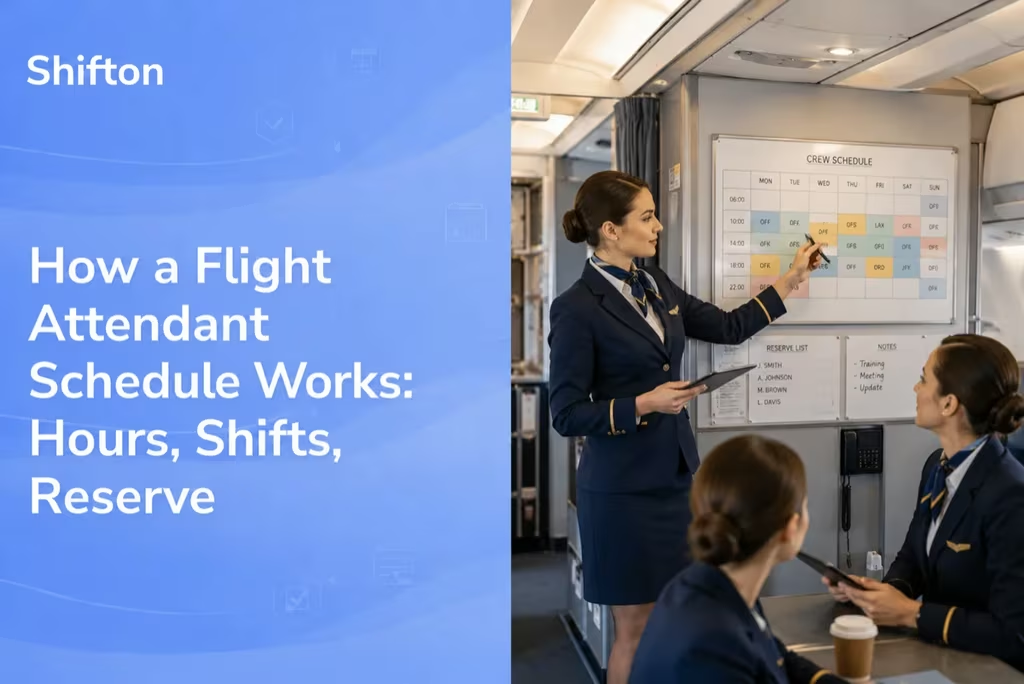
- What a Flight Attendant Schedule Actually Looks Like
- How Many Hours Do Flight Attendants Work?
- How Many Days a Week Do Flight Attendants Work?
- How Long Flight Attendant Shifts Run
- How Reserve and Lineholder Schedules Work
- First-Year and Part-Time Schedules
- What Shapes a Flight Attendant Work Schedule
- The Rules That Shape Every Schedule
- How Managers Build Schedules Like These
- Frequently Asked Questions
Short answer
A full-time flight attendant typically works 12 to 15 days a month and flies 65 to 85 flight hours, which leaves around 16 days off. Days off, not hours, are the better way to describe the job, because flight hours count only the time from pushback to parking while duty time runs much longer.
Ask three flight attendants what their week looks like and you will get three different answers. One just flew a same-day turn to Denver and slept in her own bed. Another is on hour 26 of a four-day pairing through three time zones. A third has not been told where she is going yet, because she is on reserve and her phone could ring at 5 a.m.
A flight attendant schedule is not a grid of identical shifts. It is a rolling puzzle built from trips, layovers, and federal rest rules, then handed out by seniority. Some months are brutal. Others are nearly empty. Once you understand the pieces, though, the whole thing stops looking random, and this guide walks through the hours, the days, the shifts, and the bidding that quietly decides who flies what each month.
If you have ever managed people who work nights, weekends, and unpredictable blocks, the logic will feel familiar. Cabin crew scheduling is one of the most demanding versions of a rotating shift schedule, just stretched across airports instead of a single building.
What a Flight Attendant Schedule Actually Looks Like
Forget shifts for a second. The unit of a flight attendant schedule is the trip, sometimes called a pairing or a sequence. A trip is everything from the moment you sign in at your base to the moment you are released back home, and it can last anywhere from a single day to nearly a week.
That is why “what does a flight attendant schedule look like” rarely has a tidy answer. Flight attendant schedules vary wildly from one crew member to the next. A typical flight attendant schedule for one month might mix one-day trips, a couple of overnights, and one long international rotation, all stitched together with days off in between.
Turns, overnights, and long trips
Most pairings fall into three shapes. A turn is a round trip flown and finished the same day, with no hotel. An overnight, or a two- to three-day trip, sends you out, parks you in a layover city for the night, and brings you back over the following days. Long-haul trips run international routes and can keep a crew on the road for four to six days at a stretch.
Seniority decides which of these you get. A senior flight attendant who likes being home every night can build a line of nothing but turns. A junior crew member often ends up with the leftover overnights and the trips that depart at uncomfortable hours.
A sample monthly schedule
Numbers help more than adjectives here. As a flight attendant schedule example, the table below shows a sample for a single month, the kind a mid-seniority lineholder at a major U.S. carrier might actually hold.
| Week | Trip type | Days worked | Flight hours |
|---|---|---|---|
| Week 1 | Two domestic turns | 2 | 11 |
| Week 2 | One 3-day trip | 3 | 18 |
| Week 3 | One international 5-day | 5 | 32 |
| Week 4 | Two overnights | 4 | 22 |
That adds up to 14 working days and about 83 flight hours for the month, with the other 16 or so days off. Swap the international trip for more turns and the same person could work more calendar days for fewer flight hours. The mix is the whole game.
How Many Hours Do Flight Attendants Work?
Almost everyone asks this first, and the real answer surprises people: flight attendants count hours in two completely different ways. Mixing them up is why the numbers online never seem to agree.
Flight hours versus duty hours
When people ask about flight attendant hours, they are usually blending two separate clocks. Flight hours, often called block hours, count only the time from when the aircraft pushes back from the gate to when it parks at the destination. Duty hours count everything: the briefing before the first flight, boarding, sitting through delays, connections between flights, and the walk to the hotel van. A flight attendant might log 5 flight hours on a day that keeps them on duty for 12.
Pay usually tracks flight hours, which is the source of endless frustration. The hours spent boarding 180 passengers and waiting out a ground stop are duty time, not flight time, and historically much of it went unpaid. That gap is exactly why flight attendant work hours feel longer than the paycheck suggests.
Hours per week and per month
Carriers schedule by the month, not the week, so “how many hours a week do flight attendants work” is a slightly awkward fit. Spread across a month, most full-time crew fly 65 to 85 flight hours, which works out to a rough average near 18 flight hours in a busy week and far fewer in a light one.
Total duty time is the bigger number. Once you fold in briefings, boarding, and layovers, a working week on the road easily passes 40 hours of being on the clock even when flight hours look modest. The schedule breathes. Some weeks are packed, others are nearly empty.
This is why flight attendant work hours are so hard to compare with a desk job. A 40-hour office week is 40 hours of work. A flight attendant week with 40 duty hours might hold only 18 paid flight hours, plus long gaps in airports and a hotel night two time zones from home. The clock and the paycheck rarely match, and the weekly schedule swings far more than any office calendar.
The most hours a flight attendant can work
There is a ceiling, and it is set by federal regulation rather than the airline. On most flights a flight attendant cannot be scheduled for a duty period longer than 14 hours (longer duty is allowed only with extra crew and rest facilities, up to 20 hours). Monthly flight-hour caps are written into union contracts, usually landing around 95 to 100 hours before extra premiums or hard limits kick in. So when someone asks how many hours a flight attendant can work, the practical answer is: a lot in a single day, but with firm guardrails around rest.
How Many Days a Week Do Flight Attendants Work?
Because the schedule is monthly, days do not divide evenly into weeks either. The cleaner way to think about it is days worked per month, then picture how they cluster.
Days on, days off
A full-time flight attendant typically works 12 to 15 days in a month, leaving around 16 days off. Those off days are not spread out neatly. A 4-day international trip might be followed by 3 straight days at home, then a single turn, then another long block. You trade a chunk of your calendar for longer stretches of freedom afterward.
This is the trade that surprises people. Yes, the hours are odd and the holidays are not guaranteed. But 15 or 16 days off a month is more time at home than most nine-to-five jobs offer, which is a big part of why the career holds its appeal even when the schedule is brutal.
How often flight attendants actually fly
On a working day, a flight attendant might operate anywhere from one long-haul leg to four or five short domestic hops. A regional crew flying short routes can do five or six flights in a single duty day. A long-haul crew might do exactly one. So “how many flights do flight attendants do a day” depends entirely on the route, not the person.
How Long Flight Attendant Shifts Run
A flight attendant shift is really a duty day, and it stretches well beyond the time in the air. It starts at sign-in, usually about an hour before the first departure, and does not end until the aircraft is parked and the crew is released at the layover hotel or back home.
So how long are flight attendant shifts? It depends on the day’s flying. A short domestic duty day might run 8 or 9 hours. A heavy one with multiple legs and a delay can push right up against the 14-hour scheduled-duty limit. How long flight attendant shifts run, then, is less about a fixed clock and more about how the day’s flying stacks up. Two easy legs feel nothing like five legs with a weather hold in the middle.
What outsiders underestimate is the dead time inside a shift. Sitting in an airport between connections still counts as being at work, even though you are not flying. That is why a crew can finish a 12-hour day having spent only 5 of those hours with the doors closed.
Juggling Trips, Reserve, and Rest Rules by Hand?
Shifton builds complex rotating schedules, tracks duty hours, and flags rest conflicts before they reach your crew.
How Reserve and Lineholder Schedules Work
Here is the single biggest fork in any flight attendant schedule. You are either a lineholder with a known set of trips, or you are on reserve and on call. Which one you are comes down almost entirely to seniority, and it changes daily life completely.
Life on reserve
Reserve is the on-call tier, and almost every new hire starts here. You are not handed a set of trips. Instead you are assigned blocks of availability, and the crew scheduling desk can call you to cover sick calls, delays, and trips that suddenly need a body. Some reserves sit “ready” near the airport. Others are on “long call” with a few hours to get to the gate.
Reserve is workforce management at its most unforgiving, and it looks a lot like the staffing challenge behind any on-call scheduling software setup, where coverage has to exist even when nobody knows yet who will need it. You might fly a brutal week or barely fly at all, and you find out with very little warning.
Reserve also has its own guaranteed minimums and its own pay rules, so a slow month does not leave you broke. But the loss of control is the real cost. You cannot reliably plan a wedding, a doctor visit, or a kid’s recital around a phone that might ring before dawn. Most flight attendants describe their reserve years as the price of admission, and they count the days until a line opens up.
Holding a line
A lineholder has an actual schedule, called a line, published before the month begins. You know your trips, your layovers, and your days off in advance, and you can plan a life around them. Lineholders can also swap trips with colleagues, drop a trip, or pick up extra flying for more pay. That flexibility is the reward for sticking around long enough to climb the list.
Bidding and seniority
Every month, flight attendants bid. They submit ranked preferences for the trips, days off, and layover cities they want, and the airline awards lines from the top of the seniority list down. A 20-year veteran bids first and lands almost exactly the line she wants. A first-year flight attendant bids last and takes what is left.
Seniority is the currency that runs the whole system. It decides your base, your trips, your holidays, and whether you sit on reserve for one year or five. Two flight attendants at the same airline can live opposite lives purely because one was hired eighteen months earlier.
This might interest you:Airline staff schedule ideas for modern operations – how carriers build crew rosters that hold up under delays.
First-Year and Part-Time Schedules
The first year is the hard one, and nobody pretends otherwise. A first-year flight attendant schedule usually means reserve, the least desirable trips, holidays away from family, and very little control over the calendar. It is the dues you pay before seniority starts working in your favor.
Part-time lines exist at many carriers and change the math. A part-time flight attendant might fly half the hours of a full-timer, often around 40 flight hours a month, in exchange for proportionally less pay. For someone balancing school or caregiving, that reduced load is the difference between staying in the career and leaving it.
What Shapes a Flight Attendant Work Schedule
Two flight attendants hired the same week can end up with completely different lives. Seniority is the loudest factor, but it is not the only one. A handful of structural choices decide what a flight attendant work schedule actually contains before bidding even starts.
Your base
Every flight attendant is assigned a home base, the airport their trips start and end at. A crew member based in a busy hub has more trips to bid on and more variety. Someone at a small base has thinner options and may sit reserve longer. Base matters. It also decides how much of the network you can reach without a connection, which quietly shapes how a weekly schedule comes together.
Domestic versus international fleets
Your aircraft qualification changes everything. A narrowbody domestic flyer racks up many short legs and more turns, so the days are busy but the trips are shorter. A widebody international crew member flies fewer, longer segments with multi-day layovers in foreign cities. Same job title, very different rhythm. One person is home most nights; the other is gone four days at a time.
The monthly bid cycle
Everything runs on a roughly 30-day loop. A few weeks before the month starts, the airline posts the available trips. Flight attendants submit their bids, the system awards lines by seniority, and the published schedule lands days later. Swaps, drops, and pickups then reshuffle things right up to departure. So a flight attendant schedule is never fully frozen. It keeps moving as people trade trips and reserves get assigned.
This is the part that frustrates anyone who likes certainty. Your work schedule for next month is not something you set. It is something you bid for, win partially, and then adjust on the fly. The crew who thrive learn to work the swap board as hard as they work the bid. Outside aviation, the same constant reshuffling is the everyday job of roster management, where swaps and gaps have to be absorbed without breaking coverage.
What feeds into your monthly line
- Seniority number, which sets your bidding order
- Home base and the fleet you are qualified to work
- Reserve or lineholder status for the month
- Trip swaps, drops, and extra pickups after lines are awarded
The Rules That Shape Every Schedule
None of this happens freely. Flight attendant scheduling sits inside a tight cage of federal rules, and those rules drive how trips can be built in the first place.
The core limit, written into 14 CFR 121.467 (Federal Aviation Administration rule, Cornell Legal Information Institute), is straightforward. On most flights a flight attendant cannot be scheduled for a duty period longer than 14 hours (longer duty is allowed only with extra crew and rest facilities, up to 20 hours), and after that duty period they are owed a scheduled rest period of at least 10 consecutive hours. That 10-hour minimum, strengthened by a 2022 federal rule, cannot be cut short, even when a delay tempts the airline to squeeze the turnaround.
Crew rest is not a courtesy. Fatigue is a recognized safety risk in the cabin, and surveys of cabin crew have repeatedly found that a majority believe tiredness has affected their performance on safety duties. The rest rules exist because an exhausted crew is a real safety hazard, not an inconvenience. Every line a scheduler builds has to respect them before anyone bids.
How Managers Build Schedules Like These
Airlines run this with massive crew-management systems, but the underlying problem is one every shift-based business shares. You have coverage that cannot lapse, people with wildly different availability, hard rest rules you cannot break, and a fairness system everyone is watching.
Do it on paper and two things happen fast. Someone gets rostered straight through a required rest break, because a human tracking dozens of overlapping duty clocks will eventually miss one. Someone else quietly works more weekends and more holidays than the person sitting next to them, notices the pattern after three months, and starts wondering why nobody is watching the fairness math. Both are how good people begin drafting resignation letters, and both are invisible until the damage is already done. A scheduling platform that understands rotations, on-call coverage, and hard hour limits turns that monthly puzzle from a guessing match into a few clicks, checks every line against the rest rules before it publishes, and spreads the unpopular trips evenly instead of dumping them on whoever complains least. The same engine works whether you run a cabin crew, a hospital floor, or a restaurant. If the monthly puzzle still lives in a spreadsheet, a look at the best rota apps shows what automation takes over.
Aviation is an extreme example, but the bones are the same as any team that works nights, weekends, and unpredictable blocks. Get the rules and the rotation right, and the schedule stops being the thing everyone dreads. Teams that run gate staff, ground crews or cabin crews can see how this is handled in Shifton’s airline staff scheduling setup, while smaller operators can start with a comparison of employee roster apps.
Frequently Asked Questions
How many hours do flight attendants work in a week?
Carriers schedule by the month, so weekly hours swing a lot. Full-time crew fly 65 to 85 flight hours a month, which averages out to roughly 18 flight hours in a typical week. Duty time, including briefings and layovers, runs much higher.
How many days a week do flight attendants work?
Most full-time flight attendants work 12 to 15 days across a month rather than a fixed number each week. Those days cluster into multi-day trips, so a stretch of work is often followed by several days off in a row.
What is a typical flight attendant schedule like?
A typical month mixes same-day turns, two- or three-day overnights, and sometimes one longer international trip, separated by days off. Lineholders know their trips in advance, while reserves stay on call and learn their flying with little notice. Seniority shapes nearly every part of it.
How many flights do flight attendants do in a day?
It depends on the route. A long-haul crew may operate a single flight, while a domestic or regional crew can fly four to six short legs in one duty day.
Do flight attendants choose their own schedule?
Partly. Every month they bid on the trips, days off, and layovers they want, but the airline awards schedules by seniority. Senior crew get their top picks; junior crew take what remains and often sit on reserve.
What is the most hours a flight attendant can work?
On most flights a flight attendant cannot be scheduled for a duty period longer than 14 hours (longer duty is allowed only with extra crew and rest facilities, up to 20 hours), and must then receive at least 10 consecutive hours of rest. Monthly flight hours are capped by union contracts, usually near 100 hours.
How often do flight attendants fly?
On a working day, crew might fly a single long-haul leg or as many as five or six short domestic flights. Across a month, full-time flight attendants are in the air on about 13 days, with the rest of the calendar off.
How does a flight attendant schedule work?
Airlines publish available trips each month, flight attendants bid on the ones they want, and lines are awarded by seniority. Senior crew become lineholders with a fixed schedule, while junior crew often work reserve and stay on call to cover trips on short notice. Federal duty and rest limits sit underneath the whole system.
What hours do flight attendants work?
There are no standard hours. Duty days run early mornings, red-eyes, weekends, and holidays, anywhere from about 8 hours to the 14-hour scheduled-duty limit. The trade-off for those odd hours is more days off per month than a typical office job.




Start making changes today!
Optimize processes, improve team management, and increase efficiency.