

Lawn Care Scheduling Software for Crews and Repeat Visits
Plan recurring visits, absorb rain days and keep hourly pay accurate with lawn care scheduling software that fits a full day of properties into every shift.

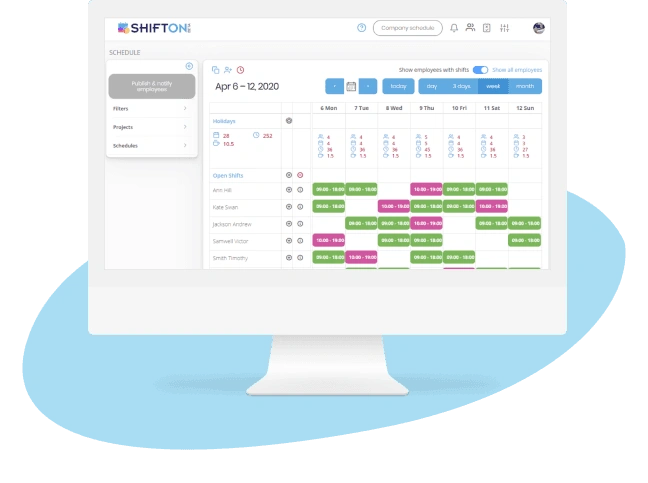
The week's crews, filled and sent out
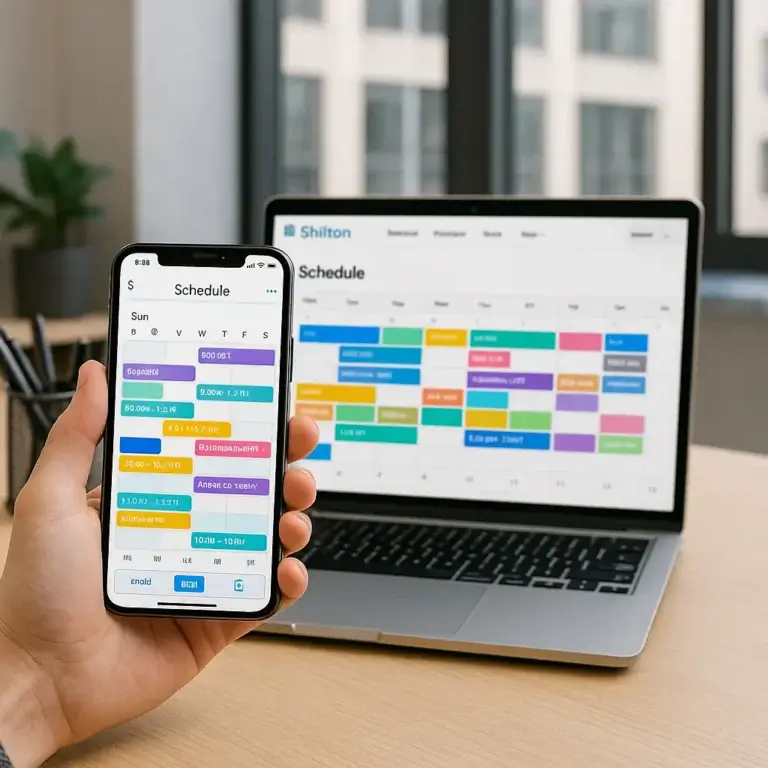
Most of the planning work in a mowing operation is the same week after week, and the part that changes is who is available to run it. The weekly grid puts every crew member on their own row with start and end times, and anything you have not staffed yet stays in the open shifts row until somebody takes it.
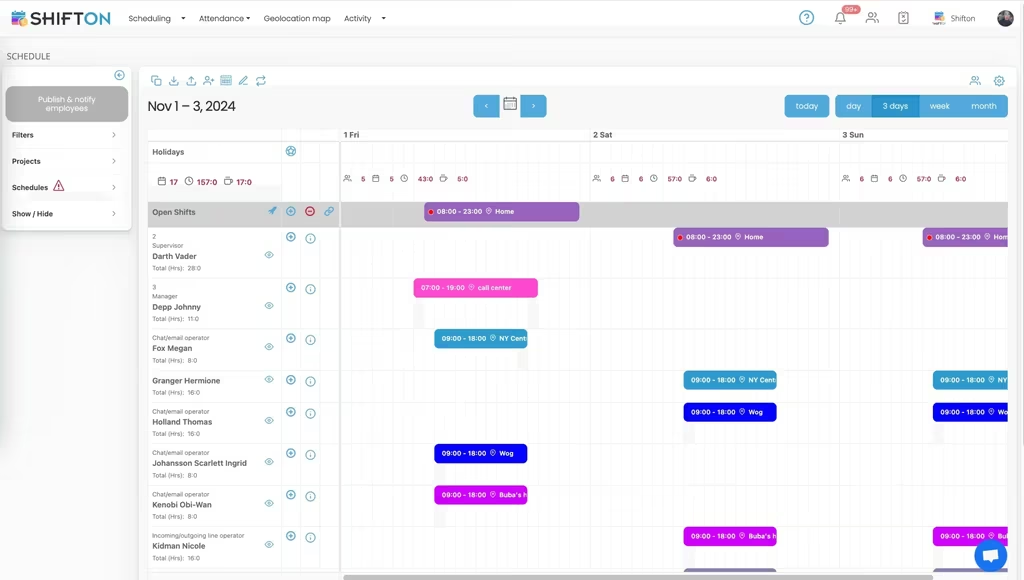
The next three days, property by property
Nobody in this trade plans the next quarter at seven in the morning. They need the next three days. The short view shows each crew member's upcoming shifts labelled with the location they were assigned to, and the running hours total sits beside every name.
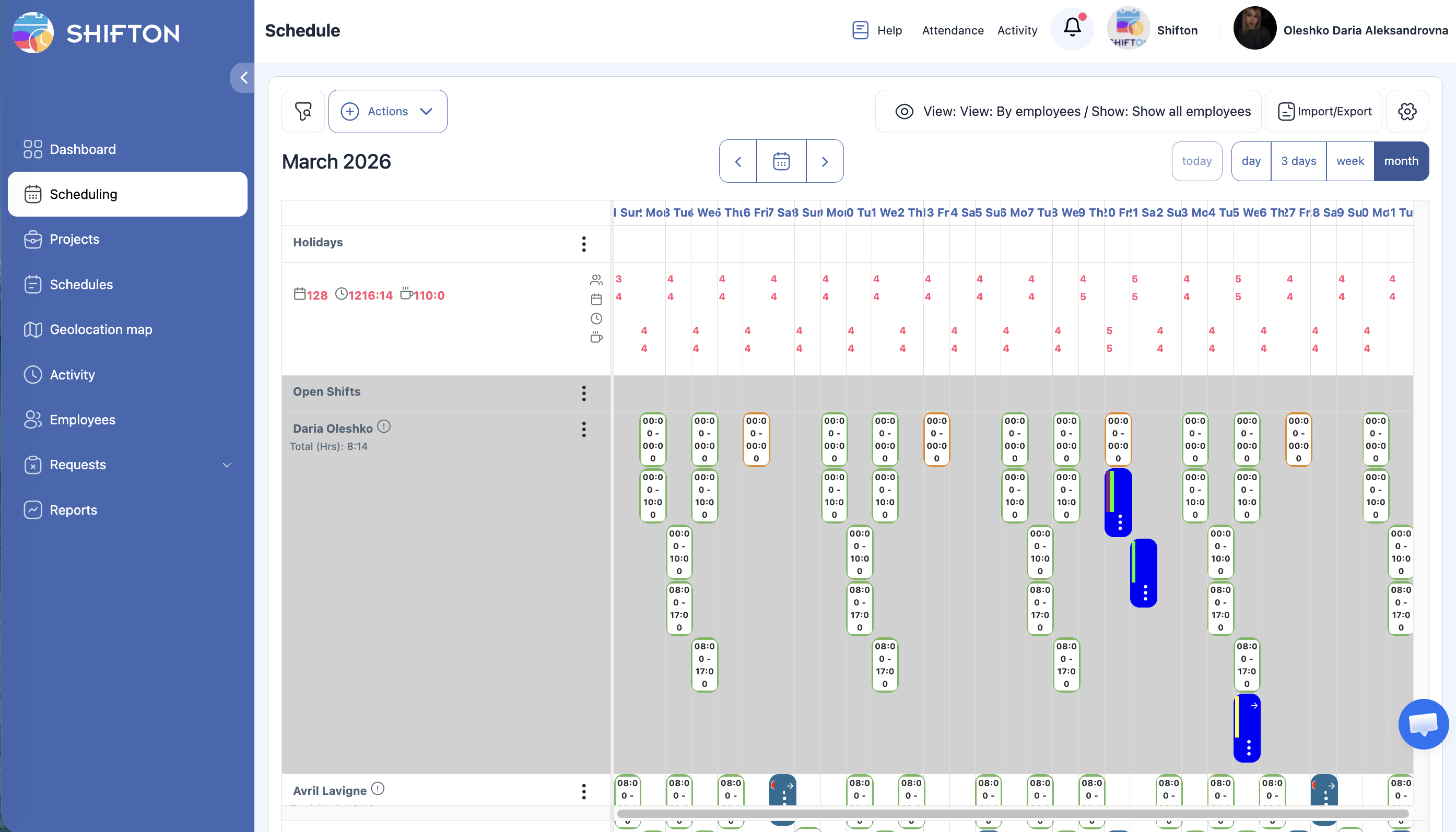
A whole season roster in the month view
Cutting season arrives all at once and stays for months, which makes the month view the honest one. It shows the full period for a single person or for the entire crew list, so you can see where staffing thins out before customers do.
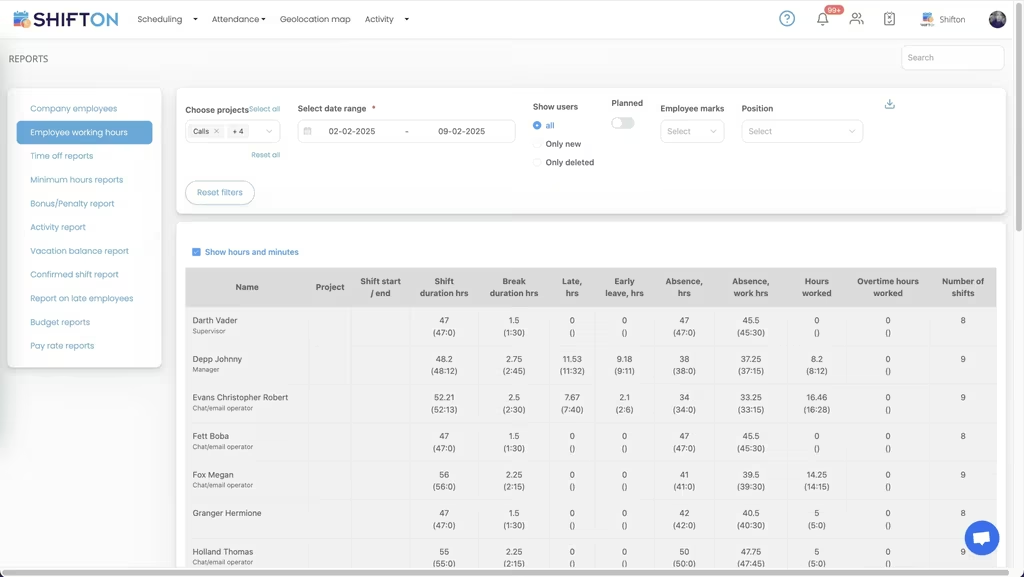
Hours you can pay from without checking twice
Wages are the largest line in a mowing business, and they are only as accurate as the record behind them. The employee working hours report lists every person's shifts with the numbers payroll needs: worked hours, overtime, break time, and the minutes lost to late starts or early finishes.
Start with the Free Plan
No time limits. Get full access to core features and upgrade when you're ready.
Read the full guide to lawn care scheduling software
A mowing round is a promise about frequency. Customers expect a visit on the same cycle, the crew expects a full day of work, and the invoice assumes both happened. Lawn care scheduling software is what keeps that promise on the week when two people call in, a mower is in for repair and half the team was hired eight weeks ago.
The arithmetic behind it is unforgiving. A residential visit is measured in minutes, margin lives in how many stops a crew clears before the light goes, and wages are close to the entire cost base. Drop a couple of properties per crew per day across a season and that is real money rather than a rounding error. The schedule is not paperwork in this trade. It is the production plan.
Why the whiteboard stops working at three crews
One crew and a wall planner get along fine. Two crews and a group chat mostly hold. At three the failure is predictable: nobody is sure they have the current version. A crew turns up at a property that was moved, the office takes a call it cannot answer, and twenty paid minutes disappear into finding out where anybody should be. Lawn care business scheduling software solves that narrowly and completely. There is one schedule, it lives on every phone, and it changes for everybody at the same moment. Lawn service scheduling software becomes worth paying for at exactly the point where the cost of a wrong address exceeds the cost of a licence.
Two crews can be held in somebody's head. Five cannot. Once the work splits across separate trucks and separate service areas, the useful question stops being what needs doing and becomes who is covering it. That is usually when an owner starts searching for lawn care dispatch software, or lawn care business dispatch software if the operation has grown, and usually the need is simpler than the phrase suggests: one grid where every crew is visible, every shift is tied to an area, and a reassignment is a drag rather than four phone calls. Shifton keeps all crews on the same screen with each service area as its own project, so covering an absence with somebody from a lighter day takes seconds. Lawn care crew scheduling software that hides the other crews from you is only half a tool, and the same goes for mowing crew scheduling software that stops at a single team. When a crew also takes on multi-day installation and planting jobs, our page on landscape crew scheduling covers that side.
Holding the weekly cycle together
Consistency is the thing customers actually notice. Same day, same crew, no phone call needed. Shifton keeps each service area or property group as a project, and a schedule template holds the repeating pattern, so a recurring week gets copied forward instead of rebuilt from scratch every Sunday. When somebody is off you replace the person rather than redo the day. Because every shift carries the place it belongs to, the plan reads as work rather than as blocks of time, and our work location feature covers how that tagging behaves across a growing list of sites. Lawn maintenance scheduling software lives or dies on this one question: can a repeating week be reproduced without being rebuilt. A lawn maintenance schedule template you already trust can be imported rather than retyped, and a grass cutting schedule template or lawn service schedule template exported from a spreadsheet loads the same way. Whether the crew opens the plan as a lawn maintenance schedule app on a phone or you read the month view on a laptop, it is the same schedule.
Fitting a full day of properties into one shift
Daylight is the real constraint on lawn service scheduling, and the second constraint is what a crew can physically sustain. Both are hour problems. Shifton shows a running total of hours per person and a maximum you can set individually, so a shift that would tip somebody into overtime is visible while you are still building rather than after payroll runs. Early starts and long summer days are ordinary here, and the schedule has to reflect that instead of assuming an office pattern. One thing to be clear about: Shifton plans the crew and records the hours. It does not decide the order of the stops or the driving between them, so treat it as the staffing layer rather than a replacement for how your crew leads sequence a day.
Rain days and the catch-up nobody enjoys
Weather does not cancel a mowing schedule, it postpones it, and the backlog has to land somewhere. That usually means an extra half day, a longer shift, or a crew working a day they were not booked for. Lawn mowing scheduling software earns its place in that scramble: shift the affected work, publish the extra hours as open shifts so willing staff can claim them, and let notifications do the phoning. What matters is speed. A change made the evening before costs nothing, while the same change at seven in the morning costs a crew's first hour.
Turnover, seasonal hires and the crew member who does not show
Headcount in this business is seasonal and turnover runs high, so lawn care employee scheduling software has to make onboarding cheap. Shifton holds the team as an employee list with positions, authority levels and invite status, which means a new hire is added, invited and scheduled in one sitting. Availability can be collected before the roster is built, so you plan around the person who cannot start before eight instead of finding out on the day. When somebody does not show, the gap becomes an open shift that everyone qualified can see, and shift swaps happen between crew members in the app with a manager confirming rather than arranging. A lawn care scheduling app that the crew ignores is worthless, which is why the mobile side has to be the simple part. Crews judge a lawn mowing scheduling app in the first ten seconds, so the phone view shows today and tomorrow and nothing they have to hunt for.
From logged minutes to accurate pay
Hourly crews make payroll accuracy a weekly problem rather than a monthly one. Clock-in and clock-out are recorded per shift, breaks are logged, and the working hours report separates worked hours from overtime and shows lateness and early leave as their own figures. Bonuses and penalties can be attached to individual shifts, and pay rate reports turn all of it into a cost you can read per service area, which is the point where lawn care workforce management software stops being an admin expense and starts being a margin tool. That is the difference between lawn care time tracking software and a paper timesheet: the number is already right when you look at it. QuickBooks and Zapier integrations move the results onward without a second round of typing.
What to check before you commit to a tool
Every lawn care scheduling tool demos beautifully, and plenty of scheduling software for lawn care is quietly dead by week three. Judge it on the boring things instead.
- Hand a phone to the least technical person on the crew and ask them to find tomorrow's shift without help.
- Publish a change and watch how long the push notification takes to arrive.
- Add a seasonal hire end to end and count the clicks.
- Pull an hours report for one pay period and see whether it is ready to pay from.
If any of those takes a support ticket, the tool will be back on paper by mid-season. The one that works is simply the one your crews still open in August.
Shifton for a lawn care operation
Shifton is workforce software: it plans people, records hours and reports on both. It is not a billing system or a mapping tool, and it does not pretend to be, and it behaves the same whether you need lawn care staff scheduling software for one crew or for eight. What it does cover is the part that costs you money every week, which is whether the right number of trained people were on the right work with hours you can trust. Similar patterns show up in other recurring residential trades, and our pool service scheduling page walks through the same problem from a different angle.
Under 10 team members the free plan runs the whole thing with no time limit, including shift scheduling, basic time clock and attendance, the mobile app and reports, which is enough for a single-crew operation permanently. Past that, paid modules add demand forecasting, automatic distribution, geolocation and deeper cost reporting, and pricing is per employee per month so it tracks your season rather than a fixed licence. Either way you end up with the same result: every visit staffed, every rain day absorbed, and a payroll figure nobody has to argue about.
Frequently Asked Questions
What does lawn care scheduling software do?
It decides which crew works which day, records the hours they actually put in, and keeps the current version of the plan on everyone's phone. Shifton builds the weekly and monthly roster, tags each shift with a location, and reports worked and overtime hours per person and per service area.
Can the same crew be scheduled for the same properties every week?
Yes. Save the pattern as a schedule template and copy it forward instead of rebuilding it, then adjust only the shifts where somebody is unavailable. A lawn mowing schedule template you already keep in a spreadsheet can be imported, and recurring weeks take minutes to publish after that.
What happens to the schedule after a washed-out day?
Move the affected shifts to the catch-up day, add the extra hours you need as open shifts, and republish. Push notifications reach the crew straight away, so people find out the evening before rather than after they have set off.
How do mowing crews clock in and out?
Through the mobile app on iOS or Android, with start and end times stored against the shift along with breaks. Basic time clock and attendance are included on the free plan. If you also want arrival at a property confirmed on a map, the geolocation module is a paid add-on.
Does it suit staff who only work one season?
It does. Add each seasonal hire to the employee list with a position and an authority level, send the invite, and they can see their shifts the same day. At the end of the season you change their status rather than unpicking a spreadsheet.
Is there a free lawn care scheduling app?
Up to 10 team members Shifton is free with no time limit, and that includes shift scheduling, basic time clock and attendance, the mobile app and reports. Paid modules are billed per employee per month, so a two-crew operation runs on genuinely free lawn care scheduling software rather than a trial.





Get every lawn care crew onto one schedule this week
Start free with up to 10 team members and have a full week of visits covered before Monday morning.