

 English
  Español
  Português
  Deutsch
  Français
  Italiano
  日本語
日本語  中文
中文  हिन्दी
  עברית
עברית  العربية
  한국어
한국어  Nederlands
  Polski
  Türkçe
  Українська
  Русский
  Magyar
  Română
  Български
  Čeština
  Ελληνικά
  Svenska
  Dansk
Dansk  Norsk
Norsk  Suomi
Suomi  Bahasa Indonesia
  Tiếng Việt
  Tagalog
  ไทย
ไทย  Latviešu
  Lietuvių
  Eesti
Eesti  Slovenčina
  Slovenščina
  Hrvatski
  Македонски
  Қазақша
  Azərbaycan
  Afrikaans
  বাংলা
বাংলা On-Call Scheduling Software That People Can Live With
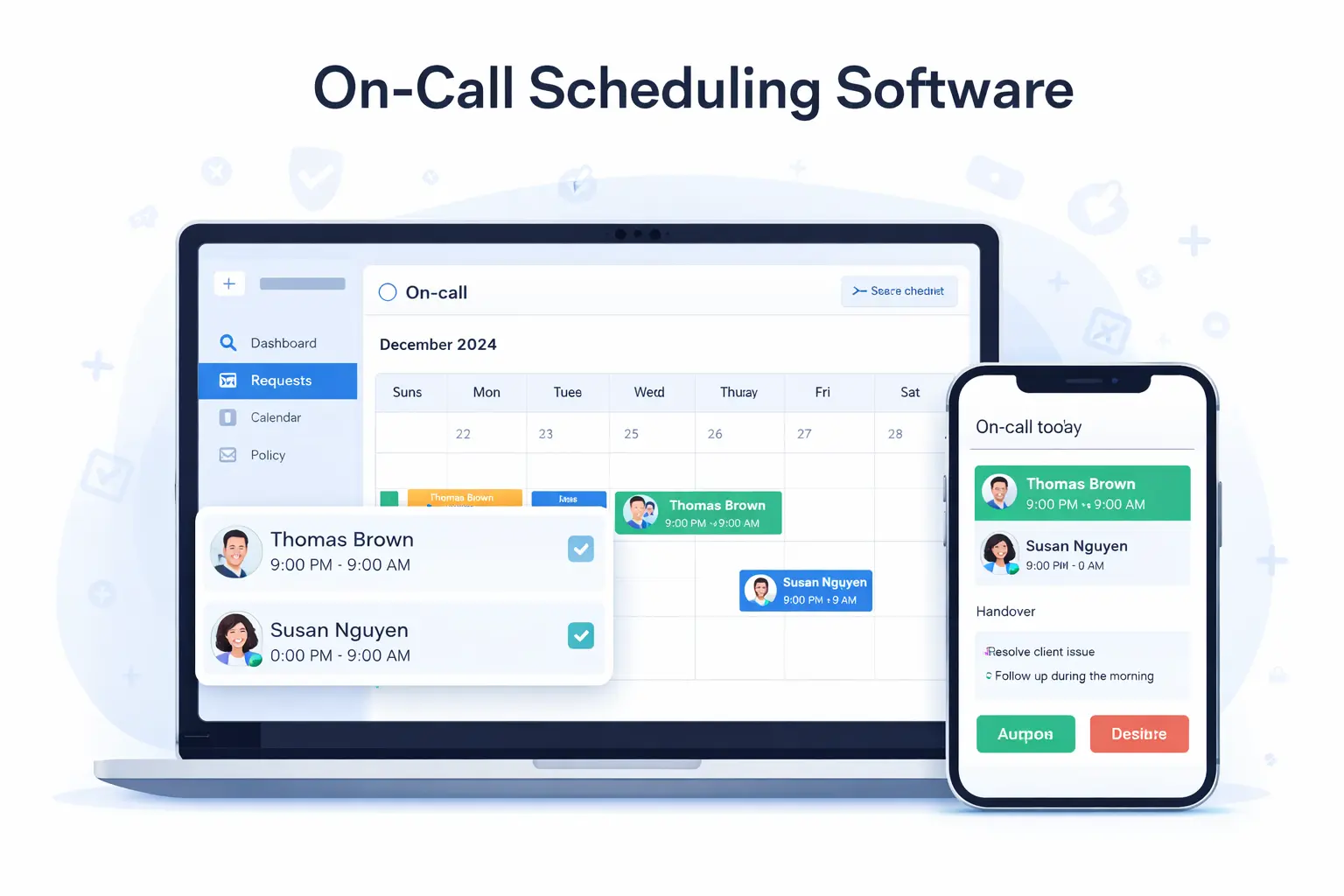
On-call work looks easy in one sentence. Someone is responsible after hours, and if something goes wrong, they respond.
In real teams, the hardest part is not the incident. It’s everything around it: unclear ownership, random swaps, missed handovers, time zones, and that quiet feeling that the same people always carry the heaviest weeks.
That’s why teams search for on-call scheduling software. Not to add bureaucracy. To remove uncertainty. A good setup makes responsibility obvious, spreads the load fairly, and gives people a real chance to switch off when they’re not on duty.
This guide sticks to reality. You’ll see what matters, what breaks most often, and how to build an on-call process people can live with.
What on-call scheduling software should solve
A tool is useful only when it answers these questions instantly:
Who is on call right now
Who is backup if the primary doesn’t respond
When responsibility starts and ends
How fairness is tracked over time
If those answers change depending on who you ask, you don’t have coverage. You have a guessing game.
When on-call coverage is truly needed
Some businesses can wait until morning. Others can’t, because delays become real risk.
On-call coverage matters most when your work touches safety, urgent requests, or customer trust outside business hours. That is why it is common in healthcare and medical services, where a missed response can affect patient flow, staffing decisions, and how quickly problems get resolved. If you want a clear example of an industry where after-hours coverage has to be predictable, look at how teams operate in healthcare environments.
The failures that happen even in good teams
Most on-call issues are not caused by bad intentions. They happen because the system leaves too much room for interpretation.
You see it when swaps live only in chat, when nobody is sure who is backup, when handovers depend on memory, and when managers can’t prove the rotation is fair because there’s no history. Over time, uncertainty becomes the real problem, because people stop trusting the schedule.
What to look for in on-call scheduling software
You don’t need a complicated tool. You need a dependable one.
Rotations that stay stable when life happens
A strong rotation supports clear time ranges, predictable patterns, and coverage that doesn’t collapse when someone takes time off. It also helps when on-call planning fits naturally into the same system you already use for staffing and availability, because teams hate maintaining two calendars. That’s why it’s worth starting from a scheduling foundation built for coverage, like Shifton’s shift scheduling features.
Backup coverage that is not a mystery
Backup should be visible and intentional. Not “call whoever is online.”
Even simple structure helps:
Primary on-call
Secondary backup
Optional manager escalation for high-impact issues
The key is that everyone can see it, and nobody has to guess who’s next.
Handover that doesn’t depend on memory
Handover is where many teams bleed time.
A good handover is short, consistent, and easy to scan:
What happened
What’s already done
What still matters
Who owns follow-up in normal hours
When handover is clear, fewer issues bounce between people, and fewer small incidents drag into the next day.
Fairness you can measure
On-call collapses when it feels unfair.
Fairness isn’t a vibe. It’s a pattern you can track:
How often someone is primary vs backup
How weekends and holidays are distributed
How many heavy weeks someone carried in a row
If you can see the history, you can fix the imbalance before people burn out.
How to build an on-call process that doesn’t burn people out
Software helps. Rules protect people.
Keep the scope tight
On-call should be for urgent issues, not routine work. If urgent becomes anything, people never truly rest.
Teams that do this well keep a shared definition of urgent and stick to it. That reduces unnecessary escalations and makes true emergencies easier to spot.
Protect recovery time
If someone gets pulled into an incident and then is expected to perform like nothing happened, mistakes become more likely. For teams that run long nights, a practical reference is this sleep schedule for 12-hour night shifts, which helps set realistic expectations around recovery and alertness.
A helpful, non-commercial reference on fatigue and work schedules is NIOSH from the CDC, which explains how disrupted schedules affect performance and safety in its guidance on work schedules and fatigue.
You don’t need complex rules to be humane. You need realistic recovery when the shift was not normal.
Make swaps official
Swaps are normal. Life happens.
The problem is when swaps live only in chat. That’s when people stop trusting the schedule and start calling whoever seems available. If swaps are allowed, the schedule must remain the single source of truth.
Define escalation like a calm contract
Escalation should not feel like punishment. It should feel like clarity.
Define what counts as no response, when the backup takes over, when a manager is contacted, and what resolved means so people can stand down. Clear escalation reduces anxiety because people know what happens next.
Keeping coverage fair without overthinking it
Fairness is not about making everyone equally unhappy. It’s about making the rotation predictable and explainable.
Rotate the hardest periods, not just the easy ones. Spread weekends. Avoid stacking heavy weeks on the same people. If your team is small, be honest about trade-offs and review the rotation more often.
If you’re building this from scratch and want a quick starting point, you can draft a simple rotation by heading to the shifton registration.
Why structured workflows reduce conflict
On-call becomes easier when decisions are visible and consistent. That’s the same principle that makes HR processes feel fair: fewer side chats, fewer misunderstandings, and fewer “I thought you approved it.”
If you want a solid example of how clear requests and approvals remove chaos, the approach in Shifton’s leave management system guide is worth reading, because the same clarity is what makes on-call sustainable.
For global context on working time principles that often shape after-hours expectations, HR teams often reference the International Labour Organization’s overview of working time.
A rollout plan teams actually follow
You don’t need a big launch. You need trust fast.
Start with one rotation and one backup. Write a short definition of urgent. Agree on a simple handover format. Run it for two weeks. Fix what confused people, then scale.
Most teams fail because they aim for perfection on day one. The teams that succeed build something simple, use it daily, and improve it based on real friction.
FAQ
What is on-call scheduling software?
On-call scheduling software helps you plan after-hours coverage with clear rotations, visible backups, and a reliable schedule so incidents don’t turn into confusion.
What makes an on-call schedule fair?
A fair schedule shares nights and weekends across the team, avoids stacking heavy weeks on the same people, and makes history visible so imbalances get fixed early.
How do we reduce burnout with on-call?
Keep the scope limited to urgent issues, rotate fairly, protect recovery after disrupted sleep, and keep handovers consistent so people can truly disconnect.
Do we need on-call if we already have shift schedules?
Often yes. Shift schedules cover planned work. On-call covers unexpected urgent issues outside planned staffing. They work best when connected to availability and coverage planning.
How do swaps work without breaking coverage?
Allow swaps, but require that the schedule is updated and remains the single source of truth. If swaps live only in chat, trust collapses.
What should a good handover include?
A good handover briefly states what happened, what was done, what still needs attention, and who owns follow-up during normal business hours.


Start making changes today!
Optimize processes, improve team management, and increase efficiency.